1. Definition
What is Allis Tissue Forceps?
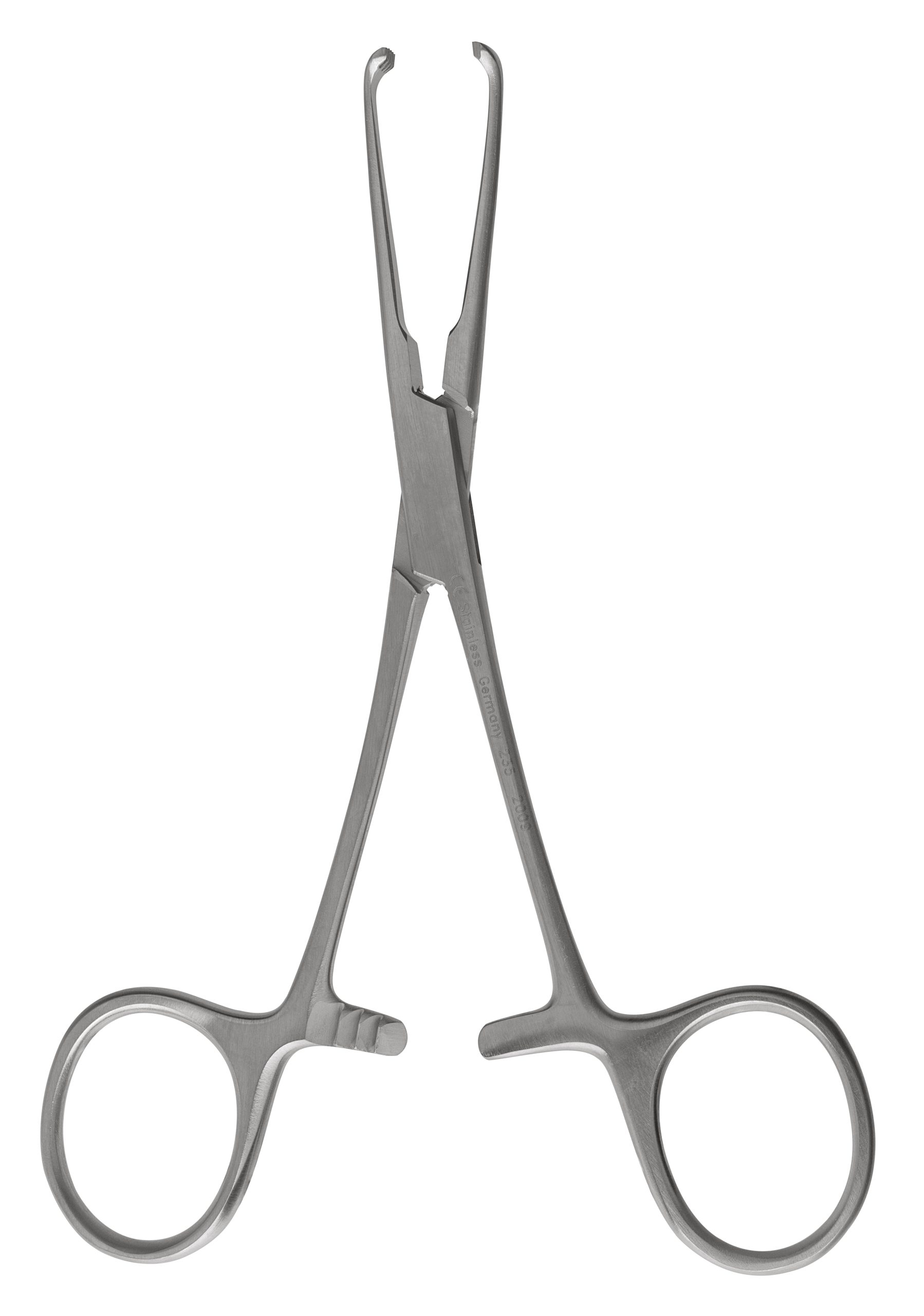
The Allis tissue forceps is a specialized surgical instrument classified as a traumatic or grasping forceps. It is distinguished by its unique jaw design, featuring multiple, sharp, interlocking teeth that provide a secure, non-slip hold on dense tissues. Named after the American surgeon Charles Valentine Allis, its primary function is to grasp, retract, and stabilize tissues that are too tough or slippery for standard smooth forceps to handle effectively. It is a staple instrument in various surgical fields, renowned for its powerful grip but also noted for the potential tissue trauma it can cause.
How it works
The working principle of the Allis forceps is mechanical and straightforward. It operates on a rack-and-pinion mechanism, similar to many locking forceps. The handles feature a series of interlocking teeth (the “rack”). When the surgeon squeezes the handles together, the pinion engages, locking the jaws at the chosen level of compression. This action brings the toothed jaws together, piercing and firmly grasping the tissue between them. The locking mechanism allows the surgeon to maintain a secure hold without continuous hand pressure, freeing them to perform other tasks.
Key Components
- Jaws: The most critical component. They are typically 4×5 or 5×6 sharp, curved teeth that interlock perfectly. This design distributes grasping pressure and prevents tissue from slipping.
- Shanks: The long, slender part connecting the jaws to the box lock. They provide the necessary length and leverage.
- Box Lock: The pivotal joint where the two shanks meet. It ensures smooth opening and closing alignment of the jaws and is engineered for durability under repeated sterilization.
- Handle/Ring Handles: The part held by the user. The serrated pattern provides a non-slip grip, while the ratchet teeth on the inner surface form the locking mechanism.
- Ratchet: The series of interlocking teeth on the handles that lock the instrument in a closed position. It typically has 2-4 clicks, allowing for adjustable compression.
2. Uses
Clinical Applications
The Allis forceps is used in situations where a firm, traumatic grip is acceptable or necessary to control robust tissue.
- Grasping and Retracting Dense Tissue: Its primary use is to hold and pull back tissues like fascia, tendon sheaths, breast tissue, or the edge of a thick abdominal wall during surgery to provide exposure to the underlying operative field.
- Holding Tissue for Excision: Used to grasp tissue masses (e.g., lipomas, breast lumps) that are being surgically removed.
- Obstetrics and Gynecology: Frequently used to grasp the cervix during procedures like dilation and curettage (D&C) or to hold the uterine angle during a C-section.
- Orthopedics: Used to grasp and manipulate dense connective tissues like ligaments or meniscal tissue during knee surgeries.
- Bowel and Stomach Surgery: Occasionally used to grasp the rim of the stomach or bowel (e.g., during gastrectomy or bowel resection), though with caution due to the risk of crush injury.
Who uses it
- Surgeons (General, Orthopedic, OB/GYN, Plastic, Cardiothoracic)
- Surgical Assistants
- Operating Room Nurses (for handling and passing the instrument)
Departments/Settings
- Operating Rooms (ORs) across all major surgical specialties.
- Day Surgery Units for minor procedures.
- Emergency Departments for complex wound closures or trauma surgeries.
- Labor and Delivery Suites for obstetric procedures.
3. Technical Specs
Typical Specifications
- Length: Commonly available in 6″ (15 cm), 7.5″ (19 cm), and 10″ (25 cm) lengths.
- Tip Configuration: Standard jaw patterns are 4×5 or 5×6 teeth.
- Curvature: Available in straight, curved, and angled versions to suit different anatomical and procedural needs.
Variants & Sizes
- Allis Tissue Forceps: The standard version.
- Allis-Adair Tissue Forceps: A longer version (often 9″ or more) with finer tips, commonly used in gynecological surgeries.
- Mini-Allis Forceps: A smaller, more delicate version for use in pediatric surgery or on finer tissues.
Materials & Features
- Materials: Almost exclusively manufactured from Tungsten Carbide, a super-hard material, inserts on the jaw tips for enhanced durability and grip. The instrument body is made from high-grade, medical-grade Stainless Steel (AISI 410 or 420) for excellent corrosion resistance and ability to withstand repeated autoclaving.
- Features:
- Tungsten Carbide Inserts (TC): Gold-colored jaws offering extreme hardness and a non-slip surface.
- German Pattern vs. American Pattern: Slight variations in weight, balance, and ratchet design.
- Serrated Handles: For a secure grip, even with wet gloves.
Models
While not typically branded with model numbers like electronics, they are distinguished by:
- Pattern: (e.g., Standard Allis, Allis-Adair)
- Size: (e.g., 6″ Straight, 7.5″ Curved)
- Jaw Type: (e.g., 4×5 Teeth, with TC Inserts)
4. Benefits & Risks
Advantages
- Superior Grip: The toothed design provides an unparalleled hold on slippery or tough tissues that would be impossible with atraumatic forceps.
- Secure Locking: The ratchet mechanism allows for hands-free retraction, improving surgical efficiency.
- Tactile Feedback: Surgeons can feel the density of the tissue through the instrument.
- Durability: Made from robust materials, it has a long operational lifespan with proper care.
Limitations
- Tissue Trauma: Its primary limitation. The sharp teeth can cause crushing, piercing, and ischemic damage (due to compromised blood flow in the grasped area), which can lead to necrosis or impaired healing.
- Not for Delicate Tissues: Absolutely contraindicated for fragile tissues like bowel mucosa, blood vessels, nerves, or skin edges.
- Limited Functionality: It is a single-purpose instrument for grasping and retracting; it cannot be used for blunt dissection or fine manipulation.
Safety Concerns & Warnings
- Crush Injury: The greatest risk. Users must apply the minimum force necessary on the ratchet to secure the tissue.
- Perforation: The teeth can puncture tissues if applied with excessive force or in the wrong area.
- Retained Foreign Body: If a tooth breaks off (rare, but possible), it could become a retained surgical item.
Contraindications
The Allis forceps should not be used on:
- Viable bowel or stomach wall (except the cut edge being removed).
- Blood vessels and nerves.
- Parenchymal organs like the liver or spleen.
- The skin surface.
- Any tissue that will remain in the body and requires minimal trauma for optimal healing.
5. Regulation
As a basic, manual surgical instrument, the Allis forceps is generally considered low-risk and falls under the following regulatory classifications.
- FDA Class: Class I. Exempt from premarket notification [510(k)] but subject to general controls regarding labeling, manufacturing, and tracking.
- EU MDR Class: Class I (reusable surgical instrument). Requires technical documentation and adherence to MDR Annex I general safety and performance requirements.
- CDSCO Category: Class A (low risk) as per the Medical Device Rules, 2017.
- PMDA Notes: Regulated as a “General Medical Device” in Japan, typically falling into the lowest risk category.
- ISO/IEC Standards:
- ISO 13485:2016: Quality Management Systems for Medical Devices.
- ISO 7153-1: Specification for materials for stainless steel surgical instruments.
- IEC 62366-1: Application of usability engineering to medical devices.
6. Maintenance
Proper maintenance is critical for performance and patient safety.
- Cleaning & Sterilization: Immediate post-use cleaning is vital to prevent bioburden from hardening. This involves enzymatic soaking, ultrasonic cleaning, and thorough brushing, especially at the box lock and ratchet. Sterilization is achieved via steam autoclaving (e.g., 135°C for 3-18 minutes). Always follow facility-specific protocols.
- Reprocessing: Inspect for damage (burrs, bent tips, loose joints, chipped TC inserts) after each cleaning cycle. Lubricate the box lock and ratchet periodically with instrument milk.
- Calibration: Not required, as it is a non-measuring, mechanical instrument. However, functional checks for proper alignment and smooth ratchet action are part of reprocessing.
- Storage: Store in a clean, dry environment. Use designated trays or racks to prevent instruments from knocking against each other, which can damage the fine teeth.
7. Procurement Guide
How to Select the Device
Consider the primary surgical applications in your facility. A mix of straight and curved, standard and long (Allis-Adair) is typical for a general OR.
Quality Factors
- Material: Ensure it’s made from high-carbon stainless steel.
- Craftsmanship: Check for seamless box locks, smoothly engaging ratchets with a positive release, and perfectly aligned, sharp teeth.
- Balance: The instrument should feel balanced and comfortable in the hand.
- Finish: A smooth, polished, satin finish reduces glare and is easier to maintain than a mirror finish.
Certifications
Look for manufacturers with ISO 13485 certification and products with a CE Mark (for EU) and/or FDA-registered establishment.
Compatibility
Fully compatible with standard OR trays and sterilization systems.
Typical Pricing Range
Price varies by quality, brand, and features.
- Standard Stainless Steel Allis: $50 – $150
- With Tungsten Carbide Inserts: $150 – $300+
8. Top 10 Manufacturers (Worldwide)
- Johnson & Johnson (Ethicon)
- B. Braun Melsungen AG
- Medtronic plc
- Integra LifeSciences
- Sklar Surgical Instruments
- Teleflex Incorporated
- Aspen Surgical
- BOWA Medical
- Surtex Instruments Limited
- Robbins Instruments
9. Top 10 Exporting Countries (Latest Year)
- Germany
- United States
- Pakistan
- China
- Switzerland
- France
- United Kingdom
- Japan
- Italy
- India
10. Market Trends
- Current Global Trends: Steady demand driven by a growing volume of surgical procedures worldwide. There is a shift towards value-based procurement, balancing cost with quality and longevity.
- New Technologies: Enhanced surface treatments (e.g., diamond-like carbon coatings) to increase hardness and corrosion resistance further. The integration of RFID tags for instrument tracking and management is also emerging.
- Demand Drivers: Rising rates of chronic diseases requiring surgery (e.g., cancer, obesity), aging populations, and expansion of healthcare infrastructure in emerging economies.
- Future Insights: The market will continue to see a focus on ergonomic designs to reduce surgeon fatigue. While robotic surgery advances, manual instruments like the Allis forceps remain irreplaceable for specific tactile functions and will continue to be a fundamental tool.
11. Training
Required Competency
Proficiency in identifying the instrument, understanding its indications/contraindications, and demonstrating correct application technique with appropriate force.
Common User Errors
- Applying excessive ratchet force, causing severe crush injury.
- Using it on contraindicated delicate tissues.
- Using a damaged instrument with misaligned or blunted teeth.
- Dropping the instrument, leading to misalignment.
Best-Practice Tips
- “Respect the Tissue”: Always use the gentlest hold possible. Engage only 1-2 clicks of the ratchet.
- Inspect Before Use: Always check the teeth for alignment and damage.
- Use a “Towel Clamp” for Skin: Never use an Allis on the skin; use a non-penetrating towel clamp for drapes or skin retraction.
- Practice: Surgical trainees should practice on simulation models (e.g., synthetic tissue or animal models) to develop a feel for the appropriate application pressure.
12. FAQs
1. What’s the difference between Allis and Babcock forceps?
Allis has traumatic, sharp teeth for dense tissue. Babcock has a fenestrated, smooth, rounded tip designed to grasp delicate tubular structures (like bowel or fallopian tube) without causing damage.
2. Can Allis forceps be used on the intestine?
Generally, no. It can cause perforation or crush injury. A Babcock or atraumatic bowel clamp is preferred. It may be used on the cut end of a bowel segment being resected.
3. Why are the teeth sometimes gold-colored?
The gold color indicates the presence of ultra-hard Tungsten Carbide inserts, which greatly extend the instrument’s functional life and provide a superior grip.
4. How many teeth does a standard Allis have?
The most common configurations are 4×5 (four teeth on one side interlocking with five on the other) or 5×6.
5. Is the Allis forceps reusable or disposable?
It is primarily a reusable instrument. Single-use, disposable versions exist but are less common due to cost and environmental concerns.
6. What should I do if the teeth of my Allis forceps become misaligned?
Do not use it. A misaligned instrument will not grasp properly and can cause excessive tissue damage. Send it for professional repair or replace it.
7. What is the proper way to pass an Allis forceps?
Hold the instrument by the box lock, with the tips pointing towards your palm, and the ratchet closed. Present the handles to the surgeon in a ready-to-use position.
8. Can Allis forceps be used in laparoscopic surgery?
No, it is a manual, open-surgery instrument. However, laparoscopic graspers with similar traumatic, toothed tips exist for the same purpose inside the body.
13. Conclusion
The Allis tissue forceps is a classic, powerful, and indispensable surgical instrument designed for one primary purpose: to provide a secure, non-slip grip on dense, tough tissue. Its value in retraction and stabilization during complex procedures is undeniable. However, this utility comes with a significant responsibility—the potential for iatrogenic tissue trauma. Its successful and safe application hinges on a deep understanding of its mechanics, its strict indications and contraindications, and the surgeon’s judicious use of force. As a fundamental tool in the surgical armamentarium, mastery of the Allis forceps remains a core skill for surgical professionals worldwide.
14. References
- Association of Surgical Technologists (AST). (2021). AST Standards of Practice for Sterile Processing and Sterilization.
- Geis, W. P. (Ed.). (2021). Surgical Instrumentation: An Interactive Approach. Elsevier Health Sciences.
- U.S. Food and Drug Administration (FDA). (2022). Classify Your Medical Device.
- European Commission. (2017). Regulation (EU) 2017/745 on medical devices (MDR).
- Central Drugs Standard Control Organization (CDSCO). (2017). Medical Device Rules.
- ISO 7153-1:2016. Surgical instruments — Materials — Part 1: Metals.
- Rothrock, J. C. (2019). Alexander’s Care of the Patient in Surgery. Elsevier.