1. Definition
What is a Mosquito Hemostat?
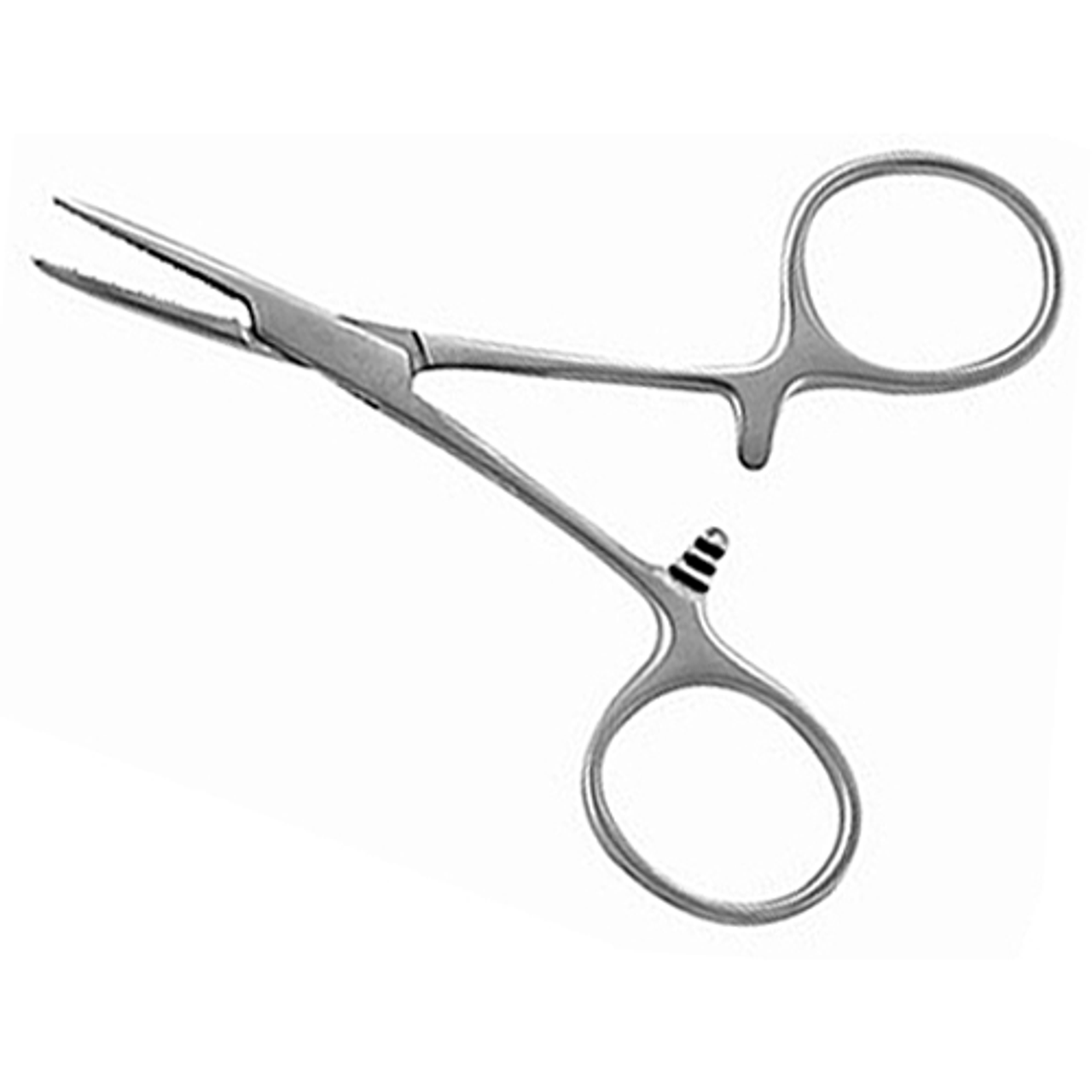
A Mosquito hemostat is a small, lightweight, and finely crafted surgical instrument primarily used for clamping and occluding small blood vessels to control bleeding (hemostasis) during surgical procedures. Its name derives from its fine, pointed tips, which are ideal for grasping delicate tissues and small vessels with precision, much like the delicate proboscis of a mosquito. It is a specific type of hemostatic forceps, falling under the broader category of locking clamps.
How it works
The working principle of a Mosquito hemostat is mechanical and straightforward. It operates via a scissor-like mechanism but is designed for clamping, not cutting. The user holds the instrument by its ring handles, opens the jaws, and positions them precisely on the target tissue or vessel. Upon releasing the handles, the ratchet mechanism—a series of interlocking teeth on the handles—engages, locking the jaws in a closed position at a consistent, controlled pressure. This pressure crushes and occludes the vessel, stopping blood flow. The instrument remains locked until the user deliberately disengages the ratchets.
Key Components
- Jaws: The working end of the instrument. Mosquito hemostats typically have straight or curved jaws with fine, longitudinal serrations (teeth) to provide a secure grip without causing excessive trauma to the tissue.
- Shanks/Blades: The long, slender part connecting the jaws to the box lock. They are designed to be long enough to provide reach but short enough for fine control.
- Box Lock: The pivotal joint where the two shanks meet. This is a critical point for durability and smooth action. A high-quality box lock allows for easy opening and closing without wobble.
- Ratchet: The interlocking teeth located on the handles. This mechanism allows the instrument to be locked in a closed position at varying degrees of tightness, freeing the surgeon’s hands for other tasks.
- Finger Rings: The circular handles where the user places their thumb and ring finger for control. They are typically of a smaller diameter compared to larger hemostats, suited for fine manipulation.
2. Uses
Clinical Applications
Mosquito hemostats are indispensable in procedures requiring meticulous hemostasis and fine dissection:
- Ophthalmic Surgery: For controlling tiny vessels in and around the eye.
- Plastic & Reconstructive Surgery: Essential for delicate work on the face, hands, and other areas where minimal tissue trauma is critical.
- Pediatric Surgery: Their small size is perfectly suited for the delicate anatomy of infants and children.
- Vascular Surgery: For isolating and clamping small-diameter veins and arteries.
- Neurosurgery: Used for controlling minor bleeding on the surface of the brain or spinal cord.
- Minor Procedure Rooms: For tasks like removing small foreign objects, clamping during suturing, or controlling bleeding from small lacerations.
- General Surgery: Used for fine hemostasis in superficial layers before larger vessels are encountered.
Who uses it
- Surgeons (across all specialties mentioned above)
- Surgical Assistants and Technologists
- Emergency Room Physicians and Nurses
- Certified Registered Nurse Anesthetists (CRNAs) for specific procedures
- Dentists and Oral Surgeons
Departments/Settings
- Operating Rooms (OR)
- Ambulatory Surgical Centers (ASCs)
- Emergency Departments (ED)
- Minor Procedure/Special Procedure Rooms
- Intensive Care Units (ICUs) for bedside procedures
- Dental Clinics
3. Technical Specs
Typical Specifications
- Length: Typically ranges from 3.5 inches (9 cm) to 5 inches (12.5 cm).
- Jaw Type: Straight or Curved.
- Jaw Serration: Fine, longitudinal serrations.
- Handle Type: Standard ring handles with a ratchet.
Variants & Sizes
The primary variants are defined by jaw configuration:
- Curved Mosquito: The most common variant. The curved jaws allow for better visualization of the tip and easier access beneath structures.
- Straight Mosquito: Used when a direct, in-line approach is needed.
Materials & Features
- Materials:
- Tungsten Carbide Inserts: High-end models feature tungsten carbide inserts on the jaw tips, offering extreme durability, a superior non-slip grip, and a longer lifespan. These are often identified by their gold-plated ring handles.
- German Stainless Steel: The industry standard for high-quality, reusable instruments, known for its corrosion resistance, strength, and ability to hold a sharp edge.
- Martensitic Stainless Steel (e.g., 420/410): Common for surgical instruments, offering good hardness and corrosion resistance.
- Features:
- Delicate Tips: Finely honed for precision.
- Smooth Ratchet: For quiet, reliable engagement and disengagement.
- Satfinish or Highly Polished Finish: Reduces glare under bright OR lights.
Models
While not typically branded with model numbers like electronic devices, they are categorized by type and manufacturer. Notable product lines include:
- Miltex® Mosquito Forceps
- Scanlan® Mosquito Forceps
- Sklar® Mosquito Forceps
4. Benefits & Risks
Advantages
- Precision: The fine tips allow for exact placement, minimizing damage to surrounding tissue.
- Secure Grip: The serrated jaws and ratchet mechanism provide a reliable hold on vessels.
- Atraumatic: When used correctly, they cause minimal tissue crush injury compared to larger, cruder forceps.
- Versatility: Beyond hemostasis, they are useful for blunt dissection and tissue manipulation.
- Durability: High-quality stainless steel versions are reusable and can last for years with proper care.
Limitations
- Small Capacity: Not designed for large vessels or thick tissue; using them as such can damage the instrument.
- Not for Cutting: They are hemostats, not scissors. Attempting to cut with them will damage the jaws.
- Skill-Dependent: Requires a steady hand and proper technique to be used effectively.
Safety Concerns & Warnings
- Needlestick Hazard: The fine tips can be sharp; care must be taken during handling and passing to avoid accidental punctures.
- Tissue Trauma: Excessive or prolonged clamping can lead to necrosis (tissue death) at the clamp site.
- Instrument Damage: Dropping the instrument can misalign the delicate jaws or box lock, rendering it useless.
Contraindications
There are no direct medical contraindications, but it is contraindicated by application:
- Do not use for clamping large vessels (e.g., femoral artery) or dense tissue.
- Do not use as a substitute for a needle holder or scissors.
5. Regulation
Medical device regulation ensures safety and performance. Mosquito hemostats are typically classified as low-to-moderate risk devices.
- FDA Class (USA): Class I. This class is subject to general controls and is generally exempt from premarket notification [510(k)].
- EU MDR Class (Europe): Class I (reusable surgical instruments). As reusable instruments, they fall under a higher classification than single-use Class I devices and require involvement of a Notified Body for certification.
- CDSCO Category (India): Class A. This represents low-risk devices.
- PMDA Notes (Japan): Generally classified as Class I medical devices under the Pharmaceutical and Medical Device Act (PMD Act).
- ISO/IEC Standards:
- ISO 13485: Quality Management Systems for Medical Devices.
- ISO 7151: Specific standard for surgical and dental instruments – materials, design, and marking.
- ISO 7740: Specifications for instruments for surgery – scissors and shears (covers general performance).
- IEC 60601-1: For any electrosurgical-capable versions (which is rare for standard Mosquito hemostats).
6. Maintenance
Proper maintenance is critical for performance and patient safety.
Cleaning & Sterilization
- Point-of-Use Cleaning: Wipe with a sterile, moist sponge immediately after use to prevent blood and debris from drying.
- Transport: Place in a designated container for soiled instruments.
- Cleaning: Use an ultrasonic cleaner with an enzymatic detergent to remove all bioburden from the box lock and serrations.
- Rinsing & Drying: Rinse thoroughly with distilled water and dry completely to prevent water spots and corrosion.
- Sterilization: Sterilize using an autoclave (steam sterilization) following validated cycles (typically 132-135°C for 3-10 minutes). Wrap in sterilization pouches before autoclaving.
Reprocessing
Follow the manufacturer’s IFU (Instructions for Use) for specific reprocessing steps. The process above is the standard for reusable instruments.
Calibration
These are mechanical instruments and do not require electronic calibration. However, they should be inspected before each use for:
- Jaw Alignment: Tips must meet perfectly.
- Ratchets: Should engage and disengage smoothly without slipping.
- Box Lock: Should be tight without any lateral play or wobble.
Storage
- Store in a clean, dry, and climate-controlled environment.
- Keep in closed, sterilized trays or pouches until ready for use.
- Avoid stacking heavy items on top to prevent damage to the jaws.
7. Procurement Guide
How to Select the Device
- Procedure Type: Choose curved for general deep cavity work and straight for superficial procedures.
- Frequency of Use: For high-volume ORs, invest in tungsten carbide models for longevity. For low-volume clinics, high-quality stainless steel may suffice.
- User Preference: Surgeons often have a strong preference for a specific brand, finish, or feel.
Quality Factors
- Feel & Balance: The instrument should feel balanced in the hand.
- Smoothness of Action: The box lock and ratchet should operate silently and smoothly.
- Finish: Look for a uniform, non-glare finish without burrs or rough spots.
Certifications
Ensure the manufacturer has ISO 13485 certification and the product carries a CE Mark (for Europe) and/or is listed with the FDA.
Compatibility
This is primarily a manual tool. The only compatibility consideration is with electrosurgical units if using a specialized, insulated version (which is uncommon for the standard Mosquito).
Typical Pricing Range
- Standard Stainless Steel: $15 – $40 per instrument.
- Tungsten Carbide Jaw Inserts: $60 – $120 per instrument.
Pricing varies significantly based on brand, quality, and geographic region.
8. Top 10 Manufacturers (Worldwide)
| Rank | Manufacturer | Country of Origin | Short Profile & Notable Lines |
|---|---|---|---|
| 1 | B. Braun (Aesculap) | Germany | A global leader in healthcare. Aesculap is synonymous with high-precision, durable surgical instruments. |
| 2 | Integra LifeSciences (Miltex) | USA | Renowned for its Miltex line, a favorite among microsurgeons and ophthalmologists for its exceptional quality. |
| 3 | Sklar Surgical Instruments | USA | A trusted American brand for over 125 years, known for reliability and a wide range of instrument sizes. |
| 4 | Scanlan International | USA | Specializes in high-end cardiovascular and specialty instruments, known for innovative designs and superior craftsmanship. |
| 5 | Stille | Sweden | A historic brand known for its high-quality stainless steel and precision, now part of the Becton Dickinson family. |
| 6 | Symmetry Surgical | USA | Manufactures a broad portfolio of surgical instruments, including the popular Padgett and Riley lines. |
| 7 | BOWA Medical | Germany | A leading German manufacturer known for its electrosurgical products and high-quality standard instruments. |
| 8 | Surgical Holdings | UK | A major supplier and manufacturer of surgical instruments in the UK, known for quality and refurbishment services. |
| 9 | Fairmont Medical | Australia | A leading supplier in the Asia-Pacific region, providing quality instruments to hospitals and surgeons. |
| 10 | Lawton GmbH & Co. KG | Germany | A family-owned German company with a long history of producing fine surgical and microsurgical instruments. |
9. Top 10 Exporting Countries (Latest Year)
Based on analysis of trade data for HS Code 901890 – Instruments and appliances used in medical sciences.
| Rank | Country | Export Market Notes |
|---|---|---|
| 1 | Germany | The global leader in high-precision surgical instrument exports, known for superior engineering and quality. |
| 2 | United States | A major hub for both manufacturing and re-export of medical devices, home to several top brands. |
| 3 | Pakistan | A key player in the manufacturing of surgical instruments, particularly from the city of Sialkot, offering competitive pricing. |
| 4 | China | A rapidly growing exporter, scaling up production of both budget-friendly and mid-tier quality instruments. |
| 5 | Switzerland | Exporter of very high-end, specialized instruments, often for niche surgical fields. |
| 6 | United Kingdom | Has a strong historical base in medical device manufacturing and a robust export market. |
| 7 | France | Home to several established medical device companies with a strong presence in European and global markets. |
| 8 | Japan | Known for high-quality manufacturing and a strong export market in Asia and beyond. |
| 9 | Mexico | A growing exporter, often serving as a manufacturing hub for companies targeting the North American market. |
| 10 | Italy | Has a significant cluster of medical device manufacturers, particularly for ophthalmic and dental instruments. |
10. Market Trends
Current Global Trends
- Rise of Single-Use Instruments: Driven by concerns over prion diseases (like CJD) and the high cost of reprocessing, single-use, disposable Mosquito hemostats are gaining traction, especially in neurology and for high-infectivity-risk cases.
- Cost-Constrained Procurement: Healthcare systems are under pressure to reduce costs, leading to increased evaluation of cost-effective options from emerging markets without compromising quality.
- Consolidation: Large medical device companies are acquiring smaller, specialized instrument makers to broaden their portfolios.
New Technologies
- Enhanced Coatings: Diamond-like carbon (DLC) and other coatings are being explored to increase hardness, reduce friction, and improve corrosion resistance.
- Ergonomic Handle Designs: New designs aim to reduce surgeon fatigue and the risk of repetitive strain injuries.
Demand Drivers
- Growing Number of Surgical Procedures: An aging global population increases the demand for surgeries (e.g., cataracts, cardiovascular).
- Advancements in Minimally Invasive Surgery (MIS): While many MIS procedures use energy-based sealing, traditional instruments like Mosquito hemostats are still vital in open and micro-surgical approaches that complement MIS.
- Expansion of Healthcare in Emerging Economies: Building new hospitals and surgical centers in developing nations drives demand for basic surgical tools.
Future Insights
The market for Mosquito hemostats will remain stable. The key evolution will be in materials science (lighter, stronger, longer-lasting materials) and the continued bifurcation between high-quality reusable instruments for standard care and reliable single-use instruments for specific infection-control scenarios.
11. Training
Required Competency
Competency involves knowledge and psychomotor skill:
- Knowledge: Understanding of anatomy, the principle of hemostasis, and instrument mechanics.
- Skill: Ability to pass and receive the instrument safely, open/close the ratchet smoothly, and apply the clamp precisely to the target vessel without damaging adjacent structures.
Common User Errors
- “Racking the Ratchet”: Forcing the ratchet to the final lock in one motion, which can damage the teeth. It should be closed gently, one click at a time.
- Improper Passing: Not presenting the instrument in a ready-to-use position (e.g., handles open towards the surgeon).
- Using as a Dissector: Using the tips to roughly dissect tissue instead of using a dedicated dissector.
- Over-clamping: Applying excessive force or clamping a large vessel, leading to instrument damage and tissue trauma.
Best-Practice Tips
- Practice: Use a sponge or simulated tissue to practice ratchet control and precise clamping.
- Inspect Always: Perform a quick visual and functional check of the instrument before use.
- Respect the Instrument: Understand its limitations—it is a precision tool, not a universal clamp.
12. FAQs
1. What’s the difference between a Mosquito and a Kelly hemostat?
The main difference is size and tip design. A Mosquito is smaller, finer, and used for delicate vessels. A Kelly is larger, with longer jaws, and is used for medium-sized vessels and tissue.
2. Can a Mosquito hemostat be used as a needle holder?
No. The jaws are not designed to hold a suture needle securely. Using it as a needle holder will damage the needle, the suture, the instrument’s jaws, and likely result in poor surgical technique.
3. Straight or Curved: which one should I choose?
Curved is more versatile for general use as it provides better visualization and access around structures. Straight is best for superficial, direct-line clamping.
4. How do I know if my Mosquito hemostat is damaged?
Check for misaligned tips that don’t meet, a loose or wobbly box lock, or a ratchet that slips or doesn’t hold.
5. Why do some have gold handles?
The gold-colored handles indicate the presence of tungsten carbide inserts on the jaw tips, signifying a premium, longer-lasting instrument.
6. Are disposable Mosquito hemostats any good?
Modern single-use models are highly reliable for their intended single procedure. They eliminate reprocessing costs and cross-contamination risks but create more medical waste.
7. How long should a reusable Mosquito hemostat last?
With proper care and handling, a high-quality stainless steel or tungsten carbide instrument can last for thousands of cycles, often many years.
8. What does “atraumatic” mean in this context?
It means the instrument is designed to perform its function (clamping a vessel) with minimal collateral damage to the surrounding tissue.
13. Conclusion
The Mosquito hemostat, a masterpiece of surgical simplicity, remains a cornerstone of the modern operating room. Its value lies in its precise application for controlling bleeding in delicate surgical fields. Success with this instrument hinges on a clear understanding of its design, proper selection for the task at hand, meticulous handling and maintenance, and adherence to fundamental surgical principles. By respecting this fine tool, healthcare professionals ensure optimal patient outcomes and uphold the highest standards of surgical care.
14. References
- U.S. Food and Drug Administration (FDA). (2023). Classification of Medical Devices.
- European Commission. (2017). Regulation (EU) 2017/745 on medical devices (MDR).
- Central Drugs Standard Control Organization (CDSCO). (2019). Medical Device Rules.
- International Organization for Standardization (ISO). (2018). ISO 7151:2018 – Surgical instruments — Materials.
- Pang, T. Y., & Ritchie, A. (2021). The Operating Room: A Guide to Surgical Instruments and Their Care. Academic Press.
- UN Comtrade Database. (2022). Trade data for HS Code 901890.