1. Definition
What is a Right-Angle (Mixter) Clamp?
A Right-angle clamp, commonly known as a Mixter clamp, is a specialized surgical instrument primarily used in a wide range of operative procedures to securely grasp, occlude, and dissect tubular structures, particularly blood vessels and ducts. Its most distinguishing feature is its 90-degree angled jaw, which provides superior access and visualization in deep and confined surgical cavities where straight instruments would be obstructed.
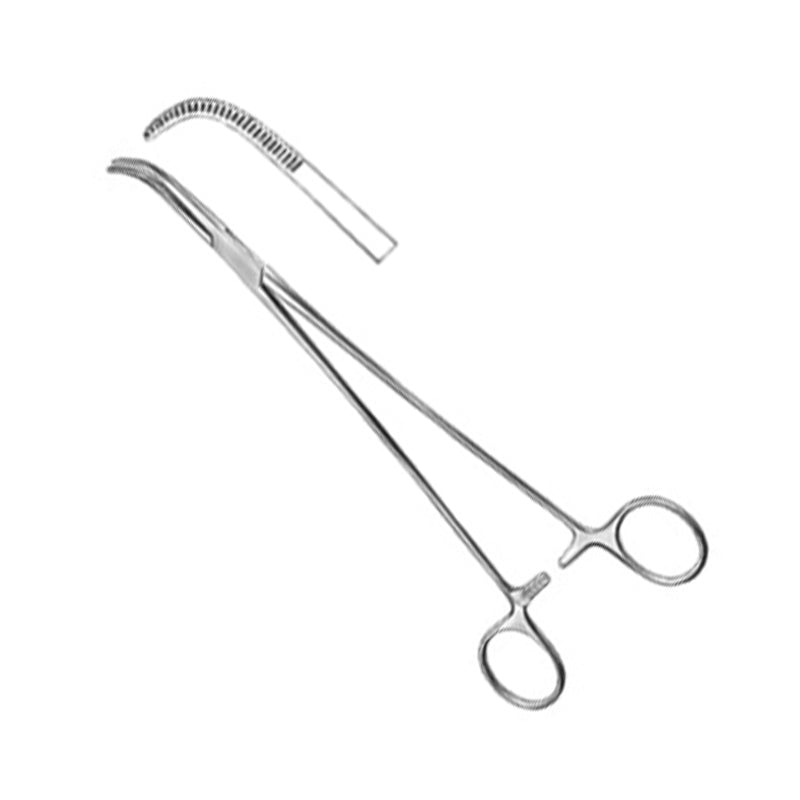
The instrument is a cornerstone of both open and minimally invasive surgery, renowned for its precision and safety in handling critical anatomical structures. The name “Mixter” is often used eponymously, paying homage to the surgeons who helped popularize its design.
How it Works
The Mixter clamp operates on a simple ratchet mechanism. The surgeon holds the ring handles (finger rings) and applies pressure to open the jaws. Once the target tissue (e.g., a blood vessel) is positioned within the jaws, the pressure is released, and the interlocking ratchets lock the instrument in place at varying degrees of closure. This allows the surgeon to secure the structure without maintaining manual grip pressure. The clamp can be easily released by slightly compressing the rings to disengage the ratchets.
The right-angle design is the key to its functionality. It enables the surgeon to slide the jaw around a vessel, passing it behind other structures, allowing for safe isolation and control before ligation (tying off) or transection (cutting).
Key Components
- Jaws: The working end of the instrument. They are finely serrated or grooved to provide a secure, non-slip grip on tissues without causing undue trauma. The right-angle bend is the defining characteristic.
- Shank/Body: The long, slender part that connects the jaws to the handle. It transmits the force from the handle to the jaws and comes in various lengths for different surgical depths.
- Ratchet: A series of interlocking teeth located near the handle. This mechanism allows the clamp to be locked in a closed position at multiple levels of tension.
- Finger Rings (Handles): The large, circular rings where the surgeon places their thumb and fingers. They provide leverage and control for precise manipulation.
- Box Lock: The pivotal joint where the two shanks meet. A high-quality box lock ensures smooth movement, durability, and prevents instrument failure.
2. Uses
Clinical Applications
The Mixter clamp is indispensable in numerous surgical disciplines:
- General & Vascular Surgery: For dissecting and occluding arteries and veins during procedures like cholecystectomy (gallbladder removal), appendectomy, and aneurysm repairs.
- Cardiothoracic Surgery: Critical for dissecting the great vessels (aorta, vena cava) and other structures during coronary artery bypass grafting (CABG) and lung resections.
- Gynecological Surgery: Used in hysterectomies and oophorectomies to secure the uterine artery and ligamentous structures.
- Urological Surgery: Employed in nephrectomies (kidney removal) and prostatectomies to control the renal vasculature and prostatic pedicles.
- Hepato-Pancreato-Biliary (HPB) Surgery: Essential for the meticulous dissection and control of the hepatic artery, portal vein, and bile ducts.
Who Uses It
This instrument is primarily used by:
- Surgeons: Including general, cardiovascular, thoracic, and transplant surgeons.
- Surgical Assistants: Who help in retraction and tissue exposure.
- Scrub Nurses/Nurse Technicians: Who prepare, handle, and pass the instrument to the surgeon.
Departments/Settings
- Operating Rooms (ORs) in hospitals and ambulatory surgery centers.
- Specialized Surgical Suites: Such as cardiac catheterization labs and hybrid ORs.
- Trauma Centers.
3. Technical Specs
Typical Specifications
- Length: Ranges from 18 cm to 25 cm for standard use, with longer versions (up to 30+ cm) for deep-cavity surgery.
- Jaw Type: Fine, medium, or coarse serrations; some have longitudinal grooves.
- Curvature: Standard 90-degree angle; some variants may have a slightly more acute or obtuse angle.
- Closure: Multiple ratchet levels (typically 3-5 clicks).
Variants & Sizes
- Mixter Clamp: The standard right-angle clamp.
- “Lahey” Goiter Clamp: A similar right-angle instrument often with a slightly different jaw configuration, used for grasping thyroid pedicles.
- Short vs. Long Shank: For superficial vs. deep surgical fields.
- Delicate/Typing: Finer, more delicate versions for pediatric or microvascular surgery.
Materials & Features
- Materials: Almost exclusively manufactured from medical-grade Austenitic Stainless Steel (e.g., AISI 304, 316, 420) for its superior corrosion resistance, strength, and ability to be repeatedly sterilized.
- Features:
- Tungsten Carbide Inserts: High-end models have TC inserts on the jaw faces, drastically increasing durability and grip, reducing slip.
- Satined/Matte Finish: Reduces glare from overhead OR lights.
- Electro-polished Surface: For a smooth, easy-to-clean finish that resists debris adhesion.
Models
While often referred to generically, notable product lines include:
- Scanlan® Modular Vessel Dissector Series
- Geister® Gamma-Plus Mixter Clamps
- Sontec® Right Angle Clamps
- B. Braun Aesculap® Mixter Forceps
4. Benefits & Risks
Advantages
- Superior Access: The right-angle design provides unparalleled access to structures deep within the body and behind other tissues.
- Enhanced Safety: Allows for precise dissection and isolation of vessels, minimizing the risk of inadvertent injury to surrounding tissues.
- Secure Occlusion: The ratcheted lock provides a firm, reliable hold on vessels, preventing slippage.
- Versatility: A fundamental tool across dozens of surgical specialties.
Limitations
- Learning Curve: Requires practice to master the technique of “passing” the clamp around a vessel correctly.
- Limited Use in Superficial Surgery: For superficial vessels, a straight clamp is often simpler and more efficient.
- Potential for Crushing: If used with excessive force on delicate tissues, it can cause crush injuries.
Safety Concerns & Warnings
- Never use excessive force to close the ratchets, as this can damage the vessel or the instrument.
- Always ensure the tip is visible before closing the jaws to avoid catching unintended tissue.
- Inspect the ratchet and jaw before use for any signs of damage, wear, or misalignment.
- Avoid dropping the instrument, as this can misalign the delicate jaws.
Contraindications
There are no direct patient-related contraindications, as it is a manual tool. Its use is contraindicated by the surgeon’s judgment—if the anatomy is not suitable or the vessel is too fragile for the clamp’s design, an alternative instrument (like a bulldog clamp or vascular clip applier) should be used.
5. Regulation
As a fundamental surgical instrument, the Right-angle clamp is typically regulated as a low-to-moderate risk device.
- FDA Class: Class I (Exempt). Most simple, manual surgical instruments are Class I and are exempt from premarket notification [510(k)].
- EU MDR Class: Class I (Reusable Surgical Instruments). Under EU MDR, reusable instruments are classified as Class I, requiring adherence to Annexes I (General Safety and Performance Requirements) and technical documentation.
- CDSCO Category: Class A. In India, non-powered surgical instruments are generally categorized as low-risk Class A devices.
- PMDA Notes: In Japan, it falls under Class I devices, which require notification to the PMDA but not premarket approval.
- ISO/IEC Standards:
- ISO 13485:2016: Quality Management Systems for Medical Devices.
- ISO 7153-1: Materials for surgical instruments – Part 1: Metals.
- IEC 62366-1: Application of usability engineering to medical devices.
6. Maintenance
Proper maintenance is critical for performance and patient safety.
- Cleaning & Sterilization:
- Point-of-Use Wipe: Immediately after surgery, wipe with a sterile water-moistened sponge to remove gross debris.
- Manual or Ultrasonic Cleaning: Disassemble if possible. Use enzymatic detergent and a soft brush to clean the box lock, ratchets, and jaws thoroughly. Ultrasonic cleaners are highly effective.
- Rinsing & Drying: Rinse with distilled water and dry completely to prevent water spots and corrosion.
- Sterilization: Autoclave using a Gravity or Pre-vacuum (Dynamic Air Removal) cycle at 132-135°C (270-275°F) for a minimum of 3-10 minutes (depending on the cycle and wrap). Always ensure the ratchets are locked in the first position during sterilization to allow steam penetration.
- Reprocessing: Follow the manufacturer’s IFU (Instructions for Use). Inspect for bioburden, functionality, and damage after each cycle.
- Calibration: These are mechanical instruments and do not require electronic calibration. However, regular functional inspection is a form of calibration. Check for:
- Smooth ratchet engagement and disengagement.
- Jaw alignment (they must meet evenly).
- Integrity of the box lock (no wobbling).
- Storage: Store in a clean, dry, and well-ventilated cabinet. Use protective tray systems to prevent contact with other instruments, which can cause damage to the fine jaws.
7. Procurement Guide
How to Select the Device
- Surgical Specialty: Cardiac surgeons may need longer, more robust models, while pediatric surgeons require finer, more delicate versions.
- Frequency of Use: High-volume ORs should invest in models with Tungsten Carbide inserts for long-term cost savings.
- Surgeon Preference: Ergonomics and “feel” are highly subjective; offer trials from different manufacturers.
Quality Factors
- Material Quality: Ensure it’s made of high-grade, corrosion-resistant stainless steel.
- Craftsmanship: Check for smooth action, perfect jaw alignment, and a flawless finish without burrs or rough spots.
- Durability: Look for instruments from manufacturers with a reputation for longevity.
Certifications
Ensure the manufacturer holds ISO 13485 certification. The device itself should have a CE Mark (for Europe) and be FDA Listed (for the USA).
Compatibility
It is a standalone instrument but is part of a set. Ensure the length and style are compatible with your other dissection and clamping instruments for a cohesive surgical tray.
Typical Pricing Range
- Standard Stainless Steel: $150 – $300 USD
- With Tungsten Carbide Inserts: $350 – $600 USD
Price varies significantly based on brand, quality, and features.
8. Top 10 Manufacturers (Worldwide)
- Johnson & Johnson (Ethicon) / Integra LifeSciences (USA): A global leader in surgical devices, offering a wide range of high-quality clamps.
- Medtronic plc (Ireland/USA): Through its Covidien brand, provides a comprehensive portfolio of surgical instruments.
- B. Braun Melsungen AG (Germany): Renowned for the Aesculap brand, known for precision and durability.
- KLS Martin Group (Germany): Specializes in high-end, innovative surgical instruments, often with ergonomic designs.
- Stryker Corporation (USA): Offers a robust line of instruments for various surgical specialties.
- Scanlan International (USA): A premier manufacturer specializing in cardiovascular and vascular surgery instruments, a top choice for Mixter clamps.
- Sontec Instruments (USA): Known for high-quality craftsmanship and a focus on surgical instrumentation.
- Surgical Holdings (UK): A leading manufacturer and reprocessor of surgical instruments.
- Geister Medizintechnik GmbH (Germany): Produces precision instruments with a strong reputation in Europe and beyond.
- Sklar Instruments (USA): A trusted name providing reliable and cost-effective surgical instruments.
9. Top 10 Exporting Countries (Latest Year)
(Based on analysis of trade data for HS Code 901890 – Instruments and appliances used in medical sciences)
- Germany: The global leader in high-precision surgical instrument exports, known for superior quality.
- United States: A major exporter of high-value, innovative surgical devices.
- Pakistan (Sialkot): A historic hub for hand-crafted surgical instruments, offering competitive pricing.
- China: A dominant force in volume manufacturing, with quality rapidly improving.
- Switzerland: Known for ultra-high-precision and specialty instruments.
- Japan: Exports high-quality, technologically advanced medical devices.
- Ireland: A significant exporter, largely due to the presence of major MedTech HQs.
- Mexico: A growing exporter, often serving as a manufacturing hub for the North American market.
- France: Home to several established medical device companies.
- United Kingdom: Maintains a strong presence in the global medical device market.
10. Market Trends
- Current Global Trends: The market is driven by a rising volume of surgical procedures globally, especially in cardiology and oncology. There is a growing demand for instruments compatible with Minimally Invasive Surgery (MIS) and robotics.
- New Technologies: Integration with robotic surgical systems (like da Vinci) requires specialized, proprietary right-angle clamps. Enhanced durability coatings and improved ergonomic designs to reduce surgeon fatigue are key innovations.
- Demand Drivers: Aging populations, increased prevalence of chronic diseases, and expansion of healthcare infrastructure in emerging economies.
- Future Insights: The future will see a continued focus on single-use/disposable instruments to eliminate reprocessing risks and costs. “Smart instruments” with embedded sensors for feedback may emerge, though this is less relevant for basic clamps. Sustainability and the circular economy will drive the market for high-quality, long-lasting, reusable instruments.
11. Training
Required Competency
Proficiency in handling a Mixter clamp is a core surgical skill. It requires:
- Understanding of surgical anatomy and tissue handling.
- Manual dexterity and spatial awareness.
- Knowledge of the instrument’s mechanics and limitations.
Common User Errors
- “Blind” Passing: Closing the jaws without visualizing the tip, risking injury to unseen structures.
- Over-tightening: Applying too many ratchet clicks, which can crush and damage the vessel.
- Using as a Dissector: Using the tip to blindly dissect tissue instead of using a dedicated dissector.
- Improper Handling: Pulling on a clamped vessel with excessive force, causing avulsion.
Best-Practice Tips
- Practice: Use surgical simulators or animal tissue models to practice the technique of passing the clamp around a vessel.
- Gentle Technique: Use the least number of ratchet clicks necessary to secure the vessel.
- Two-Handed Control: Use your non-dominant hand to guide the tip when working near critical structures.
- Inspect Before Use: Make instrument inspection a non-negotiable habit.
12. FAQs
- What is the difference between a Mixter and a Lahey clamp?
- They are very similar. The distinction is often subtle and surgeon-specific. Generally, a Lahey is considered a type of right-angle clamp used for pedicles (like in thyroid surgery), sometimes with slightly wider or differently configured jaws.
- Can a Mixter clamp be used on nerves?
- Absolutely not. The crushing action of the clamp would severely damage delicate neural tissue. Specialized, non-crushing, and much softer instruments are used for nerve handling.
- How many times can a Mixter clamp be re-sterilized?
- There is no fixed number. A high-quality clamp can withstand hundreds of sterilization cycles if handled and reprocessed correctly. Its lifespan is determined by wear and damage, not a cycle count.
- Why do the jaws need to align perfectly?
- Imperfect alignment creates points of high pressure, leading to ineffective occlusion and increased risk of traumatizing or tearing the vessel.
- What should I do if the clamp is not closing smoothly?
- Do not use it. Withdraw it from the sterile field and send it for inspection and repair. Forcing it can cause it to fail catastrophically during a critical moment.
- Is it suitable for laparoscopic surgery?
- The fundamental design principle is used in laparoscopy, but the instrument itself is for open surgery. Laparoscopic procedures use a “right-angle dissector,” which is a long, slender instrument that performs a similar function through a small port.
- How do I choose between fine and coarse serrations?
- Fine serrations are for delicate vessels (e.g., coronary arteries, cystic duct). Coarse serrations provide a stronger grip on tougher, fibrous structures but carry a higher risk of tissue damage.
- What does “TC” mean on the instrument?
- It stands for Tungsten Carbide, a super-hard material welded to the jaw faces. TC inserts provide a superior, non-slip grip and dramatically extend the instrument’s functional life.
13. Conclusion
The Right-angle (Mixter) clamp is a testament to the enduring power of intelligent surgical instrument design. Its simple yet brilliant 90-degree configuration has made it an irreplaceable tool in the surgeon’s armamentarium for nearly a century. From controlling life-saving vessels in a cardiac operation to isolating delicate ducts in abdominal surgery, its role is fundamental. A thorough understanding of its uses, benefits, limitations, and, crucially, its proper care and handling, is essential for every member of the surgical team to ensure optimal performance and, ultimately, the best possible outcomes for patients.
14. References
- Association of Surgical Technologists (AST). (2021). Core Curriculum for Surgical Technology (7th ed.).
- Guidelines for Perioperative Practice. (2023). AORN (Association of periOperative Registered Nurses).
- U.S. Food and Drug Administration (FDA). (2023). Classification of Medical Devices.
- European Commission. (2017). Regulation (EU) 2017/745 on medical devices (MDR).
- Central Drugs Standard Control Organization (CDSCO). (2017). Medical Device Rules.
- ISO 13485:2016. Medical devices — Quality management systems — Requirements for regulatory purposes.
- Manufacturer Websites and Instructions for Use (IFUs) from Johnson & Johnson (Ethicon), B. Braun (Aesculap), and KLS Martin.