1. Definition
What is a Langenbeck Retractor?
The Langenbeck retractor is a fundamental, hand-held surgical instrument belonging to the retractor family. Its primary function is to hold back the edges of a surgical incision or wound, thereby providing the surgeon with a clear and unobstructed view of the underlying anatomical structures (the surgical field) and facilitating access to the operative site. It is a quintessential tool in both general and specialized surgery, known for its simplicity, reliability, and effectiveness.
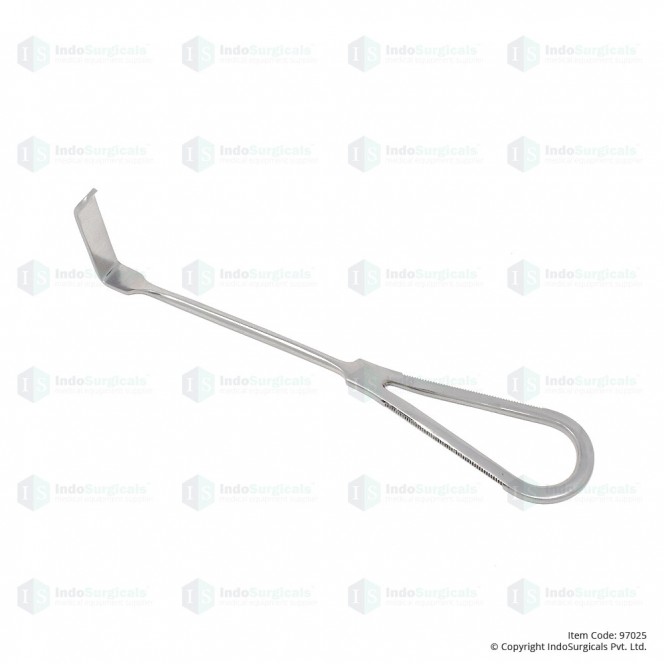
Named after the renowned German surgeon Bernhard von Langenbeck (1810-1887), a pioneer in military and plastic surgery, this instrument has stood the test of time and remains a staple in modern operating rooms.
How it works
The working principle of the Langenbeck retractor is elegantly simple, based on core principles of leverage and mechanical retraction.
- Placement: The surgeon or assistant positions the hooked, blade-like end of the retractor beneath the edge of the tissue (e.g., skin, fascia, muscle) that needs to be held back.
- Application of Force: A gentle, steady, manual force is applied to the handle, pulling the tissue away from the area of interest.
- Exposure: This action retracts the tissue, pulling it laterally or vertically to create and maintain an open surgical corridor. The depth and shape of the blade help to keep deeper structures visible while minimizing trauma to the retracted tissues.
Key Components
Despite its simple appearance, the Langenbeck retractor is designed with precision:
- Handle: The part held by the user. It is typically ergonomically shaped, often with a serrated or textured surface to provide a secure, non-slip grip, even when wearing bloody or wet gloves.
- Shank/Shaft: The central body that connects the handle to the blade. It transmits the force from the user’s hand to the tissue. The shank can be straight or slightly curved.
- Blade: The working end of the instrument that makes contact with the tissue. It is typically flat, broad, and has a single or double-ended hook (often referred to as a “cat’s paw” or “rake” tip, though true rakes are more pointed). The blade’s design is crucial for effective retraction with minimal tissue damage.
- Finger Ring (on some models): Some variants feature a loop or ring at the end of the handle, providing additional stability and control, allowing the user to apply more force without the instrument slipping.
2. Uses
Clinical Applications
The Langenbeck retractor is incredibly versatile and finds application across a wide spectrum of surgical procedures:
- General Surgery: Used in open procedures like appendectomies, cholecystectomies (gallbladder removal), hernia repairs, and laparotomies to retract skin, subcutaneous fat, and muscle layers.
- Orthopedic Surgery: Employed to hold back muscles and soft tissues during procedures like joint replacements, fracture fixations (ORIF), and spinal surgeries to expose bones and joints.
- Plastic & Reconstructive Surgery: Essential for providing exposure in delicate procedures such as flap surgeries, scar revisions, and breast reconstructions, where precise visualization is critical.
- Vascular Surgery: Used to retract tissues and provide access to blood vessels for procedures like bypass grafts or aneurysm repairs.
- Gynecological and Urological Surgery: Applied in open abdominal or pelvic surgeries to retract the abdominal wall and bladder.
- ENT (Ear, Nose, and Throat) Surgery: Smaller versions are used in head and neck procedures.
Who uses it
- Surgeons: The primary users, who employ it directly during the procedure.
- Surgical Assistants: Often tasked with holding retractors to maintain exposure for the lead surgeon.
- Scrub Nurses/Technicians: Responsible for passing the instrument to the surgeon and ensuring it is clean and available.
Departments/Settings
- Operating Rooms (ORs) in hospitals and ambulatory surgical centers.
- Emergency Departments for certain urgent wound explorations or procedures.
- Specialized Procedure Rooms in clinics for minor surgical operations.
3. Technical Specs
Typical Specifications
Specifications are primarily defined by size and blade style. There are no electronic or performance metrics.
Variants & Sizes
Langenbeck retractors come in a range of sizes, typically denoted by blade width and overall length.
- Small: Blade width of 10-15mm. Used for superficial and delicate procedures (e.g., hand surgery, plastic surgery).
- Medium: Blade width of 15-20mm. The most common size for general abdominal and orthopedic work.
- Large: Blade width of 20-30mm or more. Used for deep cavity retraction or in bariatric surgery where larger tissue masses need to be held back.
Materials & Features
- Materials:
- German Stainless Steel (ISO 7153-1): The gold standard, offering excellent corrosion resistance, durability, and the ability to hold a sharp edge if needed.
- Tungsten Carbide Inserts: Some premium models have tungsten carbide inserts on the blade tips. This super-hard material drastically improves wear resistance, reduces slipping, and extends the instrument’s lifespan.
- Martensitic Stainless Steel (AISI 420): Common for its high strength and hardness.
- Features:
- Single-ended vs. Double-ended: Double-ended models offer two different blade sizes or styles on one instrument, providing versatility.
- Blade Styles: Rake tips (sharp or blunt), cat’s paw (hollow, rounded tip), or flat.
- Finish: Matte, satin, or highly polished. A matte finish reduces glare from overhead OR lights.
Models
While not “models” in the technological sense, they are often cataloged by size and style (e.g., “Langenbeck Retractor, Double-ended, 15mm/20mm, Blunt Rake”).
4. Benefits & Risks
Advantages
- Simplicity & Reliability: No moving parts to break; it is a supremely reliable tool.
- Precise Control: Allows the user to feel the amount of force being applied, enabling fine adjustments.
- Cost-Effective: Relatively inexpensive to manufacture and maintain.
- Versatility: A small set of Langenbecks can serve in countless procedures across specialties.
- Minimal Tissue Trauma (when used correctly): The broad, smooth blade distributes pressure evenly.
Limitations
- Requires Manual Labor: Ties up the hands of a surgeon or assistant, which can be a limitation in personnel-scarce settings.
- Potential for User Fatigue: Holding a retractor in a fixed position for a long time can lead to muscle fatigue, potentially causing unsteady retraction.
- Limited Self-Retaining Capability: Unlike self-retaining retractors, it cannot maintain exposure without constant manual input.
Safety Concerns & Warnings
- Excessive Force: Applying too much force can lead to retractor-related injuries, including:
- Neuropraxia: Nerve compression and damage (e.g., lateral femoral cutaneous nerve injury in abdominal surgery).
- Rhabdomyolysis: Muscle crush injury from prolonged, intense pressure.
- Tissue Ischemia and Necrosis: Compromised blood flow leading to tissue death.
- Slippage: If the blade slips from its position, it can damage surrounding structures or contaminate the sterile field.
Contraindications
There are no absolute contraindications for the instrument itself. The contraindication lies in its misuse—it should not be used to retract tissues with excessive force or in a manner for which it was not designed.
5. Regulation
As a simple, manual, non-energy surgical instrument, the Langenbeck retractor falls under the lowest risk categories in most global regulatory frameworks.
- FDA Class: Class I. Exempt from premarket notification [510(k)] under most circumstances, but subject to general controls (e.g., establishment registration, labeling, Good Manufacturing Practices).
- EU MDR Class: Class I (per Rule 1, non-invasive). Requires a self-declaration of conformity by the manufacturer and technical documentation.
- CDSCO Category (India): Class A (Low Risk).
- PMDA Notes (Japan): Generally considered a “General Medical Device” with low risk.
- ISO/IEC Standards:
- ISO 7153-1: Specification for materials for surgical instruments.
- ISO 13485: Quality Management Systems for medical devices.
- ISO 15223-1: Symbols to be used for medical device labeling.
- IEC 62366-1: Application of usability engineering to medical devices.
6. Maintenance
Proper maintenance is critical for performance and patient safety.
Cleaning & Sterilization
- Point-of-Use Pre-Cleaning: Wipe with a sterile, water-moistened sponge immediately after use to prevent blood and bioburden from drying.
- Cleaning: Must be thoroughly cleaned in a validated washer-disinfector using enzymatic detergents. Hinged or serrated areas require careful brushing.
- Sterilization: Steam sterilization (autoclaving) is the preferred and most common method. Sterilization parameters (time, temperature, pressure) should follow the device manufacturer’s IFU and the healthcare facility’s protocols.
Reprocessing
Reprocessing is the entire cycle of cleaning, disinfection, inspection, and sterilization. Langenbeck retractors are designed to be reusable. Strict adherence to facility SOPs is mandatory.
Calibration
Not applicable, as it is a passive, non-measuring device.
Storage
- Store in a clean, dry, and temperature-controlled environment.
- Should be stored in protective trays or cassettes to prevent damage (e.g., nicks, bends) to the delicate blade edges.
- Ensure the storage system allows for complete drying to prevent corrosion.
7. Procurement Guide
How to Select the Device
- Procedure Mix: What surgeries are most common? A general OR may need a variety of sizes, while a hand surgery unit will prioritize small, delicate versions.
- Blade Type: Decide between blunt, sharp, or mixed rake tips based on the typical tissues being retracted.
- Single vs. Double-ended: Double-ended can reduce the number of instruments needed on the tray.
Quality Factors
- Material Quality: Insist on high-grade, medical-grade stainless steel.
- Craftsmanship: Check for a seamless finish, no sharp burrs on non-working surfaces, and a balanced feel in the hand.
- Durability: Look for instruments from manufacturers with a reputation for longevity. Tungsten carbide inserts are a mark of high durability.
Certifications
Ensure the manufacturer has ISO 13485 certification and that the device carries a CE Mark (for Europe) and is FDA Registered (for the USA).
Compatibility
Fully compatible with all standard sterilization systems and surgical trays. No electronic or mechanical interfaces.
Typical Pricing Range
Prices vary by manufacturer, quality, and region.
- Economy (Local/Generic): $15 – $40 per instrument.
- Mid-Range (Reputable National Brands): $40 – $100 per instrument.
- Premium (International, Tungsten Carbide): $100 – $250+ per instrument.
8. Top 10 Manufacturers (Worldwide)
- B. Braun (Germany): A global leader in healthcare, offering the Aesculap brand of high-precision surgical instruments, including a full range of Langenbeck retractors.
- Integra LifeSciences (USA): Known for the JARIT and Codman brands, providing a wide array of high-quality, durable surgical instruments for multiple specialties.
- Medtronic (Ireland): Through its surgical division, it offers a comprehensive portfolio of instruments, often rebranded from acquired companies.
- Stille (Sweden, now part of Becton Dickinson): A legendary name in surgical instruments, renowned for exceptional craftsmanship and durability.
- Sklar Surgical Instruments (USA): A long-standing, trusted American manufacturer providing reliable instruments to the global market.
- BOWA Medical (Germany): Specializes in electrosurgical and surgical instruments, known for quality and innovation.
- Lawton GmbH & Co. KG (Germany): A family-owned company with over 150 years of experience, producing premium surgical instruments.
- Cardinal Health (USA): A major distributor and manufacturer of medical supplies, including its own line of surgical instruments.
- Symmetry Surgical (USA): Manufactures a broad range of surgical instruments, including the ORBIT and F.S. brands.
- Rudolf Medical GmbH + Co. KG (Germany): A German manufacturer known for its high-quality, precision-crafted surgical instruments.
9. Top 10 Exporting Countries (Latest Year)
Based on HS Code 901890 (Instruments and appliances used in medical sciences).
- Germany: The global leader in high-precision surgical instrument exports, known for superior quality and engineering.
- United States: A major hub for both manufacturing and innovation in the medical device sector.
- China: A dominant force in the volume production of economical surgical instruments.
- Pakistan (Sialkot): A historical and massive manufacturing center, producing a vast range of instruments from basic to high-quality.
- Switzerland: Known for ultra-high-precision and specialty instruments, often commanding a premium.
- France: Home to several established medical device companies.
- United Kingdom: Has a strong heritage in surgical instrument manufacturing.
- Japan: Known for precision engineering and high-quality manufacturing standards.
- Ireland: A significant exporter, largely due to the presence of major medtech multinationals.
- Mexico: A growing exporter, often serving as a manufacturing base for the North American market.
10. Market Trends
Current Global Trends
- Consolidation: Larger companies are acquiring smaller, specialized instrument makers.
- Cost-Pressure: In many public health systems, there is a push for cost-effective, durable instruments without compromising quality.
New Technologies
- Enhanced Ergonomics: New handle designs with improved grip patterns and weight distribution to reduce surgeon fatigue.
- Advanced Materials: Development of even more corrosion-resistant and harder steel alloys.
- Single-Use/Disposable Retractors: Gaining traction in specific scenarios to eliminate reprocessing costs and cross-contamination risks, though environmental concerns are a counter-trend.
Demand Drivers
- Rising global surgical volume due to an aging population and increased access to care.
- Growth in outpatient ambulatory surgical centers, which require full sets of standard instruments.
- The ongoing need for reliable, fundamental tools in both developed and emerging markets.
Future Insights
The Langenbeck retractor is unlikely to become obsolete. Its future lies in incremental improvements in ergonomics and materials science rather than radical redesign. The balance between cost-effective reusables and the convenience of disposables will continue to shape the market.
11. Training
Required Competency
- Anatomical Knowledge: Understanding the underlying anatomy to place the retractor safely and effectively.
- Proper Technique: Training in applying steady, lateral traction without using excessive force or using the retractor as a lever.
- Situational Awareness: Knowing when to adjust retraction and communicating with the surgical team about fatigue or visibility.
Common User Errors
- “Hanging” on the retractor: Using the rib cage or pelvis as a fulcrum, which can cause fractures or severe tissue damage.
- Applying excessive inward pressure: Pushing down instead of pulling sideways, which deepens the wound but compresses underlying structures.
- Inattentive retraction: Allowing the blade to slip or not adjusting as the surgery progresses, leading to poor exposure.
- Using the wrong size: A small retractor on a large, thick muscle will be ineffective and require more force, increasing injury risk.
Best-Practice Tips
- Choose the right size: The blade width should be appropriate for the tissue being retracted.
- Use a gentle, consistent pull. Let the instrument do the work.
- Position the blade on a firm tissue plane, not on fragile structures.
- Communicate: If you are an assistant and are tired, inform the surgeon so you can switch or adjust.
- Inspect the instrument before use for any damage like burrs or bends.
12. FAQs
- What’s the difference between a Langenbeck and a Richardson retractor?
A Langenbeck typically has a rake or cat’s paw tip and is used for general tissue retraction. A Richardson (or “Rich”) has a broader, flat, and often curved blade, designed for retracting heavier tissues and abdominal walls. - Can a Langenbeck retractor be sharpened?
Yes, the rake tips can be professionally sharpened by a certified instrument repair service. However, over-sharpening can weaken the instrument and shorten its lifespan. - Is it single-use or reusable?
Traditionally and most commonly, it is a reusable instrument. However, single-use (disposable) versions made of plastic or lower-grade steel are available. - How do I know what size to ask for?
Size is often a matter of surgeon preference and the specific procedure. The scrub team will typically have a range of sizes available. A “medium Langenbeck” is a common starting request. - Why does the blade sometimes slip during surgery?
Slippage can be due to blood/fluid making the field slippery, insufficient initial purchase on the tissue, or applying force at the wrong angle. - What does “TC” mean on the instrument?
“TC” stands for Tungsten Carbide, indicating the blade has super-hard, wear-resistant inserts, usually seen as gold- or silver-colored tips. - How long should a Langenbeck retractor last?
With proper use and meticulous reprocessing, a high-quality stainless steel Langenbeck can last for decades, surviving thousands of sterilization cycles. - Can it be used in minimally invasive surgery?
No. Its function is for open surgical incisions. Minimally invasive surgery uses specialized, long, thin instruments inserted through ports.
13. Conclusion
The Langenbeck retractor is a testament to the enduring value of simple, effective design in medicine. From its 19th-century origins to the modern operating room, it remains an indispensable tool for surgeons worldwide. Its success lies in its ability to provide critical exposure with precise control. While technological advancements continue to revolutionize surgery, the fundamental principles of retraction embodied by the Langenbeck ensure its place on the surgical tray for the foreseeable future. Mastery of this basic instrument—understanding its uses, limitations, and proper handling—is a fundamental skill for every surgical professional.
14. References
- U.S. Food and Drug Administration (FDA). (2023). Classification of Surgical Instruments.
- European Commission. (2017). Regulation (EU) 2017/745 on medical devices (MDR).
- Central Drugs Standard Control Organization (CDSCO). (2020). Medical Device Rules.
- International Organization for Standardization (ISO). (2016). ISO 7153-1: Selection of materials for surgical instruments.
- Kirk, R.M. (2010). Basic Surgical Techniques. Elsevier Health Sciences.
- Ball, K.A. (2018). The Essential Guide to Surgical Instruments. TFM Publishing.
- UN Comtrade Database. (2022). Trade data for HS Code 901890.
- Grand View Research. (2023). Surgical Instruments Market Size, Share & Trends Analysis Report.