1. Definition
What is a Uterine Curette?
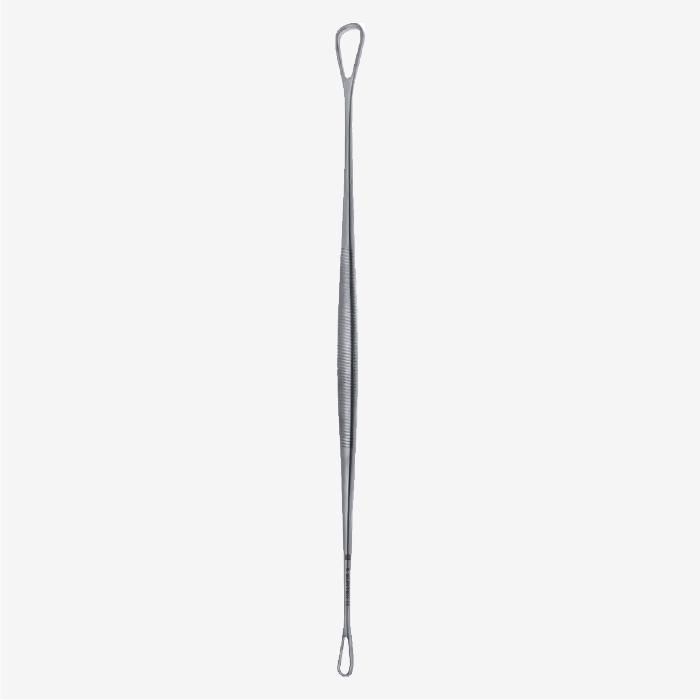
A uterine curette is a specialized surgical instrument designed for the gentle scraping or sampling of tissue from the inner lining of the uterus (the endometrium). Its primary function is diagnostic—to obtain tissue for histological examination—and therapeutic, to remove abnormal tissue, manage bleeding, or complete a miscarriage. It is a fundamental tool in gynecological practice, embodying a blend of precise engineering and clinical necessity.
How it Works
The working principle of a uterine curette is mechanical. After the cervix is appropriately dilated, the curette is inserted through the cervical canal into the uterine cavity. The physician then uses a gentle, systematic scraping motion against the uterine walls. The sharp or serrated edges of the curette’s tip (the “curette”) detach layers of the endometrium or specific lesions. The removed tissue is collected for analysis (in a diagnostic procedure) or simply evacuated (in a therapeutic procedure). The effectiveness relies on the tactile feedback the physician receives through the instrument and their anatomical knowledge.
Key Components
- Handle: The proximal end, designed for a secure, ergonomic grip. It often has a textured surface to prevent slipping.
- Shaft/Shank: The long, slender body connecting the handle to the tip. It must be rigid enough to transmit force but of an appropriate length and diameter for trans-cervical insertion.
- Curette Tip/Blade: The functional distal end. This is the working part that contacts the endometrial tissue. Its design (shape, sharpness, size) varies based on the intended use.
- Fenestration (in some models): An opening or window in the tip of the curette (common in suction curettes like the Karman cannula) through which tissue is aspirated.
2. Uses
Clinical Applications
- Diagnostic Dilatation and Curettage (D&C): The classic use. Performed to investigate abnormal uterine bleeding, postmenopausal bleeding, or suspicious findings on ultrasound (e.g., thickened endometrium) to rule out endometrial hyperplasia or cancer.
- Therapeutic D&C: To remove tissue following an incomplete or missed miscarriage (spontaneous abortion) or to manage excessive bleeding after childbirth (retained products of conception).
- Polypectomy: Removal of endometrial polyps, often under hysteroscopic guidance for precision.
- Treatment of Placental Remnants: Evacuation of residual placental tissue postpartum or post-abortion.
- Endometrial Biopsy: While smaller devices like Pipelle® are now common for office biopsies, sharp curettes can be used for a more extensive sampling.
Who Uses It
- Gynecologists: The primary users, specially trained in surgical procedures of the female reproductive tract.
- Obstetrician-Gynecologists (OB/GYNs): For both obstetric (miscarriage management) and gynecological applications.
- Reproductive Endocrinologists & Infertility Specialists: In procedures related to fertility workups or treatments.
- Trained Surgical Nurses/Technicians: Assist in preparing, handling, and passing the instrument during procedures.
Departments/Settings
- Hospital Operating Rooms (OR): For formal D&C procedures under general or regional anesthesia.
- Ambulatory Surgical Centers (ASCs): For outpatient procedures.
- Gynecology Procedure Rooms: Within hospitals or large clinics, often for procedures under local anesthesia or conscious sedation.
- Emergency Departments: For urgent management of incomplete miscarriages with heavy bleeding.
3. Technical Specs
Typical Specifications
- Length: Shaft lengths typically range from 20 cm to 30 cm to reach the uterine cavity.
- Tip Width: Curette tips vary from 1 mm to 10 mm in width, with smaller sizes (1-4mm) used for diagnostic sampling and larger ones (5-10mm) for therapeutic evacuation.
- Shaft Diameter: Corresponds to cervical dilator sizes, often ranging from 3 mm to 10 mm.
Variants & Sizes
- Sharp Curette: Has a finely sharpened, rigid blade (e.g., Novak, Sims). Used for precise scraping and tissue sampling. Sizes vary by tip curvature and width.
- Suction (Vacuum) Curette: A hollow cannula connected to a vacuum source (manual or electric). The Karman cannula is a common flexible, plastic model. Sizes are denoted by diameter (e.g., 4mm, 6mm, 8mm).
- Blunt Curette: Used less frequently, for gentle dissection or removal of loosely adherent tissue.
- Hysteroscopic Curette: Smaller, designed to pass through the working channel of a hysteroscope for targeted, visually guided procedures.
Materials & Features
- Materials: Traditionally made from high-grade medical stainless steel (AISI 304, 316) for durability, corrosion resistance, and ability to withstand repeated sterilization. Disposable variants are made from medical-grade plastics.
- Features: May include ergonomic knurled handles, depth markings on the shaft, and color-coded rings for quick size identification. Some have hollow shafts for suction attachment.
Models
- Sims Curette: A classic, sharp curette with a slightly curved, fenestrated tip.
- Novak Curette: Similar to Sims but with a more pronounced, rounded curvature, often used for endometrial biopsy.
- Kevorkian Curette: A sharp, fenestrated curette.
- Karman Cannula: A flexible, plastic suction curette, widely used in manual vacuum aspiration (MVA).
- Bierer Curette: A heavy, broad sharp curette.
4. Benefits & Risks
Advantages
- Diagnostic Gold Standard: Provides a direct tissue sample for definitive histological diagnosis of endometrial pathology.
- Therapeutic Efficacy: Highly effective at evacuating uterine contents in cases of miscarriage or retained placenta, often resolving hemorrhage.
- Relatively Quick Procedure: D&C is typically a short procedure (10-30 minutes).
- Versatility: Used for both diagnosis and treatment.
Limitations
- “Blind” Procedure (Traditional D&C): Without hysteroscopic guidance, it can miss focal lesions (like small polyps or tumors).
- Invasiveness: Carries risks inherent to any surgical procedure requiring cervical dilation.
- Discomfort/Pain: Requires anesthesia or significant analgesia.
- Skill-Dependent: Outcomes are heavily reliant on the surgeon’s skill and experience.
Safety Concerns & Warnings
- Uterine Perforation: The most serious acute complication. The curette can puncture the uterine wall, potentially injuring adjacent organs (bowel, bladder, blood vessels).
- Infection: Risk of endometritis or pelvic inflammatory disease.
- Hemorrhage: Excessive bleeding during or after the procedure.
- Adhesions (Asherman’s Syndrome): Overly aggressive curettage can scar the endometrial lining, leading to infertility or menstrual changes.
- Cervical Injury: From tenaculum placement or during dilation.
Contraindications
- Confirmed or Suspected Intrauterine Pregnancy (if not therapeutic): An absolute contraindication for a diagnostic D&C.
- Active Pelvic Infection: (e.g., acute endometritis, salpingitis). The procedure can spread the infection.
- Severe Coagulopathy or Bleeding Disorder: Uncorrected, this significantly increases hemorrhage risk.
- Known Cervical or Uterine Malignancy (in some cases): May require a different surgical approach to avoid tumor spread.
5. Regulation
FDA Class
The uterine curette is classified as a Class II medical device (Product Code HCG). It is considered to have a moderate-to-high risk and requires a 510(k) premarket notification to demonstrate substantial equivalence to a legally marketed predicate device.
EU MDR Class
Under the European Union Medical Device Regulation (EU MDR 2017/745), it is classified as a Class IIa device (Rule 6: Invasive device for transient use in the context of direct diagnosis or monitoring). This indicates a medium risk level.
CDSCO Category
In India, under the Central Drugs Standard Control Organization (CDSCO) regulations, it falls under Class B (moderate-high risk). Licensing is required from the State Licensing Authority.
PMDA Notes
In Japan, regulated by the Pharmaceuticals and Medical Devices Agency (PMDA), it is classified as a Class II medical device. It requires certification from a Registered Certification Body (RCB) based on conformity with Japanese standards.
ISO/IEC Standards
- ISO 13485: Quality Management Systems for Medical Devices (mandatory for manufacturers).
- ISO 7153-1: Materials for surgical instruments – Part 1: Metallic materials.
- ISO 17664: Processing of re-sterilizable medical devices – Information to be provided by the manufacturer.
- IEC 60601-1: General safety standards for medical electrical equipment (relevant for electric suction pumps used with curettes).
6. Maintenance
Cleaning & Sterilization (for Reusable Curettes)
- Immediate Post-Use Rinsing: Rinse under lukewarm water to remove blood and tissue debris.
- Manual Cleaning: Use a neutral pH enzymatic detergent, a soft brush, and lumened brushes for any channels. Pay special attention to hinges and serrations.
- Ultrasonic Cleaning (Recommended): Place in an ultrasonic cleaner to dislodge microscopic debris.
- Rinsing & Drying: Thoroughly rinse with distilled/deionized water and dry completely to prevent spotting and corrosion.
- Sterilization: Autoclaving (steam sterilization) is the gold standard. Use a validated cycle (e.g., 134°C for 3-5 minutes at 2 bar pressure). Ensure instruments are properly packaged before sterilization.
Reprocessing
Follow the manufacturer’s IFU (Instructions for Use) precisely. For single-use/disposable curettes, reprocessing is strictly prohibited. They must be discarded in appropriate sharps and biohazard containers after a single use.
Calibration
Uterine curettes do not require electronic calibration. However, regular visual inspection is crucial for “functional calibration.” Check for:
- Sharpness: Dull edges can cause tissue tearing.
- Integrity: Look for bends, cracks, corrosion, or pitting.
- Loose Parts: Ensure handles are securely attached.
Any instrument that is damaged, corroded, or has lost its sharpness must be taken out of service and repaired or replaced.
Storage
Store sterilized, packaged curettes in a clean, dry, temperature-controlled environment. Use trays or racks to prevent the instruments from knocking against each other, which can damage sharp edges. Maintain proper inventory rotation (First-In, First-Out).
7. Procurement Guide
How to Select the Device
- Define Primary Use: Is it for routine diagnostic D&C, miscarriage management in an ER, or hysteroscopic surgery? This dictates the type (sharp vs. suction) and set composition.
- Reusable vs. Disposable: Weigh upfront cost (reusable) against ongoing per-procedure cost, reprocessing workload, and infection control priorities (disposable).
- Ergonomics: Handles should be comfortable and provide a non-slip grip, especially when wet.
Quality Factors
- Material: For reusable, 316L stainless steel is superior for corrosion resistance.
- Craftsmanship: Seamless joints, a smooth finish, and a consistently sharp, burr-free cutting edge.
- Durability: Ability to withstand hundreds of sterilization cycles without degrading.
- Packaging: Clear, sterile, and easy-to-open packaging for disposables.
Certifications
Look for CE Marking (for EU), FDA Clearance/Listing (for USA), and ISO 13485 certification of the manufacturer. Country-specific marks like INDA (India) or JPAL (Japan) may be required for local markets.
Compatibility
Ensure the curette size is compatible with standard cervical dilators and that suction curettes fit the hospital’s vacuum aspiration units (check Luer lock or other connector types).
Typical Pricing Range
- Reusable Sharp Curette: $50 – $150 per instrument.
- Complete Reusable D&C Set: $300 – $800.
- Single-Use Disposable Curette (e.g., Karman-style): $10 – $40 per unit.
- Single-Use Complete Procedure Kit: $50 – $150 (includes curette, speculum, tenaculum, dilators, drape, etc.).
8. Top 10 Manufacturers (Worldwide)
- B. Braun (Germany): Global leader in surgical instruments; offers high-quality, durable stainless steel curettes and sets.
- CooperSurgical (USA): A major player in women’s health, providing both reusable and extensive single-use procedural kits (e.g., Pipelle®, suction curettes).
- MedGyn (USA): Specializes in gynecological and obstetric instruments, offering a wide range of curettes and D&C sets.
- Integra LifeSciences (USA): Through its Miltex brand, provides precision-crafted surgical instruments including a full line of curettes.
- Sklar Surgical Instruments (USA): Renowned for high-quality stainless steel surgical tools, including a comprehensive range of gynecological curettes.
- Rohrer Surgical (USA): Known for craftsmanship and high-grade steel in specialty surgical instruments.
- Surtex Instruments Ltd. (UK): Manufacturer of a wide array of surgical instruments, including gynecological sets.
- Puritan Medical (USA): Offers disposable medical devices, likely involved in single-use curette components.
- JEDMED (USA): Focuses on medical devices for OB/GYN and other specialties.
- Pelican Feminine Healthcare (India): A significant global manufacturer and exporter of a vast range of stainless steel gynecological instruments, including curettes.
9. Top 10 Exporting Countries (Latest Year – Based on HS Code 901890)
(Note: This HS code covers a broad range of medical instruments; data is indicative of the surgical instrument trade.)
- Germany: The world’s leading exporter of high-precision surgical instruments, known for engineering excellence.
- United States: Major exporter of advanced medical devices and single-use procedural kits.
- China: Dominant supplier of cost-effective surgical instruments, including a vast range of reusable and disposable curettes.
- Pakistan (Sialkot): A global hub for hand-crafted surgical stainless steel instruments, producing a significant volume of gynecological tools.
- Switzerland: Exporter of high-end, precision surgical instruments.
- Japan: Exporter of high-quality medical devices and technologically advanced surgical tools.
- United Kingdom: Exports specialized surgical instruments with a strong reputation.
- France: Home to several major medical device companies, contributing to significant exports.
- Mexico: A growing exporter, often manufacturing for larger US-based companies (nearshoring).
- India: A rapidly growing exporter of medical instruments, combining quality and competitive pricing, with a strong focus on gynecological instruments.
10. Market Trends
Current Global Trends
- Shift to Minimally Invasive Procedures (MIGS): Hysteroscopy is replacing many “blind” D&Cs, allowing for direct visualization and targeted curettage.
- Dominance of Single-Use Devices: Driven by infection control concerns, supply chain simplicity, and the rise of outpatient settings, disposable curettes and kits are gaining market share over reusables.
- Rising Outpatient Procedures: More D&Cs and endometrial sampling are performed in ASCs and office settings, favoring compact, easy-to-use disposable systems.
New Technologies
- Hysteroscopic Tissue Removal Systems (e.g., MyoSure®, TruClear™): These represent the technological evolution of the curette, using a rotating blade and integrated suction under hysteroscopic visualization for precise and efficient tissue removal.
- Improved Ergonomics: Enhanced handle designs and lightweight materials reduce surgeon fatigue.
Demand Drivers
- Rising Prevalence of Gynecological Disorders: Including fibroids, polyps, and endometrial cancer.
- Aging Female Population: Leading to higher rates of postmenopausal bleeding requiring diagnostic intervention.
- Improving Healthcare Access in Developing Nations: Increasing the volume of basic surgical procedures.
Future Insights
The traditional sharp curette will remain a staple, especially in resource-limited settings. However, its use in advanced healthcare systems will continue to be supplemented and replaced by:
- Office-based Hysteroscopy: With miniature scopes and mechanical tissue removal devices.
- Advanced Single-Use Systems: Integrating aspiration, irrigation, and cutting in one ergonomic device.
- Liquid Biopsy & Biomarker Research: In the long term, less invasive diagnostic methods for endometrial conditions may reduce the need for purely diagnostic curettage.
11. Training
Required Competency
Proficiency in using a uterine curette is a core surgical skill for OB/GYN residents. Competency requires:
- Theoretical Knowledge: Deep understanding of pelvic anatomy, uterine positioning, and potential pathologies.
- Practical Mentorship: Supervised, hands-on training starting with models and progressing to supervised patient procedures.
- Tactile Skill: Developing the ability to gauge pressure and resistance to safely and effectively scrape the endometrium without causing perforation.
Common User Errors
- Excessive Force: Using too much pressure, increasing perforation risk.
- Incomplete Curettage: Missing areas of the uterine cavity, especially the cornua (top corners).
- Poor Cervical Dilation: Leading to difficult insertion, cervical tears, or an inadequate procedure.
- Ignoring Anatomical Landmarks: Not checking uterine size and position (anteverted/retroverted) via bimanual exam prior to the procedure.
Best-Practice Tips
- Always perform a bimanual examination immediately before the procedure to confirm uterine size, shape, and position.
- Sound the uterus gently with a uterine sound to measure cavity depth before inserting the curette.
- Use a systematic approach: Scrape each wall (anterior, posterior, lateral) methodically, ending at the fundus.
- Let the instrument do the work: Use gentle, firm strokes; the curette’s weight and sharp edge are often sufficient.
- Stop when you feel “gritty” or “gravelly”: This tactile sensation (crepitus) often indicates the myometrial layer has been reached, signaling it’s time to stop.
12. FAQs
1. Is a D&C with a curette painful?
The procedure itself is not painful under general or regional anesthesia. With local anesthesia (paracervical block), you may feel significant cramping and pressure.
2. What’s the difference between a D&C and an endometrial biopsy?
An endometrial biopsy (like with a Pipelle) is a simpler, office-based procedure that samples a small area. A D&C with a curette is a more comprehensive, surgical procedure that samples the entire lining under anesthesia.
3. How long does it take to recover from a D&C?
Most women go home the same day. Expect mild cramping and spotting for a few days. Full recovery, including return to normal activities and intercourse, is typically advised after 1-2 weeks.
4. Can a D&C affect future fertility?
When performed carefully, it usually does not. However, a complication like infection or Asherman’s syndrome (scarring) can impact fertility.
5. Why might a doctor choose a sharp curette over suction?
A sharp curette provides a better tactile feel for the surgeon and can yield more controlled tissue samples for pathology. Suction is often faster and may be preferred for therapeutic evacuation of softer tissue.
6. Is it normal to not have a period after a D&C?
Periods usually return in 4-8 weeks. A significant delay should be discussed with your doctor.
7. What are the signs of a complication after a D&C?
Contact your doctor immediately for: heavy bleeding (soaking a pad hourly), severe pain, fever/chills, or foul-smelling discharge.
8. Can a D&C diagnose all uterine problems?
It’s excellent for diagnosing diffuse conditions (like hyperplasia) but can miss focal lesions (small polyps). Hysteroscopy is better for visualizing the cavity directly.
9. Are disposable curettes safe?
Yes, they are manufactured to high sterility standards and eliminate the risk of cross-contamination from prior reprocessing errors.
10. How many times can a reusable curette be used?
A high-quality stainless steel curette can withstand hundreds of sterilization cycles if properly maintained and inspected regularly for damage.
13. Conclusion
The uterine curette is a foundational instrument in gynecological care, bridging diagnostic necessity and therapeutic intervention. From its origins as a basic sharp scraping tool to its modern incarnations as part of sophisticated single-use kits and hysteroscopic systems, its core purpose remains: to safely access and sample or evacuate the contents of the uterine cavity. Understanding its applications, nuances, risks, and proper handling is essential for any gynecological practitioner. While technological advancements are shifting the landscape towards more visualized and minimally invasive techniques, the principles of safe uterine instrumentation learned through the use of the curette remain timeless and critical to patient safety and effective care.
14. References
- American College of Obstetricians and Gynecologists (ACOG). (2021). Practice Bulletin No. 195: Prevention of Infection After Gynecologic Procedures.
- Berek & Novak’s Gynecology. (16th ed.). (2020). Wolters Kluwer.
- U.S. Food and Drug Administration (FDA). (2023). Product Classification Database: Curette, Uterine (HCG).
- European Commission. (2017). Regulation (EU) 2017/745 on medical devices (MDR).
- ISO 13485:2016. Medical devices — Quality management systems — Requirements for regulatory purposes.
- Central Drugs Standard Control Organization (CDSCO). (2020). Medical Device Rules.
- World Health Organization (WHO). (2022). Clinical Practice Handbook for Safe Abortion.
- Al-Fozan, H., & Tulandi, T. (2002). Factors affecting the healing of intrauterine adhesions. Journal of the American Association of Gynecologic Laparoscopists.