1. Definition
What is a Transport Ventilator?
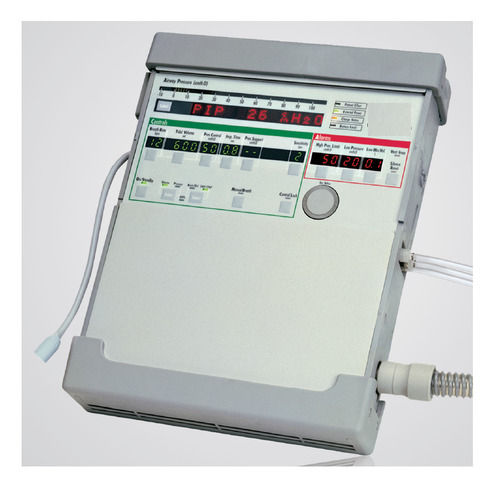
A transport ventilator is a portable, battery-powered mechanical ventilator designed to provide continuous respiratory support to critically ill patients who must be moved within a healthcare facility (e.g., from the emergency room to the ICU) or between facilities (e.g., from a clinic to a tertiary hospital, via ambulance or air transport). Unlike bulky ICU ventilators, these devices are compact, rugged, and engineered for use in dynamic, often challenging environments where space is limited and power sources may be unreliable. Their primary function is to ensure the stability of a patient’s ventilation and oxygenation during transit, bridging a critical care gap.
How it Works
At its core, a transport ventilator works by delivering a controlled mix of oxygen and air to a patient’s lungs through an endotracheal or tracheostomy tube. It operates on the principle of positive pressure ventilation: it pushes breathable gas into the lungs during inspiration and then allows passive exhalation. Modern transport ventilators are typically microprocessor-controlled pneumatic systems. The user sets key parameters (like respiratory rate and tidal volume), and the device’s internal computer and valves precisely regulate gas flow and pressure to achieve these settings, adapting to minor changes in patient effort or circuit compliance.
Key Components
- Control Unit/User Interface: The brain of the device, featuring a display screen and control knobs or buttons for setting parameters and monitoring.
- Pneumatic System: Includes internal compressors, pressure regulators, solenoid valves, and oxygen blenders that generate and control the gas flow.
- Battery: A rechargeable, high-capacity battery that provides power independence, typically offering several hours of operation.
- Gas Inlets: Ports for connecting to high-pressure oxygen cylinders and/or hospital air sources.
- Patient Circuit: The set of tubing that connects the ventilator to the patient’s airway, including an exhalation valve.
- Integrated Monitoring & Alarms: Sensors for measuring pressure, volume, and oxygen concentration, linked to visual and audible alarm systems for safety.
- Ruggedized Case: A durable, often impact-resistant housing designed to withstand the rigors of transport.
2. Uses
Clinical Applications
Transport ventilators are used for any patient requiring invasive or non-invasive ventilatory support during movement. Key applications include:
- Intra-Hospital Transport: Moving patients between departments (e.g., ER to CT scan, OR to ICU).
- Inter-Hospital Transport: Critical care ambulance or helicopter transfers for trauma, neonatal, or cardiac patients.
- Disaster & Mass Casualty Response: Deploying in field settings or overwhelmed emergency departments.
- Procedural Sedation: Providing ventilation support in radiology, endoscopy, or catheterization labs.
- Temporary Backup: Serving as a short-term backup during ICU ventilator maintenance or failure.
Who Uses It
- Paramedics & Critical Care Transport Teams
- Respiratory Therapists
- Emergency Medicine Physicians & Nurses
- Anesthesiologists
- ICU Nurses and Physicians
Departments/Settings
- Emergency Medical Services (EMS) & Air Medical Services
- Hospital Emergency Departments (ED)
- Intensive Care Units (ICU)
- Operating Rooms (OR) and Post-Anesthesia Care Units (PACU)
- Radiology and Interventional Suites
- Mobile Field Hospitals and Disaster Response Units
3. Technical Specifications
Typical Specifications
- Weight: 5 – 15 lbs (2.3 – 6.8 kg)
- Dimensions: Varies, often similar to a large laptop or briefcase.
- Battery Life: 3 – 12 hours on internal battery.
- Modes: Volume Control (VCV), Pressure Control (PCV), Pressure Support (PS), Synchronized Intermittent Mandatory Ventilation (SIMV), often CPAP.
- Parameter Range:
- Respiratory Rate: 1 – 60 bpm
- Tidal Volume: 50 – 2000 mL
- PEEP: 0 – 20 cm H₂O
- FiO₂: 21% – 100%
- Gas Consumption: Optimized for efficiency from internal compressors or external cylinders.
Variants & Sizes
Variants range from ultra-compact, basic models for short EMS calls to sophisticated, multi-parameter devices that function as full-featured ICU ventilators for long-distance critical care transport.
Materials & Features
- Materials: High-impact plastics, anodized aluminum, medical-grade silicone.
- Key Features:
- Internal Compressor: Eliminates need for an external air source.
- Color Touchscreen Interfaces: For intuitive operation.
- Integrated Capnography & Pulse Oximetry: For advanced monitoring.
- Data Logging: Records ventilator and patient parameters.
- IP Rating: Some have ingress protection (e.g., IP44) against dust and water.
Notable Models
- Hamilton-T1 (Hamilton Medical)
- Ventilogic LS / Monnal T60 (Air Liquide Medical Systems)
- Medumat Transport & Oxylog® 3000 plus (WEINMANN)
- LTV® 1200 (Vyaire Medical)
- ReVel™ (Phillips Respironics)
- Elisee™ 350 (ResMed)
- Triton® (Dräger)
- iVENT®201 (GE Healthcare)
4. Benefits & Risks
Advantages
- Portability & Independence: Enables safe patient movement without interrupting life support.
- Robustness: Built to withstand vibrations, temperature changes, and physical shocks.
- Safety: Advanced alarm systems protect against disconnection, high pressure, and apnea.
- Versatility: Capable of ventilating a wide range of patients, from neonates to adults.
- Improved Outcomes: Reduces risks associated with manual ventilation (e.g., barotrauma, hyperventilation) during transport.
Limitations
- Limited Advanced Modes: May lack some sophisticated modes found in ICU ventilators (e.g., Neurally Adjusted Ventilatory Assist – NAVA, advanced weaning protocols).
- Screen Visibility: Can be difficult to read in bright sunlight.
- Battery Dependency: Requires diligent charging protocols to ensure readiness.
Safety Concerns & Warnings
- Always have a manual resuscitation bag (Ambu bag) as an immediate backup.
- Pre-transport check: Verify battery charge, alarm function, and circuit integrity.
- Secure the device properly to prevent it from becoming a projectile during vehicle movement.
- Monitor gas cylinder levels continuously during transport.
Contraindications
There are no absolute contraindications for a device that provides life support. However, a transport ventilator may be relatively contraindicated if:
- A patient requires highly specialized ventilator modes only available on an ICU ventilator (unless the transport model is equipped with them).
- The device is not configured for a specific patient population (e.g., lacking neonatal capabilities for a preterm infant). The clinician must ensure the device is appropriate for the patient’s needs.
5. Regulation
Transport ventilators are classified as moderate to high-risk life-supporting devices globally.
- FDA Class: Class II (Special Controls). Requires 510(k) premarket notification.
- EU MDR Class: Class IIb (for devices intended for vital physiological process support for a duration > 60 min).
- CDSCO Category (India): Class C (Moderate to High Risk).
- PMDA (Japan): Classified as “Management Medical Devices” of Class III (High Risk).
- ISO/IEC Standards:
- ISO 80601-2-12: The core international standard for critical care ventilators, now including requirements for transport ventilators.
- ISO 10651-3: Previously the main standard for emergency and transport ventilators, now largely superseded by the 80601 series.
- IEC 60601-1: General standard for the safety and essential performance of medical electrical equipment.
6. Maintenance
Cleaning & Sterilization
- Exterior: Wipe with a soft cloth dampened with mild detergent or manufacturer-approved disinfectant (e.g., 70% isopropanol). Avoid flooding the controls or ports.
- Patient Circuit: Single-use only. Discard after each patient. Do not sterilize and reuse.
- Air Intake Filters: Replace periodically as per the manufacturer’s schedule.
Reprocessing
The main device itself is not sterilized. Only the external surfaces are disinfected. All parts contacting the patient’s airway (circuit, filters) are disposable.
Calibration
Modern devices perform automatic self-tests (e.g., “Pre-use Check” or “POST”). Formal calibration of pressure and volume sensors should be performed by authorized service personnel at intervals specified by the manufacturer (e.g., annually).
Storage
- Store in a clean, dry, temperature-controlled environment.
- Store with battery charged to 50-80% if not in use for extended periods.
- Keep all connectors and ports protected with covers.
7. Procurement Guide
How to Select the Device
- Define Your Primary Use Case: Is it for in-hospital code teams, long-distance air transport, or EMS first response? Needs differ drastically.
- Assess Required Features: List mandatory modes (e.g., PCV, NIV), monitoring needs (capnography?), and patient population (adult/pediatric/neonatal).
- Evaluate Durability & Form Factor: Consider size, weight, and the IP rating needed for your environment.
Quality Factors
- Alarm Reliability: The most critical safety feature.
- Battery Performance: Actual run-time under typical use, not just lab specs.
- Ease of Use: Can a clinician operate it under stress with gloves on?
- Service & Support: Manufacturer’s local service network and mean repair time.
Certifications
Ensure the device carries the relevant regulatory marks for your region: FDA Clearance, CE Mark (under MDR), BIS (India), etc.
Compatibility
- Verify compatibility with your existing oxygen cylinders (pin-index vs. Diameter Index Safety System – DISS).
- Check if it can integrate with your hospital’s monitor networks for data transfer.
Typical Pricing Range
Wide range based on capabilities: $15,000 to $40,000 USD.
8. Top 10 Manufacturers (Worldwide)
- Hamilton Medical (Switzerland): Leader in intelligent ventilation; flagship transport model: Hamilton-T1.
- Dräger (Germany): Renowned for durability; models: Oxylog® series, Savina® 300.
- Getinge (Maquet) (Sweden): Trusted in critical care; models: Servo-u (with transport capabilities).
- Vyaire Medical (USA): Focus on respiratory care; key model: LTV® series.
- Philips Respironics (Netherlands/USA): Major player; model: ReVel™.
- Air Liquide Medical Systems (France): Strong in emergency care; models: Ventilogic LS, Monnal T60.
- ResMed (USA/Australia): Innovator in sleep/critical care; model: Elisee™ 350.
- WEINMANN Emergency Medical Technology (Germany): Specialist in emergency medicine; models: Medumat Transport, Oxylog 3000 plus.
- GE Healthcare (USA): Broad medical portfolio; model: iVENT®201.
- Zoll Medical (A Division of Asahi Kasei) (USA): Leader in emergency devices; model: Z Vent®.
9. Top 10 Exporting Countries (Latest Year)
(Based on 2022/2023 trade data for HS code 901920 – Breathing appliances & ventilators)
- United States: Dominant exporter with high-value, technologically advanced devices.
- Germany: Renowned for engineering quality, a major source for EU and global markets.
- Switzerland: Home to leading manufacturers, exports high-end critical care transport ventilators.
- China: Rapidly growing exporter, offering a wide range from low-cost to mid-tier devices.
- Ireland: A key manufacturing hub for many multinational medtech companies.
- Singapore: Major re-exporter and manufacturing center for the APAC region.
- France: Significant exporter, particularly in emergency and transport medical equipment.
- Netherlands: Central logistics and distribution hub for Europe.
- United Kingdom: Maintains strong export market post-Brexit with specialized manufacturers.
- Italy: Strong domestic manufacturing base for medical devices, including ventilators.
10. Market Trends
- Current Global Trends: Increased demand due to pandemic-preparedness focus. Integration of telemedicine capabilities for remote expert oversight during transport.
- New Technologies: Advanced battery tech (lithium-polymer) for longer life. Artificial Intelligence (AI) for simplified setup and adaptive ventilation. Lighter, stronger materials like carbon fiber composites.
- Demand Drivers: Aging population, growth of specialized critical care transport networks, rising incidence of respiratory diseases, and stringent regulations mandating mechanical over manual ventilation during transfers.
- Future Insights: Expect further miniaturization and smart connectivity. Devices will become more intuitive, potentially automating more aspects of care to reduce clinician cognitive load in chaotic transport environments.
11. Training
Required Competency
Operators must be proficient in:
- Basic and advanced airway management.
- Understanding of ventilation modes and parameters.
- Performing pre-use checks and troubleshooting alarms.
- Emergency procedures (e.g., switching to manual ventilation).
Common User Errors
- Failure to Perform Pre-Transport Check: Leading to dead battery or faulty circuit.
- Incorrect Mode/Parameter Selection: e.g., using adult settings on a pediatric patient.
- Alarm Fatigue/Disregard: Silencing alarms without addressing the root cause.
- Inadequate Patient Monitoring: Over-reliance on the ventilator screen instead of direct patient assessment.
Best-Practice Tips
- Use Checklists: For setup, patient connection, and pre-transport.
- Know Your Backup: Be faster with the Ambu bag than you are at troubleshooting the ventilator.
- Treat the Patient, Not the Numbers: If the patient looks distressed but the ventilator reads “normal,” assess the patient first.
- Secure Everything: The patient, the ventilator, the tubes, and the gas cylinders.
12. FAQs
- Q: Can a transport ventilator be used as a permanent ICU ventilator?
- A: While many modern transport ventilators have ICU-grade capabilities, they are designed and tested for portability. For long-term, indefinite use, a dedicated ICU ventilator is recommended due to its service life, comprehensive humidification options, and full suite of advanced modes.
- Q: How long does the battery really last?
- A: It depends on settings. High pressures, rates, and FiO₂ (using the internal compressor/blender heavily) drain the battery faster. Always assume half the stated maximum life for safety and carry a spare, charged battery.
- Q: Do I need an oxygen cylinder AND an air cylinder?
- A: Not if the ventilator has an internal compressor. It can use room air, mixing it with oxygen from a single oxygen cylinder. This is a key feature that reduces weight and complexity.
- Q: What is the single most important thing to check before moving a patient?
- A: That the ventilator is adequately securing the patient’s ventilation. Confirm chest rise, listen for breath sounds, monitor SpO₂ and EtCO₂, and ensure the circuit is securely connected.
- Q: Can I use it for non-invasive ventilation (NIV)?
- A: Many, but not all, transport ventilators have a dedicated NIV mode or mask setting. Crucially, you must use a circuit with a whisper valve or vented mask designed for NIV to prevent CO₂ rebreathing.
- Q: What should I do if a critical alarm sounds during transport?
- A: Follow the DOPE mnemonic: Check for Displacement of tube, Obstruction, Pneumothorax, and Equipment failure. Immediately switch to a manual resuscitation bag while your partner troubleshoots.
- Q: How often does it need servicing?
- A: Follow the manufacturer’s preventive maintenance schedule, typically an annual inspection and calibration by an authorized technician, in addition to daily user checks.
- Q: Are transport ventilators waterproof?
- A: Most are splash-resistant but not waterproof. Check the Ingress Protection (IP) rating. They should not be submerged or exposed to heavy rain.
13. Conclusion
Transport ventilators are indispensable tools in the chain of survival for critically ill patients requiring movement. They represent a sophisticated balance of portability, durability, and clinical performance. Success with these devices hinges on three pillars: selecting the right device for your mission, committing to rigorous user training and maintenance, and never forgetting that the device is an aid to—not a replacement for—skilled clinical judgment. By understanding their operation, capabilities, and limitations, healthcare teams can ensure seamless, safe respiratory support for every patient, in every setting, from the hallway to the highway.
14. References
- International Organization for Standardization. (2019). ISO 80601-2-12:2020 Medical electrical equipment — Part 2-12: Particular requirements for basic safety and essential performance of critical care ventilators.
- U.S. Food and Drug Administration. (2020). Ventilator Supply Mitigation Strategies.
- Warren, J., Fromm, R. E., Orr, R. A., et al. (2004). “Guidelines for the inter- and intrahospital transport of critically ill patients.” Critical Care Medicine.
- Respiratory Care Journal. Various peer-reviewed articles on transport ventilation.
- Manufacturer Technical Manuals & User Guides (Hamilton-T1, Dräger Oxylog 3000 plus, Vyaire LTV 1200).
- Global Trade Atlas / UN Comtrade Database (2023-2024 data for HS 901920).
- European Commission. (2017). Regulation (EU) 2017/745 on medical devices (MDR).