1. Definition
What is a Fowler Bed (Mechanical)?
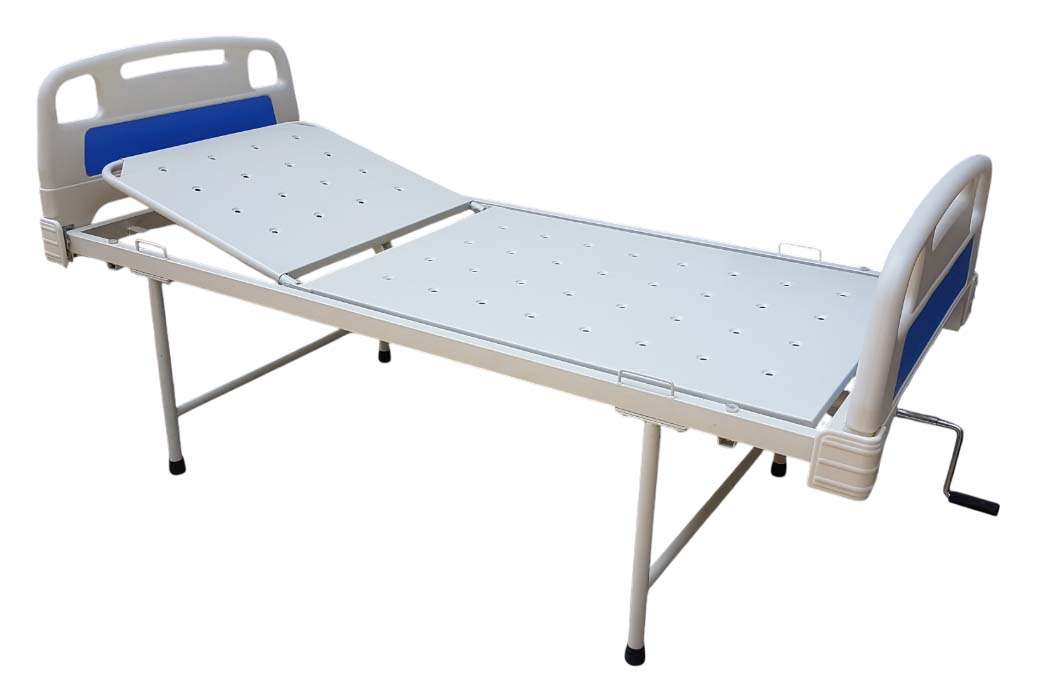
A Fowler bed, specifically a mechanical (or manual) Fowler bed, is a fundamental piece of patient care equipment found in healthcare facilities worldwide. At its core, it is a hospital bed whose backrest (head section) can be elevated to various angles, and often whose knee section can be simultaneously lowered. This ability to “Fowler” a patient—to place them in a semi-sitting position—is its defining feature. The “mechanical” designation means the adjustments are performed manually using hand cranks, levers, or pins, rather than by an electric motor. Its primary function is to enhance patient comfort, facilitate various therapeutic positions, and aid in clinical procedures, all through simple, reliable mechanical action.
How it Works
The working principle of a mechanical Fowler bed is based on leverage and gear systems. When a caregiver turns a crank handle located at the foot of the bed, it rotates a long, threaded rod (a lead screw) that runs the length of the bed frame. This rotation engages with a nut or gear mechanism connected to the head-section frame, causing it to pivot upward. A similar, often linked, crank system controls the knee section. Pulling pins or levers allows for the adjustment of the bed height and headboard/footboard. All functions are directly controlled by the physical effort of the operator, requiring no electrical power.
Key Components
- Main Frame: The rigid, rectangular steel structure that forms the bed’s foundation.
- Backrest (Head Section): The upper portion of the mattress platform that elevates to create the Fowler position.
- Seat Section: The fixed central part of the mattress platform.
- Knee Gatch (Knee Section): The lower portion of the platform that bends downward, preventing the patient from sliding and improving circulation.
- Crank Handles: Manual handles, typically at the foot end, used to raise/lower the head and knee sections.
- Central Brake & Casters: Locking wheels that allow for bed movement and secure positioning.
- Height Adjustment Mechanism: A hand-pump lever or release handle that changes the bed’s overall height from the floor.
- Side Rails (Manual): Barriers that can be manually raised or lowered to assist with patient safety and mobility.
- Headboard & Footboard: Removable panels at either end.
- Mattress: A specialized hospital-grade mattress, often with a waterproof cover.
2. Uses
Clinical Applications
- Respiratory Support: The semi-Fowler (45°) and High-Fowler (90°) positions are critical for patients with respiratory difficulties (e.g., COPD, pneumonia) as gravity helps lung expansion and eases breathing.
- Cardiac Care: Reduces cardiac workload and is used for patients with heart failure.
- Post-operative Recovery: Facilitates recovery from abdominal, thoracic, or spinal surgery by reducing tension on incisions and internal organs.
- Feeding & Digestion: The upright position is essential for safe oral feeding and can aid in managing gastroesophageal reflux.
- Patient Comfort & Interaction: Allows bedridden patients to read, watch TV, and interact with visitors more easily, improving psychological well-being.
- Prevention of Complications: Helps prevent aspiration, ventilator-associated pneumonia, and pressure ulcers by allowing regular positional changes.
- Drainage: Assists in the drainage of various body cavities (e.g., post-operative).
Who Uses It
- Nurses & Nursing Assistants: Primary users for daily patient positioning and care.
- Physiotherapists: Use positions to aid in respiratory therapy and mobility exercises.
- Doctors: Specify Fowler positioning as part of treatment orders.
- Patient Care Technicians & Caregivers: In both hospital and long-term care settings.
Departments/Settings
- General Medical & Surgical Wards
- Long-Term Care Facilities & Nursing Homes
- Rehabilitation Centers
- Hospice & Palliative Care Units
- Lower-acuity areas of hospitals where cost and reliability are prioritized over automation.
3. Technical Specs
Typical Specifications
- Overall Dimensions (LxW): Approx. 88″ x 36″ (224 cm x 91 cm).
- Mattress Size: Typically 80″ x 36″ (203 cm x 91 cm).
- Height Range (floor to mattress): Adjustable from ~20″ (low position) to ~32″ (high position).
- Backrest Angle: 0° (flat) to at least 70°-80°.
- Knee Gatch Angle: 0° to ~30°.
- Weight Capacity: Typically 350-450 lbs (160-200 kg).
Variants & Sizes
- Bariatric Models: Heavier-duty frames with wider profiles (42″ or more) and higher weight capacities (600-1000 lbs).
- Low Bed Variants: Can lower exceptionally close to the floor for fall prevention.
- Pediatric Fowler Beds: Smaller dimensions for child patients.
Materials & Features
- Materials: Frame is made of painted or epoxy-coated carbon steel. Panels are often ABS plastic or powder-coated steel.
- Features: May include IV pole holders, catheter bag hooks, built-in scale systems (in more advanced manual beds), and multi-position lockable side rails.
Notable Models
While model names vary by manufacturer, common series include Hill-Rom’s Manual BasicCare, Stryker’s Manual series, ArjoHuntleigh’s Manual beds, and Gendron’s Manual Care beds.
4. Benefits & Risks
Advantages
- Cost-Effective: Significantly lower purchase and maintenance cost than electric beds.
- Reliability & Durability: Fewer complex parts mean less that can break; long service life.
- No Power Dependency: Usable during power outages and in resource-limited settings.
- Simplicity: Easy to operate with minimal training; no confusing control panels.
- Safety: Eliminates risk of accidental activation by patient or entanglement in cords.
Limitations
- Caregiver Effort: Requires physical strength to operate, posing ergonomic strain risks.
- Slower Adjustment: Not ideal for situations requiring rapid positional changes.
- Limited Patient Independence: Patients cannot adjust the bed themselves.
- Basic Functionality: Lacks advanced features like continuous lateral rotation or built-in mattress therapies.
Safety Concerns & Warnings
- Pinch Points: Fingers/hands can be caught in hinge mechanisms during cranking.
- Crank Handle Protrusion: Can be a trip hazard or cause injury if left engaged.
- Improper Locking: Failure to engage brakes or lock side rails can lead to bed movement or patient falls.
- Weight Limit Exceedance: Can damage the frame and mechanism, creating a collapse hazard.
Contraindications
There are no direct medical contraindications for the bed itself, but its manual operation is contraindicated in settings where:
- Patients require frequent, precise positioning changes (e.g., critical spinal injury).
- Caregivers have a high risk of musculoskeletal injury.
- The patient is fully dependent and requires automated pressure relief or turning.
5. Regulation
Mechanical Fowler beds are generally considered low-to-moderate risk devices.
- FDA Class: Class I (exempt from premarket notification [510(k)] in most cases, but subject to general controls).
- EU MDR Class: Class I (may be up-classified to Class IIa if intended for long-term use or specific vulnerable populations).
- CDSCO Category (India): Class B.
- PMDA (Japan): Regulated as a general medical device.
- ISO/IEC Standards:
- ISO 10535: Hoists for the transfer of disabled persons – Requirements and test methods. (Relevant for compatibility).
- IEC 60601-1: Medical electrical equipment – Part 1: General requirements for basic safety and essential performance. (For beds with any electrical accessories like scales).
- ISO 13485: Quality management systems for medical device manufacturers.
6. Maintenance
Cleaning & Sterilization
- Daily/Discharge Cleaning: Wipe down entire frame, side rails, and panels with a hospital-grade disinfectant cleaner. Use a mild detergent for the mattress, following manufacturer’s instructions.
- Sterilization: Not required for the bed itself. Removable plastic components can often be cleaned with disinfectants. The mattress cover is typically liquid-resistant but not sterile.
Reprocessing
Between patients, a full terminal clean is required. This includes disassembling removable parts (head/footboards, side rails), cleaning all surfaces, and inspecting for damage or soiling.
Calibration
Mechanical beds do not require electronic calibration. However, regular checks of brake function, crank smoothness, and lock integrity are essential.
Storage
Store in a clean, dry area. Ensure cranks are folded in and brakes are locked. Avoid stacking or placing heavy items on the bed frame. No specific temperature requirements.
7. Procurement Guide
How to Select the Device
Consider: Patient population (bariatric, pediatric, geriatric), intended department (med-surg vs. long-term care), caregiver strength, budget constraints, and required features (IV poles, scale compatibility).
Quality Factors
- Stability: No wobble or flex when raised to maximum height with weight on it.
- Smooth Operation: Cranks should turn with consistent, manageable effort.
- Durable Finish: Scratch and stain-resistant coating.
- Robust Casters & Brakes: Wheels should roll and lock securely.
Certifications
Look for CE Marking (EU), FDA Establishment Registration, and evidence of ISO 13485 certification from the manufacturer.
Compatibility
Ensure compatibility with existing mattresses, patient lifts, and bed scales in your facility. Verify the bed fits in standard patient rooms and through doorways.
Typical Pricing Range
$800 – $2,500 USD per bed, depending on features, materials, and manufacturer. Bariatric models are at the higher end.
8. Top 10 Manufacturers (Worldwide)
- Hill-Rom (Baxter) (USA): Global leader in patient support systems. Known for reliability and clinical insight. Series: Manual BasicCare.
- Stryker (USA): Major player in medical tech. Beds are known for innovative designs and caregiver safety features. Series: Manual.
- Arjo (Sweden): Specializes in patient handling and mobility. Beds focus on hygiene and caregiver ergonomics.
- Invacare (USA): Leading manufacturer of home and long-term care medical equipment, offering cost-effective manual beds.
- Drive DeVilbiss Healthcare (USA): Provides a wide range of durable medical equipment, including value-oriented manual beds for various settings.
- Gendron (USA): Part of Savaria Corporation, specializes in bariatric and heavy-duty patient care equipment.
- LINET (Czech Republic): European innovator with sleek designs and focus on patient and nurse comfort.
- Joerns Healthcare (USA): Offers a range of manual beds, often with a focus on pressure injury prevention features.
- PROMA REHA (Poland): A significant European manufacturer supplying a wide range of hospital furniture, including manual beds.
- Medline Industries (USA): A massive healthcare supplier offering robust, no-frills manual beds as part of its extensive portfolio.
9. Top 10 Exporting Countries (Latest Year – Based on HS Code 9402* trends)
Note: Specific data for “mechanical Fowler beds” is aggregated under broader hospital bed codes.
- China: The world’s manufacturing hub, dominating in volume and value for cost-effective models.
- Germany: High-quality, precision-engineered beds, a leader in the EU market.
- United States: Major exporter of high-end and specialized (e.g., bariatric) manual beds.
- Italy: Known for design-oriented medical furniture and strong EU presence.
- Poland: A growing, cost-competitive manufacturing center within the EU.
- Mexico: Key exporter to the North American market under trade agreements.
- Czech Republic: Home to LINET, a significant exporter of quality beds across Europe and beyond.
- France: Exports both domestic brands and acts as a distribution hub.
- United Kingdom: Maintains export markets for its specialized bed manufacturers.
- Canada: Exports niche products and serves as a regional hub.
10. Market Trends
- Current Global Trends: A shift towards value-based procurement. While electric beds grow in acute care, mechanical beds remain strong in long-term care, emerging markets, and cost-conscious health systems due to their durability and lower TCO (Total Cost of Ownership).
- New Technologies: Integration of basic add-on modules like non-powered low-air-loss mattresses or manual lateral turning features.
- Demand Drivers: Aging global population, expansion of healthcare infrastructure in developing nations, and the need for reliable equipment in home-care settings.
- Future Insights: The mechanical Fowler bed will not become obsolete. Its future lies in improved ergonomics (easier cranking), lighter but stronger materials (advanced composites), and hybrid designs that allow for optional motorization upgrades.
11. Training
Required Competency
Caregivers must be able to safely operate all manual functions (height, head, knee, brakes, rails), understand indications for Fowler positioning, and perform basic safety checks.
Common User Errors
- Leaving Cranks Engaged: A major trip hazard. Always fold cranks in after use.
- Not Locking Brakes: Before any transfer or adjustment.
- Overloading: Ignoring weight capacity limits.
- Improper Body Mechanics: Bending at the waist to crank; should use leg strength and stand close to the bed.
- Failing to Communicate: Not telling the patient before adjusting the bed.
Best-Practice Tips
- Sequence Matters: Adjust bed height to a safe working level first, then adjust head/knee sections.
- Use the Gatch: Always lower the knee section slightly when raising the head to prevent patient slide.
- Daily Check: Perform a quick functional test of brakes, cranks, and side rail locks at the start of each shift.
- Patient Involvement: Explain what you are doing and encourage the patient to assist if possible.
12. FAQs
- What’s the difference between Semi-Fowler’s and High-Fowler’s position?
- Semi-Fowler’s: Head of bed elevated 30-45 degrees. Used for eating, mild breathing difficulties.
- High-Fowler’s: Head of bed elevated 60-90 degrees (sitting upright). Used for severe respiratory distress, feeding tubes, or patient interaction.
- Can a patient operate a mechanical Fowler bed themselves?
- Generally, no. It requires significant strength and mobility to reach and turn the cranks. It is designed for caregiver operation.
- How often does a mechanical bed need servicing?
- With proper use, it may only need annual preventive maintenance. However, inspect it monthly for loose parts, stiff cranks, or brake issues.
- Is it okay to use any mattress on a mechanical bed frame?
- No. Use only hospital-grade mattresses designed for the specific bed size and intended use (e.g., pressure relief). An ill-fitting mattress can be a safety hazard.
- What do I do if the crank becomes very hard to turn?
- Stop immediately. Do not force it. The mechanism may be jammed or damaged. Report it for maintenance.
- Can the side rails be used as restraints?
- No. Side rails are safety devices to aid in mobility and prevent accidental falls. Their use as restraints is legally and ethically regulated and requires a specific doctor’s order and care plan.
- How do I move a patient in a mechanical bed?
- Always lock the brakes first. Use proper transfer techniques (draw sheet, transfer board, patient lift) and never push or pull on the side rails or bed parts for leverage.
- Are mechanical beds being phased out by electric ones?
- Not entirely. They remain the workhorse in non-acute and resource-aware settings due to their unmatched reliability and low cost.
13. Conclusion
The mechanical Fowler bed is a testament to enduring, functional design in healthcare. While technology advances with electric and smart beds, the manual Fowler bed continues to be an indispensable tool, offering a reliable, cost-effective, and safe solution for fundamental patient positioning needs across the globe. Its value lies in its simplicity, durability, and direct connection between caregiver action and patient comfort. Understanding its proper operation, maintenance, and appropriate applications is essential for any healthcare provider working in general patient care settings. By selecting the right bed, maintaining it well, and using it correctly, facilities can ensure decades of service while promoting optimal patient outcomes and caregiver safety.
14. References
- U.S. Food and Drug Administration (FDA). Classify Your Medical Device.
- European Commission. Medical Device Regulation (MDR) 2017/745.
- International Organization for Standardization (ISO). ISO 10535:2006 Hoists for the transfer of disabled persons.
- Potter, P. A., Perry, A. G., Stockert, P., & Hall, A. (2021). Fundamentals of Nursing (10th ed.). Elsevier.
- Global Market Insights. Hospital Beds Market Report. 2023.
- World Health Organization (WHO). Technical specifications for hospital beds.
- Manufacturer technical manuals from Hill-Rom, Stryker, and Arjo.