1. Definition
What is a Medical Central Vacuum System?
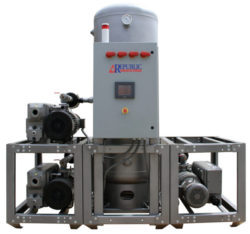
A Medical Central Vacuum System (MCVS), often called a hospital vacuum or surgical suction system, is a facility-wide, piped network that provides continuous, reliable negative pressure (vacuum) from multiple outlet stations throughout a healthcare facility. It is a critical utility, as essential as medical gases (oxygen, nitrous oxide) and electrical power. Its primary function is to remove fluids—such as blood, saliva, irrigation fluids, and other biological secretions—during surgical procedures, trauma care, and patient drainage, ensuring a clear operative field and aiding in patient airway management.
How it Works
The system operates on a simple but robust principle:
- Central Source: One or more high-capacity vacuum pumps (typically located in a plant room or basement) generate negative pressure by creating a pressure differential.
- Piped Network: This negative pressure is distributed through a dedicated, color-coded (often yellow) piping system that runs within the walls and ceilings of the facility.
- Inlets/Outlets: The network terminates at strategically placed vacuum inlets (outlets) in walls, columns, or ceiling pendants in rooms like Operating Theatres (OTs), ICUs, and wards.
- Point of Use: Healthcare staff connect disposable or reusable suction tubing and collection canisters to these inlets. When the suction valve at the inlet is opened, the generated vacuum draws fluids from the patient site, through the tubing, into a sealed collection canister where fluids are safely stored for disposal.
Key Components
- Vacuum Pumps: The heart of the system. Usually rotary vane or dry claw technology pumps, often installed in redundant sets (N+1 or N+2 configuration) for 100% backup.
- Exhaust System: Safely vents the air extracted from the facility, which may contain aerosols, odors, and microorganisms, through high-efficiency bacterial/viral filters and often a thermal oxidizer.
- Piping Network: A dedicated, medical-grade copper or stainless steel piping system with sloped lines for drainage of condensates.
- Inlet Valves (Outlets): The access points in clinical areas. They feature self-sealing, quick-connect valves that prevent contamination of the piping when not in use.
- Control Panel & Alarm System: A sophisticated control system monitors pump operation, vacuum levels, and system status. It provides visual and audible alarms for faults like loss of vacuum, pump failure, or full collection canister.
- Receivers/Accumulator Tanks: Buffer tanks that help maintain stable vacuum pressure and reduce pump cycling.
- Liquid Collection Canisters: Disposable or reusable canisters placed at the point of use (e.g., surgical suction, bedside) to collect fluids. They incorporate safety overflow valves and filters to protect the pipeline.
- Vacuum Regulators: Allow users to adjust the suction strength (negative pressure) at the point of use for different applications.
2. Uses
Clinical Applications
- Surgical Suction: Evacuating blood, irrigation fluids, and debris from the surgical site to maintain visibility.
- Airway Management: Clearing secretions from the mouth, throat, and endotracheal tube during anesthesia and in ICU patients on ventilators.
- Wound Drainage: Removing exudate from surgical wounds via closed suction drains (e.g., Jackson-Pratt drains).
- Labor and Delivery: Removing amniotic fluid and other fluids during childbirth.
- Gastrointestinal Suction: Decompressing the stomach or bowel (e.g., nasogastric suction).
- Thoracic Drainage: Evacuating air, blood, or fluid from the pleural cavity (though often connected to specialized underwater seal drains first).
- Emergency & Trauma: Rapid clearance of airways and wound sites.
- Dental Suction: In hospital dental departments.
Who Uses It
- Surgeons and Surgical Assistants
- Anesthesiologists and Nurse Anesthetists
- Critical Care and ICU Nurses
- Emergency Room Physicians and Nurses
- Respiratory Therapists
- Labor & Delivery Staff
- Ward Nurses
Departments/Settings
- Primary: Operating Theatres (all types), Intensive Care Units (ICUs), Emergency Rooms (ER), Labor & Delivery Suites.
- Secondary: Inpatient Wards, Procedure Rooms (Endoscopy, Cath Lab), Recovery Rooms (PACU), Burn Units, Oncology Departments, Dental Suites.
- Settings: Large hospitals (primary, tertiary care), multi-specialty clinics, ambulatory surgery centers (ASCs), trauma centers.
3. Technical Specifications
Typical Specifications
- Vacuum Level: Typically adjustable, with a system capability of -400 to -600 mmHg (-53 to -80 kPa). Surgical suction often requires -400 to -500 mmHg, while general ward suction is lower.
- Flow Rate: Measured in liters per minute (LPM) or cubic feet per minute (CFM). Systems are designed for simultaneous use. A single outlet may need 40-60 LPM, but the central pump must support the aggregate demand of many outlets (e.g., 1000+ LPM for a mid-sized hospital).
- Number of Inlets: Defined by facility design, from a few dozen in a clinic to thousands in a large hospital.
- Power Supply: High-voltage three-phase supply for pumps, with backup power (UPS/Generator) essential.
- Alarms: Mandatory for “Low Vacuum,” “Pump Failure,” “Maintenance Due,” and “Filter Blockage.”
Variants & Sizes
- By Pump Technology: Oil-Lubricated Rotary Vane (traditional, robust), Dry Claw/Dry Vane (oil-free, lower maintenance, increasingly popular), Liquid Ring Pumps (for specific applications).
- By Size/Scale: Compact systems for ASCs/small clinics (2-3 pumps). Modular, expandable systems for mid-sized hospitals. Large, custom-engineered plants for major medical campuses.
- By Redundancy: N+1 (one backup pump), N+2 (two backup pumps) configurations for critical care facilities.
Materials & Features
- Piping: Type L or K Copper (most common), Stainless Steel (for corrosion resistance or specific codes), or specialized medical-grade plastics in some regions.
- Features:
- Variable Frequency Drives (VFDs): For pumps to adjust speed based on demand, saving significant energy.
- Heatless Exhaust Systems: Use advanced filtration instead of thermal oxidizers, reducing energy consumption.
- Remote Monitoring: IoT-enabled systems for cloud-based monitoring of performance and predictive maintenance.
- Silenced Enclosures: Acoustic hoods to reduce noise from pump rooms.
Models
- Becker VT/VCS Series (Dry Vacuum Technology)
- Dräger Ceiling Pendants & Interfaces (Point-of-use components)
- PIAB C系列 Vacuum Generators (For specific, decentralized applications)
- Medela Surgical Suction Pumps (Often used in conjunction with or as backup to central systems)
- Atlas Copco Medical Vacuum Systems (GS/DD+ series dry screw pumps)
4. Benefits & Risks
Advantages
- Reliability & Continuity: 24/7 availability with built-in redundancy.
- Quiet & Unobtrusive: Removes noisy portable pumps from the patient bedside and OR.
- Efficiency: Multiple users can operate simultaneously without performance drop (if correctly sized).
- Cost-Effective: Lower long-term operational and maintenance costs compared to numerous portable units.
- Safety: Centralized alarms, filtered exhaust, and reduced electrical equipment in clinical areas.
- Clutter-Free: Eliminates tripping hazards from cords and individual pump units.
Limitations
- High Initial Capital Cost: Requires significant investment in infrastructure.
- Infrastructure Dependency: A failure in the central plant or major piping can affect the entire facility.
- Limited Flexibility: Difficult and expensive to add outlets or expand beyond original design capacity.
- Cross-Contamination Risk: Potential, though extremely low with proper design (sloped pipes, traps, filters).
Safety Concerns & Warnings
- Overflow & Cross-Contamination: The primary risk is liquid or secretions being drawn into the pipeline due to overfilled collection canisters or missing/broken patient line filters. This can clog pipes, damage pumps, and pose a biohazard.
- Inadequate Vacuum: Can compromise patient care during critical procedures.
- Exhaust Contamination: Improperly filtered exhaust can release pathogens.
- Electrical & Mechanical Hazards: In the pump room during maintenance.
Contraindications
The system itself has no patient contraindications. Its use is contraindicated (should not proceed) if:
- The alarm indicates system failure or loss of vacuum.
- The collection canister is full, cracked, or improperly assembled.
- There is visible damage to the inlet valve, tubing, or pipeline.
5. Regulation
FDA Class
Classified as a Class II medical device (under 21 CFR 868.6850 – Medical Gas Cylinder and Alarm System). The components (pumps, alarms) are regulated, and the system installation is governed by facility codes.
EU MDR Class
Falls under Class IIb for active devices intended for direct patient contact for suction of substances. The entire system must comply with Annex VIII of the EU MDR.
CDSCO Category
In India, governed under the Drugs and Cosmetics Rules. Medical gas pipeline systems (including vacuum) are considered “Medical Devices” and fall under Category C (moderate to high risk), requiring a manufacturing license.
PMDA Notes
In Japan, medical vacuum systems are regulated as medical devices. They must comply with the Pharmaceutical and Medical Device Act (PMD Act) and relevant JIS standards (like JIS T 7101 for medical gas pipeline systems).
ISO/IEC Standards
- ISO 7396-1:2016: The primary global standard for Medical Gas Pipeline Systems (MGPS), including vacuum. Covers design, installation, testing, and commissioning.
- ISO 7396-2:2007: For Anaesthetic Gas Scavenging Systems (often related).
- ISO 9170-1: For terminal units (outlets/inlets).
- HTM 02-01 (UK): A key guidance document for design (de facto standard in many regions).
- NFPA 99 (USA): The Critical U.S. standard for Health Care Facilities Code, covering safety provisions.
6. Maintenance
Cleaning & Sterilization
- Central System (Pipes/Pumps): Not sterilized. Protected by filters. Internal condensation is drained automatically.
- Patient Circuit (Tubing, Canisters): Single-use disposable components are the norm. Changed between every patient.
- Inlet Valves: Wiped with hospital-grade disinfectant. Internal mechanism is not routinely cleaned.
Reprocessing
Not applicable for the pipeline. Only reusable collection canisters (less common) require rigorous reprocessing per standard protocols for semi-critical devices.
Calibration
- Vacuum Gauges & Sensors: Calibrated annually as per manufacturer and ISO 7396 guidelines.
- Alarm Systems: Functionality tested daily/weekly as per facility policy.
Storage
- Spare Parts & Filters: Stored in a dry, clean environment per manufacturer instructions.
- Disposable Canisters/Tubing: Stored in their original packaging in a clean supply room.
- System Itself: The pipeline is “always on.” In case of prolonged facility shutdown, systems may be put in a standby mode following manufacturer procedures.
7. Procurement Guide
How to Select the Device
- Demand Analysis: Calculate the peak simultaneous consumption (SCFM/LPM) based on the number and type of outlets, using ISO 7396/NFPA 99 methodologies.
- Redundancy Level: Decide on N+1 or N+2 based on facility criticality.
- Technology Choice: Weigh initial cost vs. long-term maintenance (Dry vs. Oil-Lubricated pumps).
- Control & Monitoring: Prioritize systems with remote monitoring, data logging, and clear alarm management.
Quality Factors
- Compliance: Must meet ISO 7396-1 and local national codes (NFPA 99, HTM).
- Manufacturer Reputation: Longevity, service network, and references.
- Energy Efficiency: Pumps with VFDs and high-efficiency motors.
- Noise Levels: Especially important if pump room is near patient areas.
Certifications
- CE Marking (for EU)
- FDA Listed (for US)
- ISO 13485: Quality Management System certification of the manufacturer is critical.
- Local Regulatory Approvals (e.g., CDSCO, PMDA, TGA).
Compatibility
- Outlet Indexing: Ensure the system’s inlet valves match the existing or planned suction regulators and tubing connectors (e.g., DISS, Schrader, NIST) used in the facility.
- Building Management System (BMS): Ability to integrate alarm outputs into the central nurse call or BMS.
Typical Pricing Range
This is highly facility-size dependent.
- Small Clinic/ASC System: $30,000 – $100,000
- Mid-Sized Hospital (100-300 beds): $250,000 – $750,000+
- Large Hospital/Campus: $1 million – $5+ million
(Includes pumps, piping, inlets, alarms, and installation. Design and commissioning fees are separate.)
8. Top 10 Manufacturers (Worldwide)
- Atlas Copco (Sweden/Belgium): Global leader in industrial compressors and vacuum, with a dedicated medical division known for high-efficiency, oil-free dry screw vacuum systems.
- Becker Pump Corporation (USA/Germany): Specializes in dry vacuum technology (claw and vane), a major player in the medical vacuum market with robust and efficient systems.
- Dräger (Germany): A premier name in medical technology, known for integrated OR solutions, ceiling pendants, and point-of-use components that interface with central systems.
- GE HealthCare (USA): Provides comprehensive medical gas solution offerings, including central vacuum systems, often as part of total hospital infrastructure projects.
- PIAB (Sweden): Innovator in vacuum technology using compressed air-driven multi-ejector pumps (COAX®), offering compact, energy-efficient solutions for decentralized needs.
- Medela (Switzerland): While famous for breast pumps, its healthcare division is a key supplier of surgical suction pumps used as backups or in facilities without central systems.
- Ohio Medical (USA): Manufactures a wide range of medical gas equipment, including central vacuum source systems and components.
- Precision Medical, Inc. (USA): Produces vacuum and oxygen concentrators, with a range of small to mid-sized central vacuum systems.
- Air Techniques International (USA): Focuses on dental and medical vacuum systems, known for reliable and compliant solutions.
- Gardner Denver (USA) (now part of Ingersoll Rand): Provides a range of vacuum pumps that are often engineered into medical central systems by integrators.
9. Top 10 Exporting Countries (Latest Year)
(Based on analysis of HS Code 8414 – Air or vacuum pumps, compressors and fans, with medical subsets)
- Germany: Leading exporter of high-end, precision-engineered pump systems and medical components.
- United States: Major exporter of integrated medical systems and technology.
- Italy: Strong in mechanical engineering, exports high-quality vacuum pumps and components.
- China: Growing exporter of cost-effective components and complete systems, increasing in quality.
- Sweden: Home to key players like Atlas Copco and PIAB, exporting advanced, efficient technology.
- Japan: Exports reliable, high-tech systems, particularly within Asia.
- United Kingdom: Exports specialized systems and components, driven by strong standards (HTM).
- France: Significant player in European and African markets for medical infrastructure.
- Switzerland: Exports high-precision medical equipment, including related vacuum components.
- India: Emerging as a manufacturing and export hub for medical devices and system components, catering to price-sensitive markets.
10. Market Trends
Current Global Trends
- Shift to Oil-Free/Dry Technology: Driven by lower maintenance, reduced environmental impact, and stricter indoor air quality standards.
- Energy Efficiency Mandates: Hospitals are demanding VFD-driven systems and heatless exhausts to reduce operating costs.
- Integrated & Modular Solutions: Pre-fabricated, skid-mounted pump systems for easier installation and scalability.
New Technologies
- IoT & Predictive Maintenance: Sensors monitor pump vibration, temperature, and performance, predicting failures before they occur and minimizing downtime.
- Advanced Filtration: HEPA and ULPA filters in exhaust lines to meet stricter infection control standards.
- Digital Twin Technology: Creating a virtual model of the system for design optimization, staff training, and maintenance planning.
Demand Drivers
- New Hospital Construction: Especially in emerging markets (Asia-Pacific, Middle East).
- Renovation & Upgradation of aging healthcare infrastructure in developed nations.
- Rising Surgical Volumes and expansion of ASCs.
- Increasing Focus on Infection Prevention and Control (IPC).
- Stringent Safety Regulations worldwide.
Future Insights
The MCVS will evolve from a utility to a smart, data-generating asset. Future systems will be fully networked, self-optimizing for energy use, and seamlessly integrated with hospital EPIC/BMS. Sustainability will be key, with a focus on entire lifecycle carbon footprint.
11. Training
Required Competency
- Clinical Staff: Must be trained in point-of-use procedures: correct assembly of canisters and tubing, adjusting vacuum regulators, recognizing alarms, and changing canisters.
- Biomedical/Engineering Staff: Require advanced training on system monitoring, alarm response, and basic troubleshooting.
- Facility Management: Must understand preventive maintenance schedules, redundancy protocols, and emergency procedures.
Common User Errors
- Connecting Tubing to the Wrong Outlet (e.g., oxygen instead of vacuum). Prevention: Color-coding and tactile differentiation.
- Forgetting to Empty or Change Collection Canisters, leading to overflow. Prevention: Visual checks and use of canisters with clear, graduated markings and float valves.
- Opening the Suction Valve Before Connecting to Patient, causing tissue trauma. Prevention: “Connect, then activate” protocols.
- Ignoring or Silencing Alarms. Prevention: Empower staff to report alarms immediately; enforce a no-tolerance policy for silencing without investigation.
Best-Practice Tips
- Daily: Check and document inlet valve function and available vacuum at sample points.
- Pre-Procedure: Always perform a “suction check” by occluding the tubing tip and observing the gauge.
- During Use: Use the lowest effective suction pressure to minimize tissue damage.
- Spill Management: Have a clear protocol for immediate shut-off and cleanup if a canister spills or overflows into the inlet.
12. FAQs
1. What’s the difference between a medical central vacuum and a industrial or domestic vacuum?
Medical systems are engineered for life-critical reliability, with redundant pumps, medical-grade materials, continuous operation, and alarms. They are designed to handle biohazardous fluids safely, with specific filters and exhaust treatment not found in other systems.
2. How often does the system need maintenance?
Pumps require scheduled maintenance per manufacturer (e.g., every 8,000 hours). Filters are changed as indicated by pressure gauges or alarms. Daily and weekly checks of outlets and alarms are done by facility staff.
3. What happens during a power failure?
The system should be on emergency backup power (generator). Redundant pumps will start sequentially to prevent a massive power draw. Clinical areas should have portable suction units as a final backup.
4. Can the system get clogged?
Yes, primarily due to liquid overflow from canisters. Properly sloped pipes with condensate traps and strict user protocol are essential to prevent this. Clogs require specialized pipeline cleaning.
5. Why are the pipes sloped?
To allow condensation and any accidental liquid ingress to drain down to designated points (traps or drains), preventing pool formation that could block airflow or breed bacteria.
6. Is the air exhausted from the system safe?
Yes, when functioning correctly. It passes through high-efficiency bacterial/viral filters (0.01 – 0.2 micron) at the exhaust point, removing pathogens before air is released.
7. How many suction points can be used at once?
*This is determined by the original system design and pump capacity. A correctly sized system should allow for the *calculated peak simultaneous use* of outlets without a significant pressure drop.*
8. Who is responsible for fixing a broken vacuum outlet in an OR?
Clinical staff report it immediately to Biomedical Engineering or Facilities Management. It should be locked out/tagged out and repaired by qualified technicians.
9. Can we add more outlets later?
It is possible but can be expensive and disruptive. It requires a review of the system’s capacity (pump and pipe sizing) to ensure it can handle the increased demand.
10. What does a “Low Vacuum” alarm mean?
It indicates the system pressure is above (less negative than) the set threshold. Causes can include: excessive simultaneous use (overload), a pump failure, a major leak, or a clogged filter. Immediate investigation is required.
13. Conclusion
The Medical Central Vacuum System is an indispensable, life-supporting utility that forms the silent backbone of modern clinical care. From ensuring a clear field in complex surgery to managing a critically ill patient’s airway, its reliable operation is paramount. Understanding its components, stringent regulations, rigorous maintenance needs, and proper point-of-use protocols is essential for all healthcare stakeholders—from planners and engineers to surgeons and nurses. Investing in a well-designed, efficiently run MCVS is not just an infrastructure decision; it is a direct investment in patient safety, clinical efficiency, and positive outcomes.
14. References
- International Organization for Standardization. (2016). ISO 7396-1:2016 Medical gas pipeline systems — Part 1: Pipeline systems for compressed medical gases and vacuum.
- National Fire Protection Association. (2021). NFPA 99: Health Care Facilities Code.
- U.S. Food and Drug Administration. (2022). Code of Federal Regulations Title 21, Sec. 868.6850 Medical Gas Cylinder and Alarm System.
- European Union. (2017). Regulation (EU) 2017/745 on medical devices (MDR).
- UK Department of Health. (2006). Health Technical Memorandum 02-01: Medical gas pipeline systems.
- ECRI Institute. (2023). Healthcare Facility Management Guidance on Medical Gas and Vacuum Systems.
- World Health Organization. (2016). Technical specifications for medical gas pipeline systems.