1. Definition
What is a Bedside Monitor Mount/Boom?
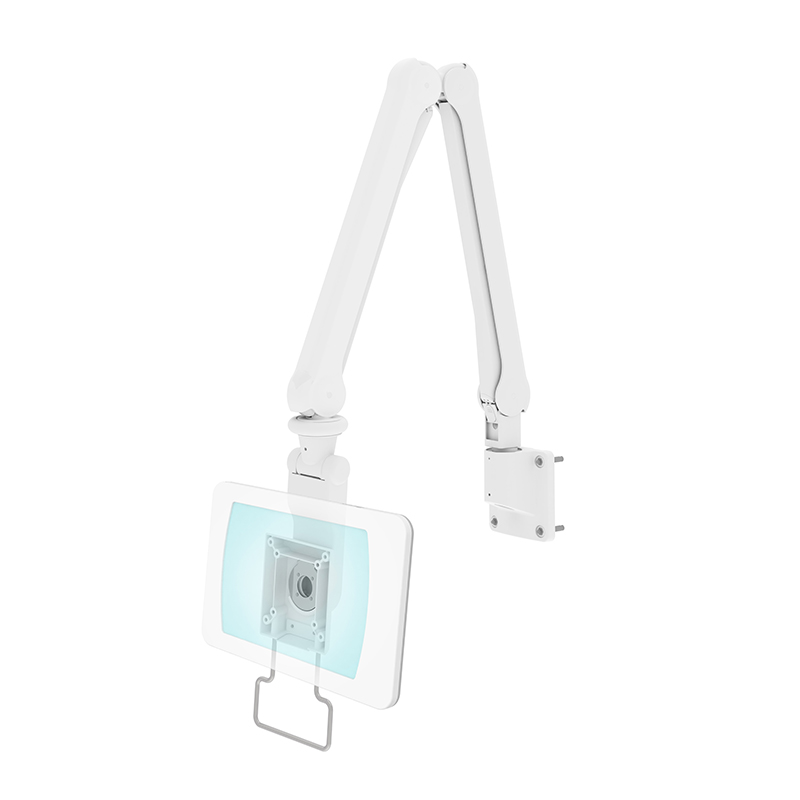
A Bedside Monitor Mount or Boom is a specialized structural support system designed to securely hold and position medical monitoring equipment (such as patient monitors, screens, infusion pumps, and related devices) at the patient’s bedside. Its primary function is to organize critical medical technology, freeing up floor space, improving accessibility for clinicians, enhancing patient safety, and creating a more organized and efficient clinical workspace. Unlike simple wall mounts or rolling stands, booms are often ceiling-mounted or attached to a floor column, featuring articulated arms that allow for precise, multi-directional positioning of the equipment.
How it Works
The fundamental working principle of a monitor mount/boom is ergonomic mechanical articulation. It functions much like a high-precision, heavy-duty arm. Using a combination of rigid segments and pivot points (joints), the boom allows the mounted devices to be extended, retracted, rotated, raised, and lowered. Counterbalance mechanisms—often gas springs, torsion springs, or mechanical brakes—are integrated to make the heavy equipment feel weightless and easy to position with minimal effort, while ensuring it stays securely in place once released.
Key Components
- Mounting Base/Column: The foundational structure that secures the boom to the ceiling, floor, wall, or bed frame. It must be anchored to a load-bearing structure.
- Articulated Arms: Segmented arms that provide reach and flexibility. Each segment connects via a joint.
- Joint Mechanisms/Pivot Points: Allow for rotation and movement (tilt, pan, rotation). These contain the counterbalance technology and locking systems.
- Equipment Interface (Cradle/Platform/VESA Plate): The point of attachment for the medical devices. VESA-compliant plates are standard for monitors, while custom cradles hold specific pumps or modules.
- Cable Management System: Integrated channels, trays, or sleeves that route and conceal power and data cables, reducing clutter and trip hazards.
- Control Handles/Locks: Easy-to-grip handles for maneuvering and intuitive levers or knobs to lock the boom in position.
- Service Box (Optional): An integrated panel containing electrical outlets, data ports, and medical gas outlets (air, oxygen, vacuum) that travels with the boom.
2. Uses
Clinical Applications
- Critical Care Monitoring: Holding large multi-parameter monitors for continuous display of vital signs (ECG, SpO2, blood pressure) in direct view of clinicians.
- Surgical Procedures: In operating rooms, booms hold monitors for anesthesia, surgical imaging (e.g., from C-arms or endoscopy towers), and navigation systems.
- Space Optimization: Eliminating bulky carts and stands from the floor, improving room cleanliness and allowing for easier patient transfers and code situations.
- Ergonomic Positioning: Allowing nurses and doctors to adjust the screen height and angle to reduce neck and back strain during documentation or procedure viewing.
- Integrated Workspace: Consolidating monitors, pumps, and sometimes patient charting systems into a single, organized point of care.
Who Uses It
- Critical Care Nurses & Physicians: For constant patient monitoring.
- Anesthesiologists: For viewing anesthesia monitors and drug delivery systems in the OR.
- Surgeons & Surgical Technologists: For viewing laparoscopic or imaging screens.
- Biomedical/Clinical Engineers: For installation, maintenance, and repair.
Departments/Settings
- Intensive Care Units (ICU) & Cardiac Care Units (CCU)
- Operating Rooms (OR) & Hybrid ORs
- Emergency Departments (ED) & Trauma Rooms
- Procedure Rooms & Cath Labs
- Recovery Rooms (PACU)
- Neonatal Intensive Care Units (NICU) – often with specialized, smaller booms.
3. Technical Specs
Typical Specifications
- Reach: Ranges from 3 to over 8 feet, depending on the model and mounting type.
- Weight Capacity: Varies from 15 lbs (for single monitor arms) to over 200 lbs (for full equipment booms in ORs).
- Vertical Travel: Typically 24-36 inches of height adjustment.
- Rotation: 180° to 360° continuous rotation at the column; individual arm segments may offer 180°-270° of movement.
- Mounting Types: Ceiling-mounted (most common for full coverage), floor-mounted, wall-mounted, or bed-mounted.
Variants & Sizes
- Single Monitor Arm: For one screen, often used in step-down units or general wards.
- Double/Triple Monitor Arm: Holds multiple screens (e.g., for patient monitor and EHR display).
- Full-Service Boom: Includes equipment platforms and an integrated service box with power and gas.
- Anesthesia Boom: Designed specifically for ORs, often with separate arms for the anesthesia screen and drug delivery modules.
- Column/Floor Stand: A mobile or fixed floor-based alternative to ceiling mounting.
Materials & Features
- Materials: High-strength aluminum alloys (lightweight and strong), carbon steel, with powder-coated or stainless steel finishes for durability and easy cleaning.
- Features:
- Smooth Glide/Gas Spring Technology: For effortless positioning.
- Tool-Free Adjustability: For quick reconfiguration.
- Low-Permeability Cables: For use in MRI environments.
- Sealed Joints: For infection control in sterile environments.
- Touchscreen-Friendly Positioning: Precise angling to reduce glare.
Models
Notable product lines include the Skytron Epsilon, Steris Harmony, Trumpf TMS, Getinge Pendulum, Stryker NAV3, and Omnimed OmniBoom. These represent leading brands with comprehensive OR and ICU solutions.
4. Benefits & Risks
Advantages
- Enhanced Patient & Staff Safety: Reduces floor clutter and cable trip hazards. Secures expensive equipment from falls.
- Improved Clinical Efficiency: Puts all critical information and tools within easy reach, saving time.
- Ergonomic Benefits: Reduces strain and fatigue by allowing optimal screen positioning.
- Infection Control: Easier to clean around than carts; some models have clean-room compatible designs.
- Space Utilization: Maximizes valuable floor space in crowded clinical environments.
Limitations
- Installation Complexity: Requires structural assessment and professional installation, often during room construction/renovation.
- Upfront Cost: Higher initial investment compared to rolling stands.
- Limited Mobility: Once installed, the coverage area is fixed (though the arm moves within its radius).
- Weight and Compatibility: Must be carefully matched to the specific monitor and equipment models.
Safety Concerns & Warnings
- Structural Failure: The most critical risk. Must be installed into a load-bearing structure capable of supporting 4-5x the total dynamic load.
- Unbalanced Loads: Exceeding the weight capacity or unevenly distributing weight can cause drift or failure.
- Pinch Points: Moving joints can pinch fingers or hands.
- Electrical/Data Hazards: Improperly managed cables can be damaged, leading to electrical shorts or data loss.
Contraindications
- Should not be installed into false ceilings, drywall, or insufficiently reinforced structures.
- Not to be used with equipment exceeding its specified weight and size limits.
- Damaged booms (e.g., with cracked welds, leaking gas springs, or stuck joints) must be taken out of service immediately.
5. Regulation
Bedside monitor booms are typically regulated as Class I medical devices in most jurisdictions because they are considered low-risk accessories that support medical devices but do not have a direct physiological function. However, if the boom incorporates an integrated power supply or medical gas delivery system, it may be classified as a higher class.
- FDA Class: Typically Class I (Exempt from premarket notification, 510(k), unless with powered components).
- EU MDR Class: Typically Class I under Rule 1 or 12. If including measuring function or supplying energy, may be Class IIa.
- CDSCO Category (India): Typically categorized as Class A (Low Risk).
- PMDA Notes (Japan): Falls under general medical device classification, requiring marketing approval from the PMDA, often as a controlled medical device.
- ISO/IEC Standards: Key standards include:
- ISO 13485: Quality Management Systems for Medical Devices.
- IEC 60601-1: Safety for medical electrical equipment (if electrically active).
- IEC 60601-1-2: Electromagnetic compatibility.
- ISO 10079-3: For medical suction equipment if vacuum is integrated.
6. Maintenance
Cleaning & Sterilization
- Daily/Between Patients: Wipe down all surfaces with a hospital-grade, low-level disinfectant. Avoid abrasive cleaners or excessive moisture, especially near joints and controls.
- Cleaning Agents: Follow manufacturer’s instructions. Typically, isopropyl alcohol (70%) or EPA-registered disinfectant wipes are suitable.
Reprocessing
- Not a sterile device. No high-level disinfection or sterilization is required. Focus is on low-level disinfection of surfaces.
Calibration
- No electronic calibration is needed. However, periodic mechanical inspection is crucial:
- Check for smooth, controlled movement without excessive drift.
- Verify that all locking mechanisms engage securely.
- Ensure counterbalance is effective (equipment stays in position without creeping).
Storage
- Not applicable once installed. For spare parts or before installation, store in a dry, clean environment. If storing a dismounted boom, secure it to prevent damage to the arms and joints.
7. Procurement Guide
How to Select the Device
- Assess Clinical Need: ICU vs. OR vs. general ward? Monitor count? Need for gas/power?
- Determine Mounting: Ceiling, wall, or floor? Conduct a structural survey.
- Inventory Equipment: List all devices to be mounted (make, model, weight, VESA pattern).
- Plan for Future: Consider potential for heavier or additional equipment later.
Quality Factors
- Build Quality & Warranty: Look for robust construction and a long warranty (5+ years is good).
- Smoothness of Movement: Test the glide—it should be effortless yet stable.
- Ease of Installation & Service: Modular designs simplify future upgrades.
- Cable Management: A clean, fully enclosed system is safest and most professional.
Certifications
- Look for CE Marking (for EU), FDA Establishment Registration (for US), and compliance with relevant ISO standards (esp. 13485).
Compatibility
- VESA Compatibility: Ensure the mount plate matches your monitors’ VESA pattern (e.g., 75x75mm, 100x100mm).
- Equipment-Specific Cradles: Verify the manufacturer offers cradles for your exact pump or device models.
- Room Infrastructure: Coordinate with facilities management for load-bearing and service box connections.
Typical Pricing Range
- Simple monitor arm: $200 – $1,000
- Full ICU/OR service boom: $3,000 – $15,000+ (installation costs extra and can be significant).
8. Top 10 Manufacturers (Worldwide)
- Steris plc (USA): A global leader in infection prevention and surgical solutions. Notable lines: Harmony and Surgi-Care booms.
- Getinge AB (Sweden): Provides a wide range of equipment for surgery, ICU, and sterilization. Notable line: Pendulum booms.
- Stryker Corporation (USA): Major player in medical tech, especially in surgery and neurovascular. Notable line: NAV3 surgical booms.
- Skytron LLC (USA): Specializes in surgical equipment integration, including booms, lights, and tables. Notable line: Epsilon.
- Trumpf Medical (Germany): A top brand in OR integration, now part of Erbe Elektromedizin. Notable line: TMS (Trumpf Medical Systems).
- Hillrom (Baxter) (USA): Focused on patient support systems, including bed-mounted monitor arms and headwalls.
- Draegerwerk AG & Co. KGaA (Germany): Known for anesthesia workstations and critical care monitoring, also produces compatible booms.
- Amico Corporation (USA): Manufacturer of medical gas systems, headwalls, and ceiling service columns/booms.
- Omnimed Ltd. (Canada/Global): Provides medical gas and equipment management systems, including the OmniBoom.
- Medicon eg (Germany): Specializes in surgical equipment, including OR integration systems and monitor mounts.
9. Top 10 Exporting Countries (Latest Year)
(Based on analysis of trade data for HS Code 9402 – Medical Furniture)
- United States: Dominant exporter of high-end, integrated OR and ICU boom systems.
- Germany: Leader in precision engineering, exporting premium OR integration solutions globally.
- China: Major exporter of cost-effective components and complete boom assemblies.
- Mexico: Significant exporter, often serving the North American market due to manufacturing partnerships.
- Italy: Exports high-quality design-focused medical furniture and mounting systems.
- Canada: Home to several niche manufacturers, exporting integrated systems.
- United Kingdom: Exports specialized medical equipment supports and mounts.
- Netherlands: A key EU trading hub for medical technology.
- France: Exports advanced healthcare infrastructure products.
- Japan: Exports technologically advanced, space-efficient designs, particularly within Asia.
10. Market Trends
Current Global Trends
- Rising Adoption of Hybrid ORs: Driving demand for sophisticated, multi-equipment booms that can hold imaging screens and surgical monitors.
- Focus on Hospital Construction & Renovation: Boom installation is a key consideration in new hospital design.
New Technologies
- Motorized/Boom-Over-Bed Systems: Push-button automated positioning for ultimate precision and sterility in the OR.
- Improved Cable and Hose Management: Smarter, more flexible systems to handle increasing data and power needs.
- Slimmer, More Aesthetic Designs: Focus on creating a less intimidating, more patient-friendly environment.
Demand Drivers
- Growing Number of Surgical Procedures
- Emphasis on Staff Safety and Ergonomics
- Need for Operational Efficiency in Healthcare
- Expansion of Critical Care Infrastructure
Future Insights
The market will see greater integration with IoT and room control systems, allowing booms to interface with smart lighting, nurse call systems, and patient data networks. Augmented Reality (AR) support may also become a future function, with booms positioning AR guidance screens for surgeons.
11. Training
Required Competency
- Clinical Users: Basic competency in safe maneuvering, locking, and understanding weight limits.
- Facilities/Biomedical Staff: Advanced training in installation, structural assessment, load testing, and mechanical repair.
Common User Errors
- Overloading/Unbalancing: Adding a tablet or accessory that exceeds the weight limit.
- Forcing the Joints: Trying to move the boom when a lock is engaged.
- Ignoring Drift: Not reporting a boom that slowly sinks or moves on its own, indicating a failing counterbalance.
- Hanging Unapproved Items: Using the boom as a coat hook or IV bag hanger.
Best-Practice Tips
- Perform a Pre-Use Check: Gently test the movement and locks before attaching critical equipment.
- Push, Don’t Pull: Always push the equipment cradle, not pull on the monitor or cables, to reposition.
- Center the Load: Distribute weight evenly across platforms.
- Report Issues Immediately: Tag and report any malfunction, drift, or unusual noise.
12. FAQs
Q1: Can a bedside monitor boom be installed in any room?
A: No. A professional must verify the ceiling or wall can support the significant static and dynamic loads. False ceilings are never suitable.
Q2: How often does the boom need maintenance?
A: Follow the manufacturer’s schedule, but a minimum is an annual inspection by clinical engineering for joint integrity, lock function, and drift.
Q3: Can we mount our existing monitors on a new boom?
A: In most cases, yes, if the boom’s interface (VESA plate) is compatible and the monitor weight is within capacity. Always check specifications.
Q4: What is “boom drift” and is it dangerous?
A: Drift is the unintended slow movement of the arm. It indicates a failing gas spring or brake mechanism. It is a safety hazard as equipment can move into a patient or lose its positioned view, and must be repaired immediately.
Q5: Is it difficult to route cables inside the boom?
A: Modern booms have user-friendly cable channels. It requires planning but is generally straightforward. Leave sufficient slack at both ends.
Q6: What’s the difference between an ICU boom and an OR boom?
A: OR booms are often more heavy-duty, may have specialized gas outlets (like anesthetic gas scavenging), and are designed for a sterile field. ICU booms focus on multi-monitor support and nurse ergonomics for long-term monitoring.
Q7: Can the boom be cleaned with disinfectants?
A: Yes, but use manufacturer-recommended, non-corrosive, non-abrasive disinfectants. Avoid spraying liquid directly onto joints.
Q8: How long does a typical boom last?
A: With proper use and maintenance, a high-quality boom can last 10-15 years or more.
Q9: Who is responsible for installing the boom?
A: The manufacturer or an authorized, trained installer. Hospital facility staff should oversee but not perform the initial installation unless specifically trained and certified.
Q10: Are bed-mounted arms a good alternative?
A: They are a good, less invasive solution for rooms where ceiling mounting isn’t possible. However, they move with the bed, which can be a pro or con depending on the clinical need.
13. Conclusion
The bedside monitor mount or boom is far more than a simple piece of hardware; it is a critical component of modern clinical workspace design. By safely and ergonomically organizing vital medical equipment, it directly contributes to enhanced patient care, improved staff safety and efficiency, and optimized use of valuable clinical space. Successful implementation requires careful selection based on clinical needs, professional installation with rigorous attention to structural safety, and ongoing user training and maintenance. As healthcare technology advances and the focus on streamlined, intelligent clinical environments grows, the role of the sophisticated boom system will only become more central to effective care delivery.
14. References
- U.S. Food and Drug Administration (FDA). Device Classification.
- European Commission. Medical Device Regulation (MDR) 2017/745.
- International Organization for Standardization (ISO). ISO 13485:2016 Medical devices — Quality management systems.
- International Electrotechnical Commission (IEC). IEC 60601-1: Medical electrical equipment – Part 1: General requirements for basic safety and essential performance.
- ECRI Institute. Guidance Articles: Medical Equipment Mounting Systems.
- Market research reports from Grand View Research, Fortune Business Insights on “Medical Equipment Mounts” market.
- Manufacturer technical manuals and white papers from Steris, Getinge, Stryker, and Skytron.