1. Definition
What is an Overbed Table?
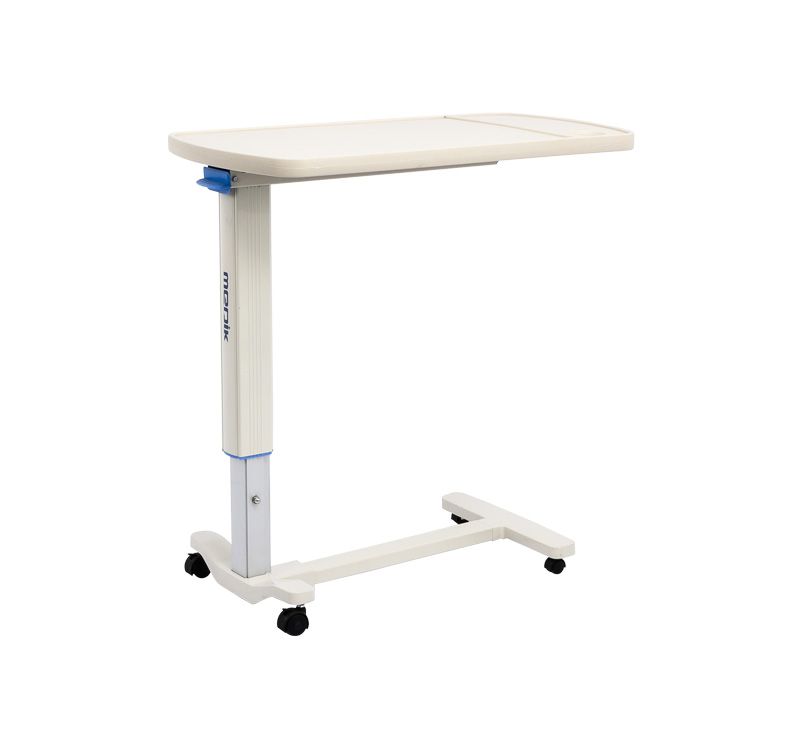
An overbed table is a highly adaptable, wheeled table specifically designed to be positioned over a bed, chair, or wheelchair. Its primary function is to provide a stable, adjustable surface for patients or residents, facilitating a wide range of activities such as eating, reading, writing, or using a laptop without the need to leave their resting place. It is a fundamental piece of equipment in patient-centered care, enhancing comfort, independence, and accessibility. While seemingly simple, modern overbed tables incorporate thoughtful ergonomics and engineering to serve clinical, rehabilitative, and personal needs.
How it Works
The overbed table operates on straightforward mechanical principles. Its core functionality is based on a height-adjustment mechanism and a stable wheeled base.
- Height Adjustment: The most common mechanism is a spring-loaded or gas-assisted lift. By releasing a locking lever or pedal (often with a foot), the internal spring counterbalances the weight of the table top. This allows the user to effortlessly raise or lower the table to the precise desired height with minimal physical effort. Some models use a manual crank or friction-based telescopic columns.
- Mobility & Stability: The table rests on a four or five-wheel base (casters), typically with at least two locking wheels. The wheels allow for easy maneuvering into position over the bed. Once in place, locking the wheels prevents unintended movement, ensuring safety during use. The table top then swivels or slides horizontally to achieve the optimal position for the user.
Key Components
- Table Top/Surface: The primary work surface. It is often made of durable, easy-to-clean materials like laminated wood, plastic, or phenolic resin. Many feature a tilting or book-stop edge to prevent items from sliding off, and some have a reversible surface (e.g., a whiteboard on one side).
- Column/Support Pole: The vertical structure that connects the base to the table top. It houses the height-adjustment mechanism (spring, gas cylinder, or telescoping tubes).
- Height Adjustment Control: This is the user interface for changing height. It is usually a foot pedal, hand lever, or crank located on the column or under the table top. It engages or disengages the lifting mechanism.
- Base & Casters: A sturdy, wide base (often an “X” or rectangular shape) provides low-center-of-gravity stability. Dual-swivel locking casters allow for 360-degree movement and secure placement. Casters are designed for quiet operation and smooth rolling on various floor types.
- Additional Features (varies by model): May include a lower storage shelf, cup holder, control panel cut-out for medical equipment, IV pole receiver, or integrated lighting.
2. Uses
Clinical Applications
- Meal Service & Dining: The primary use, allowing patients to dine comfortably and independently in bed or a chair, promoting better nutrition and dignity.
- Therapeutic Activities: Provides a stable surface for occupational therapy (crafts, puzzles), physiotherapy exercises, or cognitive games.
- Patient Entertainment & Engagement: Holds books, tablets, laptops, or puzzles, reducing boredom and supporting mental well-being.
- Clinical Work Surface: Serves as a temporary platform for nurses or doctors to place medical charts, laptops for electronic health record (EHR) input, or minor procedural trays at the bedside.
- Personal Care: Holds basins, mirrors, or personal grooming items during bed baths or grooming.
- Rehabilitation: Supports activities of daily living (ADL) training for patients relearning skills.
Who Uses It
- Patients/Residents: The primary end-users across all settings.
- Nurses & Nursing Assistants: Frequently position and adjust tables for patient meals and activities.
- Therapists (Occupational & Physical): Utilize tables as a tool for rehabilitative activities.
- Caregivers (Home & Professional): Use them to assist those under their care.
Departments/Settings
- Hospitals: Medical-Surgical Wards, ICU/CCU (for conscious patients), Pediatrics, Maternity, Rehabilitation Units.
- Long-Term Care Facilities/Nursing Homes: Resident rooms and common areas.
- Assisted Living & Residential Care Facilities.
- Home Healthcare: A vital tool for home-based patient care.
- Hospice & Palliative Care Centers: To maximize patient comfort and autonomy.
3. Technical Specs
Typical Specifications
- Height Adjustment Range: Typically 28″ to 45″ (71 cm to 114 cm) from the floor, accommodating low beds, high-profile beds, and wheelchairs.
- Table Top Dimensions: Common sizes are 24″ x 16″ (61 x 41 cm) to 30″ x 20″ (76 x 51 cm). Rectangular is standard; contoured shapes exist.
- Weight Capacity: Usually between 35 lbs (16 kg) to 75 lbs (34 kg) for the table top.
- Overall Weight: Table units weigh 25-45 lbs (11-20 kg) for portability.
- Casters: 3″ to 5″ (7.5 to 12.5 cm) diameter, often with soft-tread, non-marking wheels.
Variants & Sizes
- Standard Overbed Tables: The most common type with a rectangular top and central column.
- Hospital-Grade Tables: Heavier-duty construction, often with phenolic tops and reinforced bases for intensive use.
- Bariatric Overbed Tables: Designed with extra-wide, reinforced tops and higher weight capacities (100+ lbs) to support larger patients.
- Pediatric Overbed Tables: Smaller, colorful tops, sometimes with themed designs to be child-friendly.
- Multi-Purpose/Tilt-Top Tables: Feature a top that tilts to various angles, ideal for reading, drawing, or using as a laptop desk.
Materials & Features
- Table Top Materials:
- High-Pressure Laminate (HPL): Durable, scratch-resistant, easy to clean.
- Phenolic Resin: Non-porous, highly chemical and stain-resistant, used in high-infection-control areas.
- Plastic/ABS: Lightweight, cost-effective.
- Solid Surface (e.g., Corian): Seamless, repairable, high-end appearance.
- Frame & Base: Powder-coated steel (epoxy or polyester) for durability and corrosion resistance. Chrome plating is also common.
- Special Features: Tilt-top mechanisms, lower shelves, locking drawers, IV pole holders, integrated power outlets/USB ports, LED lighting, touch-free height adjustment sensors.
Notable Models/Series
- Invacare 6000M/9000 Series
- Drive Medical DeVilbiss Heritage Series
- Medline Advantage Overbed Table
- Nova Panther/Tracer Series
- Vermont American CarePro Series
- Joerns Hoyer Precedure Table
4. Benefits & Risks
Advantages
- Promotes Patient Independence: Enables self-feeding, reading, and other activities without constant staff assistance.
- Enhances Comfort & Quality of Life: Improves the patient experience by making the bed space more functional and personal.
- Improves Ergonomics for Caregivers: Reduces bending and straining when assisting a patient with meals or activities.
- Versatility: Serves multiple functions (dining, work, therapy) with one device.
- Space-Efficient: Rolls away easily when not in use, clearing floor space.
- Cost-Effective: A relatively low-cost item with a high impact on care and daily utility.
Limitations
- Limited Surface Area: Cannot accommodate large items or multiple large trays simultaneously.
- Stability Limits: While stable for intended use, they are not designed to bear extreme off-center weight or be used as a support for patient transfer.
- Maneuverability in Tight Spaces: Some models with wide bases can be challenging to navigate in very small rooms.
Safety Concerns & Warnings
- Pinch Points: The height adjustment column and folding mechanisms can pose finger and hand pinch hazards.
- Tip-Over Risk: Placing excessive weight on one side or hanging heavy bags on the table can cause it to tip. Never use it as a walker or support for standing.
- Caster & Trip Hazards: Ensure wheels are locked during use and cords/wires are not draped where they can entangle the base.
- Cleanliness: A soiled table top can be a vector for pathogen transmission. Regular cleaning is essential.
Contraindications
- For patients with severe involuntary movements or spasms, a standard table may pose a safety risk; specialized, more secure tables may be needed.
- Should not be used as a substitute for a medically appropriate procedure table or surgical stand.
5. Regulation
Overbed tables are generally considered low-risk medical devices.
- FDA Class: Typically Class I (exempt from premarket notification, 510(k)) under product code FPG. They are subject to general controls (registration, listing, Good Manufacturing Practices).
- EU MDR Class: Likely Class I according to Annex VIII of Regulation (EU) 2017/745, as they are non-invasive and not for direct diagnosis or monitoring.
- CDSCO Category (India): Classified as a Class A medical device under the Medical Device Rules, 2017 (low-risk).
- PMDA (Japan): Generally considered a Class I medical device under the Pharmaceutical and Medical Device Act (PMD Act).
- ISO/IEC Standards:
- ISO 13485: Quality Management Systems for Medical Devices (for manufacturers).
- IEC 60601-1: General safety standards for electrical medical equipment (if the table has electrical features like lighting or motors).
- ISO 7170: Furniture – Storage units – Strength and durability.
- Specific strength, stability, and durability tests are often based on standards like ANSI/BIFMA X5.1 (for office furniture, used as a reference).
6. Maintenance
Cleaning & Disinfection
- Daily & Between Patients: Clean with a mild detergent and water. For disinfection, use a hospital-grade disinfectant wipe or solution compatible with the table top material (check manufacturer’s label). Avoid abrasive cleaners or bleach on laminate surfaces.
- Phenolic tops tolerate stronger disinfectants like bleach solutions.
- Process: Wipe the entire surface, edges, column, and handle/control. Pay special attention to grooves and seams. Rinse if required by disinfectant instructions. Dry with a clean cloth.
Reprocessing
Not applicable in the surgical instrument sense. The entire device is cleaned and disinfected in situ between users.
Calibration
No electronic calibration is needed. Periodic checks of the height mechanism for smooth operation and caster locks for proper engagement are part of routine maintenance.
Storage
- Store in a clean, dry area.
- Can be stored flat or upright on its base to save space.
- No specific temperature requirements. Avoid prolonged exposure to direct sunlight or extreme heat, which may warp plastic components or fade surfaces.
7. Procurement Guide
How to Select the Device
- Assess Primary Use: Is it for heavy-duty hospital use, a nursing home, or lighter home care?
- Consider the User Population: Do you need bariatric, pediatric, or standard models?
- Evaluate Features: Is a tilting top, lower shelf, or IV pole holder necessary?
- Check Adjustability Range: Ensure it fits the lowest and highest beds/wheelchairs in your facility.
- Test Maneuverability: Check the wheel smoothness and locking mechanism.
Quality Factors
- Stability: The table should not wobble or tip easily when pressure is applied to the edge.
- Smooth Mechanism: Height adjustment should be fluid and easy to operate with one hand or foot.
- Durable Finish: Powder coat should be even and resistant to chipping. The table top should resist scratches and stains.
- Quiet Casters: Wheels should roll and lock quietly to maintain a peaceful environment.
Certifications
- Look for proof of compliance with relevant regulations: FDA Listed, CE Mark, ISO 13485 certification of the manufacturer.
- Warranty (e.g., 1-5 years on frame, 1 year on parts) is a good indicator of quality confidence.
Compatibility
- Ensure the table base can fit under the specific bed frames (e.g., ICU beds with complex bases) and between crowded bedside furniture.
- Check if accessory mounts (e.g., for specific IV poles) are compatible.
Typical Pricing Range
- Basic Home Care Model: $80 – $150
- Mid-Range Hospital/ Facility Model: $150 – $400
- High-End/Bariatric/Feature-Rich Model: $400 – $800+
8. Top 10 Manufacturers (Worldwide)
- Invacare Corporation (USA): A global leader in home and long-term care medical products. Known for durable, innovative designs across their extensive overbed table lines.
- Drive DeVilbiss Healthcare (USA/Global): Offers a wide portfolio under Drive Medical and DeVilbiss brands, known for value and reliability in the Heritage and Elite series.
- Medline Industries, Inc. (USA): A major manufacturer and distributor of medical supplies. Their “Advantage” and other lines are staples in hospitals and nursing homes.
- Nova (USA): Part of the Medical Depots group, specializes in patient room furniture. Their Panther and Tracer series are popular for their modern design and robust construction.
- Joerns Healthcare LLC (USA): Renowned for high-quality patient handling and room furniture. Their overbed tables are often feature-rich and hospital-grade.
- GF Health Products, Inc. (USA): Parent company of brands like Lumex and Everest & Jennings. Produces a broad range of well-regarded overbed tables for various settings.
- Arjo (Sweden): A global leader in medical devices and solutions, with a focus on patient handling and hygiene. Their overbed tables are integrated into wider care environments.
- HARD Manufacturing Co., Inc. (USA): Specializes in hospital casework and patient room furniture, offering sturdy, healthcare-focused overbed tables.
- Vernon-Carus Ltd (UK): A leading manufacturer of patient care equipment in the UK and Europe, known for the CareCo and ProCare brands.
- Mangar Health (UK): Known for emergency care equipment, also produces patient care products including specialized overbed tables.
*9. Top 10 Exporting Countries (Latest Year – Based on HS Code 940290)
Note: Overbed tables are often categorized under broader furniture codes. Data is indicative.
- China: The dominant global exporter, manufacturing a vast range from budget to high-quality OEM models.
- United States: A major exporter of high-end, branded medical equipment, including overbed tables from its leading manufacturers.
- Germany: Exports precision-engineered medical furniture and devices across Europe and globally.
- Italy: Known for design-oriented healthcare furniture, exporting premium models.
- Poland: A growing hub for European medical device manufacturing and export.
- United Kingdom: Exports specialized care equipment from established domestic manufacturers.
- Canada: Exports to the US and other markets, often featuring robust designs for North American standards.
- France: Exports medical devices and furniture within the EU and to francophone nations.
- Mexico: A key exporter to the US market under trade agreements, offering cost-competitive models.
- Taiwan: Exports well-engineered components and finished goods in the medical supplies sector.
10. Market Trends
- Current Global Trends: Rising geriatric population, increasing prevalence of home healthcare, and hospital infrastructure development in emerging economies are key drivers. There is a strong shift towards patient-centric design focusing on aesthetics, comfort, and homelike environments.
- New Technologies: Integration of low-voltage power/USB charging stations, touch-free height adjustment (voice or sensor-activated), integrated nurse call systems, and IoT sensors to monitor usage patterns for predictive maintenance.
- Demand Drivers: Aging demographics, growth of private healthcare and senior living facilities, emphasis on infection control (driving demand for non-porous tops), and rising awareness of patient dignity and independence.
- Future Insights: Expect continued material innovation (antibacterial surfaces, sustainable materials), further smart technology integration, and modular designs that allow tables to interface seamlessly with electronic health records or patient entertainment systems. Customization and personalization will become more prevalent.
11. Training
Required Competency
Minimal formal training is required. Competency involves understanding safe operation: how to adjust height, maneuver, lock wheels, and clean the table.
Common User Errors
- Using as a Support: Patients or staff attempting to lean or pull on the table to stand up, risking a tip-over.
- Overloading: Placing excessively heavy items beyond the weight capacity.
- Ignoring Pinch Points: Not checking for finger placement before adjusting height.
- Forgetting to Lock Wheels: Leading to the table sliding away during use.
- Improper Cleaning: Using harsh chemicals that damage the surface.
Best-Practice Tips
- Always lock the casters once the table is in the desired position.
- Center heavier items on the table top.
- Inspect regularly for loose parts, damaged casters, or a failing lift mechanism.
- Educate patients and family on safe use, explicitly warning against using it for support.
- Clean spills immediately to prevent stains and infection risks.
12. FAQs
1. What’s the difference between a hospital overbed table and one for home use?
Hospital-grade tables are built with more durable materials (phenolic tops, heavy-gauge steel), have higher weight capacities, and are designed for frequent disinfection and heavy daily use. Home models may be lighter, have plastic components, and focus on cost-effectiveness for lighter use.
2. How do I fix an overbed table that won’t stay up?
This usually indicates a failing gas spring or worn-out friction mechanism in the height adjustment column. Do not attempt to repair gas springs yourself, as they are under high pressure. Contact the manufacturer or a qualified medical equipment technician for repair or replacement.
3. Can the table top be replaced if it gets badly damaged?
Yes, for many models, replacement tops are available from the manufacturer or third-party suppliers. Ensure you get the correct size and mounting type.
4. Are overbed tables covered by insurance (Medicare/Medicaid)?
In the US, Medicare Part B may cover an overbed table if deemed medically necessary by a doctor for use in the home. Specific criteria must be met (e.g., the patient must be bed-confined). Always check with the supplier and insurance provider.
5. What is the best way to clean a sticky or stained laminate top?
Use a mild dish soap and warm water. For stubborn stains, a paste of baking soda and water can be gently applied. Avoid abrasive pads. For disinfecting, use a dilute vinegar solution or a disinfectant recommended by the manufacturer.
6. How high should I adjust the table for eating?
The ideal height is typically at or just below elbow level when the user is sitting upright. This allows forearms to rest comfortably while bringing food easily to the mouth.
7. My table is wobbly. What should I check?
First, ensure all bolts and screws (often at the base-column and column-top junctions) are tightened. Second, check that all casters are fully touching the ground and none are damaged or stuck.
8. Can I use it over a recliner chair?
Absolutely. One of the key benefits is its versatility. Ensure the base fits under the recliner and adjust the height to a comfortable level for the seated person.
9. What does “tilt-top” mean and who is it for?
A tilt-top table can be angled, usually from 0 to 45 degrees. It’s ideal for reading, writing, drawing, or using a laptop, as it reduces neck strain. It’s excellent for therapy, students, or anyone spending long periods on these activities in bed.
10. How do I choose between a foot pedal and a hand lever?
A foot pedal is convenient as it allows hands-free adjustment, useful for staff or patients with limited hand strength. A hand lever offers more precise control. Consider the primary user’s abilities.
13. Conclusion
The overbed table is a quintessential example of a simple device delivering profound impact. Far more than just a surface, it is a tool for independence, dignity, therapy, and comfort in clinical and home settings. From its fundamental mechanics to the sophisticated, smart-enabled models of the future, its core purpose remains: to bridge the gap between the patient and their daily world. Selecting the right table involves careful consideration of the user, environment, and required features, while proper use and maintenance ensure safety and longevity. As healthcare continues to evolve towards more personalized and patient-centric models, the humble overbed table will undoubtedly continue to adapt and remain an indispensable asset in quality care delivery.
14. References
- U.S. Food and Drug Administration (FDA). (n.d.). Device Classification.
- European Commission. (2017). Regulation (EU) 2017/745 on medical devices (MDR).
- Central Drugs Standard Control Organization (CDSCO). (2017). Medical Device Rules.
- International Organization for Standardization (ISO). ISO 13485:2016 Medical devices — Quality management systems.
- Invacare Corporation. (2023). Product Catalogs and User Manuals.
- Drive DeVilbiss Healthcare. (2023). Healthcare Equipment Catalogs.
- Grand View Research. (2023). Patient Room Furniture Market Analysis Report.
- World Health Organization (WHO). (n.d.). Decontamination and Reprocessing of Medical Devices.
- UN Comtrade Database. (2023). International Trade Statistics.
- Professional experience and knowledge of clinical equipment procurement and use.