1. Definition
What is a Mobile IV Stand?
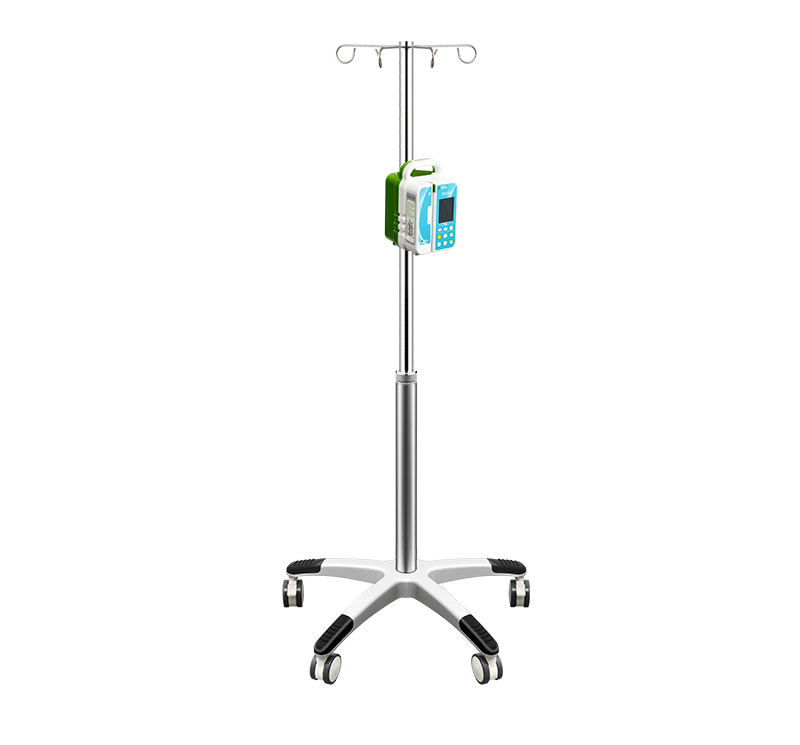
A mobile IV stand, commonly referred to as an IV pole, drip stand, or infusion stand, is a portable, height-adjustable medical apparatus designed to securely hold intravenous (IV) fluid bags, syringes, pumps, and monitoring equipment. Its primary function is to facilitate the safe, controlled, and mobile administration of fluids, medications, blood products, and nutritional solutions directly into a patient’s bloodstream. It is a foundational piece of equipment in modern healthcare, enabling both ambulatory patient care and static bedside treatment.
How it Works
The working principle is elegantly simple: it uses gravity and stability. The stand provides a elevated hook or cluster of hooks from which an IV fluid bag is suspended. Gravity pulls the fluid downward through connected IV tubing, which is regulated by a manual roller clamp or an electronic infusion pump mounted on the stand. The fluid then travels through the tubing into a catheter placed in the patient’s vein. The mobility of the stand, via its wheeled base, allows the infusion process to continue uninterrupted while the patient moves or is transported.
Key Components
- Base: A wide, typically 4 or 5-legged, wheeled foundation that provides stability and prevents tipping. Wheels often have locking brakes.
- Pole/Mast: The central vertical shaft, usually made of metal, which provides height. It may be a single piece or telescoping.
- Height Adjustment Mechanism: A handle, pinch-release, or crank that allows smooth raising or lowering of the upper section to accommodate patients of different heights and preferences.
- Hook(s): The topmost component(s) for hanging IV bags. Can be a single hook, a double “shepherd’s crook,” or a multi-armed cluster hook for multiple infusions.
- Pump Mounting Brackets/Platforms: Attachments or shelves for securing infusion pumps, syringe drivers, or patient-controlled analgesia (PCA) devices.
- Accessory Hooks/Arms: Secondary lower hooks for additional bags or coiled tubing.
2. Uses
Clinical Applications
- Fluid Resuscitation: Administering saline or lactated Ringer’s to treat dehydration or shock.
- Medication Delivery: Continuous or intermittent infusion of antibiotics, chemotherapy, pain relievers, inotropes, and other drugs.
- Blood Transfusions: Safely hanging bags of whole blood, packed red cells, platelets, or plasma.
- Nutritional Support: Holding bags for total parenteral nutrition (TPN).
- Patient Mobility: Enabling patients to walk during prolonged infusions (e.g., in labor & delivery, post-surgery) to promote circulation and recovery.
- Emergency & Transport: Essential for moving patients between departments (e.g., from ER to ICU) or during in-hospital codes while maintaining critical IV access.
Who Uses It
- Registered Nurses (RNs) & Licensed Practical Nurses (LPNs): Primary users for daily patient care.
- Doctors & Physicians: During rounds, procedures, or when adjusting infusion protocols.
- Paramedics & EMTs: In ambulances for emergency transport.
- Patients Themselves: Ambulatory patients managing their own mobility during infusions.
Departments/Settings
- Inpatient Wards (Medical, Surgical, Oncology, Pediatrics)
- Intensive Care Units (ICUs) & Critical Care
- Emergency Departments
- Operating Rooms & Post-Anesthesia Care Units (PACU)
- Labor & Delivery Suites
- Dialysis Centers
- Ambulatory/Outpatient Infusion Clinics
- Home Healthcare
3. Technical Specs
Typical Specifications
- Height Range: Adjustable from ~45 inches (114 cm) to ~80 inches (203 cm).
- Base Diameter: Typically 20-24 inches (50-60 cm) for optimal stability.
- Weight Capacity: Hooks and pumps mounts designed to hold 10-15 kg (22-33 lbs).
- Weight (Stand): 5-10 kg (11-22 lbs), balancing stability and portability.
- Wheels: 4 or 5, 2-3 inches in diameter, often with full-swivel casters and at least two with foot-operated brakes.
Variants & Sizes
- Floor Stands: The standard mobile model.
- Bedside/Over-Bed Models: Designed to clamp directly onto a patient’s bedframe, saving floor space.
- Ceiling-Mounted Systems: Track-mounted for ultimate space efficiency in specialized units.
- Pediatric Stands: Often lighter, with brighter colors or designs to reduce anxiety.
- Bariatric/Heavy-Duty Stands: Made with wider bases and stronger poles for higher weight capacities.
Materials & Features
- Materials: Tubing is typically chrome-plated steel or powder-coated steel for durability and corrosion resistance. Bases may be cast aluminum or steel. Some models use antimicrobial coatings.
- Features: Multi-directional wheel casters, central braking systems, tangle-free IV pole designs, ergonomic handles, integrated cable management for pump cords, and foldable/collapsible designs for storage.
Models
- Basic IV Pole: Simple, single-hook, height-adjustable pole.
- IV Pole with Cluster Hook: Multiple hooks (3-5) for complex infusion regimens.
- IV Pole with Pump Shelf: Includes a dedicated platform or multiple mounting arms for infusion devices.
- IV Pole with Accessory Arm: Features a swing-out secondary arm for additional equipment.
4. Benefits & Risks
Advantages
- Promotes Patient Mobility & Recovery: Allows patients to ambulate, improving outcomes and reducing complications like pneumonia and blood clots.
- Versatility & Flexibility: Can hold various combinations of fluids, pumps, and monitors.
- Safety & Stability: Wide base minimizes tipping risk; brakes secure the stand during procedures.
- Space-Efficient: Mobile design clears space around the bed when not in active use.
- Cost-Effective: Durable, reusable, and requires minimal maintenance.
Limitations
- Can Be Cumbersome: May be difficult to maneuver in tight spaces or crowded rooms.
- Trip Hazard: The base and tubing can pose a risk if not managed carefully.
- Manual Height Adjustment: Some models may require moderate physical effort to adjust.
- Limited Capacity: Overloading hooks can compromise stability.
Safety Concerns & Warnings
- Tipping Hazard: Always ensure the base is fully unfolded and never overload the top hook. Push the stand from the base, not the pole.
- Trip Hazard: Route IV tubing neatly and keep walkways clear.
- Contamination: Clean the stand regularly to prevent cross-contamination between patients.
- Brake Failure: Always engage brakes when the stand is stationary, especially during transfers or pump programming.
Contraindications
There are no direct medical contraindications for the stand itself. However, its use is contraindicated by patient conditions that preclude mobility (e.g., spinal instability) unless the stand is used in a static, brakes-locked position. The decision relates to patient safety, not device function.
5. Regulation
Mobile IV stands are generally considered low-risk devices.
- FDA Class: Typically Class I (exempt from premarket notification [510(k)]), as they are seen as non-powered, general hospital equipment.
- EU MDR Class: Likely Class I under Rule 1 (non-invasive devices).
- CDSCO Category (India): Classified as Class A (low risk) medical device.
- PMDA (Japan): Generally considered as Class I medical devices.
- ISO/IEC Standards:
- ISO 13485: Quality Management Systems for Medical Devices.
- IEC 60601-1: General safety requirements for medical electrical equipment (if incorporating electrically powered elements like integrated lights or scales).
6. Maintenance
Cleaning & Sterilization
- Routine Cleaning: Wipe down the entire stand (pole, base, wheels) daily and after each patient use with a hospital-grade disinfectant wipe or cloth dampened with an EPA-registered disinfectant.
- Decontamination: After contact with infectious patients, clean with a sporicidal or tuberculocidal agent as per facility policy.
- Note: The stand itself is non-sterile. Only the IV bags, tubing, and catheters are sterile. The stand is cleaned for disinfection, not sterilization.
Reprocessing
No complex reprocessing is needed. It is a single-patient use per admission device within a facility, cleaned between patients.
Calibration
Not required for the stand itself. However, any integrated scales or measuring devices must be calibrated per manufacturer instructions.
Storage
Store in a clean, dry area. Collapsible models should be folded. Ensure wheels are clean to prevent dragging dirt into clinical areas.
7. Procurement Guide
How to Select the Device
- Assess Primary Use: ICU (needs cluster hooks)? General ward (needs pump shelves)? Pediatrics?
- Evaluate Maneuverability: Test wheel smoothness and turning radius in a tight space.
- Check Stability: Look for a wide, sturdy base. Give it a gentle push test.
- Ease of Adjustment: Is the height mechanism smooth and operable by staff of all strengths?
Quality Factors
- Durability of Finish: Powder coating resists chipping better than paint.
- Wheel Construction: Dual-wheel casters offer smoother movement. Check bearing quality.
- Warranty: Look for a warranty of at least 2-5 years on structure and 1 year on casters.
Certifications
Look for proof of ISO 13485 manufacturing and relevant regional market approvals (FDA Establishment Registration, CE Marking).
Compatibility
Ensure pump mounting brackets are universal or compatible with your specific infusion pump models (e.g., Alaris, Baxter, B. Braun).
Typical Pricing Range
- Basic Model: $80 – $150
- Model with Cluster Hook & Pump Shelf: $150 – $300
- Specialized/Bariatric Models: $300 – $600
8. Top 10 Manufacturers (Worldwide)
- Hill-Rom (Baxter) – USA. Global leader in patient support systems; known for robust, innovative designs.
- Medline Industries – USA. Massive healthcare supplier offering a wide range of reliable, cost-effective IV stands.
- Cardinal Health – USA. Provides comprehensive supply chain solutions, including durable medical equipment like IV poles.
- Invacare Corporation – USA. Prominent in mobility and medical equipment, offering stands for various care settings.
- Drive Medical – USA. Known for value-oriented, high-quality durable medical equipment for home and institutional use.
- Amsino International – USA/China. Global manufacturer with a strong focus on infection prevention products and IV accessories.
- B. Braun Melsungen – Germany. Major player in infusion therapy, producing stands that integrate seamlessly with their pump systems.
- Armstrong Medical – UK. Specializes in equipment for critical care and anesthesia, known for high-quality stands and accessories.
- McCare (Mid Central Medical) – Australia. Leading ANZ supplier with a focus on ergonomic and user-friendly designs.
- Zhangjiagang New Fellow Med – China. Major OEM/ODM manufacturer exporting a vast volume of cost-competitive stands globally.
9. Top 10 Exporting Countries (Latest Year – Based on HS Code 9018* trends)
(Ranked by estimated export value of medical instruments/appliances including IV stands)
- China: The dominant global exporter, manufacturing a majority of the world’s mid-range and economical IV stands.
- United States: Major exporter of high-end, branded models and specialized equipment.
- Germany: Exports premium engineering and integrated system components (e.g., B. Braun).
- Mexico: Key exporter to the North American market due to trade agreements and proximity.
- Italy: Known for design-oriented medical furniture and equipment.
- United Kingdom: Exports specialized critical care and anesthetic equipment.
- Japan: Exports high-precision medical devices, including advanced stand systems.
- France: Home to several large medical technology conglomerates.
- Netherlands: A major European logistics and distribution hub for medical devices.
- Switzerland: Exports niche, high-precision medical equipment.
10. Market Trends
Current Global Trends
- Rising Healthcare Expenditure: Increased hospital admissions and outpatient procedures drive demand.
- Focus on Hospital-Acquired Infections (HAIs): Boosting demand for stands with antimicrobial coatings and easy-to-clean designs.
- Growth in Home Healthcare: Increasing need for lightweight, user-friendly stands for home infusion therapy.
New Technologies
- Smart Stands: Integration with the Internet of Things (IoT) for asset tracking, inventory management, and even monitoring infusion status.
- Advanced Materials: Use of carbon fiber for lighter yet stronger poles.
- Ergonomic Designs: One-touch braking systems, effortless height adjustment levers.
Demand Drivers
- Aging global population requiring more medical interventions.
- Increasing prevalence of chronic diseases requiring long-term infusion therapy.
- Expansion of ambulatory surgical centers (ASCs) and outpatient clinics.
- Focus on patient-centered care and early mobilization.
Future Insights
The mobile IV stand will evolve from a passive holder to an integrated data point in the smart hospital. Expect more connectivity, enhanced safety features (e.g., tip-over sensors), and designs tailored for specific therapeutic areas like biologics administration.
11. Training
Required Competency
Minimal formal training is required, but competency should include: safe mobilization (pushing from base), proper height adjustment, engaging/disengaging brakes, and managing multiple lines without tangling or dislodgement.
Common User Errors
- Pushing from the Pole: Causes tipping. Always push from the base.
- Forgetting to Lock Brakes: During patient transfers or pump setup.
- Overloading the Top Hook: Creates a top-heavy, unstable center of gravity.
- Improper Line Management: Letting tubing drag on the floor or become tangled.
Best-Practice Tips
- Raise the Bag: Ensure the IV bag is always positioned higher than the patient’s heart for gravity flow.
- Lower Before Moving: Before transporting a patient, lower the pole’s height to improve stability.
- Use Lower Hooks for Heavy Bags: Hang heavier bags (e.g., TPN, blood) on lower hooks to keep the center of gravity low.
- Perform a “Tug Test”: Gently tug on all connections (bag to hook, pump to bracket) after setup to ensure they are secure.
12. FAQs
1. How do I choose between a 4-wheel and a 5-wheel base?
5-wheel bases often offer slightly better stability on uneven floors and a smaller turning radius. 4-wheel bases are standard and perfectly adequate for most flat, indoor hospital floors.
2. Can one IV stand hold multiple infusion pumps?
Yes, but you must check the weight capacity of the pump mounting brackets and the overall stability of the stand. Do not exceed the manufacturer’s stated limits.
3. How often should mobile IV stands be cleaned?
At a minimum: after each patient use, and daily in situ for current patients. Follow your facility’s specific infection control policy.
4. What should I do if the wheels become stiff or don’t swivel?
Do not force it. Remove the stand from service. The wheels may need lubrication or replacement, often performed by clinical engineering or facilities management.
5. Are there IV stands for pediatric patients?
Yes. They are often smaller, lighter, and may feature child-friendly colors or designs. The same principles of stability and safety apply.
6. Can we attach other equipment to the IV pole, like monitors or oxygen cylinders?
Only if the pole has manufacturer-approved brackets for that specific equipment. Never clamp unauthorized heavy equipment (like oxygen tanks) to a standard IV pole, as it can cause catastrophic tipping.
7. What’s the best way to manage multiple IV lines on one pole?
Use a cluster hook. Hang bags in order of priority/sequence. Use tubing organizers or simple tape tags to identify lines and prevent tangling.
8. How high should the IV bag be hung?
For effective gravity flow, the bottom of the IV bag should be approximately 24-36 inches (60-90 cm) above the level of the patient’s heart.
9. Is it safe for a patient to walk alone with an IV stand?
It depends on the patient’s condition, mobility, and cognition. Always assess the patient first. Initially, staff should assist to ensure they can manage the stand safely.
10. What does “load capacity” mean for an IV stand?
It is the maximum weight the top hook or cluster hook is designed to hold safely. Exceeding this risks structural damage or tipping.
13. Conclusion
The mobile IV stand is a deceptively simple yet indispensable workhorse of modern healthcare. Far more than just a “pole,” it is a critical enabler of patient mobility, complex infusion therapy, and safe patient transport. Understanding its components, proper use, maintenance, and procurement considerations ensures that this fundamental device continues to serve its vital role effectively. As technology advances, we can expect the humble IV stand to become smarter and more integrated, but its core mission—safely holding life-sustaining fluids—will remain unchanged. Proper training and adherence to best practices are key to maximizing its benefits while minimizing risks to both patients and staff.
14. References
- Association of periOperative Registered Nurses (AORN). (2023). Guidelines for Perioperative Practice.
- Centers for Disease Control and Prevention (CDC). (2021). Guidelines for Environmental Infection Control in Health-Care Facilities.
- Infusion Nurses Society (INS). (2021). Infusion Therapy Standards of Practice.
- U.S. Food and Drug Administration (FDA). (2023). Device Classification Database.
- European Commission. (2023). Medical Device Regulation (MDR) – Annex VIII.
- Grand View Research. (2023). Medical Equipment Market Size, Share & Trends Analysis Report.
- Manufacturer Catalogs & Technical Specifications (Hill-Rom, Medline, Cardinal Health, B. Braun).