1. Definition
What is a Blanket/Solution Warming Cabinet?
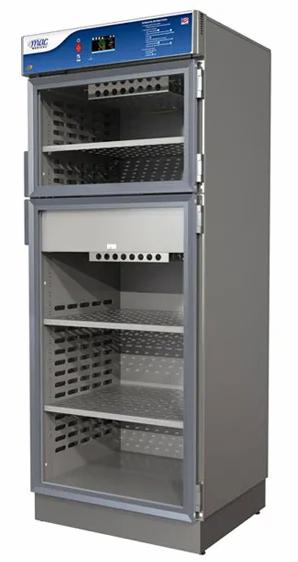
A Blanket/Solution Warming Cabinet is a specialized medical storage device designed to safely warm and maintain the temperature of patient care items. Its primary function is to elevate and hold medical blankets, intravenous (IV) fluids, irrigation solutions, blood products, or surgical packs to a predetermined, therapeutic temperature, ready for immediate patient use. It bridges the critical gap between sterile storage and patient application by ensuring that items are delivered at an optimal, safe, and comfortable temperature.
How it Works
The device operates on a forced-air convection principle. At its core is a heating element and a fan system. Air is heated and then circulated evenly throughout the insulated cabinet interior by the fan. This constant, gentle circulation prevents cold spots and ensures uniform temperature distribution. A digital or analog thermostat continuously monitors the internal temperature. When the temperature dips below the set point, the heater activates; when the desired temperature is reached, it cycles off. This creates a stable, controlled thermal environment. Advanced models feature separate compartments or zones with independent temperature controls for warming different items (like blankets and fluids) at their ideal temperatures simultaneously.
Key Components
- Insulated Cabinet: The main body, typically made of stainless steel, with high-quality insulation to minimize heat loss and improve energy efficiency.
- Heating Element: The component that generates heat, usually located at the bottom or rear of the cabinet.
- Circulation Fan: A blower fan that distributes heated air uniformly.
- Temperature Control System: Includes a temperature sensor (thermocouple/RTD) and a controller (digital microprocessor or analog dial) for setting and maintaining the desired temperature.
- Shelving/Trays: Adjustable, perforated stainless steel shelves or blanket racks that allow for optimal air circulation around stored items.
- Door(s): A well-sealed, often gasketed door with a secure latch. Many feature a safety glass viewing window.
- Display & Alarms: Digital models have an LED/LCD display showing set and actual temperatures. Audible and visual alarms alert users to door-ajar situations or temperature deviations.
- Castors/Brakes: Mobility features for easy relocation and locking brakes for stability.
2. Uses
Clinical Applications
- Hypothermia Prevention & Management: Pre-warmed blankets are crucial for post-operative patients, neonates in the NICU, trauma victims, and elderly patients to prevent and treat inadvertent perioperative hypothermia.
- IV Fluid & Blood Product Warming: Delivering room-temperature or cold IV fluids can significantly drop a patient’s core temperature. Warming cabinets ensure fluids are brought to a near-physiological temperature (~37°C-39°C), reducing the risk of hypothermia, patient discomfort, and cardiac complications during massive transfusions.
- Surgical & Irrigation Solutions: Sterile saline or water used for wound irrigation or laparoscopic procedures is warmed to prevent thermal shock to tissues and internal organs.
- Pre-warming of Sterile Packs: Warming surgical gloves, gauze, or other packs for patient comfort, especially in cold operating rooms.
- Warming of Contrast Media: In radiology, warming iodine-based contrast agents to body temperature can reduce patient viscosity, improve injection comfort, and potentially decrease adverse reactions.
Who Uses It
- Nurses: Primarily in wards, ICUs, EDs, and post-anesthesia care units (PACU).
- Surgical Technologists & OR Nurses: For preparing warm irrigation fluids and blankets.
- Anesthesiologists: For accessing warm fluids and blood products during surgery.
- Laboratory & Blood Bank Technicians: For specific warming protocols.
- Neonatal & Pediatric Care Teams: For maintaining thermoneutral environments for vulnerable patients.
Departments/Settings
- Operating Rooms (OR) & Surgical Suites
- Intensive Care Units (ICU), Neonatal ICU (NICU), Pediatric ICU (PICU)
- Emergency Departments (ED) & Trauma Centers
- Labor & Delivery Wards
- General Hospital Wards (Medical/Surgical)
- Ambulatory Surgical Centers (ASCs) & Dialysis Centers
- Blood Banks & Laboratory Settings
3. Technical Specs
Typical Specifications
- Temperature Range: Typically 30°C to 45°C (86°F to 113°F), with common settings at 37°C (98.6°F) for blankets and 39°C (102°F) for fluids.
- Temperature Uniformity: ±1°C to ±3°C across the cabinet.
- Capacity: Ranges from compact 10-blanket models to large 80+ blanket or 100+ bottle units.
- Power Requirements: 110-120V or 220-240V, 50/60 Hz.
- External Dimensions: Vary significantly; a medium cabinet may be approx. 36″ H x 24″ W x 24″ D.
- Warm-up Time: From ambient to set temperature usually within 30-90 minutes, depending on size and load.
Variants & Sizes
- Blanket Warmers: Focused on folding or rolling blankets, often with vertical hanging rods.
- Solution/IV Fluid Warmers: Designed with shelving or racks to hold bottles and bags upright.
- Combination Units: Feature separate upper (blanket) and lower (fluid) compartments with dual controls.
- Countertop/Portable Models: Small units for point-of-care use in clinics or minor procedure rooms.
- Floor-standing/Stationary Models: Standard for high-volume hospital departments.
- Pass-through Cabinets: Installed in walls between sterile supply and OR for aseptic transfer.
Materials & Features
- Construction: 304 or 316 grade stainless steel interior and exterior for durability and easy cleaning.
- Insulation: High-density polyurethane foam.
- Features: Digital PID controllers for precise control, data logging/RS-232 ports, dual alarms (audio/visual), self-diagnostic systems, door-ajar indicators, battery backup for alarms, key lock for controlled access, UV-C light for germicidal protection (in some models).
Notable Models
- Cincinnati Sub-Zero (CSZ) BlanketWarmer® Series: Industry standard, known for reliability.
- Barker CAB Series: Popular for robust construction.
- Stryker Ranger Fluid/Blanket Warmers: Known for advanced features and rapid warm-up.
- Enthermics Medical Systems (EMS) Warmers: High-capacity and combination units.
- GE Healthcare WarmTouch.
4. Benefits & Risks
Advantages
- Improved Patient Outcomes: Directly prevents perioperative hypothermia, reducing surgical site infection risk, cardiac events, and length of hospital stay.
- Enhanced Patient Comfort: Eliminates the shock of cold blankets or fluids, improving patient satisfaction.
- Increased Efficiency: Provides immediate access to warm supplies, saving staff time compared to ad-hoc warming methods.
- Safety: Safer than microwave warming, which creates dangerous hot spots, or water baths, which pose an infection and electrical risk.
- Cost-Effectiveness: Reduces complications and associated treatment costs.
Limitations
- Warming Time: Requires advance planning as items take time to reach the target temperature.
- Capacity & Footprint: Large units require dedicated floor space.
- Energy Consumption: Continuous operation contributes to facility energy use.
- Not for Active Warming: It is a storage warmer, not a device for actively rewarming a hypothermic patient (like a forced-air warming blanket).
Safety Concerns & Warnings
- Overheating/Burns: Malfunction or incorrect setting can lead to overheated items causing patient or staff burns. Never use for warming infant formula or food.
- Fire Hazard: Blocking air vents, overloading, or placing non-approved materials (e.g., plastics with low melting points) inside can cause fire.
- Electrical Safety: Must be plugged into a properly grounded outlet; avoid using extension cords.
- Contamination Risk: Storing non-sterile or soiled items can lead to cross-contamination.
- Door Left Ajar: Compromises temperature stability and wastes energy.
Contraindications
- Do NOT warm blood products intended for long-term storage (requires specific blood bank refrigerators/warmers).
- Do NOT warm medications or solutions whose chemical stability is temperature-sensitive (e.g., some antibiotics, biologics).
- Do NOT use as an incubator or for direct patient warming.
- Avoid warming items in non-breathable plastic; use approved trays or bags.
5. Regulation
- FDA Class: Class II Medical Device (subject to special controls, 510(k) clearance typically required).
- EU MDR Class: Class IIa (devices for controlling body temperature).
- CDSCO Category (India): Class B.
- PMDA Notes (Japan): Regulated as a “Controlled Medical Device” (Class II). Must comply with JPAL standards and require marketing approval.
- ISO/IEC Standards: Key standards include:
- ISO 13485: Quality Management Systems for medical devices.
- IEC 60601-1: General safety requirements for medical electrical equipment.
- IEC 60601-1-11: Requirements for home healthcare environments.
- ISO 11134: Sterilization validation (relevant for cleaning/disinfection protocols).
6. Maintenance
- Cleaning & Sterilization: Unplug the device first. Wipe exterior and interior daily or weekly with a soft cloth dampened with a mild detergent or hospital-grade disinfectant. Avoid abrasive cleaners or bleach on stainless steel. Do not pour water or submerge. Clean door gaskets. No sterilization of the cabinet itself is required.
- Reprocessing: The cabinet is not a single-use device. The items placed inside (blankets, fluid containers) must follow their own reprocessing (laundry/sterilization) cycles.
- Calibration: Annual calibration of the temperature control system by a qualified technician is recommended to ensure accuracy. This may involve placing a traceable NIST thermometer inside to verify display readings.
- Storage: When not in use, unplug, clean thoroughly, and leave the door slightly ajar in a clean, dry environment to prevent mold/mildew.
7. Procurement Guide
How to Select the Device
- Assess Volume & Type: Determine primary use (blankets vs. fluids vs. both) and daily volume to choose capacity and type (single vs. combination).
- Evaluate Space: Measure allocated space, considering door swing and clearance for ventilation.
- Check Temperature Requirements: Ensure the range and uniformity meet your clinical needs (e.g., NICU may need finer control).
- Review Features: Prioritize needed features like alarms, digital logging, dual zones, or pass-through design.
Quality Factors
- Build quality (gauge of stainless steel, door seal integrity).
- Temperature uniformity data from the manufacturer.
- Reliability and mean time between failures (MTBF) history.
- Ease of cleaning (rounded corners, removable shelves).
Certifications
Look for CE Marking (EU), FDA 510(k) Clearance (US), and certification to ISO 13485. Country-specific marks like UKCA or IMDR (India) may be required.
Compatibility
Ensure electrical compatibility (voltage/plug type). Consider integration with hospital infrastructure (pass-through walls) and IT systems if data logging is required.
Typical Pricing Range
- Small Countertop Models: $1,000 – $2,500
- Standard Floor Model (Single Zone): $2,500 – $5,000
- Large Combination/Dual-Zone Models: $5,000 – $9,000
Prices vary based on features, capacity, and brand.
8. Top 10 Manufacturers (Worldwide)
- Cincinnati Sub-Zero (CSZ) Medical (USA) – The market leader, known for its comprehensive “BlanketWarmer” line and strong clinical reputation.
- Stryker Corporation (USA) – Major player in medical tech, offering the Ranger series known for innovation and rapid warming.
- GE HealthCare (USA) – Provides the WarmTouch series, often integrated into broader care solutions.
- Enthermics Medical Systems (EMS) (USA) – Specializes in high-capacity and combination warmers for large hospitals.
- Barker Manufacturing (USA) – Renowned for durable, high-performance cabinets like the CAB series.
- 3M (USA) – Through its medical solutions division, offers warming cabinets complementing its patient warming systems.
- Gentherm Medical (USA) – A global leader in patient temperature management, offering related warming solutions.
- Dragerwerk AG & Co. KGaA (Germany) – Offers medical warmers as part of its extensive OR and critical care portfolio.
- Inspiration Healthcare Group (UK) – Manufactures the “Inditherm” and other warming products, strong in neonatal care.
- Patterson Medical (USA) / Össur (Iceland) – Distributes and manufactures various patient care devices, including warming cabinets.
9. Top 10 Exporting Countries (Latest Year – Based on HS Code 8419, Approximate Data)
Note: Specific data for warming cabinets is often under broader medical/refrigeration codes.
- United States: Dominant exporter, home to most leading manufacturers.
- Germany: High-quality engineering and strong EU market presence.
- China: Major and growing source of cost-competitive models.
- Mexico: Significant manufacturing hub for the North American market.
- United Kingdom: Niche, high-specification manufacturers.
- Italy: Known for design and medical device manufacturing.
- Japan: Advanced, technologically sophisticated models for the Asian market.
- Netherlands: Key EU logistics and distribution hub for medical devices.
- Canada: Houses several specialized manufacturers.
- France: Strong domestic and EU market supplier.
10. Market Trends
- Current Trends: Growing focus on preventing hospital-acquired conditions (like hypothermia) is driving adoption. Integration of IoT for remote temperature monitoring and predictive maintenance.
- New Technologies: Touchscreen interfaces, cloud-based data analytics for compliance reporting, integration with hospital EMR systems, and advanced materials for better insulation.
- Demand Drivers: Rising surgical volumes, increasing standards of patient care, growing awareness of inadvertent hypothermia, and expansion of ambulatory surgery centers.
- Future Insights: Expect smarter, more connected devices with a focus on energy efficiency. Modular designs and point-of-care, smaller warmers will see growth alongside consolidation among major manufacturers.
11. Training
- Required Competency: Basic operational training is required for all clinical staff. Includes setting temperatures, loading correctly, responding to alarms, and performing daily checks.
- Common User Errors:
- Overloading shelves/blocking air vents.
- Setting incorrect temperature (e.g., using fluid setting for blankets).
- Ignoring or silencing alarms without addressing the cause.
- Storing personal items or incompatible materials.
- Best-Practice Tips:
- Allow adequate warm-up time before scheduled procedures.
- Load items loosely to ensure air circulation.
- Perform a “touch test” on a warmed item against your inner wrist before patient use.
- Document temperature checks as per facility policy.
- Report any alarm or discrepancy immediately to biomedical engineering.
12. FAQs
1. What’s the ideal temperature for warming blankets?
Typically 37°C (98.6°F). Always follow your hospital’s specific policy.
2. Can I warm IV bags and blankets in the same cabinet?
Only if it’s a combination model with separate, independently controlled compartments. Mixing them in a single-zone cabinet risks overheating fluids or under-warming blankets.
3. How long does it take to warm a cabinet full of cold blankets?
Approximately 60-90 minutes for a full load to reach a stable, uniform temperature. Plan ahead.
4. The alarm is beeping. What should I do?
First, check the display. A “HI/LOW TEMP” alarm means the interior is outside the safe range. A “DOOR” alarm means it’s been open too long. Check that the door is fully closed and latched. If the problem persists, unload the cabinet, unplug it, and report to maintenance.
5. Can I use it to warm baby formula or food?
ABSOLUTELY NOT. This is a medical device for non-living patient supplies. Warming food can lead to bacterial growth, uneven heating, and is a severe contamination risk.
6. How often should it be cleaned?
Exterior: Daily. Interior: At least weekly, or whenever a spill occurs, or per your facility’s infection control protocol.
7. Why are the shelves perforated?
To allow heated air to circulate freely around every item, ensuring even warming and preventing cold spots.
8. Is an annual service contract necessary?
Highly recommended. It ensures regular calibration, safety checks, and priority repair, maintaining device reliability and compliance.
9. Can I plug it into an extension cord?
Avoid it. Use a properly rated wall outlet to prevent fire and electrical hazards. If essential, use a heavy-duty, hospital-grade extension cord minimally.
10. What should I do if a fluid bag leaks inside?
Unplug the cabinet immediately. Wearing gloves, remove all contents. Clean and disinfect the interior thoroughly following manufacturer instructions. Allow it to dry completely before reuse.
13. Conclusion
The Blanket/Solution Warming Cabinet is a deceptively simple yet profoundly impactful device in modern healthcare. Far more than just a “hot box,” it is a critical tool for proactive patient safety, directly combating hypothermia and enhancing comfort. Its effective use hinges on understanding its capabilities, limitations, and proper maintenance. By selecting the right cabinet for your clinical needs, adhering to safety protocols, and ensuring diligent upkeep, healthcare facilities can leverage this essential device to deliver higher quality, safer, and more compassionate patient care. As technology advances, these cabinets will become smarter and more integrated, further solidifying their role as a fundamental component of the thermal management ecosystem in hospitals worldwide.
14. References
- Association of periOperative Registered Nurses (AORN). Guidelines for Perioperative Practice.
- National Institute for Health and Care Excellence (NICE). Hypothermia: Prevention and Management in Adults Having Surgery. CG65.
- U.S. Food and Drug Administration (FDA). Code of Federal Regulations Title 21.
- European Commission. Medical Device Regulation (MDR) 2017/745.
- International Organization for Standardization (ISO). ISO 13485:2016.
- Manufacturer Technical Manuals (CSZ, Stryker, Barker, Enthermics).
- UN Comtrade Database (for export/import data analysis).