1. Definition
What is Rat-tooth Forceps?
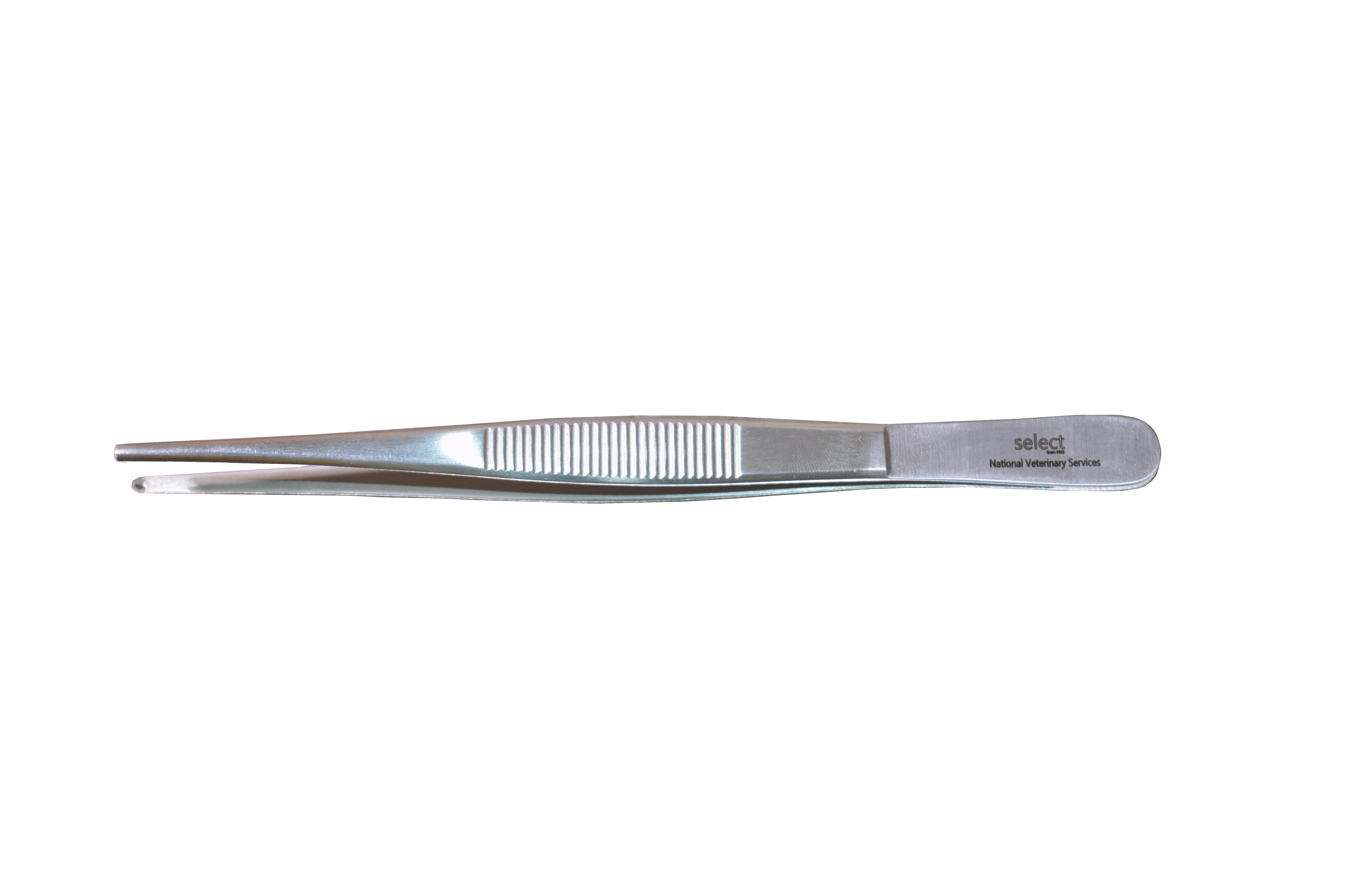
Rat-tooth forceps are a specialized type of thumb forceps, a handheld surgical instrument primarily used for grasping and holding dense tissues. The name is derived from their distinctive tip, which features one or more interlocking pairs of sharp, tooth-like projections resembling a rat’s incisors. Unlike smooth or serrated forceps, the rat-tooth design provides a secure, non-slip grip, making them indispensable in procedures where tissue must be held firmly against traction or manipulation.
How it works
The working principle is based on a simple lever mechanism. The user applies pressure with their thumb and fingers at the rings (or handles), which pivots at the box lock, bringing the tips together. The interlocking teeth at the tip penetrate the tissue’s superficial layers, creating a mechanical hold that prevents slipping. The design allows for a firm grip without the need for excessive crushing pressure along the entire length of the jaws, helping to localize trauma to the immediate area of the teeth.
Key Components
- Blades/Jaws: The distal part of the forceps that makes contact with the tissue. This is where the characteristic “teeth” are located.
- Teeth: The sharp, pointed projections on the jaws. They are precisely aligned to interlock, typically in a 1×2 (one tooth on one jaw fitting between two on the opposite jaw) or 2×3 configuration.
- Shank/Body: The long, slender portion connecting the jaws to the handle. It can be straight or curved.
- Box Lock: The hinged joint where the two halves of the forceps meet. This is a crucial component for smooth operation and durability.
- Handle/Fin ger Rings: The part where the user holds the instrument. It is designed for a comfortable and secure pinch grip.
- Ratchet: A locking mechanism located between the handle and the box lock. It allows the user to lock the forceps in a closed position, freeing their hands.
2. Uses
Clinical Applications
Rat-tooth forceps are used across a wide range of surgical disciplines for tasks requiring a firm grip on robust tissues. Common applications include:
- General and Trauma Surgery: Grasping skin, fascia, and dense connective tissue during wound closure and dissection.
- Orthopedic Surgery: Holding tendons, ligaments, and heavy fascia during repairs and reconstructions.
- Obstetrics and Gynecology: Grasping the cervix or other fibrous tissues during specific procedures.
- Veterinary Surgery: Used similarly across various animal species for tissue handling.
- Biopsy Procedures: Securing a tissue sample firmly before excision.
Who uses it
- Surgeons (General, Orthopedic, Plastic, etc.)
- Surgical Assistants and Registered Nurse First Assistants (RNFAs)
- Emergency Room Physicians
- Veterinarians
Departments/Settings
- Operating Rooms (OR)
- Minor Procedure Rooms
- Emergency Departments (ED)
- Trauma Bays
- Veterinary Clinics and Operating Theaters
3. Technical Specs
Typical Specifications
- Length: Commonly range from 10 cm to 25 cm (4 to 10 inches), with 12-15 cm being standard for many procedures.
- Tip Configuration: 1×2 teeth is the most common; 2×3 teeth provides an even more secure grip for heavier tissues.
- Curvature: Available in straight, curved, or semi-curved profiles to accommodate different anatomical sites and angles of approach.
Variants & Sizes
- Standard Rat-tooth: The classic design with 1×2 teeth.
- Heavy-duty Rat-tooth (2×3): Features larger, more robust teeth for grasping very dense tissue like tendon or heavy fascia.
- Adson Rat-tooth: Incorporates the rat-tooth tip onto a finer, broader handle, ideal for plastic and dermatological surgery where precise control is needed.
- Bonney Rat-tooth: A heavy, robust version with wide jaws and strong teeth, often used in gynecology.
Materials & Features
- Materials: Typically manufactured from high-grade medical stainless steel (e.g., AISI 410, 420, or 316L) for excellent corrosion resistance, durability, and ability to hold a sharp edge.
- Features:
- Tungsten Carbide Inserts: Some premium models have tungsten carbide inserts on the tips for extreme hardness and longevity.
- Satfinish: A non-reflective finish that reduces glare under bright operating lights.
- German vs. American Patterns: Slight variations in design and weight; German patterns are often favored for their balance and craftsmanship.
Models
While not typically branded with model numbers like electronics, they are categorized by their attributes. Notable “types” include:
- Adson Rat-tooth Forceps
- Bonney Rat-tooth Forceps
- Standard 1×2 Rat-tooth Forceps
- Cushing Forceps (a variant with finer, interdigitating teeth at the very tip)
4. Benefits & Risks
Advantages
- Superior Grip: The interlocking teeth provide unparalleled traction, preventing tissue slippage.
- Localized Trauma: By concentrating the grip at the teeth, they minimize crushing along a broader surface area compared to smooth forceps used with high pressure.
- Tactile Feedback: Provides the surgeon with a good sense of the tissue’s density and integrity.
- Durability: Simple, robust construction ensures a long lifespan with proper care.
Limitations
- Tissue Trauma: The teeth inevitably cause puncture wounds and more significant tissue damage than atraumatic forceps. They are not suitable for delicate tissues like bowel, blood vessels, or parenchymatous organs.
- Crushing Effect: If misused or applied with excessive force, they can crush and devitalize tissue.
- Skill-Dependent: Requires skill to use appropriately; improper application can lead to unnecessary tissue damage.
Safety Concerns & Warnings
- Never use on friable or delicate tissues. This can cause irreparable damage.
- Avoid grasping nerves or blood vessels directly.
- Use the minimum force necessary to achieve a secure hold to minimize trauma.
- Inspect the tips before use; damaged or misaligned teeth can cause excessive tissue injury.
Contraindications
Rat-tooth forceps are contraindicated for use on:
- Visceral organs (e.g., intestine, liver, lung)
- Blood vessels and nerves
- Any tissue where cosmesis is a primary concern (where Adson or finer forceps would be preferred)
- Thin, fragile skin (e.g., in elderly or critically ill patients)
5. Regulation
As a fundamental surgical instrument, rat-tooth forceps are generally classified as low-to-moderate risk devices.
- FDA Class: Typically Class I (exempt from premarket notification). They are viewed as simple, manual surgical tools with a long history of safe use.
- EU MDR Class: Typically Class I (under Rule 1 for non-invasive devices). Manufacturers must have a CE certificate and comply with the EU MDR’s general safety and performance requirements.
- CDSCO Category (India): Classified under Class A medical devices, representing low risk.
- PMDA Notes (Japan): Generally classified as Class I medical devices. They must comply with the Pharmaceutical and Medical Device Act (PMD Act) and bear the required certification.
- ISO/IEC Standards:
- ISO 13485: Quality Management Systems for Medical Devices (for the manufacturer).
- ISO 7151: Specific to surgical instruments, covering materials, design, and test methods.
- ISO 15223-1: Specifies symbols used on medical device labeling.
- IEC 62366-1: Application of usability engineering to medical devices.
6. Maintenance
Cleaning & Sterilization
Immediate post-procedure cleaning is critical to prevent bioburden from drying and hardening in the teeth.
- Point-of-Use Pre-cleaning: Wipe with a sterile, moist sponge to remove gross debris.
- Manual Cleaning: Use a soft brush, enzymatic detergent, and lukewarm water to thoroughly clean the jaws, box lock, and ratchet. Pay special attention to cleaning between the fine teeth.
- Ultrasonic Cleaning: Highly recommended to dislodge microscopic debris from the intricate parts.
- Rinsing & Drying: Rinse thoroughly with distilled water and dry completely to prevent water spots and corrosion.
- Sterilization: Autoclave sterilization is the standard method. Use a steam sterilizer at 121°C-135°C (250°F-275°F) for the recommended cycle time. Ensure instruments are dry before storage.
Reprocessing
Reprocessing for single-use devices is not recommended and is often not feasible. For reusable forceps, the above cleaning and sterilization process constitutes the reprocessing cycle.
Calibration
Rat-tooth forceps do not require electronic calibration. However, they require regular functional inspection to check for:
- Tip Alignment: The teeth must meet precisely without overlap or gap.
- Ratchet Function: The lock should engage and disengage smoothly without slipping.
- Box Lock: There should be no excessive play or stiffness in the joint.
Storage
- Store in a dry, climate-controlled environment.
- Use dedicated trays or organizers to prevent contact with other instruments, which can damage the fine teeth.
- Avoid overcrowding in storage trays.
7. Procurement Guide
How to Select the Device
- Procedure Type: Match the instrument to its primary use. Standard 1×2 teeth are versatile, while 2×3 are for heavy tissue.
- Length & Curvature: Choose a length that provides comfort and access. Curvature is often preferred for deep cavity work.
- Balance & Feel: The instrument should feel balanced and comfortable in the hand. This is subjective but crucial for surgeon satisfaction.
Quality Factors
- Material Quality: Ensure it’s made from high-grade, rust-resistant stainless steel.
- Craftsmanship: Look for a smooth, seamless finish, a tight box lock, and perfectly aligned teeth.
- Durability: Check for a robust shank and a well-constructed ratchet.
Certifications
Look for instruments from manufacturers with:
- ISO 13485 Certification
- CE Mark (for the EU market)
- FDA Establishment Registration (for the US market)
Compatibility
As a manual instrument, it is universally compatible. Consider the storage system (tray sizes) and the need for matching sets with other instruments.
Typical Pricing Range
Price varies significantly based on quality, brand, and material.
- Economy (Basic Stainless Steel): $15 – $40 per unit
- Mid-Range (Premium Steel, Better Finish): $40 – $100 per unit
- High-End (Tungsten Carbide, German-made): $100 – $250+ per unit
8. Top 10 Manufacturers (Worldwide)
- B. Braun Aesculap (Germany / USA) – A global leader known for precision and quality, especially in their German-made lines.
- Integra LifeSciences (USA) – Particularly through its Miltex brand, a renowned name for precision surgical instruments.
- Johnson & Johnson (Ethicon) (USA) – A giant in the surgical world, providing reliable and widely used instruments.
- KLS Martin Group (Germany) – Highly regarded for innovative and high-precision surgical instruments, including specialty forceps.
- Stille (Sweden) – A historic brand synonymous with durability and excellent craftsmanship, now often part of larger groups.
- Surgical Holdings (UK) – A leading manufacturer and reprocessor of surgical instruments with a strong global export market.
- Sontec Instruments (USA) – Known for high-quality instruments, often with tungsten carbide inserts.
- Lawton GmbH (Germany) – A premier German manufacturer with a reputation for exceptional quality and ergonomics.
- Robbins Instruments (USA) – Specializes in a wide array of forceps and other surgical tools.
- Teleflex Medical (USA) – A major global provider of medical devices, including a comprehensive portfolio of surgical instruments.
9. Top 10 Exporting Countries (Latest Year)
(Based on analysis of trade data for HS Code 901890 – Instruments and appliances used in medical sciences)
- Germany: The global gold standard for precision engineering. Exports high-value, premium instruments.
- United States: A major hub for both manufacturing and distribution of medical devices.
- Pakistan (Sialkot): A world-renowned center for the production of surgical instruments, offering a wide range from economy to high-quality.
- China: A leading mass manufacturer, dominating the economy and mid-range segments of the market.
- Switzerland: Known for high-precision, specialized, and often very expensive surgical tools.
- United Kingdom: Has a strong heritage in surgical manufacturing, exporting high-quality instruments.
- France: Home to several established medical device companies with significant exports.
- Japan: Exports high-quality, precision instruments, often incorporating advanced materials.
- Italy: Has a strong manufacturing base for surgical and dental instruments.
- Netherlands: A key trade and distribution hub within Europe, with some manufacturing.
10. Market Trends
Current Global Trends
- Rising Surgical Volumes: An aging population and increased access to healthcare are driving the number of surgeries performed globally.
- Cost Pressure: Hospitals are balancing the need for quality with budget constraints, leading to stratified purchasing (high-end for critical uses, economy for general use).
- Focus on Reprocessing: Increased emphasis on the longevity and reliable reprocessing of reusable instruments to reduce long-term costs and waste.
New Technologies
- Enhanced Materials: Development of even more corrosion-resistant and harder steel alloys.
- Surface Treatments: Permanent lubricants for box locks and non-reflective coatings are becoming more advanced.
- Ergonomics: Increased design focus on reducing surgeon hand fatigue during long procedures.
Demand Drivers
- Growth in outpatient ambulatory surgical centers.
- Expansion of veterinary surgical services.
- Global healthcare infrastructure development.
Future Insights
The market for basic instruments like rat-tooth forceps will remain stable. Innovation will focus on material science for durability and specialized designs for minimally invasive and robotic-assisted surgeries, where the fundamental grasping function remains essential but the form factor may evolve.
11. Training
Required Competency
Competency involves understanding the instrument’s appropriate use, handling it with dexterity, and appreciating tissue handling principles. This is typically gained through surgical residency and hands-on mentoring.
Common User Errors
- Using on the wrong tissue type: The most critical error (e.g., using on bowel).
- Excessive force: Crushing the tissue instead of just holding it.
- Poor placement: Placing the teeth in a way that causes unnecessary cosmetic damage.
- Using damaged forceps: Failing to inspect for misaligned or broken teeth.
Best-Practice Tips
- “Test the grip” on a surgical sponge or gauze before touching tissue.
- Use the tips of the forceps for precise control.
- Grasp only the tissue layer you intend to hold (e.g., dermis, not subcutaneous fat).
- For skin closure, consider using skin hooks or finer forceps to minimize scar formation.
12. FAQs
1. What’s the difference between rat-tooth and DeBakey forceps?
Rat-tooth have sharp, interlocking teeth for a strong grip on external/dense tissues. DeBakey forceps are atraumatic, with fine, ribbed tips designed to hold delicate tissues like blood vessels or intestines without causing puncture wounds.
2. Can rat-tooth forceps be used for suturing?
Yes, they are commonly used to hold tissue edges in apposition for suturing, particularly for skin and fascia. However, for delicate skin suturing where cosmesis is vital, less traumatic forceps are preferred.
3. What does “1×2” and “2×3” mean?
This describes the tooth pattern. “1×2” means one tooth on one jaw fits between two teeth on the opposite jaw. “2×3” is a heavier pattern with two teeth fitting between three.
4. Are they reusable or single-use?
High-quality rat-tooth forceps are designed to be reusable and can withstand hundreds of sterilization cycles. Single-use, disposable versions also exist, typically made of plastic, for specific scenarios or to prevent cross-contamination.
5. How do I check if the teeth are still good?
Close the forceps and hold them up to the light. The teeth should interlock perfectly with no light visible between them. They should not overlap or be misaligned.
6. Why are some forceps gold-colored?
The gold color typically indicates that the jaws are tipped with Tungsten Carbide, an extremely hard and durable material that significantly extends the instrument’s life.
7. My rat-tooth forceps are not closing properly. What’s wrong?
Debris is likely impacted in the box lock or between the teeth. Soak in enzymatic solution and clean thoroughly with an ultrasonic cleaner. If the problem persists, they may be mechanically damaged and need professional repair or replacement.
8. Is it normal for the teeth to be this sharp?
Yes, the sharpness is intentional and necessary for the instrument to function correctly. Handle with care to avoid accidental needle-stick injuries.
13. Conclusion
Rat-tooth forceps are a timeless and fundamental tool in the surgeon’s arsenal. Their unique design provides a secure, mechanical grip on robust tissues that is unmatched by other forceps types. Mastery of this instrument—knowing when to use it, when to avoid it, and how to handle it with skill—is a cornerstone of surgical practice. By understanding its specifications, applications, benefits, and inherent risks, and by adhering to strict maintenance protocols, healthcare professionals can ensure this simple yet vital instrument continues to contribute to successful surgical outcomes for years to come.
14. References
- Georgetown Instrument: Surgical Instrument Guide. (n.d.). Retrieved from Georgetown Instrument website
- Surgical Holdings: A Guide to Surgical Instruments. (2023). Retrieved from Surgical Holdings website
- U.S. Food and Drug Administration. (2022). Classify Your Medical Device.
- European Commission. (2017). Regulation (EU) 2017/745 on medical devices (MDR).
- Central Drugs Standard Control Organization (CDSCO). (2017). Medical Device Rules.
- International Organization for Standardization. (2016). ISO 7151:2016 – Surgical instruments — Metallic materials — Part 1: Stainless steel.
- Miltex Instrument Care & Handling Guide. (Integra LifeSciences).