1. Definition
What is a CO₂ Insufflator?
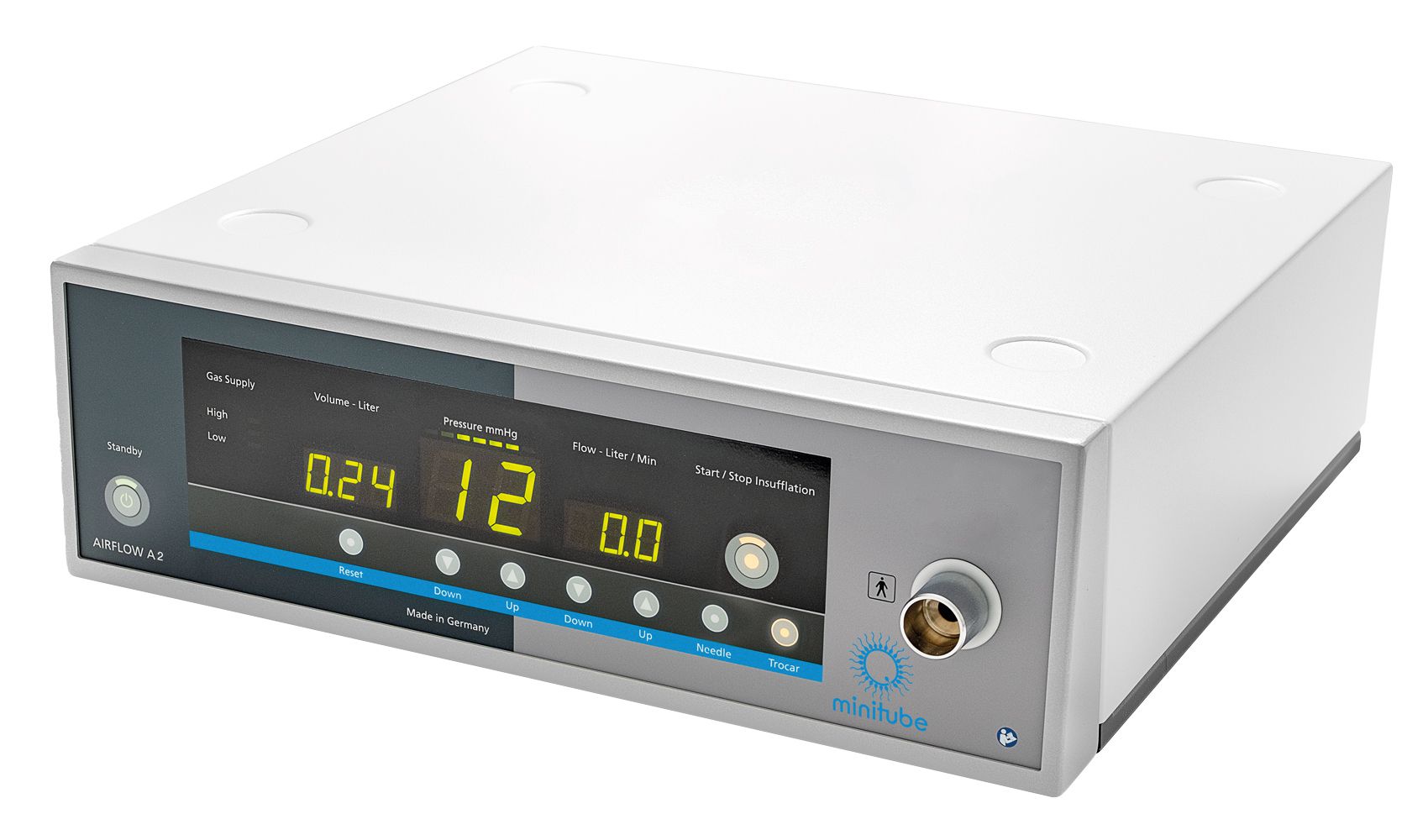
A CO₂ Insufflator is a critical medical device used primarily in minimally invasive surgeries, such as laparoscopy. Its primary function is to create and maintain a working space within a body cavity, most commonly the abdominal cavity. It does this by delivering a controlled flow of medical-grade carbon dioxide (CO₂) gas to inflate the cavity, pushing the abdominal wall away from the internal organs. This creates a “pneumoperitoneum,” which provides the surgeon with a clear view and ample room to manipulate surgical instruments.
How it works
The principle is elegant in its simplicity. The insufflator is a high-precision gas management system.
- Gas Source: It is connected to a tank of medical-grade CO₂.
- Pressurization & Regulation: The device takes the high-pressure gas from the tank and reduces it to a safe, low pressure.
- Controlled Delivery: The surgeon sets two key parameters on the device: the flow rate (liters of gas per minute) and the pressure limit (millimeters of mercury, mmHg). The insufflator then delivers the gas at the set flow rate until the pressure in the abdominal cavity reaches the preset limit. It continuously monitors the intra-abdominal pressure and automatically starts and stops the gas flow to maintain this pressure, compensating for minor leaks caused by instrument exchanges.
Key Components
- CO₂ Gas Tank/Cylinder: The source of medical-grade carbon dioxide.
- Pressure Regulator: Reduces the high pressure from the tank to a level usable by the insufflator.
- Flow Control Valve & Solenoid: An electronically controlled valve that precisely opens and closes to regulate gas flow.
- Pressure Sensor: Continuously measures the pressure within the patient’s body cavity.
- Microprocessor/Control Unit: The “brain” that processes input from the pressure sensor and controls the flow valve to maintain the set parameters.
- Display Screen: Shows real-time information such as set pressure, actual pressure, flow rate, and total gas volume used.
- Gas Outlet Port: The connection point for the sterile insufflation tubing that leads to the patient.
- Alarm System: Provides visual and audible alerts for conditions like low gas supply, tubing kinks, or failure to maintain pressure.
2. Uses
Clinical Applications
CO₂ Insufflators are indispensable in a wide range of endoscopic procedures:
- Laparoscopic Surgery: The most common application. Used in cholecystectomy (gallbladder removal), appendectomy, hernia repair, bariatric surgery, and hysterectomy.
- Arthroscopy: Used to insufflate joint spaces, like the knee or shoulder, for better visualization.
- Endoscopic Mucosal Resection (EMR) & Submucosal Dissection (ESD): In gastroenterology, CO₂ is used to insufflate the gastrointestinal tract during these advanced procedures, as it is absorbed faster than air, reducing patient discomfort.
- Robotic-Assisted Surgery: Acts as the insufflation source for systems like the da Vinci Surgical System.
- Gynecological Procedures: Such as laparoscopic investigation for endometriosis or tubal ligation.
- Urological Procedures: Including laparoscopic nephrectomy (kidney removal) and prostatectomy.
Who uses it
- Surgeons: (General, Gynecological, Urological) who perform the procedure.
- Certified Surgical Technologists (CSTs) / Scrub Nurses: Responsible for setting up the device, connecting the sterile tubing, and ensuring it is functioning before the procedure begins.
- Anesthesiologists/Anesthetists: Monitor the patient’s physiology, as increased intra-abdominal pressure can impact cardiac and respiratory function.
- Circulating Nurses: Assist with turning the device on, managing the gas cylinder, and troubleshooting non-sterile components.
Departments/Settings
- Operating Rooms (ORs) in hospitals and ambulatory surgical centers.
- Specialized Endoscopy Suites.
- Daycare Surgery Centers.
3. Technical Specs
Typical Specifications
- Flow Rate Range: Typically from 0.1 to 35+ liters per minute (L/min). High-flow insufflators (e.g., 45 L/min) are available for rapid cavity establishment.
- Pressure Setting Range: Usually 0 to 40 mmHg, with a typical working range of 12-15 mmHg for most adult laparoscopic procedures.
- Pressure Accuracy: ±1-2 mmHg.
- Gas Consumption Display: Shows real-time flow and cumulative volume used.
- Heating Capability: Some models include a gas warmer to prevent hypothermia and fogging of the scope.
Variants & Sizes
- Standard Insufflators: Offer basic to advanced flow rates (e.g., up to 20 L/min).
- High-Flow Insufflators: Designed for complex procedures or large cavities where rapid re-insufflation is needed after suction (e.g., 35-45 L/min).
- Heated Insufflators: Integrate a warming chamber to heat the CO₂ to near body temperature before it enters the patient.
- Portable/Compact Insufflators: Smaller units designed for office-based procedures or clinics with space constraints.
Materials & Features
- Materials: Housing is typically made of medical-grade plastics and stainless steel. Internal fluid paths are designed to be cleanable and sterilizable.
- Key Features:
- Digital Touchscreen Interface: For intuitive control.
- Automatic Leak Compensation: Maintains set pressure despite minor gas loss.
- Pre-sterile, Single-Use Tubing: To maintain aseptic technique.
- Data Logging & Connectivity: Ability to record procedure data and integrate with hospital information systems.
- Smoke Evacuation Mode: Some advanced models can pulse gas to help clear surgical smoke.
Models
- Karl Storz: Thermoflator® and E.A.T.I.® (Electronic Abdominal Turbointufflator) series.
- Stryker: EndoFlush® and Insufflation Systems.
- Olympus: UHI-4 Insufflator.
- Medtronic: Finesse® Insufflator.
- Richard Wolf: Bipolar Insufflation Unit.
4. Benefits & Risks
Advantages
- Minimally Invasive: Enables keyhole surgery, leading to smaller incisions, less pain, and faster recovery.
- Improved Visualization: Creates a clear, well-lit operative field.
- Enhanced Surgical Precision: Provides space for instrument manipulation.
- Reduced Blood Loss: Compared to open surgery.
- Lower Infection Rates: Due to smaller wounds.
Limitations
- Dependence on Technology: A malfunction can halt the procedure.
- Learning Curve: Requires training for proper setup and troubleshooting.
- Physiological Impact: Can cause hemodynamic and respiratory changes that must be managed by the anesthesiologist.
Safety Concerns & Warnings
- Gas Embolism: A rare but life-threatening complication where CO₂ enters the bloodstream. Modern insufflators have safety features to minimize this risk.
- Hypercapnia: Elevated CO₂ levels in the blood, managed by ventilator adjustments.
- Tissue Hypothermia: Using cold, dry CO₂ can lower patient core temperature. Heated insufflators mitigate this.
- Barotrauma: Excessive pressure can damage tissues and organs.
- Venous Stasis: High intra-abdominal pressure can impede venous return to the heart.
Contraindications
Absolute contraindications are rare but include:
- Hemodynamic instability or shock.
- Severe cardiac or pulmonary disease where increased abdominal pressure is intolerable.
- Known or suspected gas embolism.
- Uncorrected coagulopathy (bleeding disorder).
5. Regulation
CO₂ Insufflators are regulated as critical medical devices worldwide.
- FDA Class: Class II (moderate to high risk). Regulated under Product Code: GCJ.
- EU MDR Class: Class IIa or IIb, depending on the duration of use and whether it controls body pressure.
- CDSCO Category (India): Class C (moderate to high risk).
- PMDA Notes (Japan): Regulated as a “controlled medical device,” typically falling under Class II.
- ISO/IEC Standards:
- ISO 80601-2-77: Particular requirements for the basic safety and essential performance of robotically assisted surgical equipment (can apply to integrated systems).
- IEC 60601-1: General requirements for basic safety and essential performance of medical electrical equipment.
- ISO 10079-3: Medical suction equipment – Part 3: Suction equipment powered from a vacuum or pressure source.
6. Maintenance
Cleaning & Sterilization
- The main unit’s exterior is cleaned with a hospital-grade disinfectant wipe between procedures.
- The insufflation tubing is single-use, disposable, and must never be reprocessed.
- Internal gas paths in some models may require periodic sterilization according to the manufacturer’s instructions (e.g., using Ethylene Oxide or Steam).
Reprocessing
Reprocessing is typically not applicable to the main unit between patient uses, as the gas path is not patient-contacting. The critical single-use component is the tubing set.
Calibration
- Pressure and flow sensors should be calibrated annually or as per the manufacturer’s schedule by a qualified biomedical engineer.
- This ensures accuracy and patient safety.
Storage
- Store in a clean, dry, and temperature-controlled environment.
- Protect from dust, moisture, and physical impact.
- Ensure the device is turned off and disconnected from the power source when not in use.
7. Procurement Guide
How to Select the Device
- Procedure Volume & Type: A high-volume surgical center doing bariatric surgery will need a high-flow model, while a clinic for basic gynecology may only need a standard unit.
- Ease of Use: Intuitive interface reduces setup time and user error.
- Reliability & Service Support: Look for manufacturers with a strong reputation and responsive service network.
- Integration: Consider compatibility with existing equipment, like OR integration systems.
Quality Factors
- Build Quality: Robust construction.
- Accuracy & Consistency: Precise pressure control.
- Alarm Functionality: Clear and unambiguous alarms.
- After-Sales Support: Availability of training, spare parts, and technical service.
Certifications
Ensure the device has the necessary regulatory clearances for your region: CE Mark (for Europe), FDA 510(k) Clearance (for USA), and others as applicable.
Compatibility
Primarily compatible with standard CO₂ tanks (with a pin-index safety system) and universal, manufacturer-specific, or proprietary single-use tubing sets.
Typical Pricing Range
- Standard Insufflators: $5,000 – $15,000 USD.
- Advanced/High-Flow/Heated Insufflators: $15,000 – $30,000+ USD.
(Pricing varies significantly based on features, brand, and region.)
8. Top 10 Manufacturers (Worldwide)
- Karl Storz (Germany): A global leader in endoscopy. Known for their high-quality, reliable Thermoflator® systems.
- Stryker (USA): A major player in medical technology with a comprehensive portfolio, including the popular EndoFlush® insufflators.
- Olympus (Japan): Renowned for its endoscopic and imaging systems, offering integrated insufflation solutions.
- Medtronic (Ireland): A global healthcare giant providing advanced energy and insufflation devices like the Finesse® system.
- Richard Wolf (Germany): A specialist in endoscopy, offering a range of insufflation units known for their precision.
- B. Braun (Germany): Offers a wide range of medical devices and equipment, including insufflators for various surgical needs.
- ConMed (USA): Provides a diverse portfolio of surgical devices, including insufflators and related accessories.
- Applied Medical (USA): Known for its innovative surgical technologies and value-based products.
- Becton, Dickinson (BD) (USA): While known for many things, its acquisition of C. R. Bard brought it into the surgical space with relevant products.
- EMC Medical (India): A growing manufacturer offering cost-effective insufflation solutions, particularly strong in emerging markets.
9. Top 10 Exporting Countries (Latest Year)
(Based on analysis of trade data for medical insufflation apparatus)
- Germany: A global hub for precision engineering and medical devices (e.g., Karl Storz, B. Braun).
- United States: Home to several leading manufacturers (Stryker, Medtronic, ConMed).
- Japan: A technological leader, driven by Olympus and other electronics firms.
- Ireland: A significant exporter due to the presence of major med-tech companies like Medtronic’s operational hubs.
- China: A rapidly growing exporter, offering a range of devices from basic to advanced.
- Mexico: A key manufacturing and export location for companies serving the North American market.
- Switzerland: Known for high-precision manufacturing in the medical field.
- United Kingdom: Hosts R&D and manufacturing facilities for several international players.
- France: Has a strong domestic medical device industry.
- India: An emerging exporter, catering to cost-sensitive markets with increasing quality.
10. Market Trends
Current Global Trends
- Rise of Minimally Invasive Surgery (MIS): The primary driver, as MIS becomes the standard of care for more procedures.
- Integration with OR Systems: Insufflators are becoming part of connected OR suites, allowing for centralized control and data monitoring.
New Technologies
- Intelligent Pressure Control: Algorithms that adjust pressure dynamically based on patient physiology and surgical phase.
- Widespread Adoption of Heated Insufflation: Recognized as a standard of care to prevent hypothermia.
- Enhanced Smoke Evacuation: Combined insufflation and smoke clearance systems.
Demand Drivers
- Growing geriatric population requiring surgical intervention.
- Patient preference for less painful procedures with quicker recovery.
- Technological advancements making complex surgeries possible via laparoscopy.
- Expansion of healthcare infrastructure in developing countries.
Future Insights
The future lies in “smart” insufflators integrated with AI and patient monitoring systems. These devices could automatically adjust gas flow based on real-time analysis of the surgical field and the patient’s vital signs, further enhancing safety and surgical efficiency.
11. Training
Required Competency
Operators must understand:
- The principles of pneumoperitoneum.
- Device setup, connection, and priming.
- Parameter selection (pressure and flow) for different procedures and patient types.
- Alarm interpretation and basic troubleshooting.
Common User Errors
- Incorrect Tubing Connection: Failing to secure the tubing to the device or Veress needle/trocar.
- Starting with High Flow: Initiating insufflation at a high flow rate, which can be dangerous. It should always start low (1-2 L/min).
- Ignoring Alarms: Overlooking or silencing alarms without identifying the cause (e.g., low gas, kinked tube).
- Incorrect Pressure Settings: Using pressures that are too high or too low for the specific procedure.
Best-Practice Tips
- Always perform a pre-operative check: verify gas supply, tube integrity, and device functionality.
- Begin with a low flow rate to establish the pneumoperitoneum safely.
- Monitor the total gas volume used throughout the procedure.
- Communicate with the anesthesiologist regarding any significant pressure changes or prolonged high gas usage.
12. FAQs
1. Why is CO₂ used instead of air or another gas?
CO₂ is non-flammable, highly soluble in blood (so any gas embolism is absorbed quickly), and is a natural byproduct of metabolism, making it easy for the body to handle and expel.
2. What is a safe intra-abdominal pressure?
For most adults, 12-15 mmHg is standard. It can be adjusted lower for pediatric patients or patients with cardiorespiratory compromise.
3. What does the “High Flow” setting mean, and when is it used?
High flow (e.g., 35-45 L/min) is used to quickly re-establish the pneumoperitoneum when a lot of gas is lost, such as during suction, instrument exchange, or in large abdominal cavities.
4. The pressure is not building up. What could be wrong?
This is usually due to a leak. Check: 1) Tubing connections, 2) The CO₂ tank valve is fully open, 3) The tank is not empty, 4) The Veress needle or trocar valve is open and functioning.
5. Why is heated CO₂ beneficial?
It prevents hypothermia (a drop in core body temperature), which can lead to complications like surgical site infections and prolonged recovery. It also reduces lens fogging.
6. How often does the device need servicing?
Typically, an annual preventive maintenance and calibration check by a biomedical engineer is recommended.
7. Can the same insufflator be used for laparoscopy and arthroscopy?
Yes, but the pressure settings will be much lower for joint spaces (e.g., 30-50 mmHg for the shoulder is common, but always follow surgeon preference and protocol).
8. What is the single most important safety check before starting?
Ensuring all tubing connections are secure and the gas is flowing correctly before connecting to the patient, and starting at a low flow rate.
13. Conclusion
The CO₂ Insufflator is a pillar of modern minimally invasive surgery. From a simple gas delivery system, it has evolved into a sophisticated, intelligent device that is crucial for patient safety and surgical success. Understanding its operation, applications, benefits, risks, and proper maintenance is essential for every member of the surgical team. As technology advances, we can expect these devices to become even more integrated and intelligent, further pushing the boundaries of what is possible in surgery and improving patient outcomes worldwide.
14. References
- U.S. Food and Drug Administration (FDA). “Product Classification: Insufflator, Laparoscopy.”
- European Commission. “Medical Device Regulation (MDR) – Annex VIII.”
- International Organization for Standardization (ISO). “ISO 80601-2-77:2019 – Medical electrical equipment.”
- Gupta, R., et al. (2021). “Complications of Laparoscopic Surgery and their Management.” Journal of Minimal Access Surgery.
- Medtronic. (2023). Finesse Insufflator User Manual.
- Karl Storz. (2023). Thermoflator® Instructions for Use.
- GlobalData. (2023). “Medical Insufflation Devices Market Analysis.”
- World Health Organization (WHO). (2022). “Global Guidelines for the Prevention of Surgical Site Infection.”