1. Definition
What is an Ultrasonic Dissector (Harmonic Scalpel)?
An ultrasonic dissector, commonly known by its brand name “Harmonic Scalpel,” is an advanced electrosurgical instrument used for simultaneous cutting and coagulation of tissues during surgical procedures. Unlike traditional electrocautery, which uses high-frequency electrical current to burn tissue, the harmonic scalpel utilizes high-frequency mechanical vibrations to achieve its effects. It is a cornerstone of modern minimally invasive surgery (MIS), including laparoscopic, robotic, and open procedures, prized for its precision and minimal thermal damage to surrounding tissues.
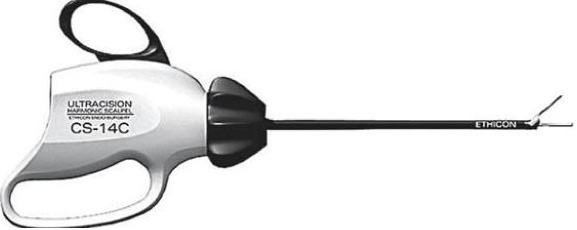
How it Works
The fundamental principle is elegant in its simplicity. The device consists of a generator, a handpiece, and a blade. The generator converts standard electrical power into a high-frequency (typically 55,500 Hz) electrical signal. This signal is transmitted to the handpiece, which contains a piezoelectric transducer.
- Transduction: The piezoelectric crystals inside the transducer vibrate at the same high frequency when the electrical signal is applied.
- Amplification: These microscopic vibrations are mechanically amplified along the length of the handpiece, culminating in the blade tip vibrating longitudinally at 55,500 times per second.
- Tissue Interaction: This rapid vibration generates frictional heat and pressure within the tissue proteins themselves. This heat (typically between 50°C and 100°C) causes the proteins to denature and form a sticky, coagulative seal, effectively sealing vessels.
- Cutting and Coagulation: Once sealed, the continued vibration and pressure cleanly divide the tissue. The device can simultaneously coagulate vessels up to 5mm in diameter and cut, eliminating the need to switch between instruments.
Key Components
- Main Console/Generator: The brain of the system. It provides power and allows the surgeon to select energy levels for different tissue types (e.g., fine dissection vs. vessel sealing).
- Handpiece/Pistol Grip: The handheld unit that the surgeon operates. It houses the piezoelectric transducer and connects to the console via a cable.
- Blade/Jaw Assembly: The functional end of the instrument. It comes in various shapes (e.g., hook, spatula, shears) designed for specific tasks. The jaws open and close to grasp tissue.
- Foot Pedal: Allows the surgeon to activate the device hands-free, maintaining focus on the operative field.
- Proprietary Software: Advanced systems include tissue-sensing feedback algorithms that automatically adjust energy output for optimal sealing and minimal charring.
2. Uses
Clinical Applications
The harmonic scalpel is versatile and used across numerous surgical specialties:
- General Surgery: Cholecystectomy (gallbladder removal), appendectomy, thyroidectomy, parathyroidectomy, hernia repair, and bowel resection.
- Gynecological Surgery: Hysterectomy, oophorectomy, myomectomy, and treatment of endometriosis.
- Urological Surgery: Nephrectomy (kidney removal), prostatectomy, and adrenalectomy.
- Bariatric Surgery: Gastric bypass and sleeve gastrectomy.
- Colorectal Surgery: Colectomy and rectopexy.
- Thoracic Surgery: Lobectomy and mediastinal tumor resection.
Who Uses It
Primarily, the device is operated by surgeons (General, Gynecological, Urological, etc.). Scrub nurses or surgical technologists are responsible for preparing, connecting, and handling the device to the surgeon, and must be knowledgeable about its assembly and care.
Departments/Settings
The device is predominantly used in hospital operating rooms (ORs). It is also found in ambulatory surgery centers (ASCs) and specialized clinics that perform advanced outpatient surgical procedures.
3. Technical Specs
Typical Specifications
- Vibration Frequency: 55,500 Hz (standard for most models).
- Blade Tip Travel: 50-100 microns (the key to minimal lateral thermal damage).
- Active Blade Temperature: 50°C – 100°C (compared to 200°-350°C for electrocautery).
- Vessel Sealing Capacity: Typically 3mm to 5mm in diameter.
Variants & Sizes
- Open Surgery Handpieces: Larger, ergonomic designs for open procedures.
- Laparoscopic Handpieces: Long, slender shafts (5mm or 10mm diameter) designed to pass through trocars.
- Robotic Instrument Arms: Specifically designed to attach to robotic surgical systems like the da Vinci Surgical System.
Materials & Features
- Materials: Handpieces are made of high-grade, medical-grade plastics and metals. Blades are often titanium for its strength, light weight, and efficient energy transmission.
- Features: Key features include a rotating shaft for better access, a dedicated grip for precise control, proprietary tissue-feedback technology, and a variety of blade geometries (curved, hook, shears).
Models
- Ethicon (Johnson & Johnson): HARMONIC ACE®+ , HARMONIC HD 1000i™, HARMONIC SYNERGY® Blades (the original and market leader).
- Medtronic: SONICBEAT® (Often integrated with their Vessel Sealing platforms).
- Olympus: THUNDERBEAT® (Combines ultrasonic and advanced bipolar energy).
- Other Manufacturers: Bowa Medical, Söring GmbH.
4. Benefits & Risks
Advantages
- Precise Cutting and Coagulation: Allows for surgery in anatomically crowded areas.
- Minimal Thermal Damage: Significantly less charring, smoke production, and lateral thermal injury (1-2mm) compared to electrocautery.
- Enhanced Visibility: Reduced smoke and mist improves the surgeon’s view.
- Versatility: One instrument can dissect, cut, and coagulate, reducing instrument exchanges.
- Strong Vessel Sealing: Creates a secure, hemostatic seal, reducing blood loss.
- Safety: No electrical current passes through the patient’s body.
Limitations
- Cost: The handpieces and blades are often single-use (disposable) and expensive.
- Tissue Specificity: May not be as effective on very tough, fibrous, or calcified tissues as some advanced bipolar devices.
- Learning Curve: Requires training to master the appropriate handling pressure and activation time to avoid ineffective sealing or tissue sticking.
Safety Concerns & Warnings
- Blade Temperature: The blade remains hot for several seconds after deactivation and can cause accidental burns if it contacts non-target tissue.
- Direct Clamping: The active blade should not directly clamp onto other metal instruments, as this can damage the blade.
- Over-Charring: Prolonged activation on a single spot can lead to eschar (char) build-up, reducing effectiveness and potentially causing the seal to fail.
Contraindications
There are no absolute patient-specific contraindications. Its use is contraindicated in situations where the surgeon is not trained in its use or when the device is malfunctioning. It is not a replacement for a stapler for transecting large, named vessels or hollow viscera.
5. Regulation
As a critical surgical instrument, the ultrasonic dissector is heavily regulated worldwide.
- FDA Class: Class II (Special Controls). It is considered a moderate-to-high risk device.
- EU MDR Class: Typically Class IIb (devices for cutting and hemostasis in central circulatory system or nervous system are Class III).
- CDSCO Category: Class C (Moderate to High Risk), as per the Medical Device Rules, 2017.
- PMDA Notes: In Japan, it is classified as a Class II controlled medical device, requiring certification from approved third-party bodies.
- ISO/IEC Standards:
- ISO 13485: Quality Management Systems for Medical Devices.
- IEC 60601-1: General requirements for basic safety and essential performance.
- IEC 60601-2-2: Particular requirements for the basic safety and essential performance of high frequency surgical equipment.
6. Maintenance
Cleaning & Sterilization (For Reusable Components)
- Point-of-Use Wipe: Wipe the external surface immediately after use to prevent blood and debris from drying.
- Cleaning: Follow manufacturer’s instructions for manual or automated cleaning with enzymatic detergents.
- Lubrication: Apply medical-grade lubricant to moving parts as specified.
- Sterilization: Most reusable handpieces are sterilizable using steam autoclaving (e.g., 135°C for 4-10 minutes). Always refer to the device’s IFU.
Reprocessing
- The majority of modern harmonic scalpels are single-use/disposable to guarantee performance and sterility and to avoid reprocessing errors.
- For reusable handpieces, meticulous cleaning and inspection for damage (cracks, loose parts) are mandatory before sterilization.
Calibration
The main generator typically requires periodic calibration and performance verification by certified biomedical engineers to ensure it delivers the correct power output.
Storage
Store in a clean, dry, and climate-controlled environment. Single-use devices should be kept in their original packaging until ready for use to maintain sterility.
7. Procurement Guide
How to Select the Device
- Procedure Mix: Does your facility primarily do gynecology, general surgery, or bariatrics? Choose a system with blade variants that suit your most common procedures.
- Open vs. MIS: Ensure the system supports both laparoscopic and open handpieces if needed.
- Integration: Does it need to integrate with an existing OR setup or a robotic system?
Quality Factors
- Seal Reliability: Look for clinical data on burst pressure of sealed vessels.
- Lateral Thermal Spread: Prefer devices with independently verified low thermal spread data.
- Ergonomics: The handpiece should be comfortable and reduce surgeon fatigue.
- Durability: For reusable parts, assess the mean time between failures (MTBF).
Certifications
Ensure the device has CE Marking (for Europe), FDA 510(k) Clearance (for USA), and relevant local regulatory approvals (e.g., CDSCO for India).
Compatibility
Check compatibility with your existing electrosurgical generators (if not buying a full system) and your video tower/recording systems if data capture is required.
Typical Pricing Range
- Main Console/Generator: $25,000 – $70,000 USD.
- Single-Use Laparoscopic Handpiece/Blade: $300 – $700 USD per unit.
8. Top 10 Manufacturers (Worldwide)
- Ethicon (Johnson & Johnson) – USA: The market pioneer and leader with the HARMONIC product line. Known for extensive R&D and a wide range of blade options.
- Medtronic – Ireland/USA: A major player with the SONICBEAT and LIGASENSE technology, often bundled with their generator platforms.
- Olympus – Japan: Offers the THUNDERBEAT, a powerful device that combines ultrasonic and bipolar energy in a single instrument.
- B. Braun – Germany: A leading provider of surgical equipment with its own line of ultrasonic shears and scalpels.
- Bowa Medical – Germany: Known for high-quality electrosurgical units and ultrasonic devices, often as a cost-effective alternative.
- Söring GmbH – Germany: Specializes in rapid surgery devices, including ultrasonic dissectors.
- ConMed – USA: Offers a range of surgical devices, including ultrasonic energy products for various specialties.
- Erbe Elektromedizin – Germany: A renowned name in electrosurgery, offering advanced vessel sealing technologies that compete with ultrasonic devices.
- Integra LifeSciences – USA: Provides solutions in neurosurgery, reconstructive surgery, and general surgery, including ultrasonic aspiration.
- Stryker – USA: While strong in orthopedics and endoscopy, they offer ultrasonic-based products, particularly in their surgical division.
9. Top 10 Exporting Countries (Latest Year)
(Based on HS Code 901890 – Instruments and appliances used in medical sciences)
- United States: A dominant exporter, home to major players like J&J and Medtronic.
- Germany: A hub of precision medical engineering, with strong exports from B. Braun, Bowa, Söring, and Erbe.
- Ireland: Hosts large manufacturing facilities for many US-based companies, making it a significant export hub to the EU and globally.
- Japan: Led by Olympus, a key technological leader and exporter in the Asian and global markets.
- Mexico: A major manufacturing center for the North American market, with many companies having factories for export.
- China: A rapidly growing manufacturer and exporter of medical devices, including both branded and OEM ultrasonic devices.
- Netherlands: Serves as a key European distribution and logistics hub for medical devices.
- Switzerland: Home to a strong medical device and pharmaceutical industry with high-precision manufacturing.
- France: Hosts several mid-sized medical technology firms and subsidiaries of larger multinationals.
- United Kingdom: Maintains a strong medical device R&D and export market despite post-Brexit changes.
10. Market Trends
Current Global Trends
- Rise of Minimally Invasive Surgery (MIS): The primary driver for ultrasonic scalpel adoption.
- Value-Based Healthcare: Hospitals are seeking devices that improve outcomes (less blood loss, shorter OR time) to justify cost.
- Growth in Ambulatory Surgery Centers (ASCs): The shift to outpatient surgery increases demand for efficient, all-in-one devices.
New Technologies
- Robotic Integration: Development of specialized ultrasonic instruments for robotic-assisted surgery is a key innovation frontier.
- Advanced Tissue Feedback: Smart generators that automatically adjust power in real-time based on tissue impedance.
- Combination Energy Devices: Devices like Olympus’ THUNDERBEAT that combine ultrasonic and bipolar energy for enhanced performance on varied tissues.
Demand Drivers
- Increasing prevalence of chronic diseases requiring surgery (e.g., cancer, obesity).
- Surgeon preference for precision and efficiency.
- Patient demand for minimally invasive procedures with quicker recovery.
Future Insights
The future points towards smarter, more connected devices. We can expect further integration with robotic platforms, AI-assisted tissue recognition for automated energy settings, and a continued focus on reducing procedural costs through improved device design and reprocessing protocols.
11. Training
Required Competency
Surgeons and OR staff require formal, hands-on training provided by the manufacturer or a certified proctor. Competency includes:
- Understanding the principles of ultrasonic energy.
- Proper assembly and connection.
- Safe handling, activation, and awareness of the hot blade.
- Tissue handling techniques (appropriate tension, “time-to-heat”).
Common User Errors
- Excessive Pressure: Pushing too hard with the blade can tear tissue and compromise the seal. Let the instrument do the work.
- “Cheese-Wiring”: Pulling too hard on tissue before the seal is complete, leading to bleeding.
- Insufficient Activation Time: Not allowing enough time for a proper coagulative seal to form.
- Tissue Sticking: Caused by excessive activation without cutting, leading to char build-up.
Best-Practice Tips
- Use the Right Blade: Select a blade design (e.g., hook, shears) suited to the specific task.
- Maintain Tissue Tension: Apply gentle, counter-traction on the tissue for clean dissection.
- Activate Before Contact: For cutting, start the blade vibration before touching the tissue for a clean incision.
- Keep the Blade Clean: Wipe off any eschar buildup promptly to maintain optimal performance.
12. FAQs
1. What’s the main difference between harmonic scalpel and electrocautery?
Electrocautery uses electrical current to burn tissue, causing significant thermal spread and smoke. The harmonic scalpel uses ultrasonic vibrations, creating less heat, less smoke, and more precise cuts.
2. Can the harmonic scalpel seal all blood vessels?
No. It is highly effective on vessels up to 5mm. Larger vessels or arteries may require other techniques like staplers or ligatures.
3. Is it safe to use near nerves?
While safer than electrocautery due to less lateral thermal damage, caution is still advised. Direct application or prolonged activation close to nerves should be avoided.
4. Why is there sometimes a “sticking” issue?
Sticking is often due to over-activation without cutting, leading to protein char building up on the blade. Using the correct power setting and wiping the blade clean can prevent this.
5. Are the instruments reusable?
Most modern laparoscopic harmonic devices are single-use/disposable to ensure peak performance and sterility. Some open surgery handpieces are reusable and require stringent reprocessing.
6. How long does the blade stay hot after use?
It can remain hot enough to cause a burn for 5-15 seconds after deactivation. Surgeons are trained to be aware of its position after use.
7. What happens if the blade cracks or breaks?
Stop using it immediately. A broken blade will not function correctly and could leave fragments in the surgical site.
8. Can it be used on a patient with a pacemaker?
Yes, this is a significant advantage. Since no electrical current passes through the patient, it is generally safe for use on patients with pacemakers or other implanted electronic devices.
13. Conclusion
The ultrasonic dissector (harmonic scalpel) has revolutionized modern surgery. By replacing electrical current with precise ultrasonic vibrations, it offers surgeons an unparalleled tool for achieving hemostatic cutting and dissection with minimal collateral damage. Its benefits—ranging from reduced blood loss and less smoke to faster patient recovery—have made it indispensable in operating rooms worldwide. While considerations around cost and training exist, its value in enabling safer, cleaner, and more efficient minimally invasive procedures is undeniable. As technology advances, its integration with robotics and smart systems promises to further elevate its role in the future of surgery.
14. References
- Ethicon, Inc. (2023). HARMONIC ACE®+ 7 Shears with Advanced Hemostasis | Instructions for Use.
- U.S. Food and Drug Administration (FDA). (2021). Product Classification: Ultrasonic Surgical Aspirator/Cutter.
- European Commission. (2017). Regulation (EU) 2017/745 on medical devices (MDR).
- Amaral, J. F. (1994). The Experimental Development of an Ultrasonically Activated Scalpel for Laparoscopic Use. Surgical Laparoscopy & Endoscopy, 4(2), 92–99.
- Sutton, P. A., et al. (2014). The role of ultrasonic dissection in modern surgical practice. The Annals of The Royal College of Surgeons of England, 96(7), 491–494.
- International Electrotechnical Commission (IEC). (2017). IEC 60601-2-2:2017 – Medical electrical equipment – Part 2-2: Particular requirements for the basic safety and essential performance of high frequency surgical equipment.