1. Definition
What is an Electro-Hydraulic Operating Table?
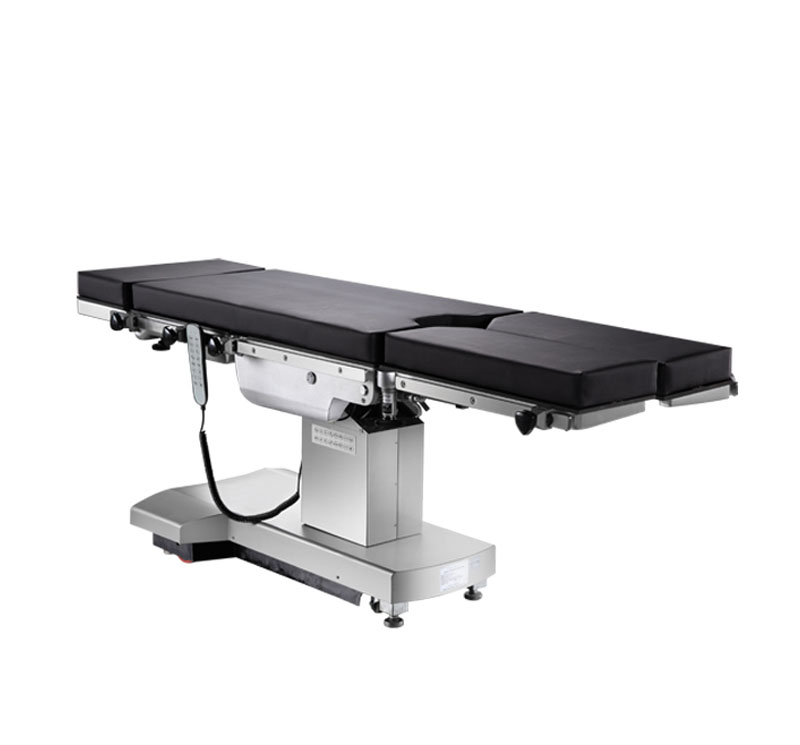
An electro-hydraulic operating table is a sophisticated piece of medical equipment designed to safely support a patient during surgical procedures. It serves as a stable, adjustable platform that allows the surgical team to position the patient optimally for various types of surgeries. The “electro-hydraulic” designation refers to its core drive mechanism: an electric motor powers a hydraulic system, which then smoothly and precisely adjusts the table’s height, tilt, and section movements.
Its primary function is to provide unparalleled positioning flexibility, enhance surgical access, improve ergonomics for the surgical team, and ensure patient safety and stability throughout an operation.
How It Works
The principle is elegantly simple. An electric motor (often a low-voltage DC motor for safety) drives a hydraulic pump. This pump pressurizes hydraulic fluid (oil) and directs it through valves to small, powerful hydraulic cylinders (actuators). These cylinders are connected to the table’s movable segments (back, leg, tilt sections). When the surgeon or technician presses a control button (from a pendant, touchpad, or remote), the corresponding valve opens. Pressurized fluid flows into the cylinder, extending or retracting its piston to move the table section. The system is designed for smooth, jerk-free motion and can lock in position with immense stability when the controls are released.
Key Components
- Table Top: The main patient-bearing surface. It is often modular, consisting of multiple radiolucent sections (head, back, seat, leg) to allow for C-arm and X-ray imaging.
- Column/Pedestal: The central support structure housing the hydraulic system. It allows for vertical height adjustment.
- Hydraulic Power Unit: Comprises the electric motor, hydraulic pump, fluid reservoir, and control valves. It is the “heart” of the table.
- Actuators (Hydraulic Cylinders): These are the “muscles” that convert hydraulic pressure into mechanical movement for table articulation.
- Control System: Includes the main power control, a hand pendant (with buttons for Trendelenburg, reverse Trendelenburg, height, flex, etc.), and often touchscreen interfaces or foot switches.
- Base & Casters: A sturdy base provides stability. Heavy-duty lockable casters allow for easy mobility.
- Accessories Mounting Rails: Side rails for attaching surgical accessories like arm boards, leg holders, shoulder supports, anaesthesia screens, and patient restraints.
- Safety Features: Include battery backup for lowering during power failure, emergency manual lowering valves, and lock-out controls.
2. Uses
Clinical Applications
Electro-hydraulic tables are versatile and used across a vast spectrum of surgeries:
- General & Abdominal Surgery: Positioning for laparoscopy, open procedures, etc.
- Orthopaedic Surgery: Critical for complex procedures like joint replacements, spinal surgeries, and trauma surgery. Features like traction and lateral tilt are essential.
- Cardiothoracic & Neurosurgery: Enable precise reverse Trendelenburg for cardiac access and specialized head fixation for neurosurgery.
- Urology & Gynaecology: Lithotomy position for cystoscopy, prostatectomies, and hysterectomies.
- Bariatric Surgery: Designed to support high patient weights safely.
- Hybrid Operating Rooms: Compatible with advanced imaging systems like fixed C-arms for intraoperative angiography.
Who Uses It
- Surgeons: Rely on precise positioning for optimal surgical access.
- Anaesthesiologists: Require safe positioning for airway management and vascular access.
- Operating Room Nurses & Technicians: Responsible for preoperative positioning, intraoperative adjustments, and post-operative transfer.
- Biomedical Engineers/Technicians: Perform maintenance, troubleshooting, and safety checks.
Departments/Settings
Primarily found in Operating Rooms (ORs) of hospitals, ambulatory surgery centres (ASCs), and specialized surgical clinics. Specific models are designed for Trauma & Emergency Rooms, Orthopaedic ORs, Cardiac Cath Labs/Hybrid ORs, and Interventional Radiology.
3. Technical Specs
Typical Specifications
- Patient Weight Capacity: Standard: 180-250 kg (400-550 lbs). Bariatric: 300-500+ kg.
- Height Range: Low height: ~60-65 cm (for easy patient transfer), High height: up to 105-120 cm (for surgeon ergonomics).
- Table Top Dimensions: Length: ~190-210 cm; Width: ~45-55 cm.
- Trendelenburg/Reverse Trendelenburg: Typically ±20° to ±30°.
- Lateral Tilt: Typically ±20°.
- Back Section Flexion: Up to 80° or more.
- Leg Section Flexion/Abduction: Varies for lithotomy positioning.
- Power Source: Mains power (110V/230V) with battery backup.
Variants & Sizes
- General Surgical Tables: Standard, versatile models.
- Orthopaedic Tables: Feature fracture traction, perineal post, and advanced limb positioning.
- Cardiac/Neuro Tables: Often have radiolucent carbon fibre tops, dedicated head clamp systems.
- Bariatric Tables: Wider tops, higher weight capacity, reinforced structure.
- Multi-Disciplinary/Hybrid OR Tables: Designed for seamless integration with advanced imaging.
Materials & Features
- Materials: Table tops are made of carbon fibre composite (for radiolucency and strength) or medical-grade stainless steel. Cushions are made of conductive, fluid-resistant, and easy-to-clean foam or gel.
- Key Features:
- 4-Section Top: Independent head, back, seat, and leg sections.
- Float Top: Allows longitudinal slide for easier use with C-arms.
- Memory Positions: Programmable buttons for one-touch positioning.
- Low Magnetic Susceptibility: For use in MRI environments.
- Seamless Design: To minimize infection retention points.
Models
- Maquet (Getinge): Alphamaquet, Magnus, Yuno.
- Stryker: iQ, 8080, 7000XL (Bariatric).
- STERIS: 5085, 4080.
- Schaerer Medical: STARSurgery, Evo.
- Mizuho OSI: Jackson, PROfx.
- Skytron: 6500, 6002.
- AGA Sanitätsartikel: Trinity, T2.
- Bender: HBS series.
- Lojer: Opera.
- Mindray: Hybrid series.
4. Benefits & Risks
Advantages
- Precise & Stable Positioning: Enables optimal surgical exposure.
- Enhanced Ergonomics: Reduces surgeon and staff fatigue, lowering risk of musculoskeletal injuries.
- Improved Patient Safety: Secure locking mechanisms and stable platforms prevent intraoperative movement.
- Versatility: One table can often support multiple surgical specialties.
- Efficiency: Quick positioning changes save OR time.
- Image Compatibility: Radiolucent designs facilitate intraoperative imaging.
Limitations
- High Initial Cost: Significant capital investment.
- Complex Maintenance: Requires specialized biomedical support.
- Dependence on Power: Requires functional batteries and electricity.
- Size & Weight: Can be cumbersome to move in crowded ORs.
Safety Concerns & Warnings
- Crush/Pinch Hazards: Always ensure no body parts or equipment are in the articulation path.
- Patient Instability: Ensure all locks are engaged and patient is secured before surgery.
- Electrical Safety: Must be used in dry environments; regular electrical safety checks are mandatory.
- Battery Management: Regular battery replacement cycles are crucial for emergency function.
- Weight Limit: Never exceed the manufacturer’s stated maximum load.
Contraindications
There are no direct patient contraindications, as the table is a support device. However, a specific table model is contraindicated for a procedure if it lacks the necessary positioning capability (e.g., using a general table without proper traction for a complex femur surgery).
5. Regulation
- FDA Class: Typically Class I (general controls) or Class II (special controls), depending on features and claims. Most are Class II (510(k) required).
- EU MDR Class: Under Rule 9, they are generally Class IIa (“medium risk”). Tables with a diagnostic function (e.g., integrated imaging) may be higher.
- CDSCO Category (India): Classified as Class B (moderate to high risk).
- PMDA (Japan): Regulated as a Class II Medical Device.
- ISO/IEC Standards:
- ISO 60601-1: General requirements for basic safety and essential performance.
- ISO 60601-2-46: Particular standards for operating tables.
- ISO 13485: Quality management systems for medical device manufacturers.
6. Maintenance
Cleaning & Sterilization
- Between Procedures: Clean the table top, cushions, and surfaces with hospital-grade, non-abrasive disinfectants. Follow manufacturer-recommended cleaning agents to avoid damaging materials.
- Daily/Weekly: Deep clean the base, column, and casters. Remove and clean accessory rails.
- Cushions: Check for tears; clean with appropriate disinfectant. They are not typically sterilizable.
Reprocessing
Detachable accessories (arm boards, leg holders) may be reprocessed according to their classification (critical/semi-critical). The table itself is a non-critical surface disinfected by cleaning.
Calibration
Periodic checks of table level (horizontal zero position) and accuracy of tilt/trendelenburg angles are recommended. This is often part of the manufacturer’s scheduled preventive maintenance (PM).
Storage
- Store in a clean, dry environment.
- When not in use for extended periods, disconnect from mains power and ensure batteries are charged to 50-70%.
- Store all accessories properly.
- Lower the table to its minimum height for stability.
7. Procurement Guide
How to Select the Device
- Define Clinical Needs: What specialties will it serve? (Ortho, cardiac, general?)
- Assess Workflow: Need for C-arm access? Float top? Hybrid OR compatibility?
- Consider Patient Population: Average weight? Need for bariatric capacity?
- Evaluate OR Space: Measure doorways and OR size for maneuverability.
Quality Factors
- Stability & Rigidity: No movement or “wobble” at maximum load and tilt.
- Smoothness of Motion: Jerk-free, quiet operation.
- Ease of Cleaning: Seamless design, minimal crevices.
- Durability: Robust construction for high-use environments.
- User Interface: Intuitive, responsive controls with clear feedback.
Certifications
Mandatory certifications for your region: CE Mark (Europe), FDA Clearance/Approval (USA), CDSCO (India), etc. Look for ISO 13485 certification of the manufacturer.
Compatibility
Ensure compatibility with existing and planned equipment: C-arms, patient monitors, anaesthesia machines (for cable routing), and surgical navigation systems.
Typical Pricing Range
A wide range exists based on features.
- Basic General Table: $25,000 – $50,000
- Advanced Multi-Specialty Table: $60,000 – $120,000
- Specialized Orthopaedic/Neuro/Hybrid Table: $100,000 – $250,000+
8. Top 10 Manufacturers (Worldwide)
- Getinge (Maquet) – Sweden/Germany: A global leader with the Alphamaquet and Magnus lines, known for reliability and innovation.
- Stryker – USA: A dominant force with the iQ and 8000 series, excelling in ergonomics and integration.
- STERIS – USA: Strong in infection prevention, offering the 5085 and 4080 series.
- Schaerer Medical (part of Steris) – Switzerland: Renowned for high-precision spinal surgery and orthopaedic tables.
- Mizuho OSI – USA: The gold standard for dedicated orthopaedic and spine tables (Jackson table).
- Skytron – USA: Known for robust, user-friendly tables like the 6500 series.
- AGA Sanitätsartikel – Germany: Manufacturer of the innovative Trinity and T2 tables.
- Mindray – China: A major global player offering cost-effective and advanced tables, including hybrid OR models.
- Lojer – Finland: Known for high-quality, ergonomic tables like the Opera series.
- Bender – Germany: Specializes in high-end tables for cardiovascular and hybrid surgeries.
9. Top 10 Exporting Countries (Latest Year – Based on HS Code 940290)
- Germany: Leading exporter of high-end medical equipment; home to Getinge, AGA, Bender.
- United States: Major hub for Stryker, STERIS, Mizuho OSI, Skytron.
- China: Largest volume exporter, with manufacturers like Mindray dominating the value segment.
- Mexico: Key manufacturing and export base for the North American market.
- Switzerland: Exporter of premium specialty tables (Schaerer).
- Italy: Strong in design and manufacturing of medical furnishings.
- Japan: Exporter of technologically advanced devices for the Asian market.
- Netherlands: A major European logistics and trade hub for medical devices.
- United Kingdom: Home to several specialist manufacturers and design firms.
- France: Exports a range of medical-surgical equipment.
(Note: Exact rankings fluctuate yearly based on trade data.)
10. Market Trends
- Current Global Trends: Growth driven by rising surgical volumes, aging populations, and expansion of ASCs. There is a strong shift towards multi-disciplinary tables to maximize OR utilization.
- New Technologies: Integration of AI and sensors for automatic positioning, weight distribution monitoring, and predictive maintenance. Enhanced connectivity (IoT) for integration into the digital OR.
- Demand Drivers: Minimally invasive surgery (MIS) growth, increasing obesity rates (bariatric tables), and the construction of Hybrid Operating Rooms.
- Future Insights: Expect greater robotics integration, voice-activated controls, augmented reality (AR) for positioning guidance, and continued focus on improving OR efficiency and ergonomics.
11. Training
Required Competency
All OR staff must be trained on: basic controls, emergency lowering, proper patient transfer to/from the table, attachment of accessories, and routine safety checks.
Common User Errors
- Not Performing Pre-op Safety Check: Failing to verify locks, battery, and stability.
- Overloading Accessories: Placing instruments or excessive weight on accessory arms not designed for it.
- Forcing Movements: Trying to adjust a locked section or one obstructed by equipment.
- Poor Cable Management: Allowing cords to be caught in the mechanism.
Best-Practice Tips
- Pre-Op Checklist: Always run through power, battery, motion, and lock tests.
- Team Communication: Announce any table movement before executing it.
- Center the Patient: Before any major tilt, ensure the patient is centered on the table top.
- Use Accessories Correctly: Ensure all clamps and locks on arm boards/leg holders are fully secured.
- Plan for Emergency: Know the location and operation of the manual emergency lowering valve.
12. FAQs
1. How often should the battery be replaced?
Typically every 2-3 years, but follow the manufacturer’s specific guidelines based on usage cycles.
2. Can the table be used in an MRI suite?
Only specific models with “MRI Conditional” labeling and low magnetic susceptibility materials can be used in designated zones. Never use a standard table near an MRI magnet.
3. What is the difference between Trendelenburg and Reverse Trendelenburg?
Trendelenburg: Head down, feet up. Reverse Trendelenburg: Head up, feet down.
4. How do I clean blood or fluids from the hydraulic column?
Use a damp cloth with recommended disinfectant. Avoid pouring fluids directly onto the column where they could seep into electrical or hydraulic components.
5. The table is moving very slowly. What could be wrong?
Low battery, a failing motor, or low hydraulic fluid level. Contact biomedical engineering.
6. Is it safe to use metal accessories (clamps, holders) with a radiolucent table?
Yes, but for imaging, they may need to be removed or repositioned to avoid artefact.
7. What is the “float” function?
It temporarily disengages the longitudinal lock, allowing the table top to be slid head-to-toe for easier C-arm positioning without moving the entire table.
8. Can we retrofit an older table with new features or controls?
Limited upgrades may be available from the manufacturer. Often, it’s more cost-effective to purchase a new table with the latest technology.
9. What is the typical lifespan of an electro-hydraulic table?
With proper maintenance, 10-15 years is common for the mechanical structure. Control systems may become obsolete sooner.
10. Who is responsible for routine maintenance?
The hospital’s biomedical engineering department, supported by scheduled service from the manufacturer or a third-party service provider.
13. Conclusion
The electro-hydraulic operating table is a cornerstone of the modern operating room, far more than a simple patient bed. Its sophisticated blend of electrical control and hydraulic power provides the precise, stable, and versatile positioning essential for successful surgical outcomes across all specialties. Selecting the right table requires a careful analysis of clinical needs, workflow, and future trends. Paramount to its value is a commitment to comprehensive staff training, rigorous preventive maintenance, and adherence to safety protocols. By understanding its principles, applications, and care, healthcare institutions can maximize this critical investment, enhancing both patient safety and surgical team performance for years to come.
14. References
- International Electrotechnical Commission. IEC 60601-1: Medical electrical equipment – Part 1: General requirements for basic safety and essential performance.
- International Organization for Standardization. ISO 60601-2-46: Medical electrical equipment – Part 2-46: Particular requirements for the basic safety and essential performance of operating tables.
- U.S. Food and Drug Administration. Device Classification.
- European Commission. Regulation (EU) 2017/745 on medical devices (MDR).
- Getinge, Stryker, STERIS, Mizho OSI. Product Technical Manuals and User Guides.
- Grand View Research. Operating Tables Market Size, Share & Trends Analysis Report.
- World Health Organization. Decontamination and Reprocessing of Medical Devices.
- Association of periOperative Registered Nurses (AORN). Guidelines for Perioperative Practice.