1. Definition
What is a Deaver Retractor?
A Deaver retractor is a fundamental, manual surgical instrument classified as a retractor. Its primary function is to hold back tissue, organs, or bone during surgical procedures, primarily within deep cavities like the abdomen and pelvis. By creating and maintaining a clear surgical field and providing optimal visibility and access to the target area, it is an indispensable tool in various open surgical interventions. It is characterized by its long, curved, and slightly flattened blade, attached to a sturdy handle, allowing for deep and effective retraction.
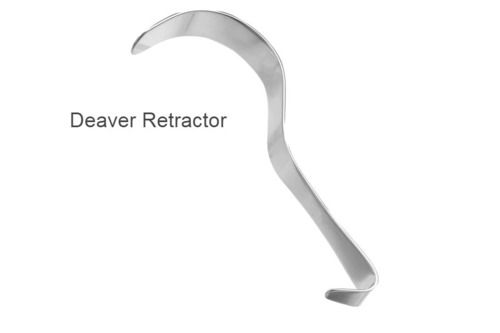
How it works
The principle of the Deaver retractor is mechanical and straightforward. A surgeon or a surgical assistant (like a scrub nurse or a resident) manually positions the curved blade into the surgical wound. They then apply gentle but firm lateral or downward pressure to hold back the anatomical structure obstructing the view. The handle provides the necessary leverage. The retractor is typically held in place by the user’s hand, though it can sometimes be secured to the surgical drape using a weight or a tie in longer procedures to reduce user fatigue.
Key Components
- Blade: The working end of the instrument. It is long, deep, and has a distinctive “S” or “C” shaped curve. This design allows it to conform to the anatomy of deep cavities and hold back large organs like the liver or bowel loops effectively. The blade tip is typically smooth and blunt to minimize tissue trauma.
- Handle/Shank: The part held by the user. It is straight and provides the necessary length to reach deep surgical sites. The connection between the blade and the handle is reinforced for durability.
- Finger Ring/Grip (Optional): Some models feature a small, open ring or a textured grip at the end of the handle. This provides a more secure and comfortable hold for the surgeon, preventing slippage during prolonged use.
2. Uses
Clinical Applications
The Deaver retractor is a versatile tool used across numerous surgical specialties. Its primary application is in open abdominal and pelvic surgeries. Common procedures include:
- Hepatectomy (Liver Resection): To retract the liver and provide exposure to the hepatic vessels and bile ducts.
- Gastrectomy (Stomach Surgery): To hold back the liver and colon for access to the stomach.
- Colectomy (Bowel Resection): To retract loops of the small and large intestine.
- Nephrectomy (Kidney Removal): To provide exposure of the retroperitoneal space and retract the peritoneum and other organs.
- Abdominal Aortic Aneurysm Repair: To retract the bowels for access to the great vessels.
- Gynecological Surgeries: Such as hysterectomy or oophorectomy, for retracting the bladder, bowel, or abdominal wall.
- Bariatric Surgery: For retracting the liver and other visceral fat during gastric bypass or sleeve gastrectomy.
Who uses it
- Surgeons: Primary users who employ the retractor for direct visualization.
- Surgical Assistants: This includes other surgeons, surgical residents, or Physician Assistants (PAs) who are tasked with holding retractors to assist the primary surgeon.
- Scrub Nurses/Technologists: They may assist in positioning the retractor and are responsible for its handling and preparation.
Departments/Settings
- Operating Rooms (ORs) in hospitals and ambulatory surgery centers.
- General Surgery Departments
- Gynecology and Obstetrics Departments
- Urology Departments
- Transplant Surgery Units
- Trauma Centers
3. Technical Specs
Typical Specifications
- Overall Length: Typically ranges from 10 to 14 inches (25 to 35 cm).
- Blade Width: Varies from 1 to 4 inches (2.5 to 10 cm), with wider blades used for retracting larger organ surfaces.
Variants & Sizes
The primary variation lies in the size and curvature of the blade.
- Deaver Retractor (Standard): The classic model with a medium-depth curve.
- Deaver “Right Angle” Retractor: Features a more pronounced 90-degree bend at the end of the blade, useful for specific deep retraction tasks.
- Baby Deaver Retractor: A smaller, more delicate version used in pediatric surgery or in procedures on smaller adults where a standard Deaver is too large.
Materials & Features
- Materials: Almost exclusively made from Medical Grade Stainless Steel (AISI 304 or 316) due to its excellent strength, corrosion resistance, and ability to withstand repeated sterilization.
- Features:
- Single-Piece Forged Construction: Ensures durability and prevents breakage at stress points.
- Satin/Matte Finish: Reduces glare from overhead OR lights.
- Blunt Tips: Designed to minimize the risk of accidental puncture or tearing of tissues and vessels.
Models
As a fundamental instrument, it is not typically sold under unique “model” names like electronic devices. Instead, it is cataloged by its size and variant (e.g., “Deaver Retractor, 12 inch, 2.5″ blade”). Manufacturers may have their own catalog numbers.
4. Benefits & Risks
Advantages
- Superior Exposure: Its deep, curved blade is uniquely suited for retracting organs in deep surgical cavities.
- Mechanical Simplicity: No moving parts to malfunction; it is entirely reliant on user skill.
- Durability: Made from robust stainless steel, it has a very long lifespan with proper care.
- Cost-Effective: A one-time purchase with minimal recurring costs beyond reprocessing.
Limitations
- User Fatigue: Requires manual holding, which can lead to fatigue for the assistant during long procedures.
- Potential for Tissue Trauma: Excessive or improperly directed force can cause damage to retracted organs (e.g., liver laceration, serosal tears in the bowel).
- Obstructed View: The hand and handle of the person holding the retractor can sometimes intrude into the sterile field.
Safety Concerns & Warnings
- Never use excessive force. Retraction should be firm but gentle.
- Avoid placing the retractor on neurovascular bundles or other delicate structures.
- Ensure the blade is not digging into or crushing tissue. Periodic relaxation and repositioning may be necessary.
- Inspect the instrument before use for any signs of damage, such as cracks or burs, which could injure tissue or tear surgical gloves.
Contraindications
There are no direct “contraindications” for a manual retractor as it is a passive tool. The contraindication lies in its application. It should not be used in a manner that applies unsafe pressure to tissues. It is also not suitable for minimally invasive (laparoscopic/robotic) surgeries where specialized instruments are required.
5. Regulation
As a basic manual surgical instrument, the Deaver retractor is generally considered low-risk.
- FDA Class: Typically classified as Class I medical device. This class is exempt from premarket notification [510(k)] but is subject to general controls (e.g., registration, listing, GMP).
- EU MDR Class: Class I under European Union Medical Device Regulation. It is a non-sterile, reusable instrument.
- CDSCO Category: Class A (low risk) as per the Medical Device Rules in India.
- PMDA Notes: In Japan, it would be classified as a Class I medical device, regulated under the Pharmaceutical and Medical Device Act (PMD Act).
- ISO/IEC Standards:
- ISO 13485:2016: Quality Management Systems for Medical Devices.
- ISO 7153-1: Materials for surgical instruments – Part 1: Metallic materials.
- IEC 62366-1: Application of usability engineering to medical devices (for general handling safety).
6. Maintenance
Proper maintenance is critical for patient safety and instrument longevity.
Cleaning & Sterilization
- Point-of-Use Pre-Cleaning: Wipe with a sterile water-moistened sponge immediately after use to prevent blood and debris from drying.
- Transport: Send to the Central Sterile Supply Department (CSSD) in a closed container.
- Cleaning: Ultrasonic cleaning is highly recommended to remove bioburden from the serrations and joints.
- Sterilization: Autoclaving (Steam Sterilization) is the gold standard. Common parameters: 132°C (270°F) for a minimum of 3-4 minutes in a pre-vacuum cycle or 121°C (250°F) for 15-30 minutes in a gravity cycle.
Reprocessing
Follow a strict CSSD protocol: Decontamination -> Cleaning -> Inspection -> Packaging -> Sterilization -> Storage.
Calibration
Manual retractors like the Deaver do not require calibration as they have no measuring or electronic components.
Storage
- Store in a clean, dry, and temperature-controlled environment.
- Instruments should be stored in dedicated trays or cabinets, often wrapped in sterilization pouches, to protect them from damage, moisture, and contamination.
7. Procurement Guide
How to Select the Device
- Procedure Mix: Consider the types of surgeries performed most frequently. A general surgery department may need a range of sizes, while a pediatric unit will prioritize smaller Baby Deavers.
- Surgeon Preference: The “feel” and balance of the instrument are often a matter of personal preference for surgeons.
Quality Factors
- Finish: A smooth, satin finish without any pits or rough spots.
- Balance: The instrument should feel balanced in the hand, not blade-heavy or handle-heavy.
- Forging vs. Machining: Forged instruments are generally stronger and more durable than those machined from sheet metal.
Certifications
- Look for manufacturers with ISO 13485 certification.
- For specific markets, ensure the device carries a CE Mark (EU) or is FDA Listed.
Compatibility
The Deaver retractor is a standalone manual instrument and does not require electronic or system compatibility. It is compatible with standard sterilization and storage systems used in any hospital.
Typical Pricing Range
- A single Deaver retractor typically costs between $50 and $200 USD, depending on the manufacturer, size, and quality. Sets containing multiple sizes are common.
8. Top 10 Manufacturers (Worldwide)
| Rank | Manufacturer | Country of Origin | Short Profile & Notable Product Lines |
|---|---|---|---|
| 1 | B. Braun (Aesculap) | Germany | A global leader in surgical equipment. Known for high-precision, durable instruments under the Aesculap brand. |
| 2 | Johnson & Johnson (Ethicon) | USA | A giant in the medical device space, offering a comprehensive portfolio of surgical instruments, including retractors. |
| 3 | Medtronic | USA | Through its surgical division, it provides a wide range of reliable and high-quality surgical retractors. |
| 4 | Integra LifeSciences | USA | Specializes in surgical instruments and offers a broad line of basic and specialized retractors. |
| 5 | Sklar Surgical Instruments | USA | A renowned American company with a long history of producing high-quality stainless steel surgical instruments. |
| 6 | Teleflex Medical | USA | A major supplier of surgical instruments to hospitals worldwide, known for its consistent quality. |
| 7 | BOWA Medical | Germany | A leading European manufacturer of electrosurgical and surgical instruments, known for innovation and quality. |
| 8 | Surgical Holdings | UK | Specializes in the manufacture and repair of surgical instruments, with a strong reputation in the UK and Europe. |
| 9 | Lawton GmbH & Co. KG | Germany | A premium German manufacturer with a focus on high-quality, ergonomic surgical instruments. |
| 10 | ASSI – Accurate Surgical & Scientific Instruments | USA | Known for providing a vast catalog of specialized and standard surgical instruments to the global market. |
9. Top 10 Exporting Countries (Latest Year)
Based on analysis of global trade data for surgical retractors (HS Code 901890).
| Rank | Country | Export Market Notes |
|---|---|---|
| 1 | Germany | The global leader in high-precision surgical instrument exports, renowned for quality and engineering. |
| 2 | United States | A major hub for both manufacturing and re-exporting a wide range of medical devices. |
| 3 | China | A dominant supplier of cost-effective surgical instruments, with rapidly improving quality standards. |
| 4 | Pakistan | Sialkot is a world-famous cluster for the manufacture and export of handcrafted surgical instruments. |
| 5 | Mexico | A key exporter, particularly to the US market, benefiting from proximity and trade agreements. |
| 6 | Switzerland | Known for exporting high-end, precision surgical instruments. |
| 7 | United Kingdom | Has a strong historical base in medical device manufacturing and a global distribution network. |
| 8 | France | Home to several major medical device companies with significant export volumes. |
| 9 | Japan | Exports high-quality, technologically advanced medical devices, including surgical instruments. |
| 10 | Italy | Has a robust manufacturing sector for surgical instruments, particularly in the Lombardy region. |
10. Market Trends
Current Global Trends
- Market Consolidation: Larger companies are acquiring smaller, specialized instrument makers.
- Focus on Cost-Efficiency: Hospitals are balancing the purchase of high-quality, long-lasting instruments with budget constraints, driving demand for reliable value.
- Growth in Outpatient Surgeries: Increases the demand for surgical instruments in Ambulatory Surgery Centers (ASCs).
New Technologies
- Enhanced Ergonomics: New handle designs with improved grips and weight distribution to reduce surgeon fatigue.
- Surface Treatments: Anti-glare and low-reflectivity finishes are becoming standard. Some manufacturers are exploring coatings to reduce tissue adhesion.
Demand Drivers
- Rising Global Surgical Volumes: Due to an aging population and increasing access to healthcare.
- Prevalence of Chronic Diseases: Such as cancer and obesity, which require surgical intervention.
- Infrastructure Development: Building of new hospitals and surgical centers in emerging economies.
Future Insights
While the fundamental design of the Deaver retractor is unlikely to change, its integration into the OR of the future will. Expect to see:
- Smart Instrument Tracking: RFID tags embedded in handles for inventory management, sterilization tracking, and usage analytics.
- Sustained Demand: As long as open surgery is performed, the Deaver retractor will remain a staple. Its simplicity and effectiveness are timeless.
11. Training
Required Competency
- Anatomical Knowledge: Understanding the anatomy of the area being retracted to avoid damage.
- Instrument Handling: Knowing how to hold, position, and apply force correctly.
- Situational Awareness: The ability to anticipate the surgeon’s needs and adjust retraction dynamically.
Common User Errors
- “Hanging on the Retractor”: Applying excessive upward or lateral force.
- Improper Placement: Positioning the blade on a delicate structure.
- Fatigue-Induced Slippage: Losing grip or position due to tiredness, which can be sudden and dangerous.
- Obstructing the Field: Placing one’s hand or arm in the surgeon’s line of sight.
Best-Practice Tips
- Communicate: Inform the surgeon if your view is obstructed or if you are feeling fatigued.
- Use Two Hands: When possible, use one hand to hold the handle and the other to guide and stabilize the blade for more controlled retraction.
- Follow the Curve: Let the natural curve of the blade guide its placement against the organ’s contour.
- Request a Break: For long procedures, don’t hesitate to ask for a replacement or a short break to maintain performance.
12. FAQs
- What is the difference between a Deaver and a Richardson retractor?
- A Deaver has a long, deep, curved blade for retracting deep organs. A Richardson (or “Rich”) has a narrower, flatter, and often fenestrated blade, primarily used for retracting the edges of superficial wounds or muscle layers.
- Is the Deaver retractor reusable or single-use?
- It is almost always a reusable instrument made from sterilizable stainless steel. Single-use versions exist but are less common due to cost and environmental concerns.
- How do I choose the right size Deaver retractor?
- The choice depends on the patient’s anatomy and the depth of the surgical field. The surgeon will typically request a specific size. A standard 12-inch retractor with a 2.5-3 inch blade is a common starting point in adult abdominal surgery.
- Can a Deaver retractor cause nerve damage?
- Yes, if placed directly on a nerve or neurovascular bundle and excessive pressure is applied. Proper anatomical knowledge and gentle technique are crucial to prevent this.
- Why does the blade have a curve?
- The curve allows it to fit the natural contour of organs like the liver and the curvature of the abdominal wall and pelvis, providing more effective and safer retraction with a larger surface area.
- How often does a Deaver retractor need to be replaced?
- With proper care and no physical damage, a high-quality Deaver retractor can last for decades. Replacement is typically due to damage (e.g., dropping and cracking, severe wear) rather than a set schedule.
- What does “Baby Deaver” mean?
- It refers to a smaller, more delicate version of the standard Deaver, designed for use in pediatric surgery or on small anatomical structures in adults.
- Is it safe to sterilize a Deaver retractor in a flash autoclave?
- While possible for emergency cases, it is not the recommended method for routine sterilization. A full cycle in a standard autoclave provides a more reliable margin of safety.
13. Conclusion
The Deaver retractor is a testament to the enduring value of well-designed, simple tools in modern medicine. Despite the advent of complex robotic and laparoscopic systems, it remains a fundamental and irreplaceable instrument in the open surgeon’s armamentarium. Its effectiveness hinges on a deep understanding of surgical anatomy, proper technique, and meticulous care. By selecting high-quality instruments, adhering to strict reprocessing protocols, and ensuring proper training for all users, healthcare institutions can leverage this classic tool to facilitate successful surgical outcomes for years to come.
14. References
- U.S. Food and Drug Administration (FDA). (2023). Classify Your Medical Device.
- European Commission. (2017). Regulation (EU) 2017/745 on medical devices (MDR).
- Central Drugs Standard Control Organization (CDSCO). (2017). Medical Device Rules.
- International Organization for Standardization (ISO). (2016). ISO 13485:2016 – Medical devices — Quality management systems.
- Purdue University Nuclear Engineering. Stainless Steel 304 vs 316.
- Association of periOperative Registered Nurses (AORN). (2023). Guidelines for Perioperative Practice.
- UN Comtrade Database. (2022). Trade data for HS Code 901890.
- Fortune Business Insights. (2023). Surgical Instruments Market Size, Share & COVID-19 Impact Analysis.