1. Definition
What is a CT Scanner?
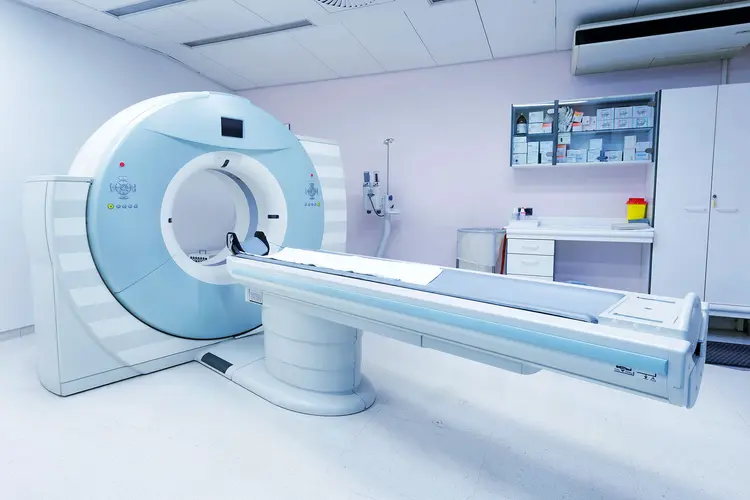
A Computed Tomography (CT) scanner is a sophisticated medical imaging device that uses X-rays and advanced computer processing to generate detailed, cross-sectional images (slices) of the inside of the body. Unlike a standard X-ray machine that produces a single flat image, a CT scanner rotates around the patient, capturing hundreds of images from different angles. These are then combined by a computer to create 2D slices and 3D reconstructions of bones, blood vessels, and soft tissues with exceptional clarity. Its primary function is non-invasive internal visualization for diagnosis, treatment planning, and guidance of interventional procedures.
How it Works
The principle is elegant in concept but complex in execution. Imagine taking a loaf of bread and examining it slice by slice, rather than just looking at the crust. Here’s the simplified process:
- Patient Positioning: The patient lies on a motorized table that moves into the scanner’s circular opening (the “gantry”).
- X-ray Emission & Rotation: Inside the gantry, an X-ray tube rotates rapidly around the patient. As it rotates, it emits a thin, fan-shaped beam of X-rays.
- Detection: Opposite the X-ray tube, an array of highly sensitive digital detectors captures the X-rays after they pass through the body. Denser structures (like bone) absorb more X-rays, allowing fewer to reach the detectors.
- Data Acquisition: For each angle of rotation, the detectors create a “projection” or profile of the X-ray attenuation. A complete scan involves thousands of these projections.
- Computer Reconstruction: This massive amount of raw data is sent to a dedicated computer. Using complex mathematical algorithms (primarily “filtered back projection” or newer “iterative reconstruction”), the computer calculates and constructs detailed cross-sectional (tomographic) images.
- Image Display: These slices, typically less than a millimeter thick, are displayed on a monitor for radiologists to interpret. They can be stacked to create 3D models.
Key Components
- Gantry: The large, doughnut-shaped structure that houses the core imaging components. It contains the X-ray tube, detectors, and rotational mechanics.
- X-ray Tube: Generates the X-ray beam. Modern tubes are high-capacity and designed for rapid, repeated use.
- Detector Array: The most critical technological component. Modern CTs use solid-state ceramic or scintillator detectors (e.g., Gadox, Gemstone) arranged in multiple rows, determining the scanner’s “slice” capability.
- Patient Table: A motorized, precisely moving table that advances the patient through the gantry. It is designed for consistent, accurate positioning.
- Computer System & Reconstruction Engine: Dedicated, powerful hardware and software that process the raw data into diagnostic images. This system also controls the scanner.
- Operator Console: The workstation where the radiographer controls the scan parameters (e.g., timing, thickness, dose), monitors the patient, and initiates reconstruction.
- Viewing Console/ PACS Workstation: Where radiologists review, manipulate (e.g., zoom, adjust contrast), and interpret the final images, often integrated into a Picture Archiving and Communication System (PACS).
2. Uses
Clinical Applications
- Trauma & Emergency Medicine: Rapidly identifies internal bleeding, organ damage, and fractures (e.g., head, spine, chest, abdomen) in accident victims.
- Oncology: Crucial for detecting tumors, staging cancer (determining its size and spread), planning radiotherapy, and monitoring treatment response.
- Neurology: Diagnoses strokes (ischemic vs. hemorrhagic), brain tumors, aneurysms, and other cerebral disorders.
- Cardiology (Cardiac CT): Visualizes coronary arteries for calcium scoring and non-invasive angiography (CTA) to detect blockages. Also used for structural heart assessment.
- Pulmonology: Detects lung nodules, pneumonia, pulmonary embolisms, and interstitial lung disease with high detail.
- Orthopedics & Musculoskeletal: Provides exquisite detail of complex fractures, joint abnormalities, spinal issues, and pre-surgical planning for implants.
- Vascular Imaging (Angiography): Maps blood vessels throughout the body to detect aneurysms, dissections, and blockages.
- Guided Interventions: Used in real-time to guide needle biopsies, abscess drainages, and other minimally invasive procedures.
- COVID-19 & Infectious Diseases: Played a pivotal role in assessing lung involvement in severe COVID-19 pneumonia.
Who Uses It
- Radiographers/Radiologic Technologists: Licensed professionals who operate the scanner, position patients, and optimize scan protocols.
- Radiologists: Specialist physicians who interpret the images and generate diagnostic reports.
- Medical Physicists: Ensure the scanner is operating safely, accurately, and is optimally calibrated.
- Biomedical Engineers/Technicians: Perform maintenance, repairs, and quality assurance tests.
Departments/Settings
- Radiology/Imaging Departments (Primary location)
- Emergency Departments (Often equipped with a dedicated “Trauma CT”)
- Oncology & Radiation Therapy Centers
- Neurology & Neurosurgery Centers
- Cardiology Centers
- Large Multi-specialty Hospitals and Outpatient Imaging Centers
3. Technical Specs
Typical Specifications
- Scan Time: As low as 0.2-0.3 seconds per rotation for high-end models.
- Spatial Resolution: Capable of resolving details as small as 0.2 – 0.5 mm.
- Slice Thickness: Adjustable, typically from 0.5 mm to 5 mm.
- Gantry Aperture: Usually 70 – 85 cm in diameter.
- Table Weight Capacity: Often 205 – 250 kg (450 – 550 lbs).
- Power Requirements: High-power electrical connections (e.g., 480V, 3-phase).
Variants & Sizes
- By Slice Count (Detector Rows):
- Low-end (4-16 slice): Basic scanning, suitable for routine head and body work in smaller clinics.
- Mid-range (32-64 slice): The clinical workhorse in most hospitals. Good for cardiac, vascular, and general scanning.
- High-end/Advanced (128-640+ slice): Offers very fast scanning, wide anatomical coverage, and superior temporal resolution for cardiac and trauma imaging. Includes “Dual-Source” CTs (two X-ray tubes/detectors).
- By Configuration:
- Conventional CT: Fixed gantry, moving table.
- C-arm CT: The gantry moves around a stationary patient (common in interventional suites and hybrid ORs).
Materials & Features
- Materials: Housing is high-grade plastic and metal. Internal components use specialized alloys, ceramics (for detectors), and tungsten.
- Key Technological Features:
- Iterative Reconstruction: Advanced software that reduces image noise, allowing for significant radiation dose reduction.
- Dual-Energy/Spectral CT: Uses two different X-ray energy levels to differentiate materials (e.g., iodine, calcium, uric acid), enabling tissue characterization.
- Wide Detector Coverage: Up to 16 cm of anatomy covered in a single rotation, enabling whole-organ scans (like the heart) in one beat.
- AI-Powered Software: Used for automated scan planning, dose optimization, image reconstruction, and lesion detection.
Notable Models/Series
- Siemens Healthineers: SOMATOM Force, SOMATOM Drive (Dual Source)
- GE HealthCare: Revolution Apex, Discovery CT (with “Gemstone” detectors)
- Canon Medical Systems: Aquilion ONE / PRISM, SCENARIA
- Philips Healthcare: Ingenuity, iCT, Spectral CT 7500
- United Imaging Healthcare: uCT series
4. Benefits & Risks
Advantages
- Speed: Extremely fast image acquisition, critical for emergency and uncooperative patients.
- Detail & Clarity: Provides superior detail of bone, soft tissue, and blood vessels compared to conventional X-ray.
- Non-invasive: Eliminates the need for exploratory surgery in many cases.
- Painless: The scanning process itself is painless.
- Versatility: Can image any part of the body for a wide range of conditions.
- 3D Capability: Allows for multi-planar reformation and 3D volume rendering for surgical planning.
Limitations
- Ionizing Radiation: Involves exposure to a higher dose of radiation than a standard X-ray.
- Limited Soft Tissue Contrast (without contrast): Compared to MRI, CT offers less inherent contrast between similar soft tissues.
- Artifacts: Metallic objects (e.g., implants, dental fillings) can cause streaking artifacts. Patient motion also degrades image quality.
- Size/Claustrophobia: The gantry opening can feel confining for some patients, though it’s less restrictive than an MRI bore.
Safety Concerns & Warnings
- Radiation Exposure: The primary safety concern. The ALARA principle (As Low As Reasonably Achievable) must always be followed to minimize dose, especially in children and pregnant patients.
- Contrast Media Reactions: Iodinated contrast, used to enhance vessels and organs, can cause allergic reactions (mild to severe) or contrast-induced nephropathy (kidney injury) in at-risk patients.
- Pregnancy: CT of the abdomen/pelvis is generally avoided in pregnancy unless the diagnostic benefit outweighs the potential risk to the fetus.
Contraindications
- Absolute: There are few absolute contraindications if the exam is medically necessary.
- Relative (Requires Risk-Benefit Assessment):
- Pregnancy (especially first trimester).
- Severe allergy to iodinated contrast media.
- Severe renal impairment (if contrast is needed).
- Uncooperative patients (may require sedation).
5. Regulation
CT scanners are high-risk, complex devices and are strictly regulated worldwide.
- FDA Class (USA): Class II (510(k) premarket notification required). Some specific indications or new technologies may be Class III.
- EU MDR Class (Europe): Class IIb (Rule 9: for diagnostic radiology equipment, including CT).
- CDSCO Category (India): Class C (moderate-high risk) under the Medical Devices Rules, 2017.
- PMDA Notes (Japan): Regulated as “Specified Controlled Medical Devices.” Requires stringent approval (Shonin) with a focus on safety and performance, including radiation safety standards set by the Japanese law.
- ISO/IEC Standards:
- IEC 60601-1: General safety for medical electrical equipment.
- IEC 60601-2-44: Particular safety standards for CT equipment.
- ISO 12052: Governs DICOM (Digital Imaging and Communications in Medicine) for image format and communication.
- IEC 61223-3-5: Evaluation and routine testing of CT performance.
6. Maintenance
Cleaning & Sterilization
- External Surfaces: Clean daily and after each patient with hospital-grade, non-abrasive disinfectants. The tabletop, gantry housing, and patient contact areas are focus points.
- Internal Components: No user sterilization. The gantry interior is sealed and cleaned by engineers during servicing.
- Disinfection: Follow manufacturer’s instructions for approved cleaning agents to avoid damage to plastics and displays.
Reprocessing
Not applicable in the same sense as surgical tools. The device itself is not reprocessed between patients. Single-use items (e.g., IV contrast injector syringes, lines) are discarded.
Calibration
- Daily/Weekly: Automated or quick-check calibration (air calibrations) performed by the technologist to ensure detector uniformity.
- Quarterly/Annually: Comprehensive performance testing by a qualified medical physicist or service engineer. This includes checks on: CT number accuracy, uniformity, noise, spatial resolution, low-contrast detectability, and radiation dose output (CTDI).
Storage
- Environment: Climate-controlled room (stable temperature ~20°C and humidity ~40-60%) to protect sensitive electronics.
- Space: Requires adequate clearance around the gantry for ventilation, patient access, and service.
- Power: Should be connected to a stable, regulated power supply, often with backup.
7. Procurement Guide
How to Select the Device
Consider your clinical needs, patient volume, and budget. Key questions:
- What are the primary clinical applications? (Routine body, cardiac, neuro, trauma?)
- What is the expected patient throughput?
- What are the space and electrical/power constraints?
- Is there a need for advanced applications (spectral imaging, perfusion)?
Quality Factors
- Image Quality: Assess low-contrast resolution and noise levels at standard doses.
- Dose Efficiency: How well does the system produce good images at low radiation doses? Review dose indices for standard protocols.
- Uptime & Reliability: Check historical reliability data and mean time between failures (MTBF) for the model.
- Workflow Integration: Ease of use, automated features, and PACS/RIS compatibility.
- Service & Support: Reputation and responsiveness of the local service team.
Certifications
Ensure the device has the necessary regulatory clearances for your region: FDA 510(k)/CE Mark/PMDA Shonin/CDSCO Import License. Also, check for relevant ISO certifications of the manufacturing facility.
Compatibility
Must be fully compatible with your PACS, RIS (Radiology Information System), and 3D/Advanced Visualization workstations. Verify DICOM conformance and network requirements.
Typical Pricing Range
- Entry-Level/Refurbished (16-slice): $150,000 – $350,000
- Mid-Range (64-128 slice): $400,000 – $900,000
- High-End/Advanced (256+ slice, Dual-Source, Spectral): $1.2 Million – $2.5+ Million
Note: Pricing is highly variable based on configuration, features, and geographic region. Service contracts (10-15% of system cost annually) are a major additional ongoing expense.
8. Top 10 Manufacturers (Worldwide)
- GE HealthCare (USA): A global leader in medical imaging. Known for its “Revolution” and “Discovery” CT series featuring Gemstone detector technology and ASiR-V iterative reconstruction.
- Siemens Healthineers (Germany): Renowned for technological innovation, particularly its dual-source CT technology (SOMATOM Force/Drive) and photon-counting CT (NAEOTOM Alpha), a groundbreaking new technology.
- Canon Medical Systems (Japan): Formerly Toshiba Medical. Famous for its Aquilion series and wide-area detector CT (Aquilion ONE), capable of scanning 16 cm in one rotation.
- Philips Healthcare (Netherlands): Strong in spectral (dual-energy) CT imaging with its “Spectral CT 7500” and intuitive workflow solutions across its “IntelliSpace” platform.
- United Imaging Healthcare (China): A rapidly growing company offering a full portfolio of mid-to-high-end CTs (uCT series) with competitive technology at value-based price points.
- Neusoft Medical Systems (China): A major Chinese manufacturer providing a wide range of CT scanners, from economical to high-end models, with a strong presence in emerging markets.
- Samsung Medison (South Korea): (Through acquisition of NeuroLogica) Markets the BodyTom, a portable, mobile 32-slice CT scanner for point-of-care use in the OR or ICU.
- Shimadzu Medical (Japan): Offers CT systems with a focus on workflow efficiency and integration, particularly in angiography and interventional suites.
- Accuray Incorporated (USA): While known for radiotherapy (CyberKnife), its Onrad brand offers specialized cone-beam CT (CBCT) systems for interventional and surgical guidance.
- Carestream Health (USA): Primarily known for X-ray and dental imaging, it also offers the “OnSight 3D” extremity CBCT system, a niche product for orthopedics.
9. Top 10 Exporting Countries (Latest Year – Based on 2022/23 Trade Data Trends)
(Ranked by estimated export value of CT scanners)
- Germany: The world’s leading exporter by value, driven by Siemens Healthineers’ high-end systems.
- United States: Home to GE and significant R&D, exporting premium systems globally.
- Japan: Major exporter through Canon and Shimadzu, known for reliability and advanced engineering.
- China: Fastest-growing exporter, led by United Imaging and Neusoft, competing strongly in Asia, Africa, and Latin America.
- Netherlands: A key export hub for Philips Healthcare’s global supply chain.
- South Korea: Exports driven by Samsung’s innovative mobile and specialty CT systems.
- Mexico: A growing manufacturing and export hub for several major OEMs serving the Americas.
- Ireland: A significant European manufacturing and distribution center for multiple US-based companies.
- France: Exports from subsidiaries of global players and indigenous engineering firms.
- Italy: Exports high-quality components and complete systems from manufacturers like Esaote (in specific segments).
10. Market Trends
- Current Global Trends: The market is driven by replacement demand for aging systems with more dose-efficient models, growing demand in emerging economies (Asia-Pacific, Latin America), and an increasing focus on early diagnosis and preventative care.
- New Technologies:
- Photon-Counting CT (PCCT): The most significant breakthrough in decades. Uses detectors that count individual X-ray photons, dramatically improving spatial resolution, contrast, and reducing radiation dose simultaneously. Now commercially available (Siemens NAEOTOM Alpha).
- Artificial Intelligence (AI): Pervasive across the workflow—for protocoling, dose optimization, image reconstruction, and automated detection of findings (e.g., pulmonary embolisms, strokes).
- Spectral/Dual-Energy CT: Moving from a niche to a mainstream feature, enabling routine tissue characterization.
- Demand Drivers:
- Rising prevalence of chronic diseases (cancer, cardiovascular).
- Aging global population.
- Technological advancements making advanced imaging more accessible.
- Expansion of outpatient imaging centers.
- Future Insights: Expect AI to become fully embedded, PCCT technology to become more widespread, and a continued push towards low-dose, high-quality imaging. Portable and point-of-care CT will continue to expand beyond the neuro ICU into broader hospital settings.
11. Training
Required Competency
Operators must be certified Radiographers/Radiologic Technologists with specific post-graduate training in CT. This includes:
- Anatomy, physiology, and pathology relevant to CT.
- Radiation physics, radiation protection, and dose management.
- Patient care and management, including IV contrast administration.
- Protocol optimization for different clinical indications.
- Recognition and troubleshooting of image artifacts.
- Emergency procedures (e.g., contrast reactions).
Common User Errors
- Incorrect Patient Positioning: Leads to poor image quality or need for repeat scans.
- Inappropriate Protocol Selection: Using a high-dose chest protocol for a pediatric patient, for example.
- Mis-timing of Contrast Injection: Capturing images too early or late for optimal vascular or organ enhancement.
- Failure to Use Dose-Reduction Tools: Not employing automatic tube current modulation or iterative reconstruction appropriately.
- Inadequate Patient Communication: Not properly instructing the patient to hold their breath, causing motion artifacts.
Best-Practice Tips
- Always follow ALARA: Use the lowest possible dose to achieve diagnostic image quality.
- Communicate Clearly: Explain the procedure to the patient to minimize anxiety and motion.
- Double-Check Patient and Protocol: Ensure the right exam is performed on the right patient with the right settings.
- Know Your Equipment: Understand the specific dose-saving features of your scanner and use them.
- Perform Routine QC: Don’t skip daily/weekly calibrations—they are essential for consistent quality.
12. FAQs
1. What’s the difference between a CT scan and an MRI?
CT uses X-rays and is best for viewing bones, lungs, acute bleeding, and is very fast. MRI uses strong magnets and radio waves and is superior for imaging soft tissues like the brain, ligaments, and spinal cord. It involves no ionizing radiation.
2. Is the radiation from a CT scan dangerous?
While CT involves more radiation than an X-ray, the dose is carefully controlled. The benefit of an accurate diagnosis almost always outweighs the small, potential long-term risk. Modern scanners and techniques continuously work to minimize dose.
3. How long does a CT scan take?
The actual scanning time is very short, often less than 30 seconds. The entire appointment, including preparation and positioning, typically takes 15-30 minutes. More complex exams with contrast may take longer.
4. Why do I need an injection of “contrast”?
Contrast media (iodine-based) highlights blood vessels and enhances the appearance of organs, making it easier to see tumors, inflammation, infection, or blood vessel abnormalities.
5. I have kidney issues. Can I have a CT with contrast?
This requires careful assessment. Your doctor will check your kidney function (creatinine level). If impaired, they may decide to proceed without contrast, use a different test, or take protective measures (hydration, medication).
6. Can I have a CT scan if I’m pregnant?
It is generally avoided, especially in the first trimester. If a CT is absolutely necessary for a serious medical problem (e.g., major trauma), the radiologist will take special steps to shield the abdomen and use the lowest dose possible.
7. Will I feel claustrophobic?
The CT gantry is a wide, shallow ring. Most people do not feel as confined as in an MRI machine. If you are very anxious, inform the staff; they can help you feel more comfortable.
8. What is a “low-dose CT” scan?
It’s a protocol specifically optimized to use the minimum necessary radiation. It’s commonly used for lung cancer screening in high-risk patients and for follow-up scans where less detail is required.
9. Why does the machine tell me to hold my breath?
Even small movements can blur the images. Holding your breath for 5-15 seconds ensures the images are sharp and clear.
10. How quickly will my doctor get the results?
The images are available immediately. However, a specialized radiologist must interpret them and write a report. In an emergency, this can be within an hour. For routine exams, it may take 24-48 hours.
13. Conclusion
The CT scanner stands as one of the most pivotal inventions in modern diagnostic medicine. From its inception, it has revolutionized our ability to see inside the human body with unprecedented speed and detail, fundamentally changing the diagnosis and management of trauma, cancer, stroke, and countless other conditions. While the technology continues to advance rapidly—with photon-counting detectors and AI leading the next wave—the core principles of patient safety, dose optimization, and clinical efficacy remain paramount. Understanding its operation, applications, benefits, and risks is essential for healthcare professionals involved in its use and for patients who rely on its diagnostic power. As it evolves, the CT scanner will undoubtedly continue to be an indispensable tool, providing clearer insights for better patient outcomes.
14. References
- Bushberg, J. T., Seibert, J. A., Leidholdt, E. M., & Boone, J. M. (2020). The Essential Physics of Medical Imaging (5th ed.). Wolters Kluwer.
- Hsieh, J. (2015). Computed Tomography: Principles, Design, Artifacts, and Recent Advances (3rd ed.). SPIE Press.
- U.S. Food and Drug Administration (FDA). (2023). Computed Tomography (CT). https://www.fda.gov/radiation-emitting-products/medical-x-ray-imaging/computed-tomography-ct
- International Electrotechnical Commission (IEC). IEC 60601-2-44: Medical electrical equipment – Part 2-44: Particular requirements for the basic safety and essential performance of X-ray equipment for computed tomography.
- Radiological Society of North America (RSNA). (2023). CT (Computed Tomography). https://www.radiologyinfo.org/en/info/ct
- Global Market Insights Inc. (2023). Computed Tomography (CT) Scanners Market Size Report, 2023 – 2032.
- McCollough, C. H., Leng, S., Yu, L., & Fletcher, J. G. (2020). Dual- and Multi-Energy CT: Principles, Technical Approaches, and Clinical Applications. Radiology, 276(3), 637–653.
- Flohr, T., & Schmidt, B. (2023). Photon-counting CT: A New Era for Cardiovascular Imaging? European Heart Journal, 44(11), 919–931.