1. Definition
What is Metzenbaum Scissors?
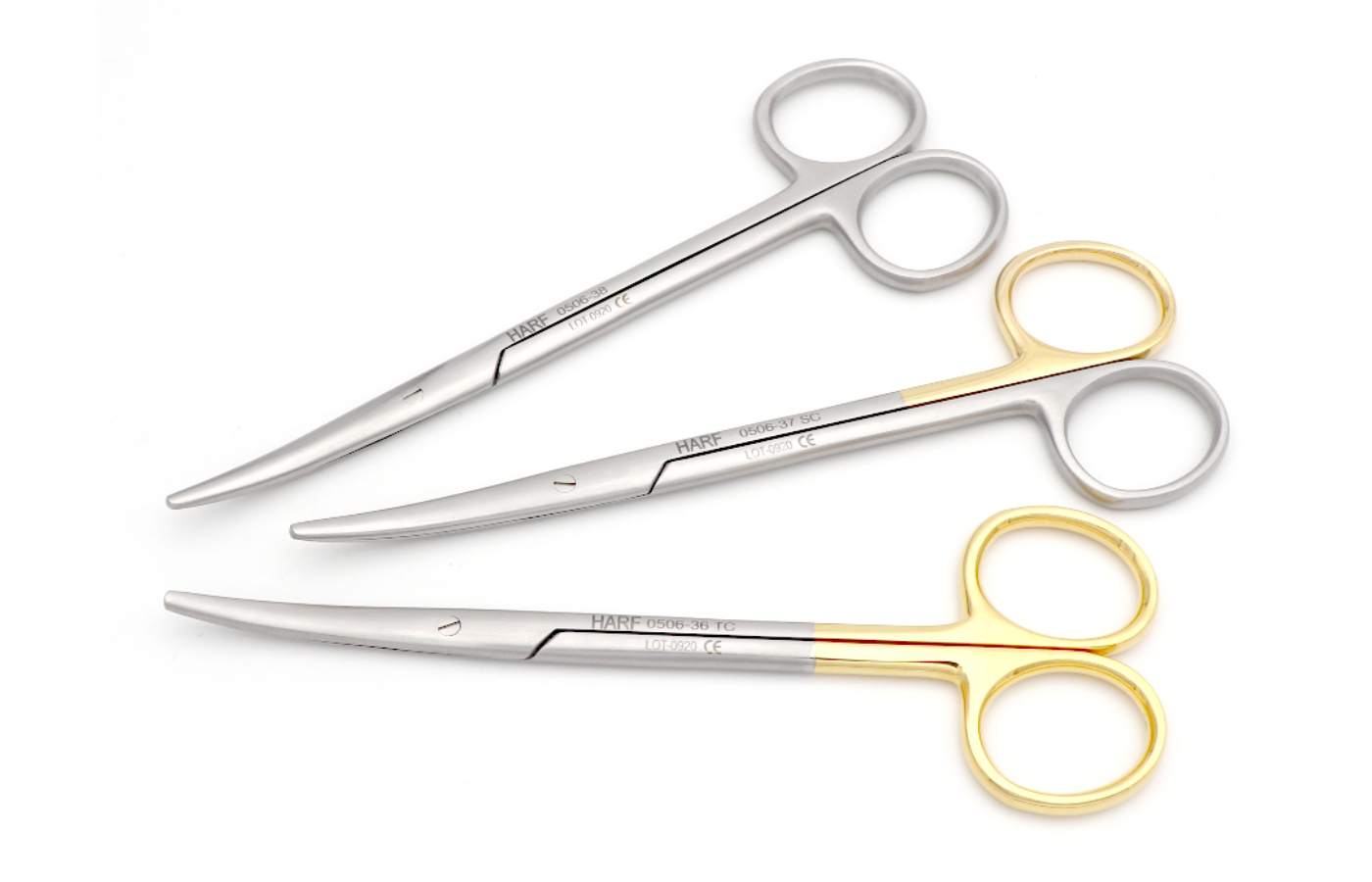
Metzenbaum scissors, often referred to simply as “Metz scissors,” are a specialized type of surgical scissors designed for delicate tissue dissection and cutting. They are a hallmark of both routine and complex surgical procedures, recognized for their precision and safety when working near vulnerable anatomical structures. Unlike standard scissors, their design prioritizes fine, controlled cuts in soft tissues, preventing unnecessary trauma.
How it works
The working principle of Metzenbaum scissors is based on a combination of mechanical leverage and sharp, precision-ground blades. The long handles and short blades create a favorable mechanical advantage, allowing the surgeon to make accurate cuts with minimal hand movement. The surgeon applies gentle, controlled pressure to the ring handles, which translates to a smooth, shearing action at the blade tips. This action cleanly separates tissue fibers rather than crushing or tearing them.
Key Components
- Blades: The working end of the scissors. They are typically short, robust, and curved, though straight variants exist. The edges are razor-sharp to ensure clean cuts.
- Shanks: The long, slender portion connecting the handles to the blades. This length provides the necessary leverage and allows the surgeon to reach deep into a surgical site without their hands obstructing the view.
- Finger Rings (Handles): The rings where the surgeon places their thumb and fingers (typically the ring finger). They are designed for a secure, comfortable, and controlled grip.
- Fulcrum (Pivot Point): The screw or rivet that connects the two halves of the scissors. A precisely engineered fulcrum ensures smooth, even, and non-binding opening and closing action, which is critical for fine dissection.
2. Uses
Clinical Applications
Metzenbaum scissors are indispensable across a wide range of surgical disciplines. Their primary use is for blunt dissection—a technique where the closed scissor tips are gently inserted into tissue planes and then opened to separate tissues without cutting—and for precise cutting of soft tissues.
- General Surgery: Dissecting fascia, subcutaneous fat, and other soft tissues during procedures like hernia repairs and mastectomies.
- Cardiothoracic Surgery: Dissecting delicate vessels and tissues around the heart and lungs.
- Plastic & Reconstructive Surgery: Their precision is vital for undermining skin flaps and dissecting fine structures without causing cosmetic damage.
- Orthopedic Surgery: Used for cutting and dissecting soft tissues like tendons, ligaments, and joint capsules.
- Gynecological Surgery: Commonly used in procedures such as hysterectomies and C-sections for delicate tissue handling.
- Vascular Surgery: For dissecting around and preparing blood vessels for anastomosis.
Who uses it
- Surgeons (across all major specialties)
- Surgical Assistants and Residents
- Certified Registered Nurse Anesthetists (CRNAs) in some regional anesthesia procedures
- Occasionally, Pathologists during tissue sample preparation
Departments/Settings
- Operating Rooms (ORs)
- Ambulatory Surgical Centers
- Labor and Delivery Suites
- Emergency Departments (for minor procedures)
- Specialized Procedure Rooms
3. Technical Specs
Typical Specifications
- Length: Ranges from 14 cm (5.5 inches) for superficial work to 28 cm (11 inches) or more for deep cavity surgery. The most common lengths are 14 cm, 18 cm, and 23 cm.
- Blade Configuration: Curved or straight.
- Tip Type: Blunt-blunt is most common for safe dissection; sharp-sharp variants are also available for fine cutting.
Variants & Sizes
The primary variants are defined by blade shape and length:
- Curved Metzenbaum Scissors: The most common type. The curved blade allows for cutting and dissecting along tissue planes while visualizing the tip, reducing the risk of injuring underlying structures.
- Straight Metzenbaum Scissors: Used when a straight-line cut is required or in more superficial, accessible areas.
- Baby Metzenbaum Scissors: Shorter, more delicate versions (e.g., 11.5 cm) for pediatric, ophthalmic, or other microsurgical procedures.
Materials & Features
- Materials: Primarily made from medical-grade stainless steel (e.g., AISI 410, 420, or 316) for superior corrosion resistance, durability, and the ability to hold a sharp edge.
- Features:
- Tungsten Carbide Inserts (TC): The cutting edges may be fortified with TC, a super-hard material that stays sharper 5-10 times longer than standard steel. These scissors often have gold-plated handles for easy identification.
- Satin Finish: A non-reflective finish reduces glare under bright OR lights.
- Serrated Blades: Some models have serrations on the inner blade surface to prevent tissue from slipping during cutting.
Models
While not typically branded with unique model names like electronic devices, they are differentiated by catalog numbers from manufacturers (e.g., “14 cm Curved Metzenbaum Scissors”). The “model” is essentially defined by its length and curvature.
4. Benefits & Risks
Advantages
- Precision: Enables accurate dissection and cutting in confined and delicate anatomical areas.
- Safety: The long shanks and curved blades keep the surgeon’s hand out of the line of sight and protect underlying tissues.
- Reduced Tissue Trauma: Sharp blades and a smooth action minimize crushing and tearing of tissues, leading to better postoperative healing.
- Versatility: A fundamental tool used in virtually every surgical specialty.
Limitations
- Not for Suture Cutting: They are not designed to cut sutures, as this will rapidly dull the fine blades.
- Not for Dense Tissue: They should not be used to cut heavy fascia, tendons, or bone, as this can damage the scissor blades or cause misalignment.
- Skill-Dependent: Optimal use requires significant surgical skill and experience.
Safety Concerns & Warnings
- Misuse: Using them for inappropriate tasks (e.g., cutting sutures, staples, or dense tissue) is the primary cause of damage and premature dulling.
- Handling: Care must be taken during passing and handling to avoid needlestick injuries or accidental punctures.
- Inspection: Scissors with burred, nicked, or misaligned blades should be removed from service immediately as they can tear tissue.
Contraindications
The primary contraindication is the type of tissue being cut. They are contraindicated for cutting:
- Sutures, staples, or other foreign materials.
- Skin (Mayo scissors are preferred).
- Dense fascia, tendons, ligaments, or cartilage.
5. Regulation
As a basic manual surgical instrument, Metzenbaum scissors are typically classified as low-risk devices.
- FDA Class: Class I. Exempt from premarket notification (510(k)) but subject to general controls regarding labeling, manufacturing, and tracking.
- EU MDR Class: Class I (Rule 1 – Non-invasive). Requires a self-declared Technical File and CE Marking.
- CDSCO Category (India): Class A (Low risk).
- PMDA Notes (Japan): Generally classified as a “General Medical Device.”
- ISO/IEC Standards:
- ISO 13485: Quality Management Systems for medical device manufacturing.
- ISO 7151: Specific standard for requirements and test methods for surgical scissors.
- ISO 17664: Specifies the information to be provided by the manufacturer for the processing of reusable instruments (cleaning and sterilization).
6. Maintenance
Cleaning & Sterilization
- Point-of-Use Cleaning: Should be wiped and rinsed immediately after use to prevent bioburden from drying on the surface.
- Ultrasonic Cleaning: Is the gold standard for removing debris from the pivot point and serrations.
- Sterilization: Autoclaving (steam sterilization) is the preferred and most effective method. Standard cycles (e.g., 134°C for 3-5 minutes) are used.
Reprocessing
Follow a strict protocol: Transport -> Manual Cleaning -> Ultrasonic Cleaning -> Rinsing -> Drying -> Inspection -> Packaging -> Sterilization. The pivot point must be worked open and closed during cleaning to ensure all debris is removed.
Calibration
As a purely mechanical device, formal calibration is not required. However, regular performance inspection is critical. This involves checking for sharpness, alignment, and smoothness of the action.
Storage
- Store in a dry, clean environment.
- After sterilization, store in sealed peel packs until ready for use.
- Use designated trays or racks to prevent the instruments from knocking against each other, which can cause nicks and dulling.
7. Procurement Guide
How to Select the Device
- Specialty & Procedure: Select length and curvature based on the most common procedures (e.g., deep cavity surgery requires longer, curved scissors).
- Feel & Balance: The scissors should feel balanced in the hand, and the action should be smooth without any “grittiness” or resistance.
- Durability vs. Cost: Decide between standard stainless steel (lower cost) and Tungsten Carbide (higher upfront cost but longer service life).
Quality Factors
- Material Certification: Ensure the steel is medical-grade.
- Craftsmanship: Inspect for flawless polishing, no sharp edges on the shanks/handles, and a perfectly aligned pivot.
- Cutting Test: Reputable suppliers should allow for a cutting test on materials like gauze or penrose drains to assess sharpness and smoothness.
Certifications
Look for manufacturers with ISO 13485 certification and products that carry the CE Mark (for Europe) and are FDA-listed.
Compatibility
As a standalone manual instrument, compatibility is not an issue. However, ensure the scissors are compatible with your facility’s standard sterilization processes and storage systems.
Typical Pricing Range
- Standard Stainless Steel: $50 – $150
- Tungsten Carbide Inserts: $200 – $400
8. Top 10 Manufacturers (Worldwide)
- Johnson & Johnson (Ethicon)
- Country: USA
- Profile: A global leader in surgical devices with a long history of quality and innovation.
- Notable Lines: Comprehensive range of precision surgical instruments.
- B. Braun
- Country: Germany
- Profile: A leading medical and pharmaceutical device company known for high-quality German engineering.
- Notable Lines: Aesculap brand surgical instruments.
- Medtronic
- Country: Ireland (operational HQ in USA)
- Profile: One of the world’s largest medical device companies, offering a vast portfolio.
- Notable Lines: Instrumentation acquired through various mergers, known for reliability.
- Integra LifeSciences
- Country: USA
- Profile: Specializes in surgical instruments and neuroscience products.
- Notable Lines: Miltex brand, highly regarded by surgeons for sharpness and durability.
- Sklar
- Country: USA
- Profile: A trusted, surgeon-preferred brand with over 120 years of history.
- Notable Lines: Known for robust and reliable instruments.
- Becton, Dickinson (BD)
- Country: USA
- Profile: A global medical technology giant.
- Notable Lines: Bard-Parker brand, a classic name in surgical blades and instruments.
- Symmetry Surgical
- Country: USA
- Profile: Spun off from Covidien/Medtronic, focused solely on surgical instruments.
- Notable Lines: Old Reliable and Bauer brands.
- Rudolf Medical
- Country: Germany
- Profile: A family-owned company renowned for crafting high-precision surgical instruments.
- Notable Lines: Premium-grade, hand-finished scissors.
- Surgical Holdings
- Country: UK
- Profile: A leading manufacturer and supplier of surgical instruments and sets.
- Notable Lines: Offers a wide range of standard and custom instruments.
- Fuhrmann GmbH
- Country: Germany
- Profile: A specialist manufacturer of high-end scissors and forceps.
- Notable Lines: Known for exceptional craftsmanship and ergonomic designs.
9. Top 10 Exporting Countries (Latest Year)
Ranked by estimated export value of surgical scissors and instruments.
- Germany: Renowned for precision engineering and high-quality steel. A top exporter of premium instruments.
- United States: Home to several major manufacturers and a large domestic market driving production.
- Pakistan (Sialkot): A global hub for the manufacturing of surgical instruments, known for cost-effective options.
- China: A rapidly growing manufacturer offering a wide range of products from economy to high-tier.
- Switzerland: Known for ultra-high-precision and specialized instruments.
- Japan: Respected for technological innovation and quality control in manufacturing.
- France: Hosts several established medical device companies.
- United Kingdom: Has a strong heritage in surgical instrument manufacturing.
- Italy: Known for fine craftsmanship and design in specialized instruments.
- India: A major emerging player in the global medical device market, with growing export capabilities.
10. Market Trends
Current Global Trends
- Rising Surgical Volumes: An aging global population and increasing access to healthcare are driving the number of surgeries performed.
- Focus on Cost-Efficiency: Hospitals are balancing the purchase of high-quality, durable instruments (like TC scissors) against lower upfront costs.
- Consolidation: Larger companies are acquiring smaller, specialized instrument makers.
New Technologies
- Enhanced Ergonomics: Development of handles with improved grip and reduced hand fatigue for long procedures.
- Coatings: Low-friction, non-stick, and antimicrobial coatings are being explored to improve performance and safety.
- Robotic Compatibility: The design of instruments, including scissor-like tools, for use with robotic surgical systems like the da Vinci.
Demand Drivers
- Growth in minimally invasive surgery (MIS), which still requires fine manual instruments for parts of the procedure.
- Expansion of outpatient ambulatory surgical centers.
- Increasing focus on infection control, driving demand for reliable, reusable instruments.
Future Insights
The Metzenbaum scissors will remain a fundamental surgical tool. Future iterations will focus on even greater ergonomics and material science to extend blade life further. Integration with single-use, disposable kits for specific procedures may also see growth, despite environmental concerns.
11. Training
Required Competency
Competency involves more than just cutting. Surgeons and assistants are trained in:
- Proper grip and manipulation.
- Techniques for blunt and sharp dissection.
- Tissue handling to minimize trauma.
- Safe passing techniques in the operating room.
Common User Errors
- Using the Tips vs. the Middle of the Blades: Using the fine tips to cut thick tissue can damage them. The thickest part of the tissue should be aligned with the middle of the blades.
- Cutting Inappropriate Materials: The most common error, leading to immediate and irreversible damage to the blades.
- Applying Too Much Force: If the scissors don’t cut easily, they are likely dull or being used on inappropriate tissue. Forcing them can cause misalignment.
Best-Practice Tips
- Always inspect the scissors before use.
- Use a gentle, rolling motion with the fingers when cutting; avoid a “sawing” motion.
- For blunt dissection, insert the closed tips into the tissue plane and open gently to spread the tissues apart.
- Have dedicated suture scissors available to preserve the Metzenbaum’s blades.
12. FAQs
1. What’s the difference between Metzenbaum and Mayo scissors?
Mayo scissors are heavier, sturdier, and have shorter, broader blades with semi-blunt tips. They are designed for cutting dense tissues like fascia and sutures. Metzenbaums are lighter, more delicate, and for fine dissection of soft tissues.
2. Can Metzenbaum scissors be re-sharpened?
Yes, they can and should be re-sharpened by a professional instrument repair service once they become dull. Attempting to sharpen them in-house often ruins the blade geometry.
3. How often should they be sharpened?
This depends on usage. A busy OR might need them sharpened every few months. The key is to send them for sharpening at the first sign of dullness, not when they are completely unusable.
4. Why are the handles so long?
The long handles provide superior leverage and control, allowing the surgeon to make precise cuts with minimal hand movement while keeping their hands out of the visual field.
5. What do the gold handles mean?
Gold handles typically indicate that the scissors have Tungsten Carbide inserts on the cutting edges, signifying a premium, longer-lasting instrument.
6. Are there disposable Metzenbaum scissors?
Yes, single-use versions exist and are used in situations where sterility is paramount (e.g., certain neuro or transplant surgeries) or for cost-control in specific procedure kits. However, reusable ones are more common and cost-effective over time.
7. My Metzenbaum scissors are sticking. What should I do?
This is often due to debris in the pivot point or a loose screw. They should be sent for professional cleaning, lubrication, and adjustment (tensioning).
8. Can I use them to cut skin?
It is not recommended. The blades are not designed for the toughness of the skin, and using them for this purpose will quickly dull them. Iris scissors or a scalpel are preferred for skin.
13. Conclusion
The Metzenbaum scissors are a timeless and essential instrument in the surgeon’s armamentarium. Their elegant design, centered on the principles of leverage, precision, and safety, has stood the test of time. From general surgery to highly specialized fields, their role in facilitating delicate dissection and minimizing tissue trauma is irreplaceable. Proper selection, use, and maintenance are key to maximizing their performance and longevity, ensuring they remain a reliable partner in achieving optimal patient outcomes for years to come.
14. References
- Association of Surgical Technologists (AST). (2023). Core Curriculum for Surgical Technology.
- International Organization for Standardization. (2018). ISO 7151: Surgical instruments — Scissors — General requirements and test methods.
- U.S. Food and Drug Administration. (2024). Classification of Surgical Scissors.
- European Commission. (2017). Medical Device Regulation (MDR) – Annex VIII.
- Grand View Research. (2023). Surgical Instruments Market Size, Share & Trends Analysis Report.
- Rudolf Medical GmbH. (2024). Craftsmanship in Surgical Instruments.