1. Definition
What is a Monopolar Electrosurgical Unit?
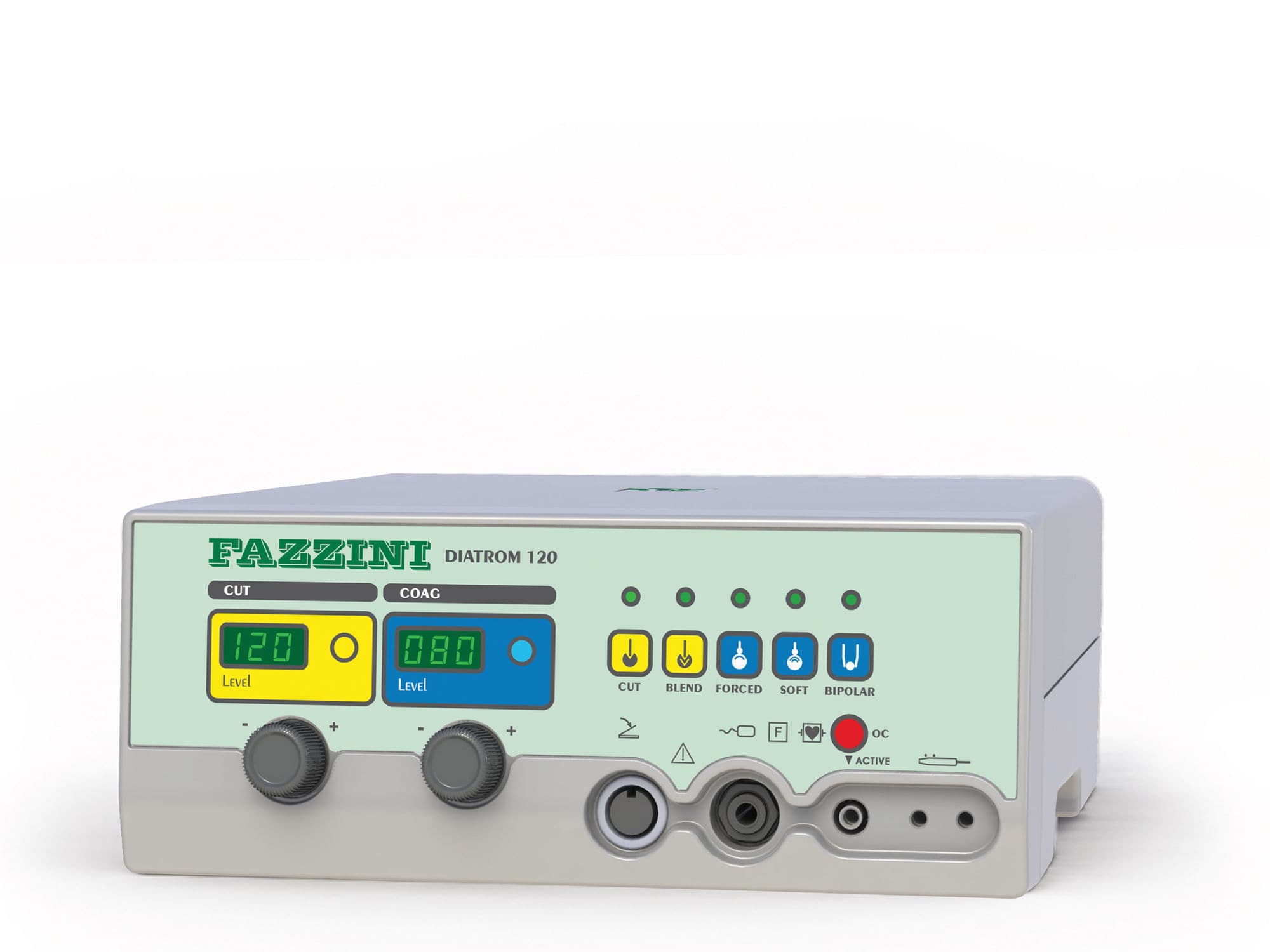
A Monopolar Electrosurgical Unit (ESU), often referred to as a “Bovie” (after its inventor, Dr. Bovie), is a fundamental surgical device that uses high-frequency electrical current to cut biological tissue and control bleeding (coagulation). It is a cornerstone of modern surgery, enabling precise dissection with simultaneous hemostasis, which reduces blood loss, shortens procedure time, and improves surgical outcomes. In essence, it replaces the mechanical scalpel for a vast range of procedures, offering enhanced control and efficiency.
How it Works
The principle behind an ESU is the rapid heating of tissue cells due to electrical resistance. The unit generates a high-frequency alternating current (typically in the range of 300 kHz to 3 MHz), which is far above the frequency that stimulates nerves or muscles, preventing electrocution.
- The Circuit: Monopolar surgery completes an electrical circuit.
- The Generator (ESU): Creates the high-frequency current.
- The Active Electrode: The surgeon applies this pencil-like instrument to the target tissue. The current enters the patient’s body here.
- The Patient: The current flows through the patient’s body.
- The Return Electrode (Dispersive Pad): A large pad placed on the patient’s skin (typically the thigh or back) away from the surgical site. This pad safely collects the current and returns it to the generator, completing the circuit.
The effect on the tissue (cutting or coagulation) is determined by the current’s waveform and power setting.
- Cutting: A continuous, high-power waveform causes rapid cellular vaporization, cleanly dividing tissue.
- Coagulation: An intermittent, pulsed waveform causes slower heating, denaturing proteins and sealing blood vessels.
- Blend: A mix of both waveforms, providing cutting with simultaneous coagulation.
Key Components
- Generator/Console: The main unit that houses the electronics, control panels, and software. It allows the surgeon to select the mode (Cut, Coag, Blend) and adjust the power output.
- Active Electrode (Handpiece/Pencil): The instrument held by the surgeon. It often includes a trigger or button to activate the current. Tips can be blades, needles, or balls.
- Return Electrode (Dispersive Pad): A large, adhesive pad that provides a safe, low-current-density exit path for the electricity. Modern systems are “contact quality monitoring” (CQM) systems that continuously check the pad’s contact with the skin to prevent burns.
- Foot Switch: An optional pedal that allows the surgeon to activate the current hands-free.
2. Uses
Clinical Applications
Monopolar ESUs are ubiquitous across surgical disciplines due to their versatility.
- General Surgery: Laparoscopic cholecystectomy, hernia repair, bowel resections.
- Orthopedic Surgery: Joint replacements, spine procedures, tumor excision.
- Cardiothoracic Surgery: Coronary artery bypass, valve replacements.
- Gynecology: Hysterectomy, cesarean sections, ovarian cyst removal.
- Urology: Prostatectomy, nephrectomy.
- ENT/Head & Neck Surgery: Tonsillectomy, thyroidectomy.
- Plastic Surgery: Abdominoplasty, flap elevation.
Who Uses It
- Surgeons: Primary operators who control the active electrode.
- Scrub Nurses/Technicians: Assist in connecting the electrodes, passing the handpiece, and ensuring the system is set up correctly.
- Circulating Nurses: Manage the generator console, adjust settings as directed, and are responsible for the integrity of the return electrode placement.
Departments/Settings
Primarily used in Operating Rooms (ORs) within hospitals and ambulatory surgery centers. They are also found in specialized procedure rooms in cardiac cath labs, endoscopy suites, and dermatology clinics.
3. Technical Specs
Typical Specifications
- Output Power: Typically 1-300 Watts, depending on the mode.
- Frequency Range: 300 kHz to 3 MHz.
- Modes: Cut (Pure, Blend 1, Blend 2), Coag (Soft, Spray/Fulgarate).
- Output Impedance: Designed to match tissue impedance for consistent performance.
Variants & Sizes
- Main Console Units: Large, cart-mounted systems for major ORs with extensive features.
- Portable/Compact Units: Smaller, lighter systems for minor procedures, office-based surgeries, or low-resource settings.
Materials & Features
- Materials: Handpieces are made of durable, autoclavable plastics and metals. Cables are insulated with silicone or Teflon.
- Key Features:
- Argon Plasma Coagulation (APC) Integration: Uses ionized argon gas to conduct current, ideal for superficial coagulation of diffuse bleeding.
- Vessel Sealing: Advanced algorithms for sealing larger vessels.
- Tissue Sensing Technology: Automatically adjusts output based on tissue impedance.
- Smoke Evacuation Integration: Ports to connect smoke evacuators to remove hazardous surgical plume.
Notable Models
- Medtronic ForceTriad™, Valleylab™ FT10
- Johnson & Johnson GEN11
- BOWA ARC 400
- Erbe VIO 300D
4. Benefits & Risks
Advantages
- Versatility: Can cut, coagulate, and desiccate tissue with one instrument.
- Precision: Allows for meticulous dissection with minimal tissue damage.
- Reduced Blood Loss: Simultaneous coagulation significantly reduces bleeding, improving visibility and patient safety.
- Efficiency: Faster than traditional scalpels and sutures for many procedures, reducing OR time.
- Minimally Invasive Application: Essential for laparoscopic surgery.
Limitations
- Thermal Spread: Heat can damage adjacent tissues (typically 1-2 mm).
- Surgical Plume: Produces a smoke byproduct that can be a biohazard and irritant.
- Potential for Interference: Can interfere with pacemakers and other implanted electronic devices.
Safety Concerns & Warnings
- Alternate Site Burns: The most significant risk. Can occur if the return electrode is poorly placed (on bony prominences, hairy skin, or scars) or if the patient makes contact with grounded metal objects (e.g., OR table rails).
- Direct Coupling: The active electrode accidentally touching another metal instrument inside the patient, redirecting current.
- Capacitive Coupling: Induced current through the insulation of a laparoscopic instrument, which can cause visceral burns.
- Pacemaker Interference: The current can inhibit or damage pacemakers and ICDs.
- Surgical Fire Risk: In the presence of oxygen (e.g., during head/neck surgery), a spark can ignite drapes or airway tubes.
Contraindications
- Should not be used in procedures where the current path is unknown or cannot be controlled (e.g., near critical neural structures without monitoring).
- Use with extreme caution and specific protocols in patients with implanted electronic devices.
- Avoid use in the presence of flammable antiseptics (e.g., alcohol-based solutions) or high oxygen concentrations.
5. Regulation
- FDA Class: Class II (moderate to high risk). Requires a 510(k) premarket notification.
- EU MDR Class: Typically Class IIb.
- CDSCO Category (India): Class C (moderate-high risk).
- PMDA Notes (Japan): Regulated as a “Specified Controlled Medical Device.” Requires a stringent approval process, often involving clinical data from Japanese populations.
- ISO/IEC Standards:
- IEC 60601-1: General requirements for basic safety and essential performance.
- IEC 60601-2-2: Particular requirements for the basic safety and essential performance of high-frequency surgical equipment.
6. Maintenance
Cleaning & Sterilization
- Generator Exterior: Wipe down with a hospital-grade disinfectant after each procedure.
- Handpieces/Cables: Most are designed for sterilization. Follow manufacturer’s instructions for cleaning (e.g., enzymatic cleaner) and sterilization (e.g., autoclaving, low-temperature hydrogen peroxide plasma). Inspect cables for insulation damage before each use.
- Return Electrodes: Single-use only. Must be discarded after each patient.
Reprocessing
Strict adherence to the manufacturer’s IFU (Instructions for Use) for reprocessing reusable components is critical to prevent cross-contamination and ensure device integrity.
Calibration
Should be performed periodically (e.g., annually) by qualified biomedical engineers as per the manufacturer’s schedule to ensure output power is accurate.
Storage
Store the generator and accessories in a clean, dry, and climate-controlled environment. Cables should be coiled loosely without sharp bends to prevent wire breakage.
7. Procurement Guide
How to Select the Device
- Procedure Volume & Type: A high-volume OR needs a robust, feature-rich console. A clinic may only need a basic portable unit.
- User Preference: Surgeon familiarity and comfort with the handpiece feel and control layout are paramount.
- Service & Support: Evaluate the manufacturer’s or distributor’s service network and response time.
Quality Factors
- Output Consistency: The generator should deliver stable power regardless of tissue impedance.
- Safety Features: CQM for the return electrode is non-negotiable. Look for isolated output and comprehensive alarm systems.
- Durability: Build quality to withstand a busy OR environment.
- Ease of Use: Intuitive interface with clear displays and audible feedback.
Certifications
Look for CE Marking (for Europe), FDA 510(k) Clearance (for USA), and other regional certifications like CDSCO (India) to ensure regulatory compliance.
Compatibility
Ensure compatibility with existing smoke evacuators, laparoscopic instruments, and facility electrical systems.
Typical Pricing Range
- Portable Units: $3,000 – $10,000 USD
- Main Console Units: $15,000 – $40,000+ USD
(Varies significantly based on features and brand.)
8. Top 10 Manufacturers (Worldwide)
- Medtronic (Ireland/USA): The market leader through its acquisition of Covidien and the Valleylab brand. Products: ForceTriad, Valleylab FT10.
- Johnson & Johnson (Ethicon) (USA): A major player in the surgical energy market. Products: GEN11, ENDO GIAN™.
- B. Braun (Germany): Offers a strong portfolio of electrosurgical products. Products: VIO® Smarthub.
- Olympus (Japan): Prominent in endoscopic surgery, with integrated ESUs. Products: ESG-400.
- Conmed (USA): Provides a wide range of electrosurgical generators and accessories.
- Erbe (Germany): Known for high-quality and innovative technology, particularly in vessel sealing. Products: VIO 300D.
- BOWA Medical (Germany): Specializes in electrosurgery and argon plasma coagulation. Products: ARC 400.
- Symmetry Surgical (USA): Manufactures electrosurgical pencils and accessories under brands like Bovie.
- Stryker (USA): Offers ESUs integrated with their visualization and navigation platforms.
- CooperSurgical (USA): Focuses on electrosurgical devices for the OB/GYN market.
9. Top 10 Exporting Countries (Latest Year – Based on HS Code 901890)
Data is illustrative based on recent global trade trends.
- United States: A leading exporter, home to major players like J&J and Medtronic’s operational hubs.
- Germany: A hub of engineering excellence, with strong exports from Erbe, B. Braun, and BOWA.
- Ireland: A significant export hub due to the presence of Medtronic’s manufacturing facilities.
- China: Rapidly growing as both a manufacturer and exporter of medical devices, including ESUs.
- Mexico: A major manufacturing and export base for the North American market.
- Japan: Home to Olympus, a key player in endoscopic energy devices.
- Netherlands: Serves as a key European distribution and logistics hub.
- Switzerland: Hosts sophisticated medical device manufacturers and regional headquarters.
- United Kingdom: Maintains a strong medical device export market post-Brexit.
- France: Home to several mid-sized medical technology companies.
10. Market Trends
Current Global Trends
- Integration: ESUs are being integrated into “smart” ORs, connecting with data management systems.
- Minimally Invasive Surgery (MIS) Growth: Rising demand for advanced ESUs compatible with laparoscopic and robotic surgery.
- Emerging Markets: Rapid growth in Asia-Pacific and Latin America due to healthcare infrastructure development.
New Technologies
- Advanced Bipolar & Vessel Sealing: Devices that can seal vessels up to 7mm, reducing the need for clips and sutures.
- Real-Time Tissue Feedback: Systems that adjust energy output in real-time based on tissue response.
- Digital Platforms: Remote monitoring, data analytics for usage patterns, and predictive maintenance.
Demand Drivers
- Rising global surgical volumes.
- Growing preference for minimally invasive procedures.
- Aging population requiring more surgical interventions.
- Technological advancements improving safety and efficacy.
Future Insights
The future lies in digitization, robotics, and intelligence. ESUs will become more adaptive, providing surgeons with data-driven feedback and seamlessly integrating into automated surgical platforms to further enhance precision and patient safety.
11. Training
Required Competency
Operators must understand electrosurgical physics, tissue effects, device operation, and, most critically, safety protocols. Formal training provided by the hospital’s clinical engineering department and/or the device manufacturer is essential.
Common User Errors
- Using an inappropriately high power setting.
- Inadvertent activation of the foot pedal or handpiece.
- Poor return electrode placement (e.g., over bone).
- Using damaged or faulty cables and electrodes.
- Ignoring alarm signals from the generator.
Best-Practice Tips
- Use the lowest effective power setting.
- Always use a CQM return electrode and place it on a well-vascularized, dry, hair-free area.
- Never drape the active electrode; use a safety holster.
- Deactivate the unit before the electrode leaves the surgical field.
- For laparoscopic surgery, use all-metal ports and inspect insulation meticulously.
12. FAQs
1. What’s the difference between monopolar and bipolar electrosurgery?
In monopolar, current travels from the active electrode, through the patient’s body, to a distant return pad. In bipolar, both the active and return electrodes are on the same instrument (e.g., forceps), and current flows only through the tissue grasped between the tips, making it safer and more localized.
2. Why is the return electrode pad so large?
The large surface area reduces the current density (current per unit area) at the exit site, preventing heat buildup and burns.
3. Can I use a monopolar ESU on a patient with a pacemaker?
Yes, but with extreme caution. A protocol must be followed, which often involves consulting a cardiologist, placing the return pad so current doesn’t flow near the device, and using bipolar mode when possible. The pacemaker should be checked post-operatively.
4. What is the “surgical plume” and why is it dangerous?
It’s the smoke produced by vaporizing tissue. It contains carcinogens, viruses, bacteria, and toxic gases. It must be evacuated using a smoke evacuation system to protect the OR staff.
5. Why isn’t the cutting/coagulation working effectively?
Possible causes include: power setting too low, desiccated tissue eschar built up on the electrode tip, a damaged cable, or an incompatible generator setting for the tissue type.
6. Is the patient at risk of being electrocuted?
No. The high-frequency current used alternates direction millions of times per second, which is too fast to cause depolarization of nerves or muscles (fibrillation). The primary risks are thermal burns, not electrocution.
7. How often should the generator be serviced?
Follow the manufacturer’s recommended schedule, typically an annual preventative maintenance and calibration check by a biomedical technician.
8. Can I use a different brand of handpiece with my generator?
Generally, no. Mixing and matching brands can be unsafe and will likely void the warranty. Always use accessories approved for use with your specific generator model.
13. Conclusion
The monopolar electrosurgical unit is an indispensable tool that has revolutionized surgery. Its ability to precisely cut and coagulate tissue has become the standard of care across countless procedures. However, its power is matched by its potential for harm if used incorrectly. A deep understanding of its principles of operation, a rigorous adherence to safety protocols, and comprehensive training for all users are the cornerstones of harnessing its benefits while mitigating its risks. As technology advances, ESUs will continue to evolve, becoming smarter, safer, and more integrated into the digital operating room of the future.
14. References
- International Electrotechnical Commission. IEC 60601-2-2:2017 – Medical electrical equipment – Part 2-2: Particular requirements for the basic safety and essential performance of high frequency surgical equipment and high frequency surgical accessories.
- AORN (Association of periOperative Registered Nurses). Guidelines for Electrosurgical Safety. 2021.
- ECRI Institute. Health Devices Guidance: Electrosurgical Safety. 2020.
- U.S. Food and Drug Administration (FDA). Recognized Consensus Standards: Medical Electrical Equipment.
- Massarweh, N. N., et al. “Electrosurgery: History, Principles, and Current and Future Uses.” Journal of the American College of Surgeons, vol. 202, no. 3, 2006, pp. 520–530.