1. Definition
What is a Multiparameter Patient Monitor?
A Multiparameter Patient Monitor (MPM) is a vital, non-invasive medical device used in healthcare settings to continuously track, display, and record multiple physiological parameters of a patient simultaneously. It serves as a clinician’s primary window into a patient’s real-time vital status, integrating data from various sensors and electrodes into a single, cohesive display. Its primary function is to provide immediate and continuous assessment of a patient’s hemodynamic and respiratory stability, allowing for rapid detection of life-threatening changes and facilitating timely clinical intervention.
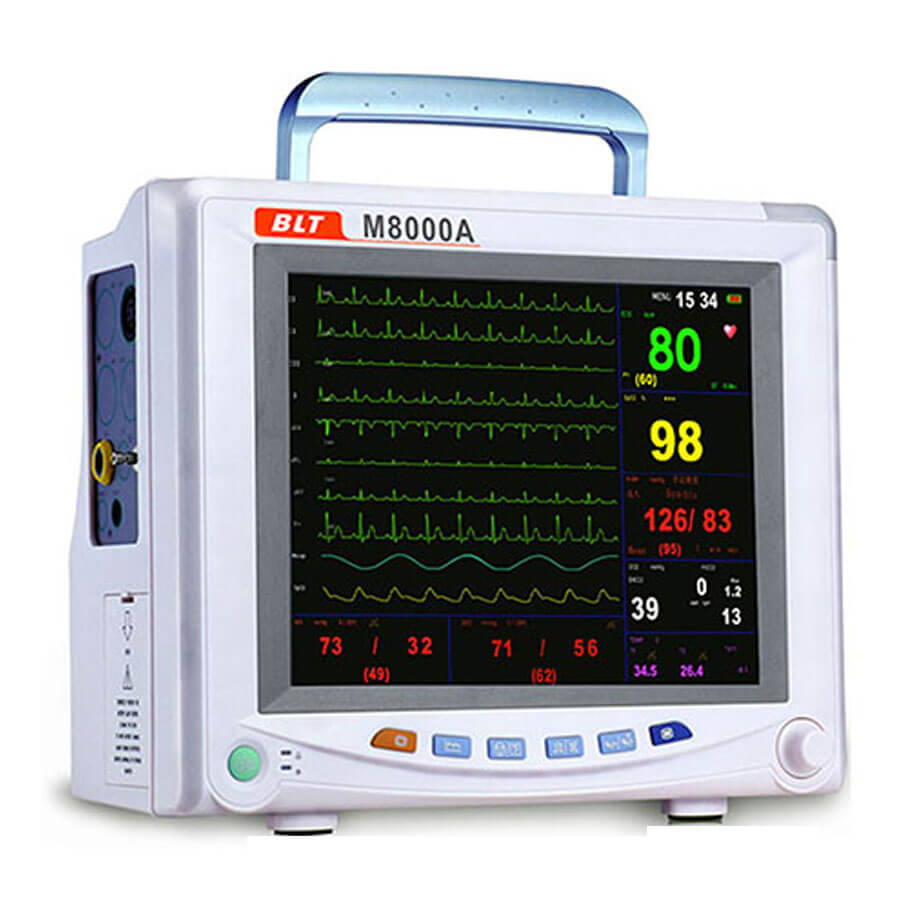
How it works
At its core, an MPM works by connecting to a patient via several dedicated sensors. Each sensor measures a specific electrical signal or physical phenomenon (like light absorption or pressure). These raw analog signals are sent to the monitor’s main processing unit. Here, sophisticated algorithms filter out noise (like motion artifact), interpret the signals, and convert them into meaningful digital data—a heart rate number, a waveform, a blood oxygen percentage. This processed information is then displayed on the screen in real-time, with visual and audible alarms triggered if values breach preset safe limits. Modern monitors often transmit this data to central nursing stations and hospital Electronic Medical Records (EMRs) for comprehensive patient management.
Key Components
- Main Display Unit: The central screen that shows waveforms, numerical values, and trends. It is the user interface for configuring settings.
- Parameter Modules: Internal or plug-in modules that process specific signals (e.g., ECG, SpO2, NIBP).
- Patient Cables & Sensors:
- ECG Cable and Electrodes: Attach to the patient’s chest to measure electrical heart activity.
- SpO2 Probe: A clip or wrap placed on a finger, toe, or earlobe to measure peripheral oxygen saturation and pulse rate using photoplethysmography.
- NIBP Cuff and Hose: An inflatable cuff placed on the arm (or leg) to measure oscillometric blood pressure.
- Temperature Probe: A disposable or reusable probe for oral, axillary, or rectal temperature measurement.
- Alarm System: Includes visual (flashing lights, on-screen messages) and audible (beeps, chimes) alerts for parameter violations.
- Battery: Provides backup power for portability and during power outages.
- Connectivity Ports: For network (Ethernet/Wi-Fi), USB, and serial connections to enable data export and integration.
- Mounting System: A rolling stand (pole mount) or wall arm for secure placement.
2. Uses
Clinical Applications
- Continuous Vital Sign Surveillance: The fundamental use—providing 24/7 tracking of heart rate, rhythm, respiration, SpO2, and blood pressure.
- Detection of Arrhythmias: ECG monitoring identifies abnormal heart rhythms like atrial fibrillation, bradycardia, or ventricular tachycardia.
- Hypoxia Monitoring: SpO2 is critical for detecting drops in blood oxygen levels in patients with respiratory conditions (COPD, pneumonia) or under sedation.
- Hemodynamic Monitoring: Tracking blood pressure trends is essential in shock, sepsis, during surgery, and in critically ill patients.
- Post-Operative Recovery: Monitoring patients in Post-Anesthesia Care Units (PACU) for stability after surgery.
- Medication Titration: Guiding the administration of drugs for blood pressure, heart rate, or sedation based on real-time parameters.
- Stress Testing: Monitoring ECG and blood pressure during cardiac stress tests.
Who uses it
- Critical Care Nurses & ICU Staff: Primary users who constantly observe and respond to monitor data.
- Anesthesiologists: Use dedicated intraoperative monitors to track patient stability during surgery.
- Emergency Medicine Physicians & Nurses: For rapid assessment and triage of patients in the ER.
- Respiratory Therapists: Closely monitor SpO2 and respiration parameters.
- Cardiologists & Cardiac Nurses: Specialize in interpreting ECG waveforms and arrhythmias.
- Primary Care Physicians & Hospitalists: Use monitor data during rounds for clinical decision-making.
Departments/Settings
- Intensive Care Unit (ICU)/Critical Care Unit (CCU)
- Emergency Room (ER)/Emergency Department (ED)
- Operating Room (OR) & Post-Anesthesia Care Unit (PACU)
- Step-down/High Dependency Units (HDU)
- General Hospital Wards (for higher-acuity patients)
- Ambulances & Mobile ICUs (transport monitors)
- Cardiac Catheterization Labs
- Outpatient Procedure Suites & Dialysis Centers
3. Technical Specifications
Typical Specifications
- Monitored Parameters (Core): ECG (3/5/12-lead), Heart Rate (HR), Non-Invasive Blood Pressure (NIBP), Peripheral Oxygen Saturation (SpO2), Respiration Rate (RR), Temperature (Temp).
- Advanced Parameters: Invasive Blood Pressure (IBP), Cardiac Output (CO), End-Tidal CO2 (EtCO2), Electroencephalogram (EEG/BIS for anesthesia depth).
- Display: 12.1-inch to 19-inch color TFT/LCD touchscreen, often sunlight-readable.
- Alarms: Fully configurable per parameter with priority levels (e.g., crisis, warning, advisory).
- Battery Life: Typically 3 to 8 hours of continuous operation on internal battery.
- Connectivity: Ethernet, Wi-Fi, HL7/ DICOM compatibility for EMR integration.
- Data Storage: Hours to days of waveform and numeric trend data.
Variants & Sizes
- High-Acuity/ICU Monitors: Large screens (15”+), support all advanced parameters, modular for expansion.
- Intermediate-Care/ED Monitors: Mid-sized, robust, with core parameters plus a few advanced options.
- Portable/Transport Monitors: Compact, lightweight, with extended battery life, designed for movement with the patient.
- Vital Signs Monitors: Often simpler, used on general wards, may not have continuous ECG waveform display.
- Telemetry Monitors: Small, wireless monitors worn by ambulatory patients, transmitting data to a central station.
Materials & Features
- Materials: Medical-grade plastics (ABS, polycarbonate) for housing, silicone keypads, corrosion-resistant metal for stands.
- Special Features:
- Touchscreen Interface: Intuitive, easy-to-clean glass fronts.
- Arrhythmia Analysis & ST-Segment Monitoring: Advanced ECG software.
- Masimo SET® or Philips FAST-SpO2: Proprietary technologies for accurate SpO2 during motion and low perfusion.
- Networking: Capability to create a central monitoring station where dozens of beds can be viewed from a single location.
Notable Models (Examples)
- Philips: IntelliVue MX Series, IntelliVue X3 (portable)
- GE Healthcare: CARESCAPE B Series, B650, B450
- Mindray: BeneVision N Series, iMEC series
- Draeger: Infinity Series, Vista 120
- Nihon Kohden: BSM-6000 Series, Life Scope SVM-7200
- Edan: iM series, H Series
4. Benefits & Risks
Advantages
- Comprehensive Patient View: Consolidates multiple data points onto one screen, improving situational awareness.
- Early Warning System: Continuous monitoring allows for the earliest possible detection of clinical deterioration.
- Improved Patient Outcomes: Enables faster intervention, reducing the risk of adverse events like cardiac arrest.
- Efficiency: Reduces the need for manual, intermittent vital sign checks, freeing up nursing time.
- Data Documentation: Automated trending and recording provides accurate, timestamped records for the patient chart.
Limitations
- False Alarms: The single biggest challenge—alarms triggered by motion artifact, poor sensor contact, or non-critical events lead to “alarm fatigue,” where staff may become desensitized.
- Operator Dependent: Accuracy is highly dependent on correct sensor placement, appropriate cuff size, and proper setup.
- Limited by Technology: SpO2 can be inaccurate with nail polish, poor perfusion, or methemoglobinemia. NIBP readings are intermittent, not continuous.
- Patient Discomfort: Can restrict movement and sleep due to cables and frequent cuff inflations.
Safety Concerns & Warnings
- Alarm Fatigue: Must be managed through proper customization of alarm limits and education.
- Electrocution Hazard: Never use with a damaged cable or if fluid is spilled into the unit. Must be connected to properly grounded outlets.
- Skin Irritation: Prolonged use of adhesives (ECG electrodes) can cause skin breakdown.
- Incorrect Interpretation: Reliance on monitor numbers without clinical correlation can lead to errors. The monitor is a tool, not a diagnostician.
Contraindications
- NIBP Cuff Placement: Should not be placed on an arm with an AV fistula for dialysis, on the side of a mastectomy, or where there is an active infection or injury.
- SpO2 Probe: Should not be used on digits with compromised circulation.
- General: The device is contraindicated for use on a patient for whom continuous monitoring is not clinically indicated, as it may provide a false sense of security.
5. Regulation
Multiparameter patient monitors are classified as moderate to high-risk devices globally.
- FDA Class: Class II (510(k) premarket notification generally required). Monitors with advanced diagnostic ECG analysis may have higher classifications for those specific functions.
- EU MDR Class: Typically Class IIa (for monitoring physiological processes) or Class IIb (if intended for direct diagnosis or monitoring of vital physiological processes where variations could pose immediate danger).
- CDSCO Category (India): Class C (Moderate to High Risk), as per the Medical Device Rules, 2017.
- PMDA (Japan): Classified based on risk; general patient monitors often fall under Class II (Controlled Medical Devices).
- ISO/IEC Standards:
- ISO 80601-2-13: Particular requirements for basic safety and essential performance of an anesthesia workstation.
- ISO 80601-2-27: Particular requirements for basic safety and essential performance of ECG monitoring equipment.
- ISO 80601-2-30: Particular requirements for basic safety and essential performance of automated non-invasive sphygmomanometers.
- ISO 80601-2-61: Particular requirements for basic safety and essential performance of pulse oximeter equipment.
- IEC 60601-1: General standard for basic safety and essential performance of medical electrical equipment.
6. Maintenance
Cleaning & Disinfection
- Daily/Between Patients: Disconnect from power. Wipe the monitor housing, screen, cables, and stand with a soft cloth dampened with a hospital-grade disinfectant (e.g., diluted bleach, 70% isopropyl alcohol, or quaternary ammonium compounds). Avoid excess moisture.
- Do Not: Immerse the monitor, spray liquid directly onto it, or use abrasive cleaners.
Reprocessing
- Sensors/Probes: Disposable SpO2 probes and ECG electrodes are single-patient use. Reusable temperature probes and NIBP cuffs/hoses must be cleaned and disinfected according to manufacturer instructions between patients.
Calibration
- NIBP: Requires periodic validation against a mercury sphygmomanometer or an accredited pressure calibrator to ensure accuracy.
- SpO2 & ECG: Internal electronic self-tests are common. Full sensor accuracy verification typically requires specialized test equipment and is done by trained biomedical engineers.
- Frequency: Per manufacturer schedule (e.g., annually) and always after any repair. Hospital policy often dictates 6-month or annual preventive maintenance (PM).
Storage
- Store in a clean, dry, climate-controlled environment.
- Avoid extreme temperatures (< -10°C or > 50°C) and high humidity.
- Store with batteries partially charged (40-60%) if not in use for extended periods.
7. Procurement Guide
How to Select the Device
- Define Clinical Need: Is it for ICU, OR, transport, or general wards? This dictates required parameters.
- Assess Workflow: Consider portability needs, network integration requirements, and desired screen size.
- Evaluate Expandability: Modular monitors allow future addition of parameters (e.g., adding EtCO2 later).
- Usability Test: Involve end-users (nurses) to test screen readability, alarm silencing, and overall ease of use.
Quality Factors
- Reliability & Uptime: Look for a strong Mean Time Between Failures (MTBF) rate.
- Alarm Management Features: Sophisticated alarm delay, customization, and escalation options.
- Screen Clarity: Bright, high-resolution display viewable from angles and in bright light.
- Service & Support: Availability of local biomedical engineering support and manufacturer service contracts.
Certifications
Ensure the device carries relevant regional regulatory marks: CE Mark (EU), FDA Clearance (USA), CDSCO (India), etc. Also look for ISO 13485 certification of the manufacturer’s quality management system.
Compatibility
- Hospital Network: Must be compatible with existing central station software and EMR/HIS for seamless data flow (check for HL7, DICOM compatibility).
- Accessories: Verify compatibility of existing ECG cables, SpO2 probes, and other accessories to avoid costly proprietary lock-ins.
Typical Pricing Range
- Basic Vital Sign Monitor: $1,500 – $4,000
- Mid-Range Multiparameter Monitor: $5,000 – $12,000
- High-End ICU/Modular Monitor: $15,000 – $30,000+
(Prices vary dramatically based on configuration, features, and region.)
8. Top 10 Manufacturers (Worldwide)
- Philips (Netherlands): A global leader with the IntelliVue series. Known for innovation, robust networking, and strong clinical decision support tools.
- GE Healthcare (USA): Major competitor with the CARESCAPE portfolio. Renowned for reliability and deep integration in OR and ICU ecosystems.
- Mindray (China): A rapidly growing global force offering high value. Its BeneVision and iMEC series are widely used.
- Draeger (Germany): Specializes in critical care environments (OR, ICU). The Infinity and Vista series are known for excellent ergonomics and safety.
- Nihon Kohden (Japan): Dominant in Japan and strong globally, especially in cardiology. Renowned for high-quality ECG monitoring.
- Hill-Rom (Baxter) (USA): Known for its Welch Allyn brand of vital signs monitors, widely used in general care and outpatient settings.
- Edan Instruments (China): A significant player offering a broad portfolio from economical to high-end monitors, with strong growth in emerging markets.
- Shenzhen Comen Medical (China): Provides cost-effective monitoring solutions, exporting globally to budget-conscious healthcare facilities.
- Contec Medical Systems (China): Another major Chinese manufacturer known for a wide range of patient monitors, from handheld to bedside.
- Schiller (Switzerland): Specializes in cardiology diagnostics, offering high-end patient monitors with exceptional ECG analysis capabilities.
9. Top 10 Exporting Countries (Latest Year – Based on Recent Trade Data)
(Ranked by estimated export value of HS Code 901819 – “Electro-cardiographs”)
- China: The undisputed export powerhouse, supplying a massive volume of monitors at various price points globally.
- United States: Exports high-value, technologically advanced monitors from companies like GE and Philips (US operations).
- Germany: Exports premium monitors from Draeger and other MedTech firms, known for engineering excellence.
- Netherlands: Home to Philips, making it a major exporter of high-end monitoring systems.
- Japan: Exports advanced technology monitors from Nihon Kohden and others, particularly to Asian and Western markets.
- Switzerland: Exports specialized, high-value monitoring equipment from Schiller and others.
- Singapore: A key trade hub for medical devices in Asia, re-exporting monitors from various manufacturers.
- Ireland: A significant MedTech manufacturing and export hub for many multinational companies.
- United Kingdom: Exports niche and advanced monitoring solutions.
- France: Home to several medical technology companies with patient monitoring offerings.
10. Market Trends
Current Global Trends
- Portability & Decentralization: Rising demand for compact, wireless, and telemetry monitors to support hospital-at-home programs and monitoring in general wards.
- Integration & Interoperability: Seamless data flow from monitor to EMR and central stations is now a baseline expectation, driving investments in hospital IT infrastructure.
- Emerging Market Growth: Rapid hospital expansion in Asia, Latin America, and Africa is driving demand for cost-effective monitoring solutions.
New Technologies
- Advanced Analytics & AI: Algorithms are moving beyond simple alarms to predictive analytics—warning of potential sepsis, hypotension, or deterioration hours before it happens.
- Wearable & Cableless Monitoring: Adhesive patch sensors (e.g., for ECG & RR) enable greater patient mobility and comfort, reducing cable clutter.
- Multi-Parameter SpO2 Probes: Probes that measure SpO2, pulse rate, perfusion index, and even hemoglobin (SpHb) non-invasively.
- Touchless Monitoring: Radar and camera-based technologies in development for contactless vitals monitoring (heart/respiration rate).
Demand Drivers
- Aging Global Population: Increasing prevalence of chronic diseases requiring monitoring.
- Focus on Patient Safety: Initiatives to reduce in-hospital adverse events and preventable deaths.
- Cost Containment: Driving adoption of monitoring to allow for safe care in lower-acuity settings (step-down units, home).
Future Insights
The future patient monitor will be less of a “box on a pole” and more of an integrated, intelligent node in a clinical IoT network. It will be smaller, smarter, and more connected, providing not just data but actionable clinical insights directly to clinician smartphones, enabling proactive rather than reactive care.
11. Training
Required Competency
Operators must be trained to:
- Correctly apply all sensors and cuffs.
- Navigate the monitor menu to admit/discharge patients and set appropriate alarm limits.
- Accurately interpret basic waveforms (ECG, SpO2 pleth).
- Recognize common artifacts and troubleshoot basic problems (e.g., “SpO2 sensor off,” “NIBP cuff error”).
- Respond appropriately to alarms and silence/acknowledge them.
- Perform basic cleaning and battery management.
Common User Errors
- Incorrect ECG Electrode Placement: Leads to bizarre waveforms and inaccurate heart rate detection.
- Wrong NIBP Cuff Size: Using a cuff that is too small falsely elevates readings; too large lowers them.
- Ignoring/Altering Alarms: Disabling alarms or setting limits too wide/narrow negates the monitor’s safety function.
- Misinterpreting Artifact: Treating motion artifact on the ECG as a lethal arrhythmia.
- Poor Sensor Site Rotation: Not moving SpO2 or ECG sites periodically, risking skin breakdown.
Best-Practice Tips
- Lead Placement is Key: Take time to place ECG electrodes on clean, dry skin with good adhesion.
- Customize Alarms: Set patient-specific, clinically relevant alarm limits upon admission. Review them regularly.
- Treat the Patient, Not the Monitor: Always corroborate monitor readings with a physical patient assessment.
- Secure Cables: Route cables to prevent tension on sensors and reduce trip hazards.
- Daily Check: Verify battery charge, availability of supplies (electrodes, paper), and that all cables are intact at the start of each shift.
12. Frequently Asked Questions (FAQs)
Q1: How often should NIBP be set to cycle on a critical patient?
A: It depends on clinical stability. It could be every 5-15 minutes for an unstable patient. For stable patients, every 30-60 minutes or even manual checks may suffice. Frequent cycling causes patient discomfort and can lead to limb complications.
Q2: Why does the SpO2 reading sometimes show “—” or disappear?
A: This is usually due to poor signal. Causes include patient motion, cold extremities with low perfusion, nail polish, or a poorly positioned probe. Check the patient, ensure warmth, try a different site (earlobe, other hand), and ensure the probe is aligned correctly.
Q3: What’s the difference between monitoring ECG in “Lead II” and “5-lead” mode?
A: Lead II (using 3 electrodes) is great for basic heart rate and rhythm (especially detecting arrhythmias). A 5-lead system allows you to monitor 7 different ECG views (I, II, III, aVR, aVL, aVF, V) simultaneously, providing more information about the heart’s electrical activity, which is crucial for detecting ischemia (e.g., ST-segment changes).
Q4: Can we use the monitor on a patient with a pacemaker?
A: Yes. Modern monitors have a “Pacemaker Detection” or “Paced” mode. When enabled, they filter the pacing spike from the ECG signal to accurately determine the underlying patient’s own heart rate and rhythm.
Q5: What should we do first when a critical alarm sounds?
A: LOOK AT THE PATIENT. Assess the patient’s level of consciousness, breathing, and color immediately. Then, look at the monitor to identify the specific parameter alarming. A patient talking to you with a screaming monitor is a very different emergency than an unresponsive patient.
Q6: How do we prevent alarm fatigue?
A: Key strategies include: customizing alarm limits for each patient, ensuring proper sensor application to minimize false alarms, cleaning sensors regularly, and having clear hospital policies for alarm management and response.
Q7: Is it safe to use a cell phone near the patient monitor?
A: Generally, yes. Modern monitors are well-shielded against electromagnetic interference (EMI). However, as a precaution, avoid placing a ringing phone directly on the monitor or its cables, as rare interference is possible.
Q8: The monitor is showing a very high respiration rate from the ECG leads (impedance method), but the patient looks calm. What’s wrong?
A: The impedance method counts chest movements. This can be falsely elevated by patient movement (shivering, talking), cardiac vibrations, or even large arm movements. Always validate the respiratory rate by physically counting breaths for 30 seconds.
Q9: How long do monitor batteries last, and when should they be replaced?
A: Batteries typically last 2-4 years with regular use. They should be replaced when the monitor indicates a “Replace Battery” warning or when the battery can no longer hold a sufficient charge to support the monitor during a typical transport.
Q10: Can monitor data be used in a court of law?
A: Yes, monitor trend data is part of the legal medical record. It provides timestamped, objective evidence of a patient’s physiological state. This underscores the importance of accurate patient ID entry and proper monitor use.
13. Conclusion
The multiparameter patient monitor is an indispensable cornerstone of modern clinical care, acting as a constant digital sentinel for patient stability. Its value lies not merely in displaying numbers, but in providing an integrated, real-time picture of a patient’s physiological status, enabling early intervention and improved outcomes. Successful implementation requires more than just purchasing advanced hardware; it hinges on proper user training, intelligent alarm management, and a clinical culture that uses the monitor as a tool to inform—not replace—skilled patient assessment. As technology evolves towards predictive analytics, wireless design, and greater integration, the fundamental principle remains: the monitor is a powerful ally in the mission to deliver safe, effective, and proactive patient care.
14. References
- Association for the Advancement of Medical Instrumentation (AAMI). Clinical Alarms Compendium.
- International Organization for Standardization (ISO). ISO 80601-2-27:2020 Medical electrical equipment.
- U.S. Food and Drug Administration (FDA). Classify Your Medical Device.
- European Commission. Medical Device Regulation (MDR) 2017/745.
- Drew, B. J., et al. (2014). “Practice Standards for Electrocardiographic Monitoring in Hospital Settings.” Circulation.
- The Joint Commission. National Patient Safety Goal on Clinical Alarm Safety.
- Manufacturer Technical Manuals (Philips IntelliVue, GE CARESCAPE, Mindray BeneVision).
- GlobalData, Fortune Business Insights. Patient Monitoring Market Reports.
- World Health Organization (WHO). Medical Device Technical Specifications.
- UN Comtrade Database. Trade Data for HS Code 901819.