1. Definition
What is a Nebulizer?
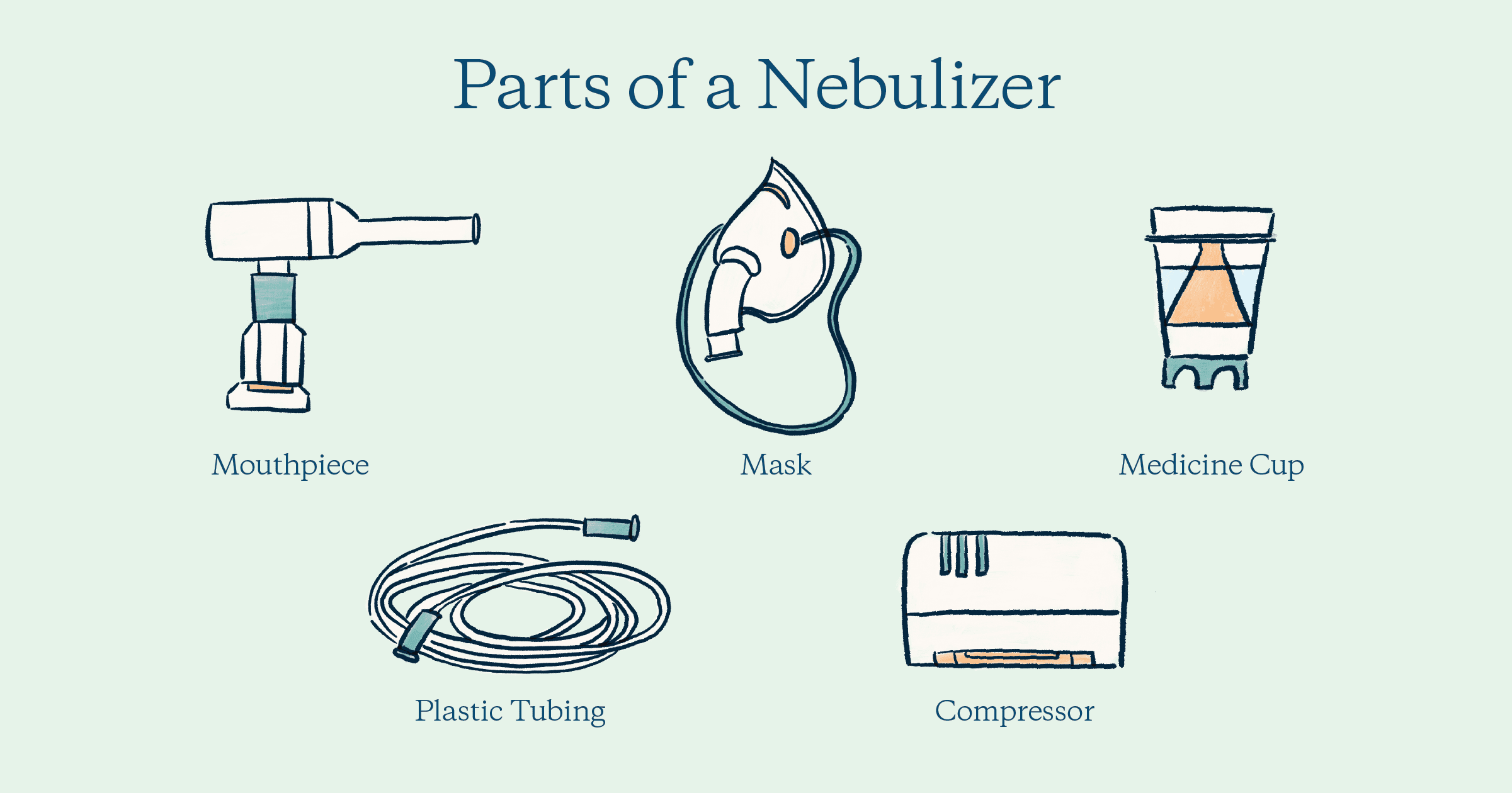
A nebulizer is a medical device that transforms liquid medication into a fine, breathable mist (aerosol) that can be inhaled directly into the lungs through a mouthpiece or mask. It is a cornerstone of respiratory therapy, delivering medications effectively to the respiratory tract for patients who have difficulty using handheld inhalers, such as young children, the elderly, or those experiencing severe respiratory distress. Think of it as a specialized machine that turns liquid medicine into a therapeutic fog for your lungs.
How it Works
The working principle of a nebulizer is based on aerosolization. It uses one of two primary mechanisms to break the liquid medication into tiny particles small enough to reach deep into the bronchioles and alveoli of the lungs (typically 1-5 microns in size).
- Jet (Compressed Air) Nebulizer: This is the most common type. It uses a compressor to generate a high-pressure stream of air or oxygen. This fast-moving air passes through a narrow opening in the medication chamber (cup), creating a vacuum effect (Bernoulli’s principle) that draws the liquid medication up a tube. The air stream then blasts the liquid against a baffle, shattering it into a fine mist.
- Ultrasonic Nebulizer: This type uses a piezoelectric crystal that vibrates at an extremely high frequency (ultrasonic waves). These vibrations are transmitted to the surface of the liquid medication, creating standing waves that cause the liquid to break apart into a mist. These are often quieter than jet nebulizers.
- Mesh Nebulizer: A modern variant where the liquid medication is forced through a fine mesh or plate with thousands of microscopic holes. This can be achieved via a vibrating mesh (activated by piezoelectricity) or a static mesh with a pumping mechanism. They are highly efficient and portable.
Key Components
A standard jet nebulizer system consists of:
- Compressor: The base unit that houses the motor and pump to generate compressed air. It plugs into a power outlet.
- Nebulizer Cup (Medication Chamber): A small, detachable container where the liquid medication is placed. It has inlet ports for air and an outlet for the mist.
- Tubing: Connects the compressor to the nebulizer cup, delivering the compressed air.
- Mouthpiece or Mask: The patient interface. A mouthpiece is held between the teeth, while a mask covers the nose and mouth. Masks are essential for infants, young children, or debilitated patients.
- Baffles: Located inside the nebulizer cup, these structures help filter out larger droplets, ensuring only the finest mist is delivered to the patient.
2. Uses
Clinical Applications
Nebulizers are used to deliver a variety of medications for acute and chronic respiratory conditions:
- Bronchodilators: (e.g., Albuterol, Ipratropium Bromide) to quickly open narrowed airways during asthma attacks, COPD exacerbations, or bronchiolitis.
- Corticosteroids: (e.g., Budesonide) to reduce inflammation in the airways in conditions like severe asthma or croup.
- Mucolytics: (e.g., Acetylcysteine) to thin thick, sticky mucus in diseases like cystic fibrosis or bronchiectasis, making it easier to cough up.
- Antibiotics: (e.g., Tobramycin, Aztreonam) for direct, targeted treatment of lung infections in cystic fibrosis.
- Prophylactic Medications: For preventing respiratory infections or chronic management of conditions.
Who Uses It
- Respiratory Therapists: The primary healthcare professionals responsible for administering nebulizer treatments in hospitals.
- Nurses: Frequently administer nebulized medications in inpatient and outpatient settings.
- Patients and Caregivers: For chronic condition management at home after proper training.
- Doctors/Pulmonologists: Prescribe the medication and therapy regimen.
Departments/Settings
- Emergency Departments: For acute asthma attacks and respiratory distress.
- Pulmonology & Respiratory Care Departments
- Pediatric Wards: Commonly used for bronchiolitis and asthma in children.
- Intensive Care Units (ICUs): For critically ill patients on ventilators (in-line nebulizers are used).
- General Medical/Surgical Wards
- Outpatient Clinics and Physician Offices
- Home Healthcare: A very common setting for daily management of chronic illnesses.
3. Technical Specs
Typical Specifications
- Particle Size (MMAD): Optimal range is 1-5 microns for lower respiratory deposition. Devices often specify their output particle size.
- Flow Rate: Typically 6-8 liters per minute for jet nebulizers.
- Residual Volume: The amount of medication left in the cup after nebulization is complete (ideally <1 mL).
- Treatment Time: Varies from 5 to 15 minutes depending on medication volume and nebulizer efficiency.
- Noise Level: Jet compressors: 45-60 dB; Ultrasonic/Mesh: often <30 dB.
- Power Source: AC mains, DC battery, or rechargeable batteries for portability.
Variants & Sizes
- Jet Nebulizers (Compressor-driven): Standard for home and hospital use. Reliable but bulky and noisy.
- Ultrasonic Nebulizers: Quieter, faster. Not suitable for all medications (e.g., suspensions like Budesonide or protein-based drugs can be degraded by heat/vibration).
- Mesh Nebulizers: Most portable and efficient. Fast treatment times, battery-operated. Can be more expensive; mesh can clog if not cleaned meticulously.
- Breath-Enhanced & Breath-Actuated: Designed to increase medication delivery efficiency by releasing more aerosol during inhalation and less during exhalation, reducing drug waste.
Materials & Features
- Materials: Nebulizer cups and masks are typically made from medical-grade polypropylene or polyethylene. Masks may use softer PVC or silicone for comfort.
- Features: May include carrying cases, child-friendly designs (animal-shaped masks), accessory kits, adjustable particle size, dose counters, and timers.
Notable Models
- PARI Respiratory Equipment (PARI TREK™ S, PARI VELOX™): Industry leader, known for robust compressors and efficient nebulizer kits.
- Philips Respironics (InnoSpire Go, SideStream): Popular for home care, offering compact designs.
- OMRON Healthcare (NE-U22, NE-C801): Widely available for home use, known for reliability.
- Drive Medical (DeVilbiss Pulmo-Aide): A classic, durable compressor model.
- Vectura (Fox/Neb) & Aerogen (Aeroneb Solo): Leading mesh nebulizer technologies often integrated into hospital systems.
4. Benefits & Risks
Advantages
- Ease of Use: Requires minimal patient coordination compared to pressurized Metered-Dose Inhalers (pMDIs), ideal for young children, the elderly, or during severe attacks.
- High Dose Delivery: Can deliver larger doses of medication effectively.
- Continuous Aerosol: Patient can breathe normally during treatment.
- Compatibility: Can deliver a wide range of liquid medications.
- Humidification: Adds moisture to the airways, which can be soothing.
Limitations
- Treatment Time: Significantly longer than using an inhaler (minutes vs. seconds).
- Portability: Traditional jet compressor units are not easily portable. (Mesh nebulizers address this).
- Noise: Compressors can be loud, which may frighten children.
- Maintenance: Requires regular cleaning and disinfection to prevent bacterial contamination.
- Drug Waste: Traditional jet nebulizers release aerosol continuously, leading to waste during exhalation.
Safety Concerns & Warnings
- Infection Risk: Improper cleaning can lead to bacterial growth (e.g., Pseudomonas) in the tubing and cup, causing lung infections.
- Overuse of Bronchodilators: Can lead to tachycardia, tremors, and worsened bronchospasm (paradoxical reaction).
- Eye Irritation: When using mask with anticholinergic drugs like Ipratropium, can cause blurred vision or glaucoma exacerbation if mist gets in eyes.
- Electric Shock Hazard: Using a damaged compressor or near water.
- Medication Error: Using the wrong medication or dosage.
Contraindications
- Known Hypersensitivity: To the specific medication being administered.
- Unstable Cardiovascular Status: For certain stimulant bronchodilators in patients with severe tachycardia or arrhythmias (relative contraindication, requires physician assessment).
- Inability to Tolerate Treatment: Patients who are extremely agitated or non-cooperative.
5. Regulation
Nebulizers are regulated as medical devices globally.
- FDA Class: Typically Class II (moderate to high risk). Requires 510(k) premarket notification to demonstrate substantial equivalence to a predicate device.
- EU MDR Class: Generally Class IIa (medium risk), as they administer medicines in a non-invasive manner.
- CDSCO Category: In India, regulated as a Class B medical device (moderate risk) under the Medical Devices Rules, 2017.
- PMDA Notes: In Japan, nebulizers are classified as Class II medical devices under the Pharmaceutical and Medical Device Act (PMD Act) and require marketing approval.
- ISO/IEC Standards:
- ISO 27427: Nebulizing systems and components – The primary standard covering safety and performance.
- ISO 10651-5: Lung ventilators – Part 5: Gas-powered emergency resuscitators (relevant for resuscitation applications).
- IEC 60601-1: General safety standard for medical electrical equipment.
- ISO 14971: Application of risk management to medical devices.
6. Maintenance
Cleaning & Sterilization
- After Each Use: Disassemble the cup, mask, and mouthpiece. Wash with warm water and mild liquid soap. Rinse thoroughly with clean water. Shake off excess water and air-dry on a clean paper towel. Do not wash the tubing.
- Disinfection (Daily/Empirically): After cleaning, parts can be disinfected by:
- Soaking in a solution of 1 part white vinegar to 3 parts hot water for 1 hour, then rinsing.
- Using a FDA-cleared disinfectant as per instructions.
- Top-rack dishwasher cleaning (if manufacturer states it is dishwasher safe).
- Sterilization: Some hospital-grade or home-care kits can be sterilized via cold sterilant solutions or, if marked, autoclaving (steam sterilization). Always check the manufacturer’s instructions.
Reprocessing
In hospital settings, reusable nebulizer kits are reprocessed in central sterile supply departments (CSSD) following strict protocols for cleaning, disinfection, and sterilization between patient uses.
Calibration
The compressor motor does not require user calibration. However, performance (particle size and output) should be checked periodically per manufacturer guidelines or if performance is suspected to be degraded. This is often done with specialized equipment by service technicians.
Storage
- Store all components completely dry in a clean, dust-free bag or container.
- Store compressor in a dry place.
- Avoid extreme temperatures. Do not store in direct sunlight or a humid bathroom.
- Replace tubing if it becomes discolored, stiff, or shows visible moisture inside.
7. Procurement Guide
How to Select the Device
Consider the patient/user profile and primary use case:
- For Home/Chronic Care: Consider portability, noise, treatment speed, and ease of cleaning. Mesh nebulizers are ideal for active adults; robust compressors may suit homebound patients.
- For Pediatrics: Look for quiet compressors, child-friendly mask designs, and perhaps a unit that can be used with a car adapter.
- For Hospital/Clinical Use: Prioritize durability, efficiency (low residual volume), compatibility with hospital oxygen/air flow meters, and availability of accessories.
Quality Factors
- Consistency of Output: Reliable particle size generation.
- Low Residual Volume: (<0.5mL is excellent).
- Durability & Warranty: Look for a compressor with a long warranty (e.g., 3-5 years).
- Noise Level: Especially important for home and pediatric use.
- Ease of Assembly and Cleaning: Fewer parts often mean easier cleaning.
Certifications
Look for regulatory marks indicating compliance: FDA 510(k) cleared, CE Mark (under MDR), ISO 27427 certification. For specific markets, look for local certifications (e.g., BIS in India, PMDA in Japan).
Compatibility
Ensure the nebulizer cup kit is compatible with the compressor’s flow rate and connector type. Verify mask sizes (adult, child, infant) are available. For hospital use, ensure it connects to standard wall oxygen/air outlets.
Typical Pricing Range
- Home Jet Compressor Kits: $50 – $150 USD.
- Ultrasonic Nebulizers: $70 – $200 USD.
- Portable Mesh Nebulizers: $100 – $250+ USD.
- Hospital-Grade Compressors/Systems: $200 – $500+ USD.
(Note: Prices vary widely by brand, region, and features.)
8. Top 10 Manufacturers (Worldwide)
- PARI GmbH (Germany): A global leader in high-quality respiratory nebulizers and compressors. Known for precision engineering and clinical efficacy. Notable: PARI LC SPRINT kit, PARI VELOX, PARI BOY compressor.
- Omron Healthcare Co., Ltd. (Japan): A major consumer health electronics company producing reliable and widely available home nebulizers. Notable: NE-U22 (mesh), NE-C series compressors.
- Philips Respironics (Netherlands/USA): A giant in sleep and respiratory care, offering a range of homecare nebulizer solutions. Notable: InnoSpire Go, SideStream.
- Drive DeVilbiss Healthcare (USA): Formed from the merger, it holds the legacy of DeVilbiss, a pioneer in nebulizers. Known for durable, cost-effective compressors. Notable: Pulmo-Aide.
- Vectura Group (UK, now part of Philip Morris International): A specialist in inhaled drug delivery, providing advanced nebulizer technology (FOX/NEB). Often partners with pharma companies for drug-device combinations.
- Aerogen (Ireland): The leading provider of vibrating mesh nebulizers for critical care, often integrated into ventilators and hospital systems. Notable: Aeroneb Solo, Pro, and ICU line.
- Becton, Dickinson and Company (BD) (USA): Through its acquisition of CareFusion, it offers respiratory products including the MicroAIR ultrasonic nebulizer.
- Rossmax International Ltd. (Taiwan): Manufacturer of a wide range of medical devices, including popular ultrasonic and jet nebulizers for the global market.
- Medline Industries, LP (USA): A large manufacturer and distributor of medical supplies, offering its own line of nebulizers and kits for institutional and home use.
- GF Health Products, Inc. (USA): Parent company of brands like TruZone, producing a variety of home healthcare equipment including nebulizer compressors.
9. Top 10 Exporting Countries (Latest Year – 2023 Est.)
(Based on analysis of medical device export data)
- Germany: Dominant exporter, driven by high-end engineering from companies like PARI. Key markets: EU, North America, Asia.
- China: The world’s manufacturing hub, exporting vast volumes of cost-effective jet and ultrasonic nebulizers. Key markets: Global, especially developing economies.
- United States: Major exporter of high-end, innovative devices and integrated systems from Philips, Aerogen (via distributors), and BD.
- Japan: Exports advanced ultrasonic and mesh technology from Omron and other electronics giants. Key markets: Asia-Pacific, Middle East.
- Netherlands: Significant export hub for Philips’ global supply chain.
- Ireland: A notable exporter due to the presence of Aerogen’s specialized mesh nebulizer manufacturing.
- Mexico: A growing exporter, often serving the North American market through manufacturing partnerships.
- Taiwan: A key Asian manufacturing center for mid-range electronic medical devices, including nebulizers from Rossmax and others.
- United Kingdom: Exports specialist devices and technologies from companies like Vectura (though post-acquisition, structure may change).
- France: Exports respiratory devices from various mid-sized medical technology firms.
10. Market Trends
Current Global Trends
- Shift to Mesh Technology: Increasing adoption of vibrating mesh nebulizers due to portability, efficiency, and quiet operation.
- Home Healthcare Growth: Driven by aging populations, cost-containment policies, and the COVID-19 pandemic, demand for home-use nebulizers is rising sharply.
- Rising COPD & Asthma Prevalence: The increasing global burden of respiratory diseases is a primary market driver.
New Technologies
- Smart Nebulizers: Integration with Bluetooth and apps to track adherence, usage patterns, and lung function (e.g., Propeller Health add-ons).
- Breath-Actuated Jet Nebulizers: Becoming more common to improve drug delivery efficiency and reduce waste.
- Advanced Materials: For mesh plates that are less prone to clogging and easier to clean.
- Drug-Device Combinations: Pharma companies partnering with device makers to develop optimized nebulizers for specific biologic or complex drugs (e.g., for cystic fibrosis).
Demand Drivers
- High prevalence of chronic respiratory diseases (COPD, asthma, CF).
- Growing geriatric population prone to respiratory issues.
- Patient preference for easy-to-use devices over inhalers.
- Technological advancements making devices more user-friendly.
- Expansion of homecare and telehealth services.
Future Insights
The market will continue to grow, with portability, connectivity, and personalized medicine as key themes. Nebulizers will become more integrated into digital health ecosystems, enabling remote patient monitoring by clinicians. The development of nebulizers for systemic drug delivery (e.g., insulin, vaccines) could open new, significant markets.
11. Training
Required Competency
- Operators (Patients/Caregivers): Must be trained on correct assembly, medication loading, cleaning/disinfection, and recognizing when to seek help.
- Clinical Staff: Must understand medication indications, dosing, operation, infection control protocols, and patient education techniques.
Common User Errors
- Incorrect Assembly: Tubing connected to the wrong port, cup not sealed tightly.
- Overfilling/Underfilling the Cup: Using the wrong volume of medication or diluent.
- Poor Cleaning: Leading to contamination or clogged mesh.
- Using a Damaged Mask/Mouthpiece: Cracks or tears reduce effectiveness.
- Stopping Treatment Too Early: Before the medication cup is empty (except for a small residual volume).
- Incorrect Breathing Pattern: For breath-actuated devices, not breathing slowly and deeply.
Best-Practice Tips
- Sit Upright: During treatment to maximize lung expansion.
- Tap the Cup: Gently tap the side if condensation forms, to return medication to the reservoir.
- Breathe Slowly and Deeply: With occasional deep breaths and holds to deposit medication deeply.
- Clean and Dry Thoroughly: After every use without fail.
- Follow a Schedule: Replace disposable parts (cups, masks, tubing) as per manufacturer instructions (typically every 3-6 months for home use, or when discolored/damaged).
12. FAQs
- Q: Is a nebulizer better than an inhaler?
- A: Not necessarily “better,” but different. Nebulizers are easier for some populations (infants, elderly) to use effectively during severe attacks. Inhalers are more portable and faster. The best device is the one the patient can use correctly for their condition.
- Q: How often should I clean my nebulizer?
- A: Clean the cup, mask, and mouthpiece after every use. Disinfect these parts at least once a day. Never wash the tubing; replace it if it gets wet inside.
- Q: Can I use tap water in my nebulizer?
- A: No. Use only sterile saline or the diluent prescribed by your doctor for mixing medication. Using tap water can introduce harmful bacteria into your lungs, risking serious infection.
- Q: My child is scared of the noise. What can I do?
- A: Try a quieter mesh nebulizer. For compressor types, let the child play with it while off, decorate it with stickers, or use it during cuddle time while watching a favorite show. Practice with the mask on a favorite toy first.
- Q: How long does a nebulizer treatment last?
- A: Typically 5 to 15 minutes, until the medication cup is empty (except for a small sputter). Stop when no more mist is produced.
- Q: Do I need a prescription to buy a nebulizer?
- A: In most countries, the device itself can be purchased over-the-counter. However, the medication you put in it almost always requires a doctor’s prescription.
- Q: Why is my nebulizer not producing mist?
- A: Check: 1) Power connection, 2) If the compressor is running (listen/feel for air), 3) If tubing is connected tightly and not kinked, 4) If the nebulizer cup is assembled correctly and not cracked, 5) If the air inlet on the cup is not blocked.
- Q: Can I travel with my nebulizer?
- A: Yes. Portable and mesh nebulizers are ideal for travel. Check airline policies; you can usually carry it in your hand luggage and use it on the plane if needed. Bring a doctor’s note for the medication.
- Q: How often should I replace the nebulizer parts?
- A: Follow the manufacturer’s instructions. Generally, tubing and kits should be replaced every 3 to 6 months with regular home use, or sooner if they become discolored, stiff, or damaged.
- Q: Is it normal to feel shaky after a breathing treatment?
- A: It can be a common side effect of bronchodilator medications like albuterol. Jitteriness, a fast heartbeat, or mild tremors often subside within 20-30 minutes. Inform your doctor if these effects are severe or concerning.
13. Conclusion
The nebulizer remains an indispensable tool in respiratory medicine, bridging the gap between complex clinical needs and manageable home care. From the classic jet compressor to the modern, silent mesh device, its evolution reflects a commitment to patient comfort and therapeutic efficacy. Its success hinges not just on technological specifications but on proper user education, diligent maintenance, and appropriate clinical application. By understanding its operation, benefits, risks, and care requirements—as outlined in this guide—healthcare professionals and patients alike can ensure this simple yet powerful device delivers its life-improving and sometimes life-saving potential safely and effectively.
14. References
- Ari, A., et al. (2021). Aerosol Therapy in Pulmonary Critical Care. Respiratory Care, 66(6), 1028-1048.
- International Organization for Standardization. (2019). ISO 27427:2019 Anaesthetic and respiratory equipment — Nebulizing systems and components.
- U.S. Food and Drug Administration. (2022). Premarket Notification 510(k).
- European Medicines Agency. (2021). Guideline on the Pharmaceutical Quality of Inhalation and Nasal Products.
- Global Initiative for Chronic Obstructive Lung Disease (GOLD). (2024). Global Strategy for the Diagnosis, Management, and Prevention of COPD.
- Global Initiative for Asthma (GINA). (2024). Global Strategy for Asthma Management and Prevention.
- Fink, J. B., & Dhand, R. (2020). Aerosol Drug Delivery: Developments in Device Design and Clinical Use. The Lancet, 397(10277), 1027-1040.
- Philips Respironics, PARI GmbH, Omron Healthcare. (2023). Official Product Technical Manuals and User Instructions.
- World Health Organization (WHO). (2023). Asthma Key Facts.
- Grand View Research. (2023). Nebulizer Market Size, Share & Trends Analysis Report.