1. Definition
What is a Portable Oxygen Concentrator (POC)?
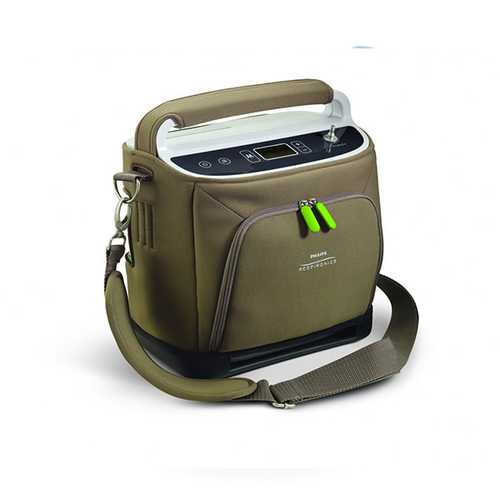
A Portable Oxygen Concentrator (POC) is a compact, battery-powered medical device designed to deliver supplemental oxygen to individuals with respiratory conditions. Unlike traditional oxygen tanks that store a finite amount of compressed or liquid oxygen, a POC actively draws in ambient air, separates and concentrates the oxygen, and delivers it on-demand or continuously to the user. Its primary function is to provide greater mobility and independence, allowing patients to maintain an active lifestyle while managing their oxygen therapy needs.
How it works
A POC operates on a principle called Pressure Swing Adsorption (PSA). Here’s a simplified breakdown of the process:
- Air Intake: The device’s internal compressor draws in room air, which is approximately 21% oxygen and 78% nitrogen.
- Filtration: The air passes through an inlet filter to remove dust and particulates.
- Separation: The filtered air is directed into one of two sieve beds filled with a material called Zeolite. Zeolite granules have a high affinity for nitrogen molecules. Under pressure, the Zeolite adsorbs (traps) the nitrogen, allowing the remaining oxygen-rich gas (typically 87-95% pure) to pass through.
- Cycle Switching: While one sieve bed is adsorbing nitrogen, the other is depressurizing to release the trapped nitrogen back into the atmosphere as waste gas. The system switches between the two sieve beds in a rapid cycle, providing a continuous stream of oxygen.
- Delivery: The concentrated oxygen is delivered to the user via a nasal cannula. POCs deliver oxygen in one of two modes:
- Continuous Flow (CF): Provides a steady, unchanging liters-per-minute (LPM) flow, similar to home concentrators.
- Pulse Dose (or On-Demand): Delivers a small, precisely metered “bolus” of oxygen only at the start of inhalation. This is more efficient and conserves battery life.
Key Components
- Compressor: Draws ambient air into the device and pressurizes it for the sieve beds.
- Sieve Beds: Twin chambers containing Zeolite, the material critical for separating nitrogen from oxygen.
- Circuit Board/Control System: The “brain” of the device, controlling the PSA cycle, user interface, and safety alarms.
- Battery: Rechargeable lithium-ion battery pack enabling portability. Runtime varies by model and setting.
- User Interface: Buttons, a screen, and indicators for adjusting settings (flow rate, pulse dose setting) and displaying status (battery life, alarm messages).
- Oxygen Outlet: The port where the oxygen tubing and cannula connect.
- Air Inlet Filter: Protects the internal components from dust and debris; requires regular cleaning or replacement.
- Alarm System: Audible and visual alerts for low battery, no breath detection, low oxygen purity, system faults, etc.
- Power Supply: An AC/DC adapter for charging the battery and powering the unit from a wall outlet or vehicle.
2. Uses
Clinical Applications
POCs are prescribed for chronic conditions that result in hypoxemia (low blood oxygen levels). Key applications include:
- Chronic Obstructive Pulmonary Disease (COPD): The most common indication, including emphysema and chronic bronchitis.
- Interstitial Lung Disease (ILD): Such as pulmonary fibrosis.
- Cystic Fibrosis.
- Severe Asthma.
- Pulmonary Hypertension.
- Sleep Apnea (when combined with nocturnal hypoxemia not fully corrected by CPAP/BiPAP alone).
- Post-operative or Palliative Care: To support recovery or provide comfort.
Who uses it
- Patients: The primary users, operating the device daily for activities of daily living (ADLs) and mobility.
- Respiratory Therapists: Essential for initial patient education, device setup, titration of oxygen flow, and troubleshooting.
- Pulmonologists & Primary Care Physicians: Prescribe the device and determine the required oxygen dose (LPM or pulse dose setting).
- Home Healthcare Providers & Nurses: Assist with setup, maintenance, and monitoring compliance in the home setting.
Departments/Settings
- Home Healthcare: The dominant setting, enabling patients to live independently.
- Pulmonary Rehabilitation Clinics: Used during supervised exercise sessions.
- Hospitals: For patient ambulation within the facility, during transfers, or for short-stay patients requiring mobility.
- Long-Term Care Facilities & Hospice.
- During Travel: Approved for use on commercial airplanes, in cars, and at destinations.
3. Technical Specs
Typical Specifications
- Oxygen Purity: 87% – 95% (±3%) at specified flow rates.
- Flow Settings:
- Pulse Dose: Settings often range from 1 to 6 (not equivalent to LPM; each manufacturer’s setting is unique).
- Continuous Flow: Typically 0.5 to 3 LPM on portable units (5 LPM on some larger transportables).
- Weight: 2 to 10 pounds (0.9 to 4.5 kg).
- Dimensions: Vary from the size of a small handbag to a rolling suitcase.
- Noise Level: 30 to 50 decibels (roughly library to quiet conversation level).
- Battery Life: 1 to 13+ hours, depending on flow setting and battery size.
- Power Sources: AC wall outlet, DC car/airplane outlet, rechargeable battery.
Variants & Sizes
- Ultra-Portable (1-3 lbs): Lightweight, often pulse-dose only, designed for maximum mobility (e.g., Inogen One G5, Philips SimplyGo Mini).
- Mid-Range Portable (4-7 lbs): Balance of weight, battery life, and sometimes continuous flow capability.
- Transportable (8-10+ lbs): Often have wheels, longer battery life, and higher flow capacities, including continuous flow up to 5 LPM (e.g., Caire Freestyle Comfort, Respironics SimplyGo).
Materials & Features
- Materials: Durable medical-grade plastics, aluminum alloys for lightweight frames, silicone for internal tubing.
- Features:
- Intelligent Delivery: Sensors that adjust pulse dose based on breathing rate.
- Multiple Battery Options: Standard and extended-life batteries.
- Bluetooth/App Connectivity: For data tracking and therapy adherence monitoring.
- Universal Power Compatibility: Auto-switching for international voltages.
- Carrying Solutions: Shoulder straps, backpacks, roll carts.
Notable Models
- Inogen One G5
- Philips Respironics SimplyGo / SimplyGo Mini
- Caire (Chart) Freestyle Comfort / Freestyle 3
- ResMed Mobi
- Drive Medical DeVilbiss iGo
- Precision Medical Live Active 5
- Invacare Platinum Mobile / Solo 2
- GCE Zen-O
- Oxlife Independence
- SeQual Eclipse 5
4. Benefits & Risks
Advantages
- Mobility & Independence: Allows travel, work, and social activities.
- Safety: No risk of leakage or combustion associated with high-pressure oxygen tanks.
- Cost-Effective: Eliminates recurring costs for oxygen refills/deliveries after initial purchase.
- Convenience: Lightweight, easy to use at home and on-the-go.
- Reliability: Provides an indefinite supply of oxygen as long as power is available.
Limitations
- Flow Rate Cap: Most POCs cannot deliver high continuous flow rates (>3 LPM) required by some severe patients.
- Battery Dependency: Limited by battery life and access to charging.
- Noise: Can be a distraction in very quiet environments.
- Upfront Cost: Significant initial investment compared to renting tanks.
- Airline Use: Requires FAA approval for in-flight use; must have enough battery life for 150% of the flight duration.
Safety Concerns & Warnings
- Smoking/Vaping/Fire Hazard: Never use near open flames or while smoking. Oxygen-enriched air is a severe fire hazard.
- Ventilation: Do not use in a confined space without ventilation (e.g., a small closet). Ensure the exhaust vent is not blocked.
- Power Sources: Use only manufacturer-approved batteries and power adapters to avoid damage or fire.
- Filtration: Never operate without a clean inlet filter. A clogged filter can cause overheating and failure.
- Alarms: Understand all alarm meanings and never ignore them.
Contraindications
- Patients who require oxygen flow rates exceeding the device’s maximum output.
- Patients who are unable to understand or respond to device alarms.
- Use in an explosive atmosphere containing flammable gases or aerosols.
5. Regulation
Portable Oxygen Concentrators are regulated as medical devices globally.
- FDA Class: Class II (moderate to high risk). Requires 510(k) premarket notification to demonstrate substantial equivalence to a predicate device.
- EU MDR Class: Typically Class IIa (for therapeutic purpose of supplying oxygen). Governed by Annex VIII of the MDR.
- CDSCO Category (India): Class C (Moderate-High Risk) under the Medical Device Rules, 2017.
- PMDA Notes (Japan): Regulated as a “Specified Maintenance Medical Device.” Requires marketing authorization (Shonin) from PMDA. Specific technical standards (JIS T 7201) apply.
- ISO/IEC Standards:
- ISO 80601-2-69: Particular requirements for basic safety and essential performance of oxygen concentrator equipment.
- ISO 8359: Oxygen concentrators for medical use.
- IEC 60601-1: General requirements for basic safety and essential performance of medical electrical equipment.
6. Maintenance
Cleaning & Sterilization
- Exterior: Wipe with a damp, soft cloth using mild soap. Do not immerse in liquid.
- Inlet Filter: Clean per instructions (often weekly). Usually involves rinsing under water, shaking dry, and air-drying completely before reinserting. Replace every 3-6 months.
- Nasal Cannula: Replace every 2-4 weeks. Clean tubing weekly with soapy water; rinse and air-dry completely.
- Note: Internal components are NOT user-serviceable or sterilizable.
Reprocessing
POCs are single-patient use devices. They are not intended for reprocessing (cleaning and sterilization for another patient) outside of controlled, documented institutional protocols.
Calibration
Oxygen purity and flow sensors require periodic calibration. This is performed by authorized service technicians during annual preventive maintenance, not by the user.
Storage
- Store in a clean, dry, well-ventilated area.
- Avoid extreme temperatures (check manual, typically 40-95°F / 4-35°C).
- Store with battery at a 40-80% charge if not used for extended periods.
- Keep the air inlet and outlet unobstructed.
7. Procurement Guide
How to Select the Device
- Prescription: Start with your doctor’s prescribed flow rate (LPM at rest, during activity, and during sleep).
- Lifestyle Needs: Assess daily activity level, travel frequency (especially air travel), and importance of size/weight.
- Dose Delivery: Determine if you need Pulse Dose only (for active, mobile users) or Continuous Flow (for sleep or higher resting needs).
- Battery Life: Calculate required battery life for your longest typical outing (include a 50% safety margin).
Quality Factors
- Reliability & Uptime: Look for models with strong durability records.
- Warranty & Service Network: Minimum 3-year warranty. Check for local/authorized service centers.
- Alarm System: Comprehensive and easy-to-understand alarms.
- Noise Level: Crucial for social comfort and sleep.
Certifications
Look for CE Marking (EU), FDA Clearance (USA), and relevant marks for your region (e.g., UKCA, TGA Australia). For air travel, the model must be explicitly FAA-approved.
Compatibility
Ensure compatibility with your preferred power sources (car adapter, international adapter) and accessories (specific battery types, humidifier bottles if needed for high flow).
Typical Pricing Range
- Purchase: $1,500 – $3,500+ USD, depending on features and capabilities.
- Rental: $150 – $400+ USD per month.
- Accessories: Extra batteries ($150-$500), carrying cases ($50-$150), DC adapters ($50-$100).
8. Top 10 Manufacturers (Worldwide)
- Inogen (USA): Market leader focused solely on POCs. Known for ultra-portable, pulse-dose devices (Inogen One G series).
- Philips Respironics (Netherlands/USA): Global healthcare giant. Offers the versatile SimplyGo and ultra-light SimplyGo Mini.
- Chart Industries / Caire (USA): Major player in respiratory care. Products include the Freestyle 3 and Freestyle Comfort.
- ResMed (Australia/USA): Leader in sleep and respiratory care. Entered POC market with the innovative ResMed Mobi.
- Invacare Corporation (USA): Leading manufacturer of home and long-term care medical products. Lines include Platinum Mobile and Solo 2.
- Drive Medical / DeVilbiss Healthcare (USA): Major distributor and manufacturer of home medical equipment. Sells the iGo series.
- Precision Medical (USA): Subsidiary of Medline. Known for the “Live Active” series of POCs.
- GCE Group (Sweden): A leading manufacturer of medical gas equipment, including the Zen-O POC.
- Nidek Medical (Japan): Produces medical devices including the Oxlife Independence series of POCs.
- Teijin Pharma (Japan): A healthcare company offering POCs in the Asian market.
9. Top 10 Exporting Countries (Latest Year)
(Based on trade data for HS Code 901920 – Oxygen therapy apparatus)
- United States: Dominant exporter, home to major manufacturers like Inogen, Philips, and Caire.
- China: Major global manufacturing hub, exporting a wide range of POCs from economy to premium models.
- Germany: High-value exporter of precision medical equipment, including POCs from companies like Löwenstein Medical.
- Ireland: Significant export base for multinational med-tech companies with European headquarters.
- Mexico: Key exporter to the North American market under trade agreements, with growing manufacturing capacity.
- Netherlands: Major European distribution and logistics hub for medical devices.
- Sweden: Home to GCE Group, a notable exporter of POCs and other gas control devices.
- United Kingdom: Retains a strong med-tech export market post-Brexit, with domestic manufacturing.
- Japan: Exporter of high-quality POCs from companies like Teijin and Nidek, primarily within Asia.
- France: Exports medical devices, including POCs, across Europe and to Francophone nations.
10. Market Trends
- Current Global Trends: Rapid growth driven by an aging population, rising prevalence of COPD, and patient demand for improved quality of life. The COVID-19 pandemic accelerated awareness and home-based care adoption.
- New Technologies: Integration of IoT and Bluetooth for remote patient monitoring, AI algorithms to optimize oxygen delivery efficiency, development of even lighter and more efficient sieve bed materials, and longer-lasting solid-state batteries.
- Demand Drivers: Aging demographics, increasing air pollution, high smoking prevalence in developing nations, expansion of home healthcare models, and growth in medical tourism.
- Future Insights: Expect a continued shift towards connected health ecosystems, with POC data integrated into Electronic Health Records (EHRs). The market will see further miniaturization and the development of “smart” cannulas with built-in sensors. Emerging markets in Asia-Pacific and Latin America will be key growth areas.
11. Training
Required Competency
Users/patients must be able to:
- Operate the power switch and adjust settings.
- Interpret basic display icons and alarms.
- Perform daily cleaning of filters and cannula.
- Safely change and charge batteries.
- Troubleshoot common issues (e.g., low battery alarm, no power).
Common User Errors
- Using a Dirty/Clogged Filter: Leads to overheating and shutdown.
- Not Charging Batteries Fully: Results in unexpectedly short runtime.
- Setting the Wrong Flow/Pulse Dose: Using a setting not prescribed for the activity (rest vs. exercise).
- Blocking the Exhaust Vent: Causes overheating, often by placing the unit on a soft bed or couch.
- Ignoring or Muting Alarms: Creates unsafe situations.
Best-Practice Tips
- Always have a backup power plan (extra battery, car charger).
- Air-dry the filter completely before reinserting to prevent mold and device damage.
- Perform a “walk test” with your RT to find the correct pulse dose setting for exertion.
- Travel with your prescription and FAA approval letter.
- Schedule and adhere to annual professional servicing.
12. FAQs
1. What’s the difference between a Portable Oxygen Concentrator (POC) and an oxygen tank?
A: Tanks contain a finite supply of compressed oxygen. POCs continuously make oxygen from the air, so they never need refilling, only power.
2. Can I use my POC while sleeping?
A: Yes, but it depends on your needs. If your prescription requires continuous flow oxygen while you sleep, you must select a POC model that offers a continuous flow mode at your prescribed LPM.
3. Are all POCs approved for airplane use?
A: No. Only specific FAA-approved models can be used in-flight. You must also carry enough batteries for 150% of the flight duration.
4. How do I know what pulse dose setting to use?
A: Your respiratory therapist will help determine this based on your prescription and may conduct a “walk test” while monitoring your oxygen saturation to find the correct setting for rest, activity, and sleep.
5. Can I get my POC wet?
A: No. The device is electrical and should never be exposed to water, rain, or high humidity (like a steamy shower). Only the removable filter and cannula are washable.
6. How long does a POC last?
A: With proper maintenance, a POC can last 5 to 7 years. The internal sieve beds and compressor have a finite lifespan measured in operating hours.
7. Does Medicare or insurance cover a POC?
A: In many cases, yes, but typically under a rental model for home use. Coverage for portable units for mobility outside the home has specific eligibility criteria. Always check with your provider.
8. Why is my POC beeping?
A: Refer to your manual. Common alarms are for low battery, no breath detected (if you disconnect the cannula), low oxygen purity, or a system fault. Never ignore persistent alarms.
9. Can I use a regular humidifier with my POC?
A: Only if your POC has a built-in humidifier attachment port and you use a medical-grade, oxygen-compatible humidifier bottle. Do not attempt to jury-rig a solution.
10. How do I clean it?
A: Wipe the exterior with a damp cloth. Wash the nasal cannula weekly and the inlet filter as directed (usually weekly). Let the filter dry COMPLETELY before reuse.
11. Can I use it during a power outage?
A: Yes, that’s a key benefit! You can run it on battery power. It’s wise to have fully charged batteries ready for emergencies.
12. Is it safe to use around pets?
A: Yes, but keep cords and cannula tubing out of reach to prevent chewing. Ensure pet hair does not clog the air intake filter, which may require more frequent cleaning.
13. Conclusion
A Portable Oxygen Concentrator is a transformative medical device that restores freedom and activity to individuals requiring supplemental oxygen. By understanding its operation, benefits, limitations, and essential maintenance, users and healthcare providers can ensure safe and effective therapy. Selecting the right model requires careful consideration of clinical needs, lifestyle, and device capabilities. As technology advances, POCs are becoming smarter, lighter, and more integrated into holistic respiratory care, promising an even higher quality of life for patients worldwide. Proper education, adherence to safety guidelines, and partnership with your healthcare team are the keys to success with this life-enabling technology.
14. References
- U.S. Food and Drug Administration (FDA). Guidance Documents for Oxygen Concentrators.
- European Medicines Agency (EMA). Medical Device Regulation (MDR) 2017/745.
- International Organization for Standardization (ISO). ISO 80601-2-69:2020 Medical electrical equipment.
- Global Initiative for Chronic Obstructive Lung Disease (GOLD). 2023 Report.
- American Thoracic Society (ATS). Patient Education Series: Oxygen Therapy.
- Federal Aviation Administration (FAA). Information for Travelers with Portable Oxygen Concentrators.
- Market research reports from Grand View Research, Fortune Business Insights, etc. (2022-2023).
- Manufacturer user manuals and technical specifications for Inogen G5, Philips SimplyGo, Caire Freestyle Comfort.