1. Definition
What is an ECG (Electrocardiograph) Machine?
An electrocardiograph (ECG or EKG) machine is a fundamental, non-invasive medical device used to record the electrical activity of the heart over a period of time. It does this by detecting and amplifying the tiny electrical changes on the skin that occur each time the heart muscle depolarizes and repolarizes during each cardiac cycle (heartbeat). The resulting graphical output is called an electrocardiogram.
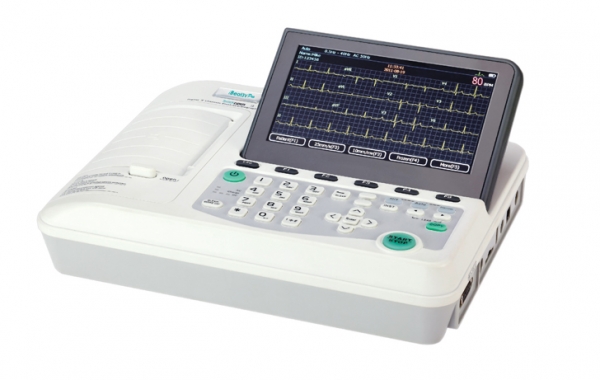
Think of it as a “heart monitor” that translates the heart’s electrical language into a waveform that clinicians can read, providing a snapshot of the heart’s rhythm, rate, and overall electrical health. Its primary function is diagnostic, aiding in the detection and diagnosis of a wide array of cardiac conditions.
How it Works
The principle is elegantly simple. The heart’s natural pacemaker (the sinoatrial node) generates an electrical impulse that travels through specialized pathways, causing coordinated muscle contraction. This electrical current also spreads throughout the body, reaching the skin. The ECG machine acts as a highly sensitive voltmeter:
- Electrode Placement: Adhesive electrodes are placed at standardized locations on the patient’s limbs and chest.
- Signal Detection: Each electrode picks up the electrical signal from the heart from its unique perspective.
- Signal Amplification & Filtering: The tiny signals (typically 1-5 mV) are amplified and filtered to remove “noise” like muscle tremor or electrical interference.
- Recording & Display: The processed signals are either printed onto moving graph paper (in traditional machines) or displayed digitally on a screen. The machine compares the voltages between different pairs of electrodes (called “leads”) to create 12 different graphical views of the heart’s electrical activity (in a standard 12-lead ECG).
Key Components
- Main Unit/Console: The central processor containing the amplifier, analog-to-digital converter, and display screen.
- Electrodes: Adhesive sensors placed on the skin to capture electrical signals. They are single-use or reusable.
- Lead Wires/Cables: Insulated wires that connect the electrodes to the main unit, transmitting the signals. They are often organized in a color-coded cable set.
- Patient Interface/Connector: The port where the lead cable bundle connects to the console.
- Display Screen: LCD or LED screen to visualize the ECG waveform in real-time.
- Recording/Printing Mechanism: An internal thermal printer that outputs the ECG tracing on grid paper (known as Z-fold paper).
- Controls & User Interface: Buttons, knobs, or a touchscreen for operating the device, selecting leads, setting parameters, and storing data.
- Battery (in portable models): A rechargeable battery for mobile use.
- Software: In digital systems, software manages signal processing, display, analysis algorithms, data storage, and network connectivity.
2. Uses
Clinical Applications
ECG is one of the most commonly performed cardiovascular tests.
- Diagnosis: Arrhythmias (irregular heartbeats like atrial fibrillation), myocardial infarction (heart attack), ischemia (reduced blood flow), chamber enlargement, and conduction abnormalities (e.g., bundle branch blocks).
- Monitoring: During surgery (perioperative), in Intensive Care Units (ICU), for patients on certain medications (e.g., chemotherapy drugs), and in stress tests.
- Screening: Pre-operative assessment, part of routine physicals for at-risk populations (e.g., hypertensive, diabetic patients), and for athletes.
- Emergency Medicine: Rapid assessment of chest pain, shortness of breath, palpitations, and syncope (fainting).
- Pacing & Device Checks: Evaluating the function of pacemakers and implantable cardioverter-defibrillators (ICDs).
Who Uses It
- Cardiologists & Physicians: For definitive diagnosis and patient management.
- Nurses & Nurse Practitioners: Commonly perform ECG recordings in wards, clinics, and emergency departments.
- Paramedics & EMTs: Use portable ECG machines (often 12-lead) for pre-hospital diagnosis of heart attacks, enabling faster treatment.
- Cardiac Technologists/Physiologists: Specialists trained to perform complex ECG tests like stress tests and Holter monitoring.
- Medical Assistants & Technicians: In outpatient clinics and doctor’s offices.
Departments/Settings
- Cardiology Departments & Cath Labs
- Emergency Departments (ED)
- Intensive Care Units (ICU) & Coronary Care Units (CCU)
- General Wards & Pre-operative Holding Areas
- Outpatient Clinics & Primary Care Physician Offices
- Ambulances & Mobile Medical Units
- Sports Medicine Facilities & Wellness Centers
3. Technical Specifications
Typical Specifications
- Input Channels: Typically 12 simultaneous channels for a full 12-lead ECG.
- Sampling Rate: ≥ 500 Hz (samples per second) for accurate waveform reproduction.
- Frequency Response: 0.05–150 Hz, compliant with AHA (American Heart Association) standards.
- Input Impedance: > 50 MΩ to minimize signal loss.
- Common Mode Rejection Ratio (CMRR): > 100 dB to reject electrical interference.
- Display: 8.4” to 15” color TFT/LCD screen.
- Print Speed: Selectable, typically 5, 10, 25, or 50 mm/sec.
- Power Supply: AC mains (100-240V) and rechargeable DC battery (4-8 hours of operation).
- Connectivity: USB, Ethernet, Wi-Fi, Bluetooth for data transfer to Hospital Information System (HIS) or Picture Archiving and Communication System (PACS).
Variants & Sizes
- Resting/Standard 12-Lead ECG Machine: The most common type, used with a patient at rest.
- Portable/Handheld ECG: Compact, battery-operated devices for point-of-care or home use. Some are single-lead devices connected to smartphones.
- Stress/Exercise ECG System: Used with a treadmill or stationary bike; includes specialized software for analysis under exertion.
- Holter Monitor: A wearable ambulatory ECG that records continuously for 24-48 hours.
- Cardiac Event Monitor: A portable ECG worn for weeks to capture intermittent symptoms.
- Bedside/Patient Monitor ECG Module: Integrated into multi-parameter monitors in ICUs and ORs for continuous monitoring.
Materials & Features
- Materials: Durable, medical-grade plastics (ABS, polycarbonate) for the housing. Electrodes use silver/silver-chloride (Ag/AgCl) gel for optimal conductivity.
- Key Features:
- Automatic Interpretation: Built-in software algorithms provide a preliminary interpretation (must always be verified by a clinician).
- Diagnostic vs. Monitoring Mode: Higher filtering for cleaner diagnostic traces vs. real-time monitoring views.
- Touchscreen Interface: For intuitive operation.
- Large Internal Memory: For storing hundreds of ECG records.
- Noise Filtering: Advanced filters for AC interference, baseline wander, and EMG (muscle noise).
- Wireless & Cloud Connectivity: For telemedicine and remote diagnostics.
Notable Models (Examples)
- GE Healthcare: MAC 5500 HD, CARESCAPE B450
- Philips: PageWriter TC70, IntelliVue MX450 (monitor)
- Mortara: ELI 350, ELI 380
- Schiller: AT-102 plus, AT-110
- Nihon Kohden: ECG-2550, ECG-1250
- BPL: Cardiart 108T, Cardiart 6108
- Burdick: Atria 6100
4. Benefits & Risks
Advantages
- Non-invasive & Painless: No needles or incisions required.
- Rapid & Immediate Results: Provides critical data within minutes.
- Highly Informative: Gold standard for diagnosing arrhythmias and acute coronary syndromes.
- Cost-Effective: Relatively low-cost test with a high diagnostic yield.
- Widely Available & Portable: Can be used anywhere, from a hospital to an ambulance.
- Safe: No known biological risks from the procedure itself.
Limitations
- Snapshot in Time: A standard resting ECG only captures 10-30 seconds of data. It may miss intermittent arrhythmias.
- Indirect Measurement: Records electrical activity, not mechanical pumping function. A heart can have electrical activity without effective contraction (pulseless electrical activity).
- False Positives/Negatives: Interpretation requires skill. Abnormalities can be non-cardiac, and some heart attacks may not show clear initial ECG changes.
- Artifact Prone: Poor electrode contact, patient movement, and tremor can corrupt the tracing.
Safety Concerns & Warnings
- Electrical Safety: Must be properly grounded and maintained to prevent micro-shock hazards, especially for patients with direct cardiac connections (e.g., pacemaker wires).
- Infection Control: Use of single-patient electrodes or proper disinfection of reusable parts is crucial to prevent cross-contamination.
- Interference: Should be used away from strong electromagnetic sources (e.g., MRI machines).
- Patient Allergies: Rare skin reactions to electrode adhesive or gel.
Contraindications
There are no absolute contraindications to performing a standard ECG—it is considered a safe procedure for all patients. The only relative contraindications are practical, such as severe skin burns or trauma at the precise electrode placement sites.
5. Regulation
ECG machines are regulated globally as medical devices to ensure safety and efficacy.
- FDA Class (USA): Class II (moderate to high risk). Requires 510(k) premarket notification to demonstrate substantial equivalence to a predicate device.
- EU MDR Class (Europe): Typically Class IIa (medium risk). Requires a conformity assessment by a Notified Body and CE marking under the Medical Device Regulation (MDR 2017/745).
- CDSCO Category (India): Class B (moderate risk). Requires import/manufacturing license under the Medical Device Rules, 2017.
- PMDA Notes (Japan): Classified as Class II under the Pharmaceutical and Medical Device Act (PMD Act). Requires marketing approval from PMDA.
- ISO/IEC Standards:
- ISO 80601-2-25: The core standard for the basic safety and essential performance of ECG machines.
- ISO 80601-2-86: For ambulatory ECG devices (e.g., Holter monitors).
- ISO 10993: For biocompatibility testing of patient-contacting parts (electrodes).
- IEC 60601-1: General standard for the safety of medical electrical equipment.
- AAMI EC11: Diagnostic electrocardiographic devices (widely referenced in the US).
6. Maintenance
Cleaning & Sterilization
- Main Console: Wipe exterior with a soft cloth dampened with mild detergent or a hospital-grade disinfectant (e.g., 70% isopropyl alcohol). Do not pour liquids directly on the device.
- Lead Wires & Cables: Wipe down with a disinfectant. Check regularly for cracks, fraying, or broken connectors.
- Electrodes: Single-use electrodes are disposable and must never be reused. Reusable electrodes require cleaning per manufacturer instructions.
- Never autoclave or steam sterilize any part of the main ECG unit.
Reprocessing
For reusable components like limb clamps or chest electrodes (if not disposable), follow the manufacturer’s specific instructions for disinfection between patients.
Calibration
Modern digital ECG machines are largely software-based and do not require routine manual calibration like older analog devices. However, they must undergo regular performance verification:
- Internal Self-Tests: Most devices perform these on startup.
- Annual PM (Preventive Maintenance): Conducted by a qualified biomedical engineer. This includes checking amplitude and timing accuracy using an ECG simulator, which generates known, standardized test signals.
Storage
- Store in a clean, dry, temperature-controlled environment.
- Avoid extreme temperatures, direct sunlight, and high humidity.
- When not in use for long periods, remove batteries and store cables loosely coiled to prevent damage.
7. Procurement Guide
How to Select the Device
Consider your primary use-case:
- High-volume cardiology department? Prioritize diagnostic accuracy, advanced analysis software, and seamless hospital IT integration.
- General ward or clinic? Prioritize ease of use, durability, and clear automatic interpretation.
- Ambulance or remote clinic? Prioritize portability, ruggedness, and long battery life.
Quality Factors
- Signal Quality & Noise Rejection: The most critical factor. Request a live demo on a moving patient.
- User Interface: Intuitive, with minimal steps to acquire a trace.
- Software Analysis: Accuracy and clarity of the automatic report.
- Build Quality & Durability: Should withstand daily use and transport.
- Service & Support: Availability of local technical support and spare parts.
- Data Management: Ease of storing, retrieving, and exporting ECG data (PDF, DICOM, XML).
Certifications
Look for mandatory regional marks: CE Mark (EU), FDA Clearance (USA), CDSCO Registration (India), PMDA Approval (Japan). ISO 13485 certification of the manufacturer is a strong indicator of a quality management system.
Compatibility
- Hospital IT (HL7/DICOM): Ensure it can connect to your existing ECG Management System, HIS, or EMR.
- EMR/EHR Integration: Can reports be directly sent to the patient’s electronic record?
- Consumables: Check the cost and availability of proprietary vs. universal electrodes and paper.
Typical Pricing Range
- Portable/Interpretive 12-Lead ECG: $1,500 – $5,000 USD
- High-end Diagnostic 12-Lead ECG: $5,000 – $12,000 USD
- Handheld/Smartphone-connected Devices: $200 – $1,000 USD
- Note: Prices vary drastically based on features, brand, and region.
8. Top 10 Manufacturers (Worldwide)
- GE Healthcare (USA) – A global giant in medical imaging and monitoring. Offers the MAC series and CARESCAPE monitors.
- Philips Healthcare (Netherlands) – Leader in connected care solutions. Known for PageWriter ECG machines and IntelliVue patient monitors.
- Nihon Kohden (Japan) – A major force in patient monitoring and ECG, with a strong presence in Asia and globally.
- Hillrom / Baxter (USA) – Hillrom (now part of Baxter) is renowned for its Welch Allyn brand of cardiopulmonary devices, including the AT-2 ECG.
- Mortara Instrument (USA) – A specialist in ECG technology, known for high-quality diagnostic devices and innovative algorithms. Acquired by Hillrom in 2017.
- Schiller AG (Switzerland) – A key European manufacturer specializing in cardiopulmonary diagnostics, including stress ECGs and spirometry.
- BPL Medical Technologies (India) – A leading Indian manufacturer offering a wide range of affordable and reliable ECG machines under the ‘Cardiart’ brand.
- Mindray Medical (China) – A rapidly growing global player in medical devices, offering a full portfolio of patient monitors and ECG devices.
- Burdick (USA) – A subsidiary of Cardiac Science, known for its cardiology product line, including treadmill stress systems and resting ECGs.
- Contec Medical Systems (China) – A significant manufacturer of economical monitoring and diagnostic devices, including a wide array of ECG models for various markets.
9. Top 10 Exporting Countries (Latest Year – Based on Recent Trade Data Trends)
(Ranked by estimated export value of ECG machines)
- China – The world’s largest exporter, manufacturing a vast range from high-end to low-cost devices.
- United States – Home to major innovators and manufacturers, exporting premium diagnostic systems.
- Germany – A European hub for high-quality medical technology and re-exports.
- Japan – Exports advanced, technologically sophisticated devices from leaders like Nihon Kohden.
- Netherlands – A major European trade and distribution hub, home to Philips.
- Switzerland – Exports specialized, high-precision devices from companies like Schiller.
- India – A growing exporter, especially to emerging markets in Africa, the Middle East, and Southeast Asia, offering cost-effective solutions.
- Mexico – A key manufacturing and export location for the North American market.
- United Kingdom – Exports niche and high-value diagnostic equipment.
- Italy – Known for design and engineering in the medical device sector.
10. Market Trends
- Current Global Trends: Growth is driven by an aging population, rising cardiovascular disease prevalence, and increased focus on preventive care. There is a strong shift towards portability and connectivity.
- New Technologies:
- AI-Powered Interpretation: Machine learning algorithms are improving the accuracy of automatic diagnosis, especially for complex arrhythmias.
- Wireless & Wearable ECGs: Patch monitors (e.g., Zio patch) and smartwatch ECG apps (e.g., Apple Watch, KardiaMobile) are expanding monitoring beyond the clinic.
- Cloud-Based ECG Management: Centralized platforms for storing, analyzing, and sharing ECGs remotely, enabling telecardiology.
- Demand Drivers: Rising CVD burden, technological advancements, government screening initiatives, and the expansion of home healthcare.
- Future Insights: The convergence of AI, cloud computing, and wearable sensors will make continuous, personalized cardiac monitoring a reality. ECG machines will evolve from standalone diagnostic tools into integrated nodes in connected health ecosystems.
11. Training
Required Competency
Operators must be trained in:
- Correct anatomical electrode placement (10 electrodes for a 12-lead).
- Patient preparation (skin cleaning, hair removal if necessary).
- Basic machine operation (lead selection, recording, printing).
- Recognizing and minimizing artifact.
- Understanding basic cardiac rhythms and knowing when to alert a clinician immediately.
Common User Errors
- Incorrect Electrode Placement: The most common and serious error, leading to misdiagnosis.
- Poor Skin Preparation: Oily or dirty skin causing poor signal and artifact.
- Loose Electrodes/Wires: Causing baseline wander or complete signal loss.
- Muscle Tremor: Not instructing the patient to relax, leading to EMG interference.
- Mislabeling: Failing to enter correct patient data, leading to critical report mix-ups.
Best-Practice Tips
- Always verify patient ID before starting.
- Explain the procedure to the patient to alleviate anxiety and minimize movement.
- Ensure the patient is supine and relaxed, arms at sides, not talking.
- Use a systematic approach for placement: “White on right, smoke (black) over fire (red).” Limb leads: RA (white), LA (black), LL (red), RL (green).
- Always review the trace before the patient leaves. Repeat if there is excessive artifact.
12. FAQs
1. What’s the difference between ECG and EKG?
None. Both are abbreviations for electrocardiogram. EKG comes from the German “Elektrokardiogramm.”
2. How long does it take to perform an ECG?
The actual recording takes about 10 seconds. With preparation and electrode placement, the entire process takes 5-10 minutes.
3. Does it hurt?
No. The procedure is completely painless. You may feel a slight coolness from the gel or a tiny tug when removing the electrodes.
4. Can an ECG detect a past heart attack?
Yes. An ECG can show patterns suggestive of damage from a previous heart attack.
5. Why do I need an ECG if I feel fine?
It’s used for screening to detect silent conditions like asymptomatic arrhythmias or ischemia, especially before surgery or if you have risk factors.
6. What does a “normal ECG” mean?
It means no electrical abnormalities were detected during the short recording period. It does not guarantee your heart is completely healthy.
7. Why did they do an ECG for my lung problem?
Certain lung conditions (like a pulmonary embolism) can strain the heart and cause ECG changes. It’s a quick way to assess cardiac involvement.
8. How often should an ECG be done?
There’s no standard interval. It’s done based on symptoms, risk factors, or as part of a specific clinical evaluation.
9. Can I eat or drink before an ECG?
Yes, there are no dietary restrictions for a standard resting ECG.
10. What should I wear?
Loose, comfortable clothing. You may need to remove your top and wear a gown for easy chest access.
11. Are there ECG apps on smartphones reliable?
FDA-cleared single-lead devices (e.g., KardiaMobile) can be reliable for detecting common arrhythmias like AFib but are not a replacement for a full 12-lead ECG or medical evaluation.
12. What if the machine’s automatic report says “abnormal”?
Do not panic. The automatic interpretation is a screening aid. It must be reviewed and confirmed by a qualified doctor (cardiologist or physician) who will consider your full clinical picture.
13. Conclusion
The ECG machine remains an indispensable, non-invasive cornerstone of modern cardiovascular diagnosis. From its fundamental principle of detecting the heart’s electrical signals to its evolution into AI-enhanced, connected devices, it provides critical, life-saving information in seconds. Successful implementation relies not just on the technology itself, but on proper operator training, diligent maintenance, and integration into clinical workflows. As technology advances, the ECG is poised to become even more accessible and intelligent, moving from the clinic into daily life, empowering earlier detection and better management of heart disease worldwide.
14. References
- American Heart Association. (2021). Recommendations for the Standardization and Interpretation of the Electrocardiogram.
- U.S. Food and Drug Administration (FDA). Classify Your Medical Device.
- International Organization for Standardization (ISO). ISO 80601-2-25:2011 – Medical electrical equipment.
- European Commission. Medical Device Regulation (MDR) 2017/745.
- Wagner, G. S. (2018). Marriott’s Practical Electrocardiography (13th ed.). Wolters Kluwer.
- World Health Organization (WHO). (2021). Cardiovascular diseases (CVDs) Fact Sheet.
- Global Market Insights. (2023). ECG Devices Market Size Report.
- Manufacturer websites and technical manuals (GE Healthcare, Philips, Nihon Kohden, etc.).