1. Definition
What is a Bedside Locker?
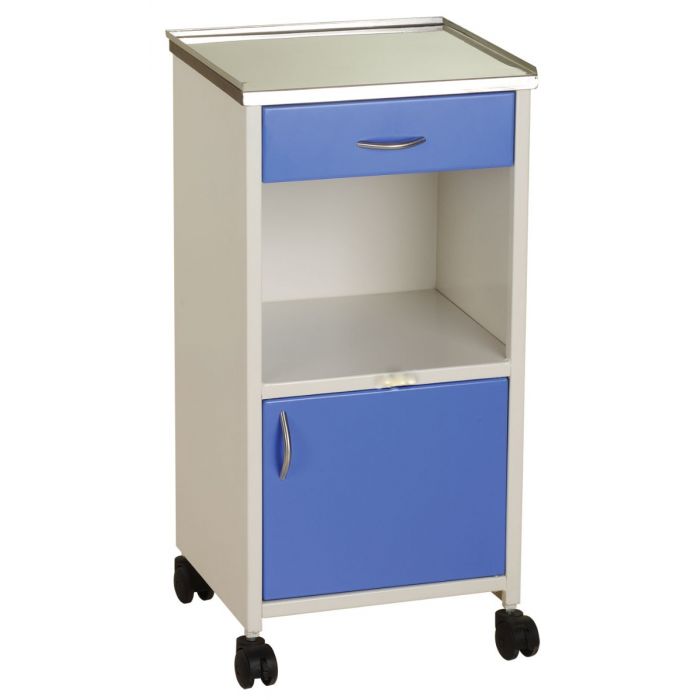
A bedside locker, also known as a bedside cabinet, bedside table, or hospital bedside stand, is a piece of essential medical support furniture designed for use in patient rooms. Its primary function is to provide secure, convenient, and organized storage for a patient’s personal belongings, medical supplies, and essential care items within easy reach. Far from being a simple piece of furniture, it is a critical component of the patient’s immediate environment, supporting both clinical efficiency and patient dignity, comfort, and autonomy during a hospital stay.
How it Works
The bedside locker operates on a simple mechanical principle: it is a compact, multi-compartment storage unit on casters. Its design ensures that a patient’s necessities—from a glass of water and personal items to nurse-accessible supplies like gloves and sanitizer—are contained, organized, and accessible without cluttering the limited space around the hospital bed. It works by integrating drawers, cabinets, and open shelves to segregate items based on frequency of use, privacy needs, and user (patient vs. clinician). Lockable compartments provide security, while smooth-rolling casters allow for easy repositioning during room cleaning or patient transfers.
Key Components
- Main Carcass/Body: The primary structure, typically a rectangular cabinet, providing overall stability and housing the storage compartments.
- Tabletop/Surface: A flat, durable surface on top for placing frequently used items like water pitchers, phones, reading glasses, or a nurse call button.
- Drawer(s): Usually one or two shallow drawers for patient use, ideal for storing personal small items (eyeglasses, books, remotes).
- Lockable Cabinet/Door: A larger, often lockable compartment below for storing more valuable personal items, clothing, or medical supplies that need to be kept out of sight.
- Open Shelf or Towel Bar: Some models feature an open lower shelf for storing items like shoes or spare linens, or a towel bar on the side.
- Casters/Wheels: Four (often two locking) swivel casters enable effortless mobility and stabilization of the unit.
- Handles/Pulls: Ergonomically designed for easy gripping by patients and staff, even with limited hand strength.
- Optional IV Rod Socket: A socket on the side or back for inserting a pole to hold intravenous (IV) fluid bags.
2. Uses
Clinical Applications
- Patient-Centered Care: Stores personal belongings (clothing, toiletries, electronics), promoting a sense of normalcy and control.
- Clinical Efficiency: Provides a dedicated surface and storage for nurse-assigned items: patient charts (in holders), disposable gloves, hand sanitizer, tissue boxes, emesis basins, and wound care supplies.
- Safety & Accessibility: Keeps essential items like water, call bell, and communication aids within the patient’s “arm’s reach,” reducing fall risks from over-reaching.
- Infection Control: Non-porous, cleanable surfaces prevent harboring pathogens. Dedicated storage for patient items reduces cross-contamination.
- Space Organization: Centralizes necessities in a compact footprint, keeping the clinical environment uncluttered and safe for staff movement.
Who Uses It
- Patients: The primary users of the drawer and surface for personal items.
- Nurses & Nursing Assistants: Frequently access the surface, open shelf, or designated cabinet for supplies and to place/retrieve clinical items.
- Housekeeping/Environmental Services: Staff who clean and disinfect the locker between patients.
- Patient Families/Visitors: May place items for the patient on the surface or in designated compartments.
Departments/Settings
- Inpatient Wards: Medical-Surgical, Orthopedics, Pediatrics, Maternity.
- Critical & Long-Term Care: ICU (often with specialized, smaller models), Step-down Units, Rehabilitation Hospitals, Skilled Nursing Facilities.
- Outpatient/Day Surgery: Pre-op holding and post-anesthesia care units (PACU) for temporary patient belonging storage.
- Clinics & Consultation Rooms: For general storage and as a surface during examinations.
3. Technical Specs
Typical Specifications
- Height: 24 – 30 inches (61 – 76 cm), designed to be level with a standard hospital bed.
- Width: 16 – 24 inches (41 – 61 cm).
- Depth: 16 – 20 inches (41 – 51 cm).
- Weight Capacity (Tabletop): 50 – 100 lbs (23 – 45 kg).
- Caster Diameter: 3 – 5 inches, with swivel and brake functions.
Variants & Sizes
- Standard Single-Patient Locker: The most common type, with one drawer and one cabinet.
- Double/Lateral Locker: A wider unit serving two patients, often with two separate drawers and cabinets.
- ICU/Overbed Table Combo: A narrower design that fits over the head of ICU beds, often with an integrated adjustable table.
- Pediatric Locker: Smaller scale, often with brighter colors or child-friendly designs.
- Bariatric Locker: Heavier-duty construction with increased weight capacity and larger dimensions.
Materials & Features
- Materials: High-pressure laminate (HPL) is the industry standard for durability, chemical resistance, and ease of cleaning. Edges are capped with ABS or PVC. Frames are typically steel. Casters are rubber or polyurethane.
- Features:
- Seamless Construction: Rounded corners and coved edges (flush surfaces) to eliminate dirt traps.
- Soft-Close Mechanisms: On drawers and doors to minimize noise.
- Anti-Ligature Design: For mental health settings, with no protruding parts.
- Integrated Electricals: Some models include USB charging ports, electrical outlets, or built-in lighting.
- Tag/Chart Holders: Mounted on the side or end.
Models
- Hill-Rom / Baxter: Centrella™ series.
- Midmark: 800/900 Series Cabinets.
- Herman Miller / Nemschoff: Various ergonomic designs.
- InterMetro: Emphasis on modularity and clinical utility.
- Linet: Often integrated into their bed systems.
4. Benefits & Risks
Advantages
- Improves Patient Experience: Empowers patients by keeping their essentials accessible.
- Enhances Workflow: Organizes supplies at the point of care, saving staff time.
- Promotes Safety: Reduces clutter-related falls and supports infection control protocols.
- Cost-Effective: Durable, long-lasting asset with minimal operational cost.
- Space-Efficient: Optimizes the use of limited room space.
Limitations
- Fixed Storage Volume: Cannot expand if a patient has excessive personal items.
- Mobility vs. Stability: Lightweight units can move unintentionally if not locked.
- Surface Area: The top can become cluttered if not managed.
Safety Concerns & Warnings
- Tip-Over Hazard: Overloading the top shelf or hanging heavy items on open doors can cause the unit to tip. Always use locking casters when stationary.
- Pinch Points: Fingers can be caught in drawers or closing doors.
- Contamination: If not cleaned properly, surfaces can become reservoirs for pathogens like MRSA or C. diff.
- Obstruction: Poor placement can block access to the patient or emergency equipment.
Contraindications
There are no strict medical contraindications. However, in settings with highly mobile, cognitively impaired patients (e.g., advanced dementia), a standard locker may need to be removed if it presents a persistent fall or security risk, to be replaced with a more secure, wall-mounted alternative.
5. Regulation
Bedside lockers are generally classified as Class I medical devices under most regulatory frameworks, as they are non-invasive, low-risk devices intended for general patient support.
- FDA Class (USA): Class I (exempt from premarket notification [510(k)] in most cases, but subject to general controls).
- EU MDR Class (Europe): Class I (Rule 1 – Non-invasive device).
- CDSCO Category (India): Class A (Low Risk).
- PMDA (Japan): Generally considered as “General Medical Devices” (lowest risk category).
- ISO/IEC Standards:
- ISO 7170: Furniture – Storage units – Determination of strength and durability.
- ISO 10131: Furniture – Electrically operated household furniture – Safety.
- IEC 60601-1: For models with electrical components (e.g., charging ports).
- ISO 10993: For testing of materials in contact with skin (for components like handles).
6. Maintenance
Cleaning & Sterilization
- Daily/Between Patients: Clean all surfaces with a hospital-grade disinfectant wipe or solution. Pay attention to handles, drawer pulls, and the top surface.
- Protocol: Follow the “wipe-discard-wipe” method for disinfectants requiring dwell time. Never use abrasive cleaners or bleach at high concentrations, as they can damage laminates.
Reprocessing
Full reprocessing involves emptying all contents, cleaning all interior surfaces (drawers, cabinet), and inspecting for damage before assigning to a new patient.
Calibration
Not applicable for standard mechanical lockers. For models with integrated digital scales or electronic features, follow manufacturer calibration schedules.
Storage
Store in a clean, dry area. Stacking is not recommended. If storing long-term, ensure drawers and doors are closed, and units are on a level surface with casters locked.
7. Procurement Guide
How to Select the Device
Consider: Patient Population (adult, pediatric, bariatric), Clinical Setting (ICU, Med-Surg, Psych), Space Constraints (room size), and Storage Needs (volume of supplies).
Quality Factors
- Durability: Look for commercial-grade construction, robust casters, and solid drawer slides.
- Cleanability: Seamless surfaces, coved edges, and chemical-resistant laminate.
- Safety: Stability (wide base), smooth edges, reliable braking casters.
- Ease of Use: Light drawer action, intuitive handles, smooth door operation.
Certifications
Look for proof of compliance with relevant standards (ISO 7170) and electrical safety marks (CE, UL) for models with outlets. FDA listing is standard for US purchases.
Compatibility
Ensure the height is appropriate for your bed fleet. Check if the design complements other room furniture (bed, chair) for a cohesive environment.
Typical Pricing Range
- Basic Model: $200 – $500
- Mid-Range (Enhanced Features): $500 – $1,200
- High-End/Integrated/Specialty: $1,200 – $3,000+
8. Top 10 Manufacturers (Worldwide)
- Hill-Rom (Baxter) (USA): Global leader in patient support systems; offers the comprehensive Centrella platform.
- Stryker (USA): Major medical technology company with a full line of hospital furniture, including lockers integrated with their bed systems.
- Midmark (USA): Renowned for durable, innovative medical cabinets and casework.
- Linet Group (Czech Republic): European powerhouse specializing in advanced hospital beds and integrated patient room furniture.
- Invacare (USA): Broad range of medical equipment, including robust patient room furniture.
- Medline (USA): Largest privately held manufacturer of medical supplies, offering cost-effective and durable locker options.
- Herrmann (Germany): High-quality manufacturer of hospital and laboratory furniture with a focus on design and function.
- InterMetro (USA): Known for wire shelving and modular clinical storage solutions, including mobile cabinets.
- Herman Miller / Nemschoff (USA): Focuses on evidence-based, human-centered design for healthcare environments.
- Drive DeVilbiss Healthcare (USA): Provides a wide array of durable medical equipment, including bedside furniture.
9. Top 10 Exporting Countries (Latest Year – Based on HS Code 9403 ‘Other furniture’)
Note: Specific export data for “bedside lockers” is aggregated under general furniture codes. The following list reflects key exporters of medical furniture.
- China: Dominant global manufacturer and exporter, offering the widest range from budget to high-spec models.
- Germany: High-end, precision-engineered medical furniture, known for quality and design.
- Italy: Exports stylish and high-quality healthcare furnishings.
- USA: Major exporter of advanced, technology-integrated patient room systems.
- Poland: Significant and growing European manufacturing hub for contract healthcare furniture.
- Czech Republic: Home to Linet, a major exporter of integrated bed and furniture systems.
- Canada: Exports durable, well-designed medical furniture, particularly to the US market.
- Turkey: Emerging as a cost-competitive exporter to European, Middle Eastern, and African markets.
- Mexico: Key exporter to the US market under regional trade agreements.
- Malaysia: Leading ASEAN exporter of healthcare furniture components and finished goods.
10. Market Trends
- Current Trends: Move towards “Acuity-Adaptable” rooms is driving demand for modular, versatile furniture. Home-like aesthetics are increasingly important for patient satisfaction scores.
- New Technologies: Integration of IoT sensors (for fall detection, inventory tracking), touchless controls (voice-activated drawers, motion-sensor lighting), and embedded patient entertainment/education screens.
- Demand Drivers: Aging global population, rising hospital construction/renovation, focus on patient-centered care models, and stringent infection control standards post-pandemic.
- Future Insights: Expect greater use of antimicrobial materials (copper-infused surfaces), AI-powered storage management, and furniture that seamlessly integrates with the Electronic Health Record (EHR) for a fully digital patient room ecosystem.
11. Training
Required Competency
Minimal formal training is needed. Competency involves knowing how to safely move, position, clean, and use the locking mechanisms.
Common User Errors
- Overloading the Top: Placing excessive weight causing instability.
- Ignoring Locking Casters: Not engaging brakes, allowing the locker to drift.
- Improper Cleaning: Using corrosive chemicals that damage the surface.
- Blocking Access: Placing the locker where it obstructs bed exits or clinical workflows.
Best-Practice Tips
- Positioning: Place parallel to the bed, within the patient’s easy reach, without blocking critical pathways or medical gas outlets.
- Load Management: Store heaviest items in the lower cabinet. Keep the top surface clear for essential daily items only.
- Routine Check: During safety rounds, check that casters are locked and the unit is stable.
12. FAQs
- Q: Can the bedside locker be used by infectious isolation patients?
- A: Yes. Its non-porous surfaces allow for effective disinfection. In some cases, disposable covers may be used, or the unit may be dedicated to that room for the duration of the outbreak.
- Q: What is the weight limit?
- A: Check the manufacturer’s label, typically 50-100 lbs on the top. Distribute weight evenly and use the lower cabinet for heavier items.
- Q: The drawer is sticking. How can I fix it?
- A: First, empty the drawer and check for obstructions. Wipe the drawer slides clean. If the problem persists, contact facilities/bio-med for adjustment; do not force it.
- Q: Are personalized patient lockers available?
- A: Many manufacturers offer a range of laminate colors, woodgrain finishes, and even custom graphic laminates to match hospital decor or wayfinding schemes.
- Q: How often should it be replaced?
- A: With proper care, a high-quality locker can last 10-15 years. Replacement is typically driven by aesthetic updates, changes in clinical protocol, or physical damage that compromises safety or cleanability.
- Q: Is assembly required?
- A: Most are delivered fully assembled. Some models with complex features or for international shipping may require minor on-site assembly (e.g., attaching casters).
- Q: Can we get lockers without locks?
- A: Yes. Locking mechanisms are often optional. They are standard in many models but can be omitted or specified as non-locking for settings where patient access to all storage is desired (e.g., pediatric wards).
- Q: Who is responsible for cleaning the patient’s locker?
- A: The patient is encouraged to keep their personal area tidy. However, terminal cleaning and disinfection between patients is the responsibility of environmental services/housekeeping staff following strict protocols.
13. Conclusion
The bedside locker is a quintessential, yet often overlooked, workhorse of the patient room. It sits at the intersection of clinical utility, infection control, patient dignity, and operational efficiency. Selecting the right locker involves more than just picking a piece of furniture; it requires consideration of the patient population, clinical workflows, durability needs, and infection prevention strategies. As patient rooms evolve into integrated care environments, the humble bedside locker is also transforming, incorporating technology and smarter designs to better serve both patients and healthcare providers. A well-chosen, well-maintained bedside locker is a simple but powerful tool in delivering safe, effective, and humane care.
14. References
- The Facility Guidelines Institute (FGI). Guidelines for Design and Construction of Hospitals. (Latest Edition).
- Centers for Disease Control and Prevention (CDC). Guideline for Disinfection and Sterilization in Healthcare Facilities (2008).
- U.S. Food and Drug Administration (FDA). Device Classification Database.
- European Commission. Medical Device Regulation (MDR) 2017/745.
- International Organization for Standardization (ISO). ISO 7170:2018 Furniture — Storage units — Determination of strength and durability.
- Agency for Healthcare Research and Quality (AHRQ). Patient Safety and Quality Initiatives.
- Industry White Papers from leading manufacturers (Hill-Rom, Midmark, Linet).
- Market analysis reports from firms like Grand View Research and Frost & Sullivan on the medical furniture market.