Introduction
Independent creators often produce work that audiences value but cannot easily monetize through conventional sales.
Writers publish free articles. Artists share illustrations. Musicians release experimental projects. Software developers maintain open-source tools used by thousands of people.
These activities require time, equipment, software, and ongoing maintenance.
Advertising and product sales can generate income, but they are not suitable for every creator.
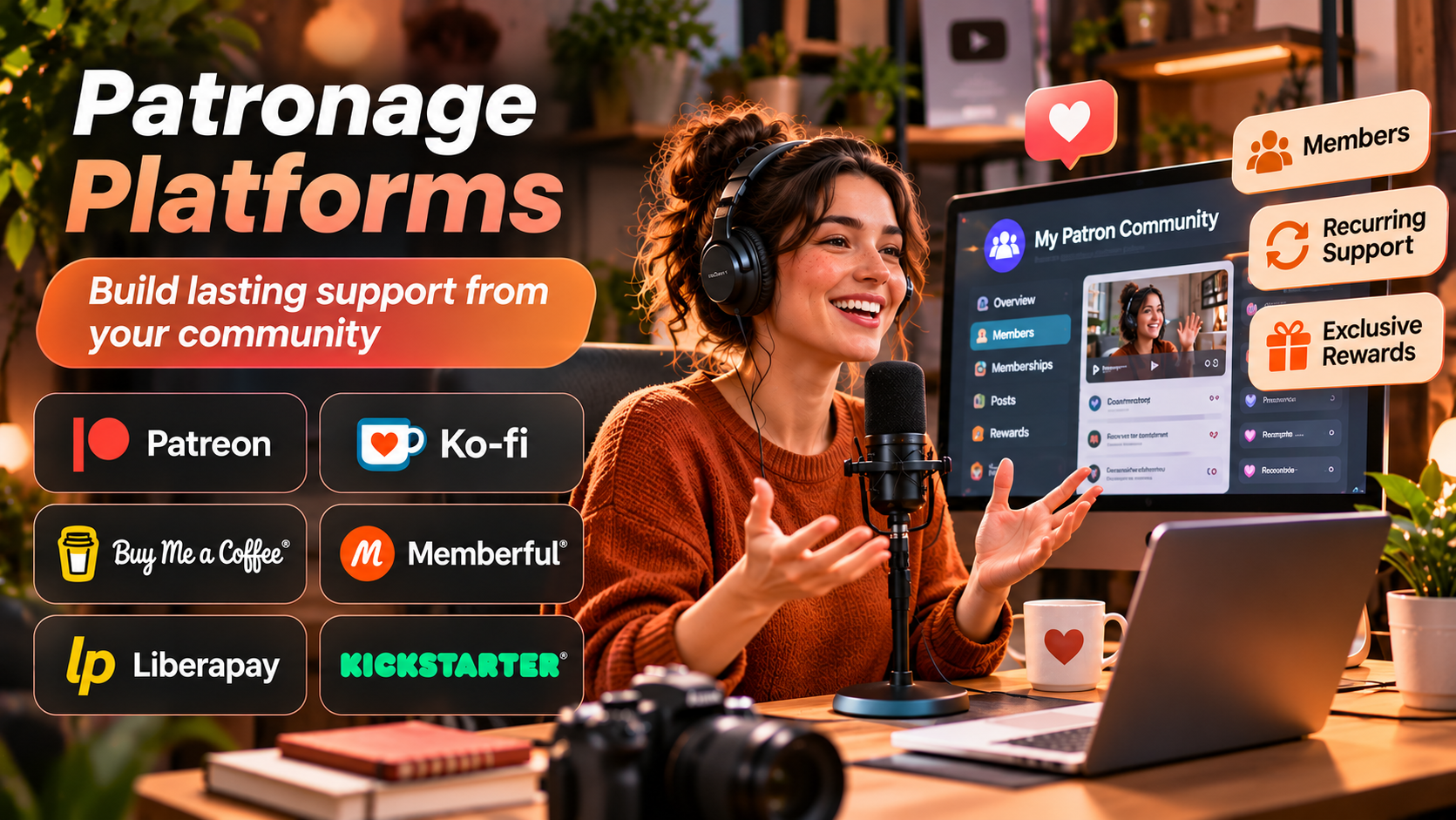
Patronage platforms provide another option.
They allow individuals, communities, and organizations to financially support creators or projects through voluntary contributions, recurring sponsorships, or membership arrangements.
Some platforms focus on creative professionals. Others specialize in software development, collaborative projects, independent journalism, or transparent community funding.
Selecting the right platform requires understanding how money is collected, what supporters receive, which fees apply, and who controls the funds.
This guide compares ten patronage platforms, explains their strengths and limitations, and provides a practical framework for building sustainable audience support.
What Are Patronage Platforms?
Patronage platforms are online services that help creators, maintainers, or projects receive financial support from people who value their work.
Unlike ordinary e-commerce, patronage does not always involve purchasing a defined product.
Supporters may contribute because they want the work to continue, believe in the creator’s mission, or appreciate the benefits a project provides.
Three common patronage models are:
Voluntary contributions: Supporters give money without requiring a specific product or service in return.
Recurring sponsorships: Supporters provide regular funding to help sustain ongoing work.
Membership patronage: Supporters make recurring payments and may receive exclusive content, recognition, or community benefits.
Some systems also support project budgets, financial transparency, organizational sponsorships, and contributor reimbursements.
Patronage should not automatically be described as charitable giving. Tax treatment, donor benefits, and eligibility for charitable deductions depend on the recipient, jurisdiction, and transaction structure.
Top 10 Patronage Platforms
1. Patreon
Best For: Artists, writers, podcasters, and other creators building recurring supporter relationships.
Short Description
Patreon is a creator membership and patronage platform that allows audiences to support ongoing creative work.
It is particularly useful for creators who regularly publish content and want a direct financial relationship with their most engaged followers.
A podcast producer might offer bonus episodes. An illustrator could share sketches, process videos, or exclusive artwork. A writer might provide early access to essays.
Patreon combines recurring payments with member communication and content delivery.
This makes it suitable for creators who want to offer structured benefits rather than simply collect donations.
However, patronage programs can become demanding when creators promise too much exclusive content.
Successful Patreon businesses usually balance supporter value with a sustainable publishing schedule.
Key Features
- Recurring memberships: Supports ongoing payments from patrons.
- Membership tiers: Allows different levels of financial support and benefits.
- Exclusive content: Restricts selected posts and media to eligible supporters.
- Member communication: Provides tools for publishing updates and interacting with patrons.
- Payment administration: Processes eligible membership transactions.
- Supporter management: Organizes member records and access.
- Community features: Supports selected forms of audience interaction.
- Revenue reporting: Helps creators review membership earnings and activity.
Benefits
Patreon can create a more predictable revenue stream than occasional donations.
It also encourages ongoing relationships between creators and their most committed supporters.
Pros
- Established creator patronage ecosystem.
- Supports recurring financial contributions.
- Combines funding with content delivery.
- Suitable for different creative disciplines.
- Membership tiers offer flexibility.
Cons
- Platform and payment fees apply.
- Exclusive benefits require ongoing work.
- Audience growth is not guaranteed.
- Creators depend on platform policies.
Use Cases
Podcasters can fund ongoing production.
Artists can share exclusive creative updates.
Writers can offer subscriber-supported publishing.
Best Suited For
Creators with established audiences and consistent output.
2. Ko-fi
Best For: Independent creators seeking flexible one-time support, memberships, and small product sales.
Short Description
Ko-fi provides a creator support platform that combines voluntary contributions with several monetization options.
Its accessible approach appeals to artists, writers, streamers, developers, and freelancers.
A creator can use Ko-fi as a simple support page without requiring every supporter to commit to a subscription.
The same creator may also offer memberships, commissions, or digital products.
This flexibility is useful when audience members have different preferences and budgets.
Ko-fi is especially relevant to creators who are not ready to operate a complicated membership business.
However, different features have different fee structures and responsibilities.
Creators must also manage any commissions or products they promise to deliver.
Key Features
- One-time contributions: Allows supporters to provide voluntary payments.
- Recurring memberships: Supports ongoing patron relationships.
- Creator pages: Provides a central support destination.
- Digital product sales: Enables eligible downloadable products.
- Commissions: Supports creator service offerings.
- Payment connections: Uses supported payment services.
- Audience updates: Helps creators communicate with supporters.
- Transaction records: Provides information about received payments.
Benefits
Ko-fi allows creators to combine casual patronage with more structured monetization.
It can be useful when financial support is irregular or audience demand is still developing.
Pros
- Flexible funding options.
- Supports one-time contributions.
- Suitable for artists and freelancers.
- Membership and storefront features.
- Relatively straightforward setup.
Cons
- Feature-specific fees require review.
- Advanced business automation is limited.
- Creators must promote their own pages.
- Commission fulfillment remains the creator’s responsibility.
Use Cases
Illustrators can accept audience support and commissions.
Bloggers can receive voluntary contributions.
Independent developers can offer paid resources.
Best Suited For
Emerging creators and freelancers seeking flexible support.
3. Buy Me a Coffee
Best For: Bloggers, developers, and creators seeking a simple support experience.
Short Description
Buy Me a Coffee focuses on making financial support easy for audiences.
A creator can establish a public support page and invite readers, viewers, or users to contribute.
Its model works well when supporters appreciate free content but do not necessarily want a formal membership.
For example, an independent blogger might include a support link after an article.
A software developer could offer visitors a convenient way to contribute toward maintenance costs.
The platform also supports selected recurring membership and creator product features.
However, one-time contributions can be unpredictable.
Creators seeking reliable recurring revenue may need to combine voluntary support with other offerings.
Key Features
- Support pages: Provides a dedicated destination for contributions.
- One-time payments: Supports voluntary financial gifts.
- Membership options: Enables eligible recurring support.
- Creator updates: Allows communication with supporters.
- Payment processing: Handles supported transactions.
- Supporter records: Organizes relevant contribution information.
- Creator offerings: Supports selected paid products or benefits.
- Earnings reporting: Provides visibility into received payments.
Benefits
Buy Me a Coffee reduces friction for people who want to thank or support a creator.
It is useful when a creator values simplicity over extensive membership administration.
Pros
- Simple support model.
- Accessible for small audiences.
- Suitable for free-content creators.
- Supports one-time and recurring payments.
- Minimal setup requirements.
Cons
- Contributions may be inconsistent.
- Less suitable for complex community programs.
- Platform and processing charges affect proceeds.
- Does not independently generate an audience.
Use Cases
Tutorial writers can receive reader support.
Open-source contributors can accept appreciation payments.
Independent artists can collect voluntary contributions.
Best Suited For
Creators who want lightweight patronage rather than a complex membership business.
4. GitHub Sponsors
Best For: Open-source developers and software maintainers.
Short Description
GitHub Sponsors provides a sponsorship mechanism designed for developers and organizations involved in open-source software.
It is particularly relevant to maintainers whose projects provide ongoing value without generating direct product sales.
Software libraries, developer tools, documentation projects, and infrastructure components often require significant maintenance.
GitHub Sponsors allows eligible contributors to receive financial support from individuals and organizations.
Its close relationship with the GitHub ecosystem helps supporters connect funding with software projects and contributors.
However, sponsorship eligibility, payout availability, and account requirements depend on supported arrangements.
Maintainers should also avoid assuming that sponsorship alone will cover long-term development expenses.
Key Features
- Developer sponsorship: Supports financial contributions to eligible maintainers.
- Recurring funding: Allows ongoing sponsorship arrangements.
- Sponsorship tiers: Supports structured contribution levels.
- GitHub integration: Connects sponsorship with developer profiles and repositories.
- Sponsor recognition: Provides visibility into supporting relationships.
- Organizational sponsorship: Supports eligible company contributions.
- Funding links: Makes sponsorship discoverable through supported repository features.
- Sponsor administration: Helps maintainers manage their sponsorship relationships.
Benefits
GitHub Sponsors places financial support close to the open-source work that benefits from it.
This can reduce friction for developers and organizations seeking to fund maintainers.
Pros
- Designed for open-source contributors.
- Integrated with GitHub.
- Supports individual and organizational sponsors.
- Relevant to long-term maintenance.
- Recognizable developer ecosystem.
Cons
- Eligibility and geographic restrictions apply.
- Most suitable for software-related work.
- Sponsorship is not guaranteed.
- Maintainers still need to communicate funding needs.
Use Cases
Library maintainers can fund ongoing updates.
Documentation contributors can receive support.
Companies can sponsor tools they depend on.
Best Suited For
Open-source maintainers and developer communities.
5. Open Collective
Best For: Collaborative projects requiring transparent budgets and shared financial administration.
Short Description
Open Collective supports community-oriented funding and financial administration.
Its approach is different from a typical individual creator tip jar.
The platform is particularly relevant to groups that need to receive money, publish financial information, and coordinate expenses.
Open-source projects, community initiatives, and collaborative organizations may benefit from this structure.
Some projects use fiscal hosts to administer funds and payments.
This can help groups operate financially without every contributor establishing a separate legal organization, subject to the fiscal host’s terms.
However, fiscal hosting introduces governance and administrative considerations.
Projects must understand who legally receives the funds, who authorizes expenses, and which fees apply.
Key Features
- Collective funding pages: Supports contributions to eligible projects.
- Recurring contributions: Enables ongoing supporter relationships.
- Transparent budgets: Provides visibility into financial activity.
- Expense workflows: Supports submission and administration of eligible expenses.
- Fiscal hosting: Connects eligible projects with financial hosts.
- Contributor records: Organizes funding relationships.
- Financial reporting: Supports review of income and spending.
- Project administration: Helps teams coordinate financial responsibilities.
Benefits
Open Collective can improve financial transparency and accountability for collaborative projects.
It is useful when money belongs to a shared initiative rather than an individual creator.
Pros
- Transparency-oriented funding.
- Suitable for collaborative projects.
- Fiscal hosting options.
- Expense administration.
- Relevant to open-source communities.
Cons
- Fiscal host arrangements require careful review.
- Not primarily designed for exclusive creator content.
- Governance can become complicated.
- Administrative fees and restrictions may apply.
Use Cases
Open-source projects can fund maintenance.
Community initiatives can administer shared budgets.
Volunteer organizations can manage contributions and expenses.
Best Suited For
Collaborative projects and community-funded initiatives.
6. Liberapay
Best For: Creators and open-source projects seeking recurring donations without a membership-commerce model.
Short Description
Liberapay is a nonprofit-oriented recurring donation platform.
Its philosophy emphasizes financial support rather than exchanging payments for exclusive content or commercial benefits.
This makes it particularly relevant to open-source developers, independent creators, and public-interest projects.
Supporters can contribute regularly to help sustain work they value.
The platform is less focused on marketing, digital storefronts, or complicated membership tiers.
For creators who want their work to remain freely accessible, this distinction can be important.
However, Liberapay is not designed to replace a complete creator commerce platform.
Its usefulness depends on whether supporters are comfortable funding work without receiving exclusive rewards.
Key Features
- Recurring donations: Supports ongoing voluntary financial contributions.
- Creator profiles: Provides public funding destinations.
- Team support: Accommodates eligible group funding arrangements.
- Donation administration: Helps organize supporter contributions.
- Nonprofit orientation: Emphasizes sustainable support rather than commercial memberships.
- Payment integration: Works through supported payment arrangements.
- Public funding information: Provides selected transparency features.
- Open-source approach: Aligns with community-oriented software funding.
Benefits
Liberapay offers a patronage model focused on sustaining work rather than selling exclusive access.
Pros
- Recurring donation focus.
- Relevant to free and open-source projects.
- Nonprofit-oriented model.
- Avoids complicated reward obligations.
- Suitable for public-interest work.
Cons
- Limited product-commerce features.
- Less suitable for premium content memberships.
- Support depends on voluntary contributions.
- Payment availability varies.
Use Cases
Open-source maintainers can receive recurring support.
Independent writers can fund freely available work.
Community software projects can build a supporter base.
Best Suited For
Creators and projects committed to freely accessible work.
7. Tipeee
Best For: Online content creators seeking tips and recurring audience support.
Short Description
Tipeee is a creator funding platform associated with audience contributions and recurring support.
Its model is relevant to creators producing videos, articles, podcasts, illustrations, and other online content.
Supporters can contribute because they value the creator’s ongoing work.
Depending on the creator’s arrangement, support may involve one-time contributions or recurring patronage.
Tipeee is particularly relevant to creators whose audiences are familiar with its supported markets.
However, creators should verify country eligibility, payout options, language support, and current platform terms.
A platform that works well for one geographic audience may not be equally convenient for another.
Key Features
- Creator funding pages: Provides destinations for audience support.
- Recurring contributions: Supports ongoing patronage arrangements.
- One-time support: Offers eligible contribution options.
- Creator information: Allows explanation of funding goals.
- Supporter relationships: Helps creators communicate with contributors.
- Payment administration: Processes supported contributions.
- Funding visibility: Provides information about patronage activity.
- Creator-oriented workflows: Supports independent content producers.
Benefits
Tipeee can help online creators receive support directly from their communities.
Pros
- Creator patronage orientation.
- Supports different contribution arrangements.
- Relevant to independent media creators.
- Direct audience funding.
- Can complement free content.
Cons
- Geographic availability must be checked.
- Fees and payment conditions vary.
- Limited compared with comprehensive business platforms.
- Audience awareness differs by market.
Use Cases
Video creators can fund ongoing production.
Podcasters can receive listener contributions.
Independent media projects can build supporter relationships.
Best Suited For
Online creators with audiences in supported markets.
8. Steady
Best For: Independent publishers and media creators building reader-supported businesses.
Short Description
Steady provides membership and audience revenue technology associated with independent publishing.
Its approach is relevant to journalists, writers, podcasters, and media organizations seeking recurring financial support.
Rather than relying entirely on advertising, publishers can encourage readers or listeners to fund their work.
A publication may offer membership benefits, exclusive content, or opportunities to participate in its community.
Steady is useful when a creator wants patronage to become part of a more structured publishing business.
However, publishers should verify current product availability, supported markets, commercial arrangements, and integrations.
The platform’s value depends on how well it fits the publication’s audience and operating model.
Key Features
- Membership payments: Supports recurring reader or audience contributions.
- Publisher support: Addresses independent media monetization.
- Member administration: Organizes supporter relationships.
- Content access: Supports selected membership benefits.
- Audience communication: Helps publishers engage supporters.
- Payment processing: Handles eligible transactions.
- Revenue information: Supports review of membership performance.
- Publishing integration: Connects monetization with supported publishing workflows.
Benefits
Steady can help independent media organizations develop recurring audience revenue.
Pros
- Publishing-oriented patronage.
- Recurring membership support.
- Relevant to journalism and podcasts.
- Helps organize supporter relationships.
- Can reduce advertising dependence.
Cons
- Market availability requires verification.
- Publishing-specific orientation.
- Fees and integrations need review.
- Subscription retention requires editorial consistency.
Use Cases
Independent magazines can establish reader memberships.
Podcasters can receive recurring listener support.
Journalists can fund continuing reporting.
Best Suited For
Independent media and publishing businesses.
9. Polar
Best For: Software developers monetizing open-source projects through sponsorships and digital offerings.
Short Description
Polar provides monetization infrastructure oriented toward developers and software businesses.
It is relevant to creators who want to combine sponsorship with commercial offerings such as subscriptions or digital products.
An open-source developer might provide free software while offering paid support, premium resources, or recurring sponsorship options.
Polar’s developer-oriented approach distinguishes it from general-purpose creator platforms.
It can be useful for software projects evolving from voluntary support toward a more formal business model.
However, the platform’s commercial and payment structure should be evaluated carefully.
Developers should distinguish voluntary sponsorship from transactions that promise specific products, services, or support obligations.
Key Features
- Developer monetization: Supports software-oriented revenue workflows.
- Recurring payments: Enables eligible subscription or sponsorship arrangements.
- Digital products: Supports selected software and digital offerings.
- Checkout infrastructure: Provides payment-related workflows.
- Customer records: Organizes supporter or buyer information.
- Developer integration: Supports technical monetization workflows.
- Revenue reporting: Provides transaction information.
- Commercial flexibility: Allows different software business models.
Benefits
Polar can help developers combine community support with structured software monetization.
Pros
- Developer-oriented design.
- Supports recurring revenue.
- Digital product capabilities.
- Relevant to open-source businesses.
- More flexible than a basic donation page.
Cons
- Not designed primarily for artists or podcasters.
- Payment and tax arrangements require review.
- Technical integration may be necessary.
- Commercial offerings create customer obligations.
Use Cases
Developers can monetize software utilities.
Open-source maintainers can accept sponsorships.
Small software teams can offer paid resources.
Best Suited For
Developers and open-source businesses.
10. thanks.dev
Best For: Organizations supporting open-source dependencies through automated funding allocation.
Short Description
thanks.dev approaches software patronage through dependency-based sponsorship.
Many organizations depend on numerous open-source packages but do not know which maintainers to support.
A dependency-oriented funding system can help connect organizational contributions with the software ecosystem being used.
This makes thanks.dev different from ordinary creator membership platforms.
It focuses on helping fund the broader software supply chain rather than delivering exclusive creator content.
Its usefulness depends on supported package ecosystems, dependency information, and funding arrangements.
Organizations should review how allocations are calculated and which projects can receive funds.
Key Features
- Dependency-oriented funding: Connects sponsorship with software dependencies.
- Open-source support: Focuses on funding software maintainers.
- Organizational contributions: Supports eligible company funding arrangements.
- Funding allocation: Helps distribute support across projects.
- Dependency visibility: Uses software dependency relationships.
- Project recognition: Highlights supported open-source work.
- Funding administration: Organizes contribution workflows.
- Ecosystem sustainability: Encourages support beyond a single project.
Benefits
thanks.dev can help businesses support the open-source software they rely on.
It reduces some of the effort involved in identifying individual maintainers.
Pros
- Specialized open-source funding model.
- Relevant to organizations.
- Dependency-based approach.
- Encourages ecosystem-wide support.
- Distinct from individual creator tip jars.
Cons
- Limited relevance outside software.
- Funding allocations require evaluation.
- Not a creator content platform.
- Supported ecosystems and payout conditions vary.
Use Cases
Software companies can support dependencies.
Engineering teams can establish recurring funding programs.
Organizations can formalize open-source sustainability efforts.
Best Suited For
Businesses and teams funding open-source infrastructure.
Patronage Platforms Comparison Table
| Platform | Primary Funding Model | Main Strength | Best For |
|---|---|---|---|
| Patreon | Recurring memberships | Exclusive supporter content | Artists and podcasters |
| Ko-fi | Tips and memberships | Flexible contributions | Independent creators |
| Buy Me a Coffee | Tips and support | Simple payments | Bloggers |
| GitHub Sponsors | Developer sponsorship | GitHub integration | Open-source maintainers |
| Open Collective | Project contributions | Financial transparency | Community projects |
| Liberapay | Recurring donations | Noncommercial patronage | Free-content projects |
| Tipeee | Tips and recurring support | Creator funding | Online creators |
| Steady | Reader memberships | Publishing monetization | Independent media |
| Polar | Sponsorships and digital sales | Developer monetization | Software creators |
| thanks.dev | Dependency-based funding | Open-source allocation | Software organizations |
How to Choose the Best Patronage Platform
1. Define the Funding Relationship
Decide whether supporters are making voluntary contributions, purchasing membership benefits, or sponsoring a specific project.
2. Identify Your Audience
Artists, developers, journalists, and community organizations often have different supporter expectations.
3. Compare Recurring and One-Time Funding
Recurring contributions may improve financial predictability, while one-time support is easier for casual audiences.
4. Evaluate Platform Fees
Review platform charges, payment processing, currency conversion, and withdrawal costs.
5. Check Geographic Eligibility
Verify whether creators and supporters in the relevant countries can send and receive payments.
6. Understand Financial Ownership
For collaborative projects, determine who controls funds and authorizes spending.
7. Consider Supporter Benefits
Avoid promising exclusive rewards that require more work than the funding can sustain.
8. Review Data Portability
Determine whether supporter records can be exported and how recurring relationships would be affected by migration.
9. Examine Transparency Requirements
Public projects may benefit from visible budgets and expense reporting.
10. Build a Sustainable Communication Plan
Explain how contributions support the work and provide regular, meaningful updates.
Best Patronage Platforms by User Type
| User Type | Recommended Platform | Main Reason |
|---|---|---|
| Artists with exclusive content | Patreon | Membership benefits |
| Freelancers | Ko-fi | Tips and commissions |
| Bloggers | Buy Me a Coffee | Simple support |
| Open-source maintainers | GitHub Sponsors | Developer sponsorship |
| Collaborative projects | Open Collective | Transparent finances |
| Free-content creators | Liberapay | Recurring donations |
| Online media creators | Tipeee | Audience contributions |
| Independent publishers | Steady | Reader memberships |
| Software entrepreneurs | Polar | Developer monetization |
| Companies funding dependencies | thanks.dev | Dependency-based sponsorship |
Practical Example: Funding an Open-Source Software Project
Consider a developer maintaining a free software library used by several businesses.
Step 1: Estimate Maintenance Costs
Calculate the monthly time required for bug fixes, documentation, security updates, and support.
Step 2: Define the Funding Goal
Suppose the developer wants to fund 20 hours of maintenance each month at an internal target of $40 per hour.
The monthly funding goal is:
20 × $40 = $800.
Step 3: Choose a Platform
Evaluate GitHub Sponsors for direct maintainer sponsorship and Open Collective for a shared project budget.
Step 4: Explain the Project’s Value
Describe the software, its users, and the work required to maintain it.
Step 5: Establish Contribution Options
Offer voluntary sponsorship levels without promising unrealistic development outcomes.
Step 6: Publish Funding Information
Make sponsorship options visible in the repository and project documentation.
Step 7: Contact Relevant Organizations
Explain how ongoing support can help maintain software that their teams use.
Step 8: Track Contributions
Record funding received, fees, and relevant expenses.
Step 9: Report Progress
Publish meaningful maintenance updates and acknowledge supporters appropriately.
Step 10: Review Sustainability
Compare recurring contributions with actual maintenance requirements and adjust the funding strategy.
Frequently Asked Questions
What is a patronage platform?
A patronage platform helps creators or projects receive financial support from individuals, communities, or organizations.
Is patronage the same as crowdfunding?
Not necessarily. Crowdfunding often targets a particular campaign, while patronage may support ongoing work.
Are patronage payments donations?
Some are voluntary gifts, while others purchase membership benefits or services. Legal and tax treatment varies.
Which platform is best for artists?
Patreon and Ko-fi are relevant options depending on whether the creator prioritizes memberships or flexible support.
Which platform is best for open-source developers?
GitHub Sponsors, Liberapay, Open Collective, and Polar serve different developer funding needs.
Can businesses sponsor open-source projects?
Yes. Several platforms support eligible organizational contributions.
Do creators need to offer rewards?
No. Platforms such as Liberapay emphasize support without exclusive commercial benefits.
Can patronage replace advertising revenue?
It can reduce dependence on advertising, but sustainable funding depends on audience support.
What is fiscal hosting?
Fiscal hosting is an arrangement in which an eligible host administers funds and related financial processes for a project.
Can a creator use multiple patronage platforms?
Yes, although managing several platforms may increase administrative complexity.
How can creators encourage recurring support?
Explain the value of their work, communicate funding needs clearly, and maintain trustworthy supporter relationships.
What should creators track?
Track recurring contributions, one-time funding, fees, supporter retention, and the cost of delivering the work.
Conclusion
Patronage platforms help creators and projects receive financial support beyond traditional advertising and product sales.
Patreon, Ko-fi, and Buy Me a Coffee suit general creator funding. GitHub Sponsors, Liberapay, Polar, and thanks.dev address different aspects of developer and open-source sustainability.
Open Collective provides transparent project finance, while Tipeee and Steady offer additional options for content creators and independent publishers.
The best platform depends on whether funding supports an individual, a membership business, a collaborative project, or an open-source ecosystem.
Creators should prioritize clear expectations, reliable payment arrangements, financial transparency, and sustainable relationships with supporters.