Introduction
Choosing the right IVF treatment is a major step for anyone facing fertility challenges. Understanding your options helps you feel confident and prepared. This guide covers IVF treatment cost, IVF success rates, and how to compare fertility clinics around the world.
We also look at procedures like egg freezing and ICSI treatment to support your planning. Many people look into IVF abroad to find lower costs or specialized care.
We explain IVF cost by country and explore different fertility treatment options. You will also learn about key medical choices and questions to ask your doctor. Our goal is to provide clear, practical information so you can make informed decisions.
Understanding IVF Treatment and How It Works
What Is IVF Treatment?
In vitro fertilization, or IVF, is a series of medical procedures that help with fertility. Doctors join an egg and sperm outside the body in a laboratory.
The main goal is to create a healthy embryo. Doctors then place the embryo into the uterus. People turn to this option when other treatments have not worked.
The Step-by-Step IVF Process
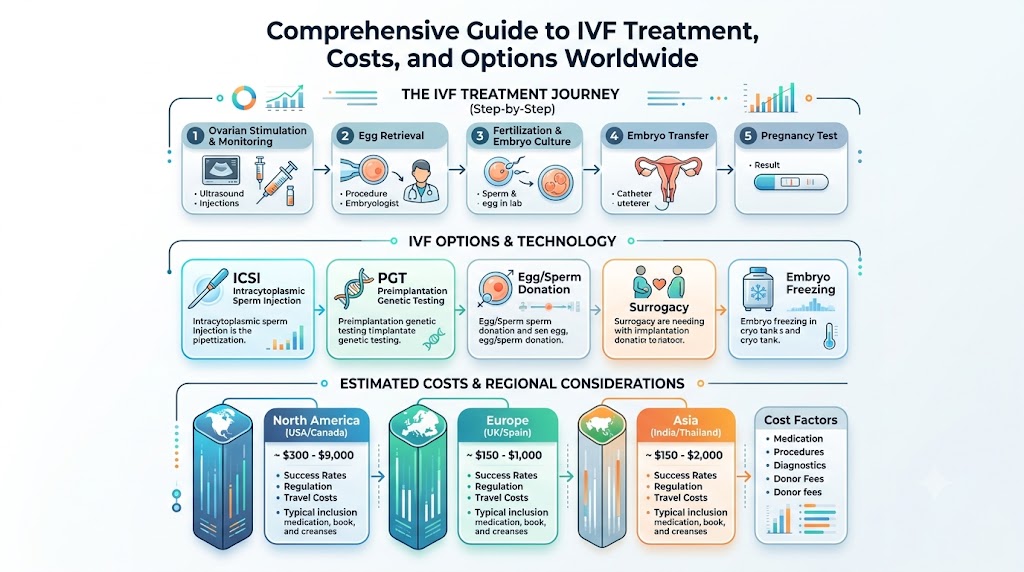
The IVF journey has several basic steps. First, doctors give medication to stimulate the ovaries. This helps the body produce multiple mature eggs.
Next, a doctor retrieves the eggs during a minor procedure. The lab then combines the eggs with sperm. Once embryos form, doctors monitor their growth for a few days. Finally, one or more embryos are placed in the uterus.
Who May Need IVF?
IVF helps people facing different fertility struggles. It is often recommended for blocked fallopian tubes or low sperm counts.
It also helps individuals with ovulation disorders or unexplained infertility. Same-sex couples and single parents often use IVF with donor eggs or sperm to build their families.
Exploring Advanced Fertility Treatment Options
Overview of Fertility Treatment Options
Many fertility treatment options exist beyond standard IVF. Your doctor will suggest a plan based on your health history and test results.
Some people start with simpler care, like medication or intrauterine insemination (IUI). Others need advanced lab procedures from the start.
What Is ICSI Treatment?
Intracytoplasmic sperm injection, or ICSI treatment, is a specialized form of IVF. A scientist injects a single healthy sperm directly into a mature egg.
This method helps when male fertility issues are present, such as very low sperm counts. It also helps if past IVF attempts resulted in unfertilized eggs.
Preserving Fertility with Egg Freezing
Egg freezing allows a person to store mature eggs for future use. The process involves ovarian stimulation and egg retrieval, just like IVF.
Instead of fertilizing the eggs, the lab freezes them using a fast-cooling method. People choose this option for medical reasons, like cancer care, or to delay pregnancy for personal reasons.
Understanding IVF Success Rates
How IVF Success Rates Are Measured
When reviewing IVF success rates, it helps to know how clinics present their data. Some clinics report pregnancy rates, while others report live birth rates.
A live birth rate shows how many procedures led to a born baby. This measure gives a clearer picture than a positive pregnancy test alone.
Key Factors Affecting Success
Age is a major factor in IVF success because egg quality changes over time. Younger individuals generally see higher success rates per attempt.
Health factors, underlying diagnoses, and embryo quality also affect results. Lab standards and the expertise of the medical team play an important role as well.
Setting Realistic Expectations
Published success rates represent group averages, not guaranteed results. A high success rate does not mean a procedure will work on the first try.
Most people need more than one cycle to achieve a pregnancy. Discussing your personal medical history with a doctor gives you the best estimate of your chances.
Understanding IVF Treatment Cost
Breakdown of Standard IVF Costs
The total IVF treatment cost includes several separate steps. Standard quotes often cover monitoring, egg retrieval, lab work, and embryo transfer.
However, medications are usually billed separately. These fertility drugs can add significant expense to the overall price of a cycle.
Additional Medical Fees to Expect
Extra laboratory techniques can increase the overall cost. For example, using ICSI or genetic testing on embryos adds specific lab fees.
Anesthesia for egg retrieval and long-term embryo storage also carry extra charges. Always request an itemized list of costs before starting care.
Managing Unexpected Expenses
Unexpected health changes during a cycle can change your total costs. A cycle may be canceled if ovaries do not respond to medications.
In other cases, extra monitoring appointments or blood tests are needed. Planning for a financial buffer helps prevent stress during treatment.
Comparing Fertility Costs Across Different Countries
Why Consider IVF Abroad?
Many patients consider IVF abroad to find lower medical prices. Cross-border care can make multiple treatment cycles more affordable.
Some people also travel to access specific legal options, such as donor programs. Others travel to avoid long wait times for treatment in their home country.
Understanding IVF Cost by Country
When reviewing IVF cost by country, prices vary widely due to local healthcare systems. Medical staffing costs, drug prices, and overhead expenses differ around the world.
For example, care in North America often costs much more than in Europe or Asia. However, lower fees do not automatically mean lower standards of care.
Extra Costs of Cross-Border Care
While base medical fees may be lower abroad, travel costs add up. You must account for flights, hotels, meals, and local transit.
Taking time off work can also impact your budget. Always calculate total travel expenses alongside clinic costs when making comparisons.
Comparing Fertility Treatment Options and Services
Comparing Common Treatment Paths
| Treatment Option | Primary Purpose | Key Considerations |
| Standard IVF | Overcomes blocked tubes or general fertility issues | Combines eggs and sperm in a lab dish |
| ICSI Treatment | Addresses severe male factor infertility | Injects one sperm directly into each egg |
| Egg Freezing | Preserves fertility for future family planning | Freezes unfertilized eggs for later use |
| Donor Egg IVF | Helps when egg quality or supply is low | Uses eggs from a donor with recipient sperm |
Cost Components to Review
| Cost Item | Included in Base Price? | Patient Action Required |
| Ovarian Medications | Rarely | Ask for estimated drug costs from a pharmacy |
| Anesthesia Services | Varies | Check if the anesthesiologist bills separately |
| Embryo Storage | Usually for 1 year | Confirm annual renewal fees for freezing |
| ICSI Procedure | Optional fee | Check if ICSI is needed for your diagnosis |
How to Compare Fertility Clinics Effectively
Evaluating Medical Staff and Standards
When you compare fertility clinics, look closely at team qualifications. Check if the doctors are board-certified fertility specialists.
Research the experience of the embryology team and lab directors. A well-trained lab staff is essential for high-quality embryo care.
Reviewing Lab Accreditation and Rules
Reputable IVF clinics hold accreditation from national health bodies or professional groups. These standards ensure proper safety, hygiene, and equipment care.
Regulations also govern donor safety and record-keeping. Make sure the clinic follows strict quality control standards.
Assessing Patient Care and Support
Good medical care extends beyond technical procedures. Choose clinics that offer clear communication, emotional support, and easy access to nurses.
Clear explanation of fees is another sign of a reliable clinic. You should receive direct answers about costs before signing agreements.
Practical Questions to Ask Your Fertility Specialist
Questions About Diagnosis and Options
- What specific tests do we need before picking a plan?
- Which fertility treatment options offer us the best chance of success?
- Would our case benefit from ICSI treatment or extra lab tools?
Questions About Success and Costs
- What are your live birth rates for patients in my age group?
- What is the complete IVF treatment cost, including medicines and extra fees?
- If a cycle fails, what are the costs for a second attempt?
Questions About Clinic Procedures
- How many embryos do you recommend transferring at one time?
- How does your team handle communication on weekends or after hours?
- What support services exist if we feel overwhelmed during care?
Frequently Asked Questions (FAQs)
1. What is the average IVF treatment cost?
The cost varies based on your location, clinic, and medical needs. A single basic cycle often ranges from several thousand to over fifteen thousand dollars. Medications, testing, and extra lab services usually add to the base price.
2. How do IVF success rates change with age?
Age affects egg quality and quantity, so younger individuals usually see higher success rates per attempt. Rates gradually decrease after age thirty-five. However, using donor eggs can help maintain high success rates regardless of age.
3. How do I choose between different IVF clinics?
Look for clinics with clear pricing, accredited laboratories, and experienced specialists. Compare their reported birth outcomes for your age group and read patient communication policies. Choosing a clinic with clear guidance helps reduce stress during care.
4. What steps are involved in an IVF treatment cycle?
A typical cycle involves ovarian stimulation, egg retrieval, fertilization in a laboratory, and embryo transfer. Doctors monitor your progress with blood tests and ultrasounds. Remaining healthy embryos can be frozen for future use.
5. Why do patients choose to compare fertility clinics abroad?
Many patients look into cross-border care to find lower prices or shorter wait times. Others travel to access specific treatments or donor programs not available locally. Always research local health laws and travel costs before deciding.
6. What is the main benefit of IVF abroad?
The main advantage is often lower total medical fees for complex procedures. Some countries also offer specialized programs or extensive donor databases. However, you must factor in travel time, hotel stays, and time off work.
7. How does IVF cost by country vary around the world?
Prices vary due to local economic conditions, medication costs, and healthcare regulations. Some European and Asian countries offer care at a fraction of North American prices. Always verify what is included in a clinic’s published price package.
8. Who should consider egg freezing?
This option suits individuals who wish to preserve their fertility for future use. It helps those facing medical treatments that affect fertility, such as chemotherapy. It is also an option for people delaying pregnancy for personal or career reasons.
9. When is ICSI treatment recommended during IVF?
Doctors recommend this procedure when dealing with male factor infertility, such as low sperm count or poor motility. It is also used if previous IVF attempts had low fertilization rates. The process involves injecting one sperm directly into an egg.
10. How do I explore different fertility treatment options?
Start by consulting a qualified fertility specialist for comprehensive health testing. They can explain whether simple interventions, standard IVF, or advanced lab methods suit your needs. Reviewing reliable resources helps you ask informed questions during your visit.
Conclusion
Navigating fertility care requires time, research, and clear communication with medical professionals. Understanding the details of IVF treatment cost, expected outcomes, and procedural choices helps you plan effectively. Comparing clinics at home or looking into options abroad allows you to find care that fits your needs and budget.
Remember that every family’s journey is unique, and general statistics cannot predict individual results. Take time to review reliable, independent health resources before making financial or medical commitments. We encourage you to discuss your options with a qualified fertility specialist who can provide personalized medical guidance.