Introduction
Deciding to travel across international borders for medical treatment is a major step. Unlike standard leisure travel, which centers on sightseeing and relaxation, medical travel involves personal health, physical safety, and significant financial commitments. For international patients and their families, navigating this journey starts with a foundational element: reliable healthcare information. Without clear, accurate, and objective data, patients can easily become overwhelmed by choices, conflicting advice, and unfamiliar foreign medical systems.
Medical travelers face unique challenges when researching hospitals, verifying specialist qualifications, understanding complex treatment plans, estimating total costs, coordinating travel arrangements, and arranging proper follow-up care. When information is unclear or incorrect, it can lead to confusion, misplaced expectations, and unnecessary stress. This is why accessing trustworthy healthcare information before making any commitment is essential. Platforms like MYMEDICPLUS.COM aim to bridge this information gap, helping patients explore healthcare options, understand medical procedures, and organize their search with greater clarity and confidence.
What Is Trusted Healthcare Information?
Understanding what constitutes trustworthy healthcare information is the first step for any prospective medical traveler. In the digital age, health advice is widely available, but not all sources adhere to high standards of accuracy, transparency, and neutrality. Genuine healthcare information is rooted in verified facts, clinical evidence, and transparent institutional data.
- Accurate treatment information: Explanations of medical procedures that rely on standard clinical guidelines rather than exaggerated promises.
- Reliable hospital information: Verified details regarding facility accreditations, infrastructure, safety records, and international patient services.
- Specialist qualifications and experience: Clear documentation of a doctor’s training, board certifications, areas of clinical focus, and professional background.
- Clear treatment details: Step-by-step breakdowns of what a procedure involves, including preparation requirements and expected recovery timelines.
- Transparent cost information: Detailed breakdowns covering consultation fees, hospital stays, diagnostics, and potential ancillary expenses.
- Patient support information: Practical guidelines on language interpretation, local transportation, and logistical assistance abroad.
- Travel-related information: Up-to-date guidance on medical visas, required documentation, and flight readiness.
- Follow-up care information: Structured protocols outlining post-discharge requirements and communication channels with the treating medical team.
Patients should always check where information comes from. Independent data, physician-reviewed content, and accredited institutional disclosures offer a much safer foundation than promotional advertisements or unverified online forums.
Why Medical Travelers Need Reliable Information
Medical travel decisions differ fundamentally from ordinary travel planning or choosing a local doctor. When a patient steps outside their home healthcare ecosystem, they enter an environment where regulations, clinical protocols, and communication styles may differ entirely.
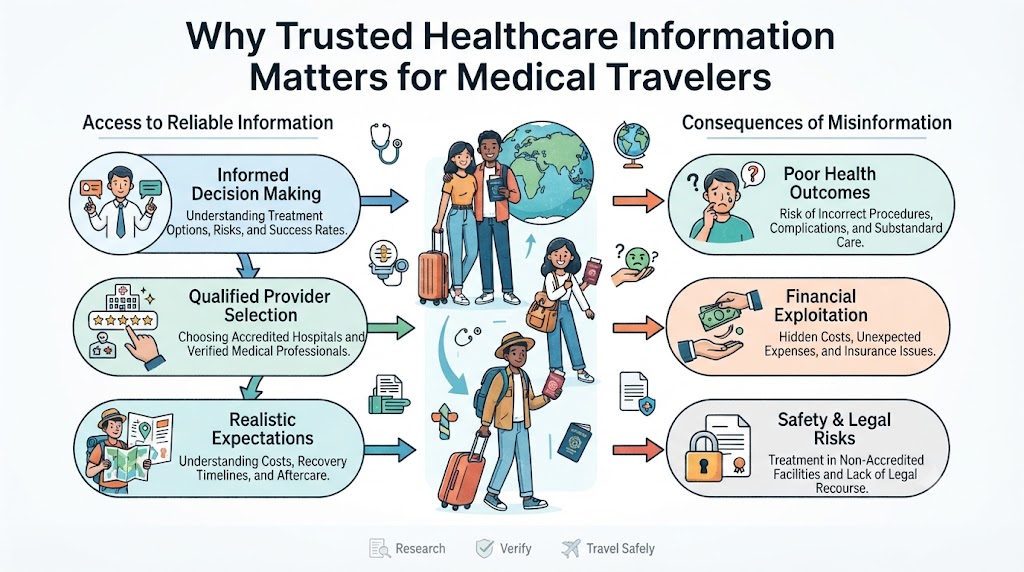
Healthcare decisions carry direct personal risks. A miscalculation or misunderstanding regarding a diagnosis or surgical approach can have serious health consequences. Furthermore, patients are often unfamiliar with the destination country’s broader healthcare infrastructure, making it difficult to judge whether a clinic meets international standards. Treatment options for the same condition can vary widely between countries, and costs can fluctuate based on hidden variables. Hospital quality standards, nursing ratios, and infection control measures also differ from one facility to another.
Beyond clinical factors, logistical realities demand precise coordination. Bridging language barriers, managing medical records across borders, and synchronizing travel itineraries with clinical schedules require careful forethought. Having reliable information allows patients to anticipate these variables rather than reacting to surprises mid-journey.
How Wrong or Unclear Information Can Affect Medical Travelers
Misinformation, vague details, or incomplete guidance can disrupt a medical journey in multiple ways. While medical travel offers incredible opportunities for accessing specialized care, relying on unverified sources can introduce avoidable complications.
- Choosing an unsuitable hospital: Selecting a facility lacking proper international accreditations or specialized intensive care units for high-risk procedures.
- Misunderstanding treatment options: Expecting one specific surgical technique only to discover upon arrival that a different, less suitable procedure was scheduled.
- Unexpected costs: Facing budget shortfalls because initial estimates omitted vital elements like post-operative medications or extended hospital stays.
- Confusion about medical procedures: Lacking clarity on pre-operative fasting, diagnostic testing requirements, or recovery milestones.
- Poor travel planning: Booking flights or arriving in a destination country too soon after major surgery, ignoring fitness-to-fly guidelines.
- Communication problems: Encountering severe language barriers without adequate interpretation support inside the clinical setting.
- Incomplete medical records: Traveling without a comprehensive medical history, forcing foreign doctors to repeat expensive and time-consuming diagnostic tests.
- Difficulty arranging follow-up care: Returning home without proper discharge summaries, prescriptions, or a plan for local physician oversight.
Recognizing these risks does not mean patients should feel fearful; rather, it highlights the importance of thorough, methodical research and cautious planning.
What Healthcare Information Should Medical Travelers Check?
To build a safe and organized medical travel itinerary, patients should systematically review several core categories of information before making decisions.
Hospital Information
Patients should look beyond glossy promotional photographs and examine institutional credentials. Key details include international accreditations (such as JCI or local equivalent bodies), safety records, specialized department capabilities, infection control standards, and the availability of dedicated international patient desks.
Specialist Information
A hospital’s reputation matters less than the individual doctor performing the procedure. Patients should review a specialist’s medical degrees, post-graduate fellowships, board certifications, years of active practice, and specific volume of successful procedures performed in their area of expertise.
Treatment Information
Understanding the proposed medical intervention is vital. Patients should research what the procedure entails, why it is recommended over alternative therapies, what the anticipated success rates are in general terms, and what the typical recovery timeline looks like from start to finish.
Cost Information
Financial transparency prevents major disruptions. Patients need to understand what is included in a medical quote—such as surgeon fees, anesthesiology, operating room charges, standard room rates, and routine consumables—versus what might incur extra charges.
Patient Support Information
Logistical support can make or break an international trip. Checking whether a provider or facilitator offers airport transfers, local accommodation guidance, visa invitation letters, and 24/7 translation services ensures a smoother day-to-day experience abroad.
Follow-Up Care Information
Care does not end when a patient leaves the hospital doors. Information regarding stitch removal, follow-up teleconsultations with the foreign specialist, and coordination guidelines for the patient’s local doctor back home must be established in advance.
How Patients Can Check Healthcare Information
Gathering information requires a structured approach. Patients and caregivers can follow a practical, step-by-step process to verify data before committing to travel:
- Identify the information you need: Write down a clear checklist covering your diagnosis, preferred treatment goals, budget boundaries, and travel constraints.
- Check the source: Look for authoritative medical portals, official hospital accreditations, and peer-reviewed educational literature. Avoid relying entirely on anonymous reviews or social media claims.
- Compare information from reliable sources: Cross-reference treatment details and hospital profiles across multiple independent platforms to spot inconsistencies.
- Review hospital details: Examine official institutional credentials, emergency response capabilities, and intensive care provisions.
- Check specialist information: Verify medical council registrations, educational backgrounds, and professional memberships of the proposed doctors.
- Understand treatment information: Read clinical summaries written in plain language to grasp what the procedure involves and what physical limitations to expect during recovery.
- Ask questions before making decisions: Compile a list of specific inquiries for hospital coordinators or treating physicians to clarify ambiguities.
- Confirm important details in writing: Ensure that treatment plans, cost estimates, and inclusion lists are provided via official written correspondence.
- Keep medical and travel documents organized: Maintain digital and physical copies of diagnostic scans, lab reports, passport details, and itineraries.
- Review follow-up arrangements: Confirm how post-treatment check-ups will be handled both abroad and upon returning home.
Information Patients Should Ask Their Healthcare Provider About
Direct communication with healthcare providers clarifies uncertainties. When interacting with international patient coordinators or consulting physicians, patients can ask targeted questions:
- What specific treatment is being suggested, and what are the primary goals?
- Why has this treatment been chosen over other conservative or surgical alternatives?
- What are the potential risks, side effects, and complication rates associated with this procedure?
- How long will the active treatment phase and the subsequent recovery period take?
- What pre-operative diagnostic tests or medical records must I bring or send in advance?
- What exact costs are covered in the baseline quote, and what might incur separate charges?
- What follow-up care or physical therapy will be required after discharge?
- Who should I or my family contact if unexpected concerns arise after returning home?
Asking these questions ensures that expectations align with clinical realities.
Why Transparent Cost Information Matters
Financial planning is one of the primary pillars of successful medical travel. While many patients travel to save on expensive procedures, unexpected expenses can quickly diminish those savings if costs are not transparently understood from the outset.
Treatment costs encompass more than just a surgeon’s fee. They include hospital facility charges, specialized surgical equipment, anesthesia, diagnostic blood work, imaging studies, and post-operative medications. Furthermore, secondary expenses such as international flights, local ground transportation, hotel or extended-stay accommodation, visa fees, and daily living costs must be factored into the equation.
Costs can vary widely depending on the chosen country, the tier of the hospital, the seniority of the specialist, the patient’s underlying health status, and the length of hospital stay required. Clear, itemized cost estimates ensure that patients can prepare financially without facing sudden distress during their recovery period.
Why Hospital and Specialist Information Matters
Evaluating a hospital and its medical staff is the most critical step in safeguarding patient health. A structured review helps identify institutions that prioritize patient safety and clinical excellence.
Patients should examine hospital infrastructure, such as advanced modular operating theatres, modern diagnostic imaging units, and reliable intensive care backup. For specialists, verifying relevant experience means looking at how frequently a doctor performs a specific procedure and whether they have managed complex cases similar to yours. Patient testimonials and peer reviews offer qualitative insights into bedside manner, communication clarity, and overall hospital culture.
Verifying this data independently protects patients from marketing exaggerations and ensures that decisions are rooted in verifiable professional credentials.
How MYMEDICPLUS.COM Can Help Medical Travelers
Navigating the global healthcare landscape can be complex, which is why digital guidance platforms play a valuable supportive role. MYMEDICPLUS.COM is designed to help patients explore healthcare information, understand available options, and streamline their research process.
Rather than navigating fragmented sources across the internet, patients can utilize the platform to:
- Explore structured information regarding various medical conditions, treatments, and procedures.
- Discover verified hospitals and specialist listings across different regions.
- Access transparent cost comparisons to better plan medical travel budgets.
- Organize their search for international healthcare providers in a centralized space.
By offering clear educational resources and structured discovery tools, MYMEDICPLUS.COM helps bridge the gap between patients seeking care and the information they need to make confident decisions, keeping in mind that all digital tools serve as educational guides rather than substitutes for direct professional medical evaluation.
Benefits of Having Trusted Information Before Medical Travel
Equipping oneself with reliable information before embarking on a medical journey yields numerous practical advantages:
- Better preparation: Knowing what to expect reduces anxiety and helps patients prepare physically and mentally.
- More informed questions: Clear baseline knowledge enables patients to engage in meaningful dialogues with their doctors.
- Easier comparison of options: Objective data allows for straightforward evaluation of different hospitals and countries.
- Better understanding of treatment: Patients comprehend the scope of their procedures and recovery milestones.
- Clearer cost expectations: Transparent budgeting prevents financial surprises during or after the trip.
- Better travel planning: Synchronizing travel timelines with medical clearances ensures physical safety.
- Better understanding of follow-up care: Knowing post-discharge requirements protects long-term health outcomes.
- Reduced confusion: Clear guidance cuts through conflicting advice found online.
- More confidence in decision-making: Grounding choices in verified facts creates peace of mind for patients and their families.
Challenges Medical Travelers May Face
A realistic view of medical travel must acknowledge the hurdles patients frequently encounter. Being prepared for these challenges helps mitigate their impact:
- Different healthcare systems: Navigating unfamiliar administrative procedures and hospital routines.
- Language barriers: Overcoming communication hurdles in clinical and daily settings.
- Different medical terms: Understanding foreign or technical descriptions of medical conditions.
- Distance from home: Coping with being far away from familiar support networks during recovery.
- Travel arrangements: Coordinating complex international flights and transit while managing health conditions.
- Medical records: Ensuring clinical histories are accurately transferred across borders.
- Cost uncertainty: Managing fluctuations in exchange rates or incidental expenses.
- Follow-up care: Bridging the gap between the overseas hospital and local physicians at home.
- Insurance questions: Determining whether domestic or international insurance covers planned procedures abroad.
- Visa requirements: Complying with strict medical visa documentation and timelines.
- Recovery away from home: Finding comfortable, safe lodging during the outpatient recovery phase.
Preparing for Medical Travel
A structured timeline can help patients manage the phases of their medical journey effectively.
Before Travel
- Gather and digitize all relevant medical records, diagnostic films, and physician referral letters.
- Schedule preliminary virtual consultations with international specialists to confirm treatment suitability.
- Conduct thorough research on hospital accreditations, specialist credentials, and itemized cost estimates.
- Secure passports, medical visas, and necessary travel insurance.
- Finalize flight itineraries and book recovery-friendly accommodations close to the hospital.
During Treatment
- Maintain open communication with your hospital coordinator and nursing staff.
- Ensure you fully understand the day-of-procedure instructions, such as fasting and medication adjustments.
- Keep all administrative paperwork, consent forms, and financial receipts neatly organized in a dedicated folder.
- Ask questions promptly if any part of your treatment plan or medication schedule is unclear.
- Strictly follow the medical team’s post-operative instructions during your initial inpatient or outpatient recovery.
After Treatment
- Attend all scheduled post-operative check-ups before leaving the destination country.
- Secure your complete medical discharge summary, physical prescriptions, and digital copies of your diagnostic results.
- Plan your return travel in accordance with your doctor’s fitness-to-fly assessment.
- Establish contact with your local healthcare provider at home to review your discharge notes and coordinate ongoing rehabilitation or monitoring.
How Digital Healthcare Information Is Changing Medical Travel
Technology has transformed how patients approach international healthcare. In the past, medical travel relied heavily on word-of-mouth recommendations or traditional travel agencies with limited clinical insight. Today, digital platforms empower patients directly.
Online medical databases, teleconsultations, and digital health records allow patients to consult with specialists oceans away before booking a single flight. Secure digital sharing of diagnostic reports enables foreign doctors to review cases accurately and provide preliminary opinions remotely. Furthermore, modern digital platforms centralize hospital ratings, specialist credentials, and transparent cost data, making global healthcare mobility more accessible, transparent, and structured than ever before.
How to Spot Unreliable Healthcare Information
As patients research online, they must remain vigilant against misleading or exaggerated claims. Recognizing warning signs protects both health and financial well-being:
- No clear source: Content that lacks author credentials, institutional backing, or medical review notes.
- Unverified medical claims: Broad statements promising cures for chronic or complex conditions without clinical backing.
- Guaranteed treatment results: Any platform or provider promising a 100% success rate, as medicine always carries inherent variables.
- Unrealistic success rates: Statistics that sound too extraordinary to be true and lack citation from recognized medical registries.
- Hidden costs: Vague pricing structures that promise impossibly low figures while obscuring mandatory hospital fees.
- Fake-looking testimonials: Overly glowing, generic reviews that lack specific details about medical procedures or doctor names.
- Lack of clear hospital or specialist details: Vague descriptions of facilities without names, accreditations, or verifiable locations.
- Pressure to make a quick decision: Coercive marketing tactics urging patients to wire money or book immediately to secure a “limited-time” medical discount.
Always verify critical health information with independent medical professionals before making binding decisions.
Frequently Asked Questions
Why is trusted healthcare information important for medical travelers?
Trusted information ensures patient safety, clarifies treatment options, prevents unexpected costs, and helps individuals navigate unfamiliar foreign medical systems with confidence.
How can patients check if healthcare information is reliable?
Patients can check information sources by looking for clinical evidence, peer-reviewed content, transparent hospital accreditations, and verification from qualified medical professionals.
What information should I check before choosing a hospital abroad?
You should review international accreditations (such as JCI), safety records, department capabilities, infection control standards, and availability of international patient support services.
How can I verify information about a medical specialist?
You can verify a specialist by checking their medical board registrations, educational background, post-graduate fellowships, years of active practice, and clinical experience.
Why is treatment cost information important before medical travel?
Transparent cost information helps patients budget accurately, understand what is included in hospital packages, and avoid unexpected financial surprises.
What medical records should I prepare before travelling for treatment?
Patients should prepare comprehensive medical history summaries, recent diagnostic imaging (like MRIs or CT scans), laboratory test results, and current prescription lists.
How can patients avoid misleading healthcare information?
Patients can avoid misleading content by watching out for guaranteed treatment results, hidden fees, unverified claims, and pressure tactics, preferring independent, evidence-based sources.
What should medical travelers ask before choosing treatment abroad?
Travelers should ask about proposed treatment goals, alternative options, potential risks, recovery timelines, itemized cost breakdowns, and follow-up care arrangements.
How can reliable information make medical travel easier?
It reduces confusion, streamlines travel planning, ensures realistic expectations, and empowers patients to ask informed questions throughout their healthcare journey.
How can MYMEDICPLUS.COM help medical travelers find healthcare information?
MYMEDICPLUS.COM helps patients explore structured health data, discover verified hospitals and specialists, and compare treatment options in one centralized space.
Conclusion
Embarking on a medical journey across international borders is a significant decision that deserves careful thought, thorough research, and reliable guidance. Trusted healthcare information serves as the anchor that keeps medical travel safe, structured, and manageable. By verifying hospital accreditations, evaluating specialist credentials, understanding treatment scopes, and planning for transparent costs, patients can approach their care with greater clarity and peace of mind.
While the process involves overcoming logistical and cultural differences, proper planning ensures that patients can focus on what matters most: their health and recovery. Always discuss major medical decisions and treatment plans with qualified healthcare professionals. To explore structured healthcare information, compare global options, and organize your medical travel research effectively, visit MYMEDICPLUS.COM to begin your journey with confidence.