Introduction
Building a robot is fun, but keeping it working every single day is hard. When a robot stops in a busy factory, work slows down fast. This is why teams need RobotOps. It is a way to manage, fix, and update working robots using smart software tools. This article explores how modern Robotics Operations help keep machines safe, fast, and ready for action. You will learn how engineers use Robot Fleet Management and smart Robotics Software to control many machines at the same time. Let us look inside the exciting world of industrial automation and learn how smart tools keep metal helpers moving smoothly.
What Is RobotOps?
Think of RobotOps as a helper system for mechanical workers. Just like computer experts manage websites, robot experts manage machines. It brings together software engineering and daily robot care.
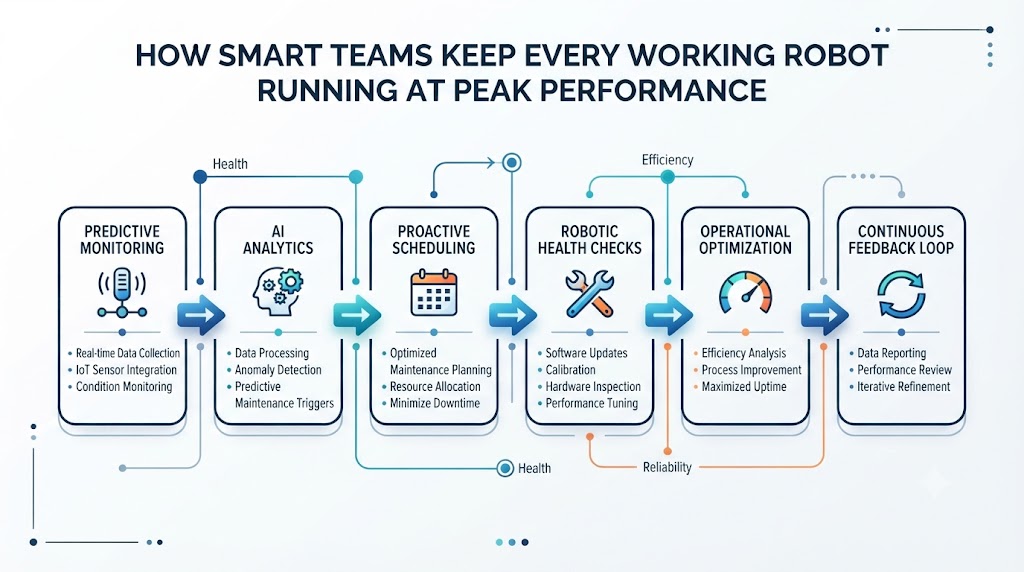
When a robot moves through a warehouse, it sends a constant stream of data back to the office. This is called telemetry. Telemetry means data sent by a robot about its status and activity. Teams watch this data to see if a motor gets too hot or a battery runs low.
Using Robotics Operations, teams can spot problems early. Fixing a small part before it breaks saves time and money. It also keeps human workers safe.
Managing Many Machines At Once
When a factory has one robot, life is easy. When a factory has fifty robots, things get messy fast. This is where Robot Fleet Management comes in. It is the art of controlling a large group of machines at the same time.
Fleet tools track where every robot is located. They make sure two machines do not bump into each other in the hallway. They also send out software updates while the robots sleep at night.
Core Fleet Tasks
- Tracking real-time location and battery levels.
- Assigning daily tasks to the nearest available machine.
- Sending automatic software patches over the air.
- Catching errors before a breakdown occurs.
Powering The Modern Factory Floor
Modern factories rely heavily on Industrial Robotics to build cars, pack boxes, and weld metal parts. These heavy-duty machines never get tired, but they do need constant care and smart control systems.
In these busy settings, you will often find Autonomous Mobile Robots moving quietly across the floor. These smart carts carry heavy loads from one shelf to another without needing a human driver. They use lasers and cameras to see people and boxes, stopping safely if something blocks their path.
Factory Robot Types And Uses
| Robot Type | Main Job | Where It Works |
|---|---|---|
| Robotic Arm | Welding and lifting heavy parts | Car factories |
| Mobile Cart | Moving boxes and supplies | Fulfillment warehouses |
| Cleaning Bot | Scrubbing floors at night | Large retail stores |
The Brains Behind The Machine: Software And Simulation
No robot can move without good code. Robotics Software acts as the true brain of the machine. It tells the wheels when to turn and the camera when to snap a picture.
Before a new program goes onto a real, expensive machine, engineers test it safely using Robot Simulation. A simulation is a computer game world where a digital robot practices its daily tasks. If the virtual robot crashes into a virtual wall, no real metal gets bent.
Many developers build these systems using ROS 2, which stands for Robot Operating System 2. It is a shared set of software tools that helps different robot parts talk to each other easily.
Scaling Up With Smart Automation
As businesses grow, they want to speed up work. This brings us to Robotics Automation, the process of letting machines handle boring, heavy, or dangerous tasks.
When a company scales up its robot count, it often builds a central Robotics Operations Center. This is a special room filled with giant screens. Operators sit here to watch live video feeds, check system alerts, and take manual control of a stuck machine from miles away.
RobotsOps.com shares helpful learning materials for people who want to master these systems and build better automation workflows for the future.
Frequently Asked Questions About RobotOps
What does RobotOps mean? It means combining software tools and engineering practices to manage, monitor, and update working robots safely.
Why are robotics operations important? They help teams keep machines running smoothly, reduce unexpected downtime, and handle large groups of robots without confusion.
How does robot fleet management work? It uses central software to track locations, assign tasks, schedule charging, and update software across many robots at once.
What are autonomous mobile robots? They are smart machines that drive around warehouses and factories by themselves to move materials and goods safely.
Why do engineers use robot simulation? It lets developers test new code in a safe virtual world before putting it onto physical machines in the real world.
What is ROS 2? It is a popular set of open-source software tools that helps developers build programs for different types of robots.
What is robot telemetry? It is the live data that a robot sends back to its operators about its battery, speed, and health status.
Can robots be controlled from far away? Yes. Operators can monitor live feeds and take over remote operations if a robot gets stuck or encounters an unusual obstacle.
What happens inside a robotics operations center? Engineers watch fleet performance, check system alerts, review telemetry data, and manage unexpected incidents.
How can beginners learn more about this field? Platforms like RobotsOps.com offer great technical guides, articles, and learning resources for students and automation professionals.
Final Thoughts
Managing robots is an exciting mix of hardware and software. As more machines join our warehouses and factories, good management becomes essential. Using smart tools, keeping a close eye on system data, and testing code safely help machines work at their very best. Whether you are a student, a developer, or a curious engineer, understanding these operations opens the door to a fascinating future of reliable automation.