A creator with a large audience is not necessarily the right partner for a brand.
Audience size can attract attention, but successful influencer marketing depends on relevance, credibility, content quality, commercial expectations, and the ability to measure results.
As creator partnerships become more complex, brands need ways to discover suitable influencers, coordinate campaigns, manage agreements, and understand performance.
Influencer marketing platforms bring these activities into organized workflows. The challenge is choosing software that improves partnership quality rather than simply expanding the number of creators available to contact.
What Are Influencer Marketing Platforms?
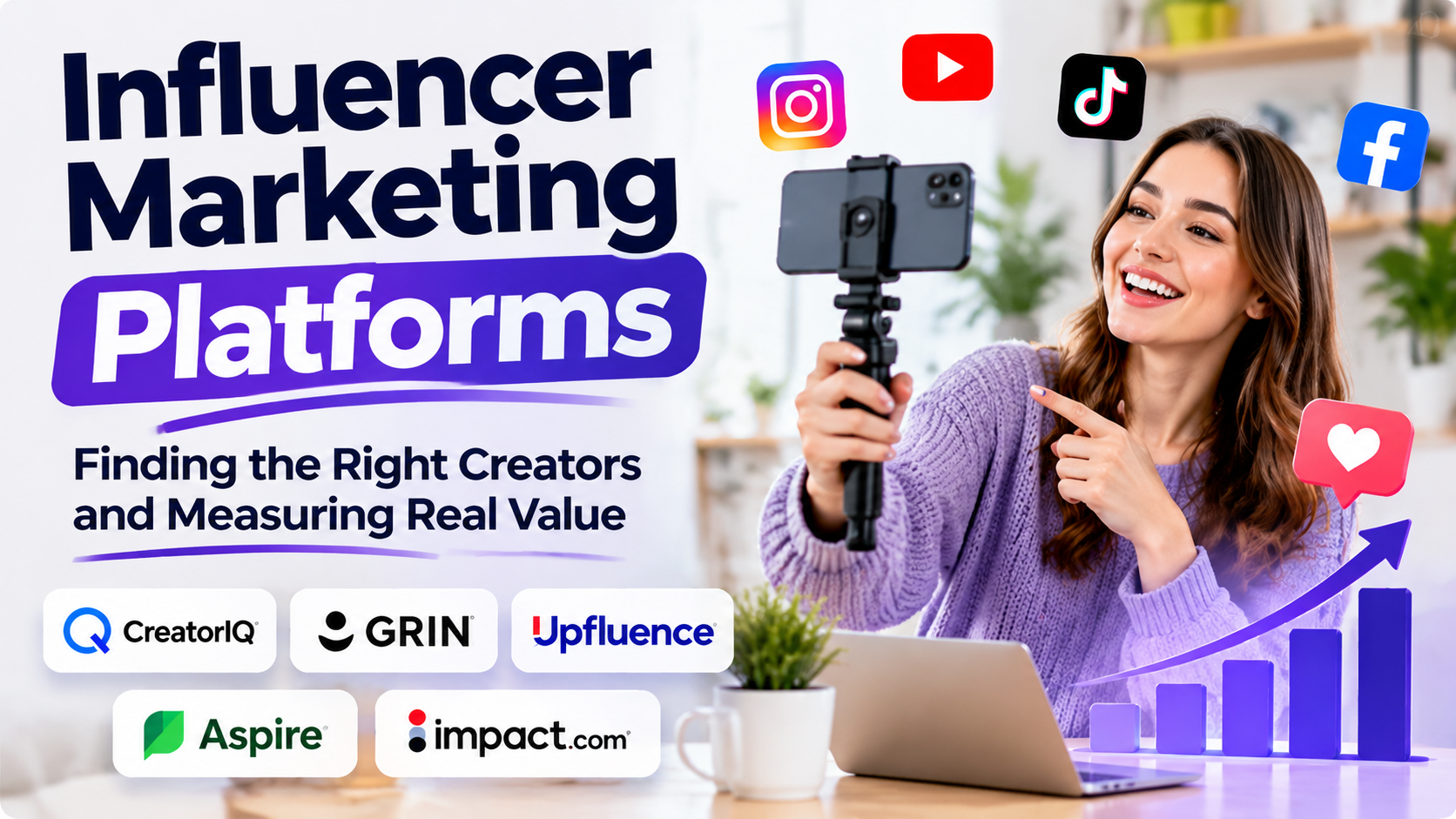
Influencer marketing platforms are software systems that help brands and agencies manage relationships with content creators.
Their capabilities may include creator discovery, audience analysis, outreach, campaign planning, content approvals, affiliate tracking, payment administration, and reporting.
Some products focus on discovery and research. Others emphasize long-term creator relationship management or commerce-driven partnerships.
These differences influence which platform is suitable for a particular business.
Why Creator Selection Is More Complicated Than Follower Counts
A creator’s apparent popularity does not establish audience quality.
Brands should investigate audience interests, geographic distribution, engagement patterns, content consistency, and suitability for the campaign.
For example, a regional fitness equipment company may benefit more from a smaller creator with a highly relevant local audience than from a celebrity account reaching millions of unrelated followers.
The important question is whether the partnership can influence the intended audience in a credible way.
Influencer Marketing Platforms to Consider
CreatorIQ
CreatorIQ provides enterprise-oriented creator marketing capabilities, including creator discovery, campaign management, and measurement workflows.
It is relevant to larger organizations coordinating substantial influencer programs.
Procurement teams should evaluate data access, governance, reporting requirements, and integration needs.
GRIN
GRIN emphasizes creator relationship management and workflows relevant to ecommerce brands.
It may appeal to businesses building ongoing relationships with creators who promote or demonstrate products.
Brands should assess how well its workflows connect to their commerce and customer systems.
Upfluence
Upfluence offers influencer discovery and campaign management capabilities, with an emphasis on connecting creator activity to commercial workflows.
It is worth evaluating for businesses that want to coordinate creator partnerships and ecommerce activity.
Specific integrations and attribution capabilities should be confirmed for the intended deployment.
Aspire
Aspire supports creator discovery, relationship management, and campaign collaboration.
Its approach is relevant to brands seeking structured creator programs rather than isolated sponsorship arrangements.
Evaluation should focus on recruitment workflows, campaign administration, and reporting needs.
impact.com
impact.com provides partnership management capabilities that include creator and affiliate-related workflows.
It can be relevant when influencer partnerships form part of a wider performance partnership strategy.
Organizations should distinguish creator relationship features from affiliate tracking and partnership automation capabilities.
Comparing Platform Approaches
| Platform | General emphasis | Relevant business need |
|---|---|---|
| CreatorIQ | Enterprise creator marketing | Large-scale program governance |
| GRIN | Creator relationships and ecommerce | Product-focused brand partnerships |
| Upfluence | Discovery and campaign workflows | Commerce-linked influencer programs |
| Aspire | Creator collaboration | Long-term brand and creator relationships |
| impact.com | Partnership management | Coordinating creators with performance partnerships |
These distinctions are intended to guide evaluation, not establish product rankings.
The Features That Determine Campaign Quality
Creator discovery
Search filters should help teams identify creators based on relevant audience and content characteristics.
Useful criteria may include location, language, topic, engagement patterns, and audience demographics where appropriately available.
Discovery databases are starting points, not substitutes for reviewing actual content.
Audience credibility
Some platforms offer indicators intended to identify suspicious audience activity.
Such indicators should be interpreted cautiously.
Unusual engagement does not automatically prove fraudulent behavior, and automated credibility assessments may produce false positives.
Campaign workflow management
A campaign involves more than publishing a sponsored post.
Teams need to coordinate briefs, deadlines, deliverables, content reviews, usage rights, and communication.
A platform should make these responsibilities visible without creating unnecessary administrative work.
Content rights and approvals
A creator’s agreement to publish content does not necessarily grant a brand unlimited rights to reuse it.
Contracts should address permitted channels, duration, geographic scope, paid advertising usage, exclusivity, and relevant disclosure requirements.
Software can organize these details, but legal obligations still require appropriate review.
Performance measurement
Reach, impressions, engagement, clicks, conversions, and revenue answer different questions.
A campaign designed to build awareness should not be evaluated exclusively through immediate sales.
Similarly, a direct-response campaign should not be considered successful solely because its content attracted attention.
Measuring Return on Investment
Suppose a retailer spends money on creator fees, product samples, production support, and campaign administration.
The total investment should include all material expenses, not only the creator’s payment.
Revenue attributed through promotional codes or tracking links can provide useful evidence, but attribution is imperfect.
Customers may see creator content and purchase later through another channel.
Businesses should combine direct attribution with other indicators, such as branded search activity, customer surveys, and changes in relevant business outcomes.
A Practical Creator Selection Process
Start by defining the campaign’s intended audience and objective.
Identify creators whose content naturally fits the product category.
Review recent posts for consistency, authenticity, communication style, and audience interaction.
Request appropriate audience information and assess it alongside independently observable content.
Before launching, agree on deliverables, approval responsibilities, disclosure expectations, content rights, and payment terms.
After the campaign, review both performance and the quality of the working relationship.
This process creates a stronger foundation for repeat partnerships.
Common Mistakes Brands Should Avoid
Choosing creators exclusively by follower count can lead to poor audience alignment.
Overly restrictive creative briefs can also weaken results by making sponsored content feel unnatural.
Another mistake is using short-term conversion metrics to judge campaigns intended primarily to increase awareness.
Finally, brands should avoid assuming that platform-generated performance figures represent independently verified business outcomes.
How to Choose an Influencer Marketing Platform
Smaller businesses running occasional campaigns may not need a complex enterprise system.
A structured spreadsheet, direct creator outreach, and basic tracking may initially be sufficient.
As partnerships grow, dedicated software becomes more valuable for managing communications, approvals, contracts, and reporting.
Large organizations should pay particular attention to permissions, regional coordination, procurement processes, and integration with existing marketing systems.
Final Thoughts
Influencer marketing platforms are most useful when they improve the quality and accountability of creator partnerships.
Good software can reduce administrative work and improve visibility, but it cannot replace thoughtful creator selection or authentic audience relationships.
The strongest influencer programs combine relevant creators, clear commercial expectations, creative freedom, and measurement aligned with the campaign’s actual purpose.