Introduction
In an increasingly interconnected world, the boundaries of healthcare are expanding. Medical tourism—the practice of traveling across international borders to receive medical care—has evolved from a niche concept into a mainstream global healthcare strategy. Whether seeking specialized treatments that are unavailable locally, looking for more affordable options, or aiming to bypass long waiting lists, millions of patients are choosing to pursue medical treatment abroad every year.
Global healthcare access is undergoing a significant transformation. With advancements in technology, communication, and international medical standards, patients now have the ability to compare global providers and make informed choices about their health. However, navigating the international healthcare landscape can be complex. Choosing the right medical tourism partner is essential to ensuring a safe, efficient, and supportive journey. At MYMEDICPLUS.COM, our mission is to provide the guidance necessary to make these life-impacting decisions with confidence.
What Is Medical Tourism?
At its core, medical tourism refers to the process of traveling to a different country to receive medical, dental, or surgical care. While it was once associated primarily with elective cosmetic procedures, the scope has grown significantly to include complex surgeries, chronic condition management, and preventive medicine.
Types of Medical Tourism
The industry now covers a broad spectrum of medical needs:
- Surgical Treatments: Orthopedic, cardiac, and bariatric surgeries.
- Dental Care: Complex restorative work, implants, and cosmetic dental procedures.
- Cosmetic Procedures: Reconstructive and aesthetic enhancements.
- Fertility Treatments: In-vitro fertilization (IVF) and reproductive technologies.
- Organ-Related Treatments: Specialized care involving organ transplants or chronic disease management.
- Wellness and Preventive Healthcare: Comprehensive health checkups, screenings, and holistic wellness programs.
Unlike traditional healthcare, which is restricted by geography and local resource availability, healthcare travel provides patients with a global marketplace of doctors and institutions.
Why Do Global Patients Choose Medical Tourism?
Patients seek overseas healthcare solutions for a variety of valid reasons. Understanding these motivations is the first step in planning your own medical travel journey.
- Affordable Treatment Costs: In many cases, high-quality care can be accessed abroad at a fraction of the cost found in a patient’s home country.
- Access to Advanced Medical Technology: Some countries are at the forefront of medical innovation, providing access to state-of-the-art diagnostic equipment and surgical techniques.
- Experienced Specialists: Many medical tourists seek out world-renowned surgeons and specialists who have extensive experience in treating specific conditions.
- Reduced Waiting Times: Elective procedures that require months of waiting at home can often be scheduled promptly through medical travel channels.
- Treatments Unavailable Locally: In certain regions, specific medical treatments or clinical trials may not be offered, making travel a necessity for those seeking care.
- International Healthcare Standards: Many hospitals participating in medical tourism are accredited by international bodies, ensuring that patient safety and care quality remain top priorities.
How Medical Tourism Works: Complete Patient Journey
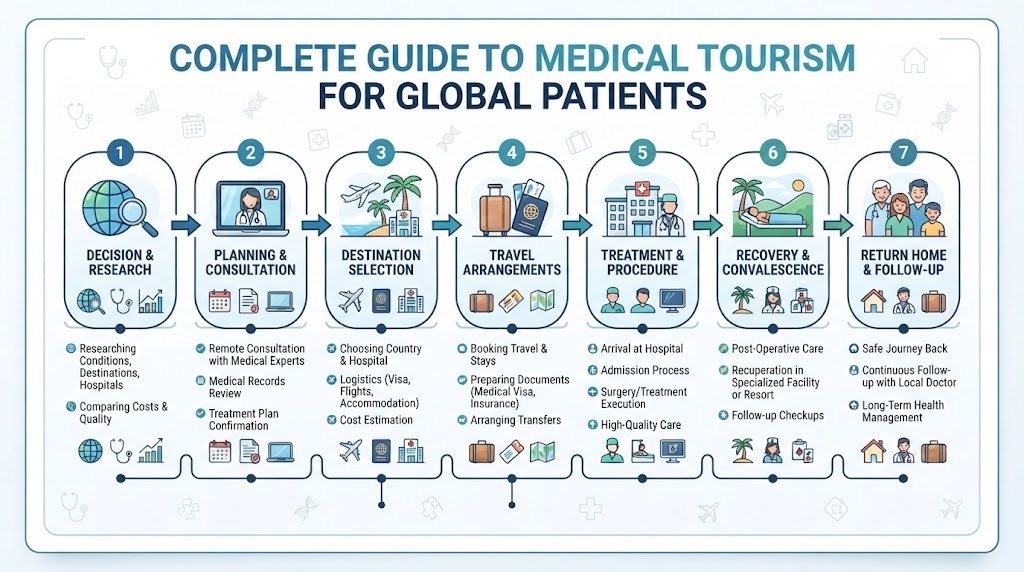
A successful medical travel experience requires structured planning. Here is the standard step-by-step journey for international patient care:
- Finding the Right Healthcare Provider: Researching hospitals and clinics that match your specific medical needs.
- Sharing Medical Records: Providing your history, diagnostic reports, and imaging (X-rays, MRIs) to potential providers for review.
- Medical Consultation and Treatment Planning: Connecting with doctors—often via telemedicine—to discuss the proposed treatment plan, risks, and expected outcomes.
- Cost Estimation: Obtaining a comprehensive breakdown of the treatment package, which should include hospital stay, surgeon fees, medication, and post-operative care.
- Visa and Travel Assistance: Navigating the necessary travel documents and medical visa requirements.
- Hospital Admission: Arrival and formal admission to the medical facility, where you are integrated into their specialized international patient program.
- Treatment and Recovery: Undergoing the procedure and following the personalized recovery plan overseen by the medical team.
- Follow-up Care: Coordinating with local doctors upon returning home to ensure continuity of care and proper long-term recovery.
Popular Medical Treatments Through Medical Tourism
Patients travel for a wide range of needs. The most common procedures include:
- Cardiac Treatments: Bypass surgeries, heart valve repairs, and consultations.
- Cancer Care: Advanced oncology treatments, radiation, and complex surgical oncology.
- Orthopedic Procedures: Joint replacements (hip/knee) and spinal surgeries.
- Dental Treatments: Full mouth reconstructions and implant-supported restorations.
- Fertility Treatments: IVF and related assisted reproductive technologies.
- Cosmetic Surgery: Post-bariatric reconstruction, aesthetic procedures, and more.
- Neurological Treatments: Complex neurosurgical interventions.
- General Health Checkups: Preventive screening packages designed for early detection.
How to Choose the Right Medical Tourism Provider
Evaluating potential hospitals is the most critical step. Look for the following indicators of quality:
- Hospital Accreditation: Check for credentials from recognized international or national accrediting bodies.
- Doctor Qualifications: Verify the board certifications, training, and years of experience of the attending physician.
- Treatment Experience: Does the hospital regularly treat international patients? Do they have experience with your specific diagnosis?
- Patient Reviews: Look for balanced feedback regarding the overall patient experience.
- Transparent Pricing: Ensure the provided quote is comprehensive and clear about what is—and is not—included.
- Support Services: Availability of translators, concierge services, and post-treatment follow-up support.
Benefits of Medical Tourism for International Patients
Medical tourism for global patients is not just about the procedure; it is about the holistic experience. Benefits include:
- Better Healthcare Accessibility: Breaking geographical barriers to get the right treatment.
- Cost Advantages: Potential for significant savings without compromising the quality of clinical outcomes.
- Personalized Patient Support: International departments in hospitals are designed to handle the specific needs of travelers.
- Access to Global Specialists: Connecting with experts who focus on niche or complex medical conditions.
Challenges and Risks of Medical Tourism
While highly beneficial, medical travel involves inherent challenges:
- Quality Verification: Distinguishing between facilities requires diligent research.
- Communication Barriers: Language differences can complicate consultations. Solution: Use professional medical facilitation services.
- Follow-up Challenges: Continuity of care after returning home is vital. Solution: Establish a clear plan with your home physician before departure.
- Legal and Insurance Aspects: Most standard insurance policies do not cover international procedures. Solution: Thoroughly review your policy or consider specialized medical travel insurance.
Medical Tourism Process at MYMEDICPLUS.COM
At MYMEDICPLUS.COM, we streamline the complexities of healthcare travel by providing a structured support system:
- Initial Consultation: We listen to your medical needs and help clarify your options.
- Treatment Assessment: We facilitate the sharing of your medical reports with qualified specialists for professional review.
- Coordination: We bridge the communication between you, the hospital, and the medical team.
- Travel and Support: We provide guidance on the logistics of your medical trip, ensuring you have the information needed for a smooth transition.
- Recovery and Follow-up: We support the planning of your post-treatment recovery and ensure you understand your follow-up requirements.
How Much Does Medical Tourism Cost?
Costs are highly variable and depend on several factors:
- Treatment Complexity: The nature of the procedure and the length of hospital stay required.
- Hospital Selection: Higher-tier hospitals with international accreditation may have different pricing structures than smaller clinics.
- Individual Patient Requirements: Pre-existing conditions or the need for additional diagnostic tests can impact total costs.
- Logistics: Costs for airfare, accommodation, and ground transportation should be factored into your total budget.
Patients are encouraged to request an “all-inclusive” package from their provider, which clearly itemizes all medical costs, ensuring there are no hidden fees.
Medical Tourism Safety Checklist for Global Patients
Before you finalize your plans, ensure you have:
- Verified the hospital’s current accreditation status.
- Reviewed the surgeon’s CV and relevant experience.
- Received a written, detailed treatment plan.
- Organized all medical records and diagnostic images.
- Confirmed a plan for follow-up care in your home country.
- Calculated the total expenses and verified the inclusions in your package.
Preparing for Medical Travel
Before Travel
- Gather all medical documents.
- Secure your passport and obtain the necessary medical visa.
- Have a formal consultation (tele-consult) with the medical team.
During Treatment
- Maintain open communication with your medical team.
- Focus on your recovery and adhere strictly to pre- and post-operative instructions.
After Returning Home
- Keep your local physician informed of the treatment you received.
- Follow up on any prescribed medications or physical therapy.
Future of Medical Tourism
The industry is moving toward a more integrated model. We expect to see:
- Digital Healthcare: More widespread use of remote monitoring and digital health records.
- Telemedicine Support: Enhanced pre-trip and post-trip consultations.
- Personalized Patient Journeys: Using data to tailor care plans more effectively to individual needs.
Why Choose MYMEDICPLUS.COM for Medical Tourism Support
We focus on transparency, patient-centricity, and reliable coordination. Our role is to act as your partner, helping you navigate the complexities of international healthcare so you can focus on what matters most: your health and recovery. We provide the tools and information necessary to make your journey as seamless as possible.
Frequently Asked Questions (FAQ)
1. What is medical tourism? It is the practice of traveling to another country for medical, surgical, or dental treatment.
2. Why do patients travel abroad for treatment? Patients travel for cost savings, access to advanced technology, specialized expertise, and reduced waiting times.
3. Is medical tourism safe? It can be safe when proper research is conducted, accredited hospitals are chosen, and professional coordination is utilized.
4. How do I choose the right hospital abroad? Look for international accreditation, doctor qualifications, clear treatment packages, and patient support services.
5. What treatments are commonly available through medical tourism? Common procedures include cardiac surgery, orthopedics, cancer care, fertility treatments, and dental procedures.
6. How does the medical tourism process work? It involves selecting a provider, sharing records, receiving a treatment plan, planning travel, undergoing treatment, and following up post-recovery.
7. Does medical insurance cover international treatment? Generally, standard insurance does not cover international treatment. You should verify your specific policy.
8. How can MYMEDICPLUS.COM help global patients? We offer coordination, guidance, and assistance in navigating your treatment journey and hospital selection.
9. What documents are required for medical travel? You will need your medical records, diagnostic reports, a valid passport, and the appropriate medical visa for your destination country.
10. How can patients prepare for treatment abroad? Prepare by consulting with your home physician, organizing your medical files, and finalizing your travel and post-treatment recovery plan.
Conclusion
Medical tourism offers a world of possibilities for those seeking quality healthcare. By approaching your medical journey with careful planning, thorough research, and the support of a trusted partner, you can ensure that your experience is both safe and effective. Taking the time to understand your options is the most important step in achieving your health goals.
If you are considering your options for international patient care, MYMEDICPLUS.COM is here to provide the guidance you need. Contact us today to start planning your personalized medical travel journey.