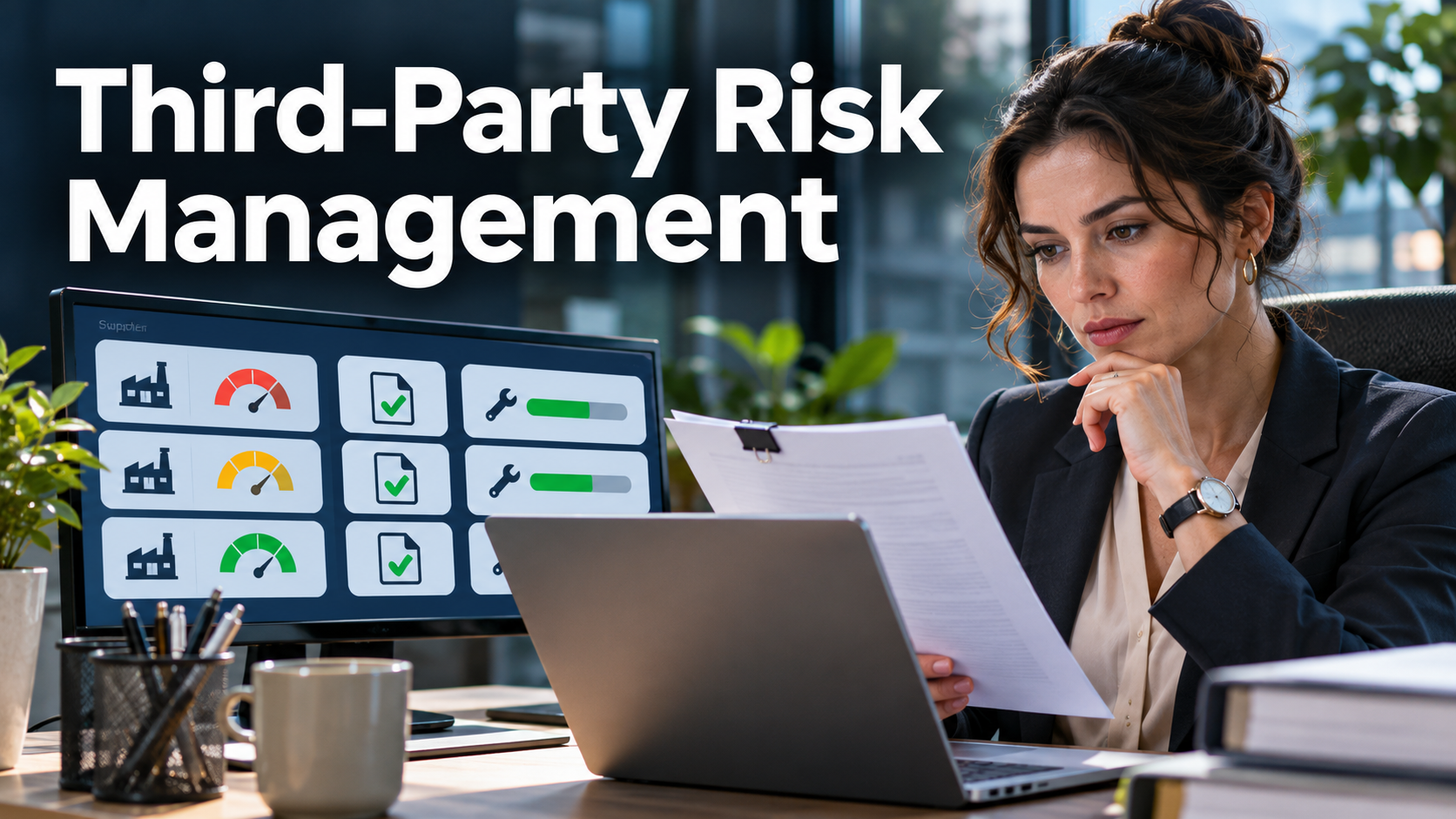
A critical supplier sends a completed questionnaire. Most answers look satisfactory, but the supporting evidence covers a different product from the one your organization uses. The business owner wants to finish the purchase. Security needs to understand the gap. Procurement needs a decision it can document and communicate.
Third-party risk management tools organize the work of identifying suppliers, assessing exposure, reviewing evidence, and following up on findings. Their value depends on how well they help people make and revisit decisions. A completed questionnaire is one input. A dependable program also knows which service was reviewed, who accepted any remaining risk, and what change would bring the decision back for review.
Model the relationship at the service level
Start with a vendor inventory and identify the services each organization supplies. One supplier might provide both an office scheduling tool and a business-critical application. Those relationships can involve different data, dependencies, and operational consequences. An assessment attached only to the vendor name can hide which service it covers.
Capture a business owner for each important relationship. Record what the service does, which processes depend on it, and where the organization can find the contract and technical inventory. An application owner may know how the service is used, while procurement may know the contracting entity and renewal date. Bring those facts together without asking every team to maintain a separate copy.
NIST’s cybersecurity supply chain risk management guidance describes how organizations can integrate supply chain risk work into broader risk management. Use it to frame the operating model and tailor assessments to the organization’s dependencies and consequences. A platform can support that work by connecting decisions with the records and people responsible for them.
Tier relationships before selecting questionnaires
Inherent risk describes exposure before considering controls. A service that handles sensitive information or supports a critical operation may warrant more attention than one with limited access and an easy replacement. Record the reason for the tier, especially if an override changes the assessment required.
Use intake questions that can influence the path. What information will the supplier handle? How long could the process operate without it? Does the provider depend on a subcontractor for an important part of the service? A reviewer can then request evidence appropriate to those answers. Review every question that adds work for the supplier but rarely affects an internal decision.
Make tiering revisable. A team may expand a pilot into a production dependency or introduce a new integration. An old assessment can remain valid for its original scope while the expanded use requires separate review. Check that the platform can preserve the earlier decision and show the reason for reassessment.
Treat evidence as something with boundaries
An assurance report or control description has a scope. It may identify a service, period, region, or set of activities. An assessment tool should help a reviewer record those boundaries and flag gaps. When a supplier offers a new artifact, ask whether the system can link it to several relevant assessments while preserving each reviewer’s conclusion.
Review evidence as a role with limited access. Supplier materials may contain sensitive information that belongs with a small review group. A business owner may need the decision and required actions without access to every attachment. Verify what users can see in searches, exports, and notification previews, as well as the main assessment screen.
Separate missing evidence from an observed control weakness. If a supplier has yet to provide a requested document, the next action may be a request with a deadline. If the evidence shows a material problem, the next action might require remediation, an approved exception, or a change in scope. Those outcomes deserve different statuses and owners.
Show what happens after a finding
Use a realistic pilot finding, such as recovery evidence that does not cover the service your organization depends on. Have the reviewer create a finding, give the supplier a response deadline, and assign an internal owner. Then simulate a supplier response that addresses only part of the concern. The workflow should show who can judge the evidence and what remains open.
| Finding outcome | What the system should retain |
|---|---|
| Remediation required | Owner, due date, requested evidence, and closure decision |
| Time-limited exception | Approver, rationale, conditions, and expiry |
| Service scope reduced | Updated usage, affected processes, and any residual concern |
| Relationship ended | Exit status, transition tasks, and required records |
Test approval boundaries. The person recording the finding might have authority to close a low-impact item after reviewing evidence. A critical exception may require a business leader or risk committee. Ask how the system handles delegated approval, expired exceptions, and rejected requests. A dashboard should make overdue actions distinguishable from findings the organization knowingly accepted.
Treat monitoring signals as a review queue
External monitoring feeds can identify changes worth investigating. Their usefulness depends on how well the signals map to the service under review and whether the team has capacity to respond. A company-level signal may need an analyst to determine which service, domain, or subsidiary it concerns. Require enough context for that analyst to make a defensible decision.
Combine recurring reviews with meaningful change triggers. Examples include a significant service change, a contract renewal, an incident notice, or a change in the data the provider receives. Decide which events can come from existing systems and which require a business owner to report them. Test how duplicate notifications consolidate and how urgent items reach the right person.
A broader governance suite may suit a program that needs common risk taxonomies and reporting across several domains. A specialist may make more sense if supplier assessments and evidence management consume most of the team’s time. Include configuration, evidence migration, and ongoing review staffing in the comparison.
Bring a supplier with several services, incomplete evidence, and an upcoming renewal into the pilot. The platform should help the team reach a decision on the relevant service, assign the remaining work, and make it easy to see when that decision needs revisiting.