Introduction
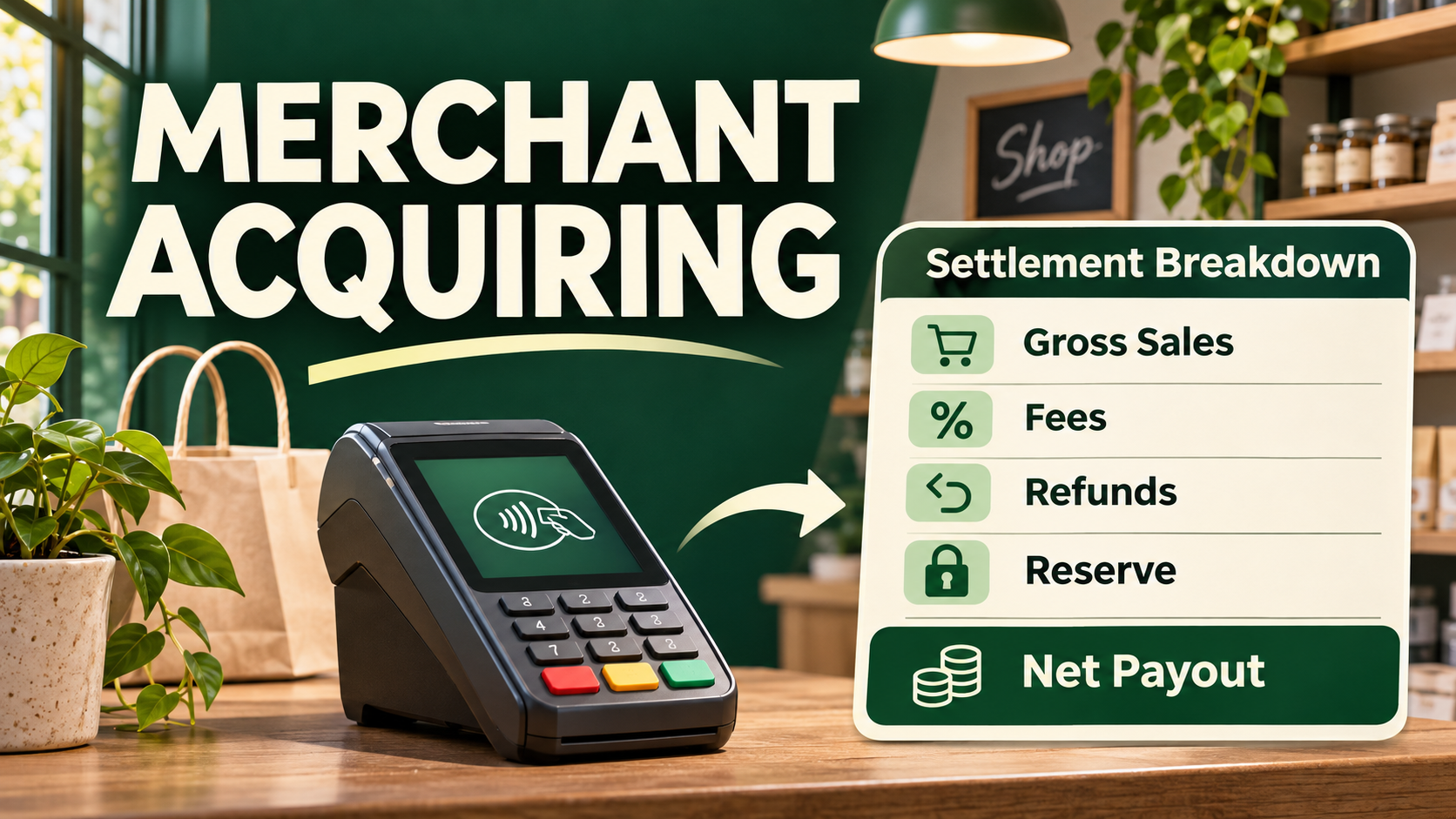
A merchant accepts card payments all week, but the bank deposit is smaller than its sales report. The difference could include processing charges, refunds, a reserve movement, or transactions that settled in a different batch. A merchant acquiring platform should make that explanation easy to reconstruct. Its value extends beyond the ability to accept a card at checkout.
Acquiring arrangements connect merchants to card acceptance and settlement. A gateway provides a technical interface for sending transactions, while acquiring involves the merchant relationship and the terms governing acceptance and funding. The same provider can bundle both. Buyers should identify the legal and operational parties before comparing dashboards, rates, and onboarding promises.
Start with who signs the merchant agreement
A merchant can contract directly with an acquirer or participate through a payment facilitator or another arrangement. A platform serving software providers may help onboard and manage submerchants under a defined model. Visa’s description of payment facilitation illustrates how a facilitator can distribute settlement proceeds on behalf of an acquirer within such a relationship. The applicable contract and network arrangements determine the responsibilities in a particular setup. Visa’s payment facilitator model
Ask which party underwrites the merchant, holds any reserve, handles disputes, and answers funding inquiries. Establish who can suspend acceptance or delay settlement and how the merchant is informed. These questions matter for both a retailer choosing a provider and a software business embedding payments for other merchants.
For a platform serving many merchants, identify who owns the relationship if the platform changes acquiring partners. Ask which agreements and records are portable and whether merchants must be re-onboarded. The operational cost of switching can become significant even when the payment API is easy to replace.
Test onboarding with the businesses you actually serve
Onboarding may involve business information, ownership details, bank account verification, and an assessment of the products and sales channels. A straightforward merchant can often move through a standard workflow. More complex cases may require manual review, additional documents, or a different acquiring arrangement.
Use a representative set of merchant profiles. Include a business with several outlets, a merchant with seasonal volumes, and an applicant whose legal name differs from the trading name. Ask who handles review and how the platform tracks outstanding evidence. Test a request to change the payout account after onboarding. Review the authority required, the identity checks, and the record the platform retains.
Confirm what happens after approval. Merchants may need terminals, credentials, configuration for online channels, and access to reporting. A platform can approve a merchant quickly while leaving it waiting for the equipment or account setup needed to accept payments. Measure the time to the first correctly settled transaction as well as the time to approval.
Read the funding terms as a cash-flow document
Settlement timing can depend on batch cutoffs, business days, currencies, and contractual controls. Funds may be subject to reserves or other adjustments. Ask the provider to explain the path from a captured transaction to a bank deposit using the arrangement under consideration. Have finance review the terms alongside the example reports.
Compare funding across expected merchant scenarios. A service business taking deposits well before delivery can create a different exposure from a retailer that hands over goods at the time of payment. Ask how the provider evaluates changing exposure and how it communicates reserve decisions. Review the basis for holding funds, release conditions, and the reports available to reconcile reserve balances.
In a sample settlement, include a refund, a dispute debit, a fee, and a delayed item. Ask the team to match each entry to the original transaction and to the net deposit. Check whether the platform can show which outlet, merchant account, or channel generated each item. A group of stores may need both consolidated reporting and a way to trace an individual location.
Compare pricing with the same merchant profile
Visa notes that the merchant discount is negotiated with the acquirer and may include processing services. Pricing arrangements can bundle charges or present components separately. Compare offers against the merchant’s expected channel mix, transaction sizes, card and currency mix, and dispute volume. Visa guidance on choosing an acquirer
Include terminal charges, gateway fees, minimums, currency conversion, and fees related to disputes or other services when applicable. Estimate the cash impact of reserves separately from service fees. A charge that reduces margin and a hold that changes working capital have different business effects.
Ask for invoices and settlement reports corresponding to the same hypothetical month. Confirm which fees are deducted from deposits and which are billed separately. For a software company serving many merchants, test how the platform reports its fees and the amounts allocated to merchants. Require enough detail for each party to explain the totals it sees.
Evaluate the service during a difficult week
Take a merchant whose volume rises sharply, receives several disputes, and requests an account change. Ask how monitoring identifies the change, how a human reviews it, and how the platform communicates decisions. Check what employees and merchant users can see. Sensitive evidence needs access controls, while merchants need enough information to understand actions that affect their funds.
Review incident ownership between the acquiring provider, gateway, terminal supplier, and software platform. A merchant should know who can answer whether a transaction was approved and who can explain a missing payout. Inspect escalation paths and availability for periods when merchant volume is highest.
Finish the evaluation by following a merchant from application through first settlement and then into an exception involving a refund or reserve. Compare the reports, responsibilities, and timing that the contract actually offers. An acquiring platform is a good fit when the merchant can accept the payments it needs and account for the money from transaction to deposit.