Introduction
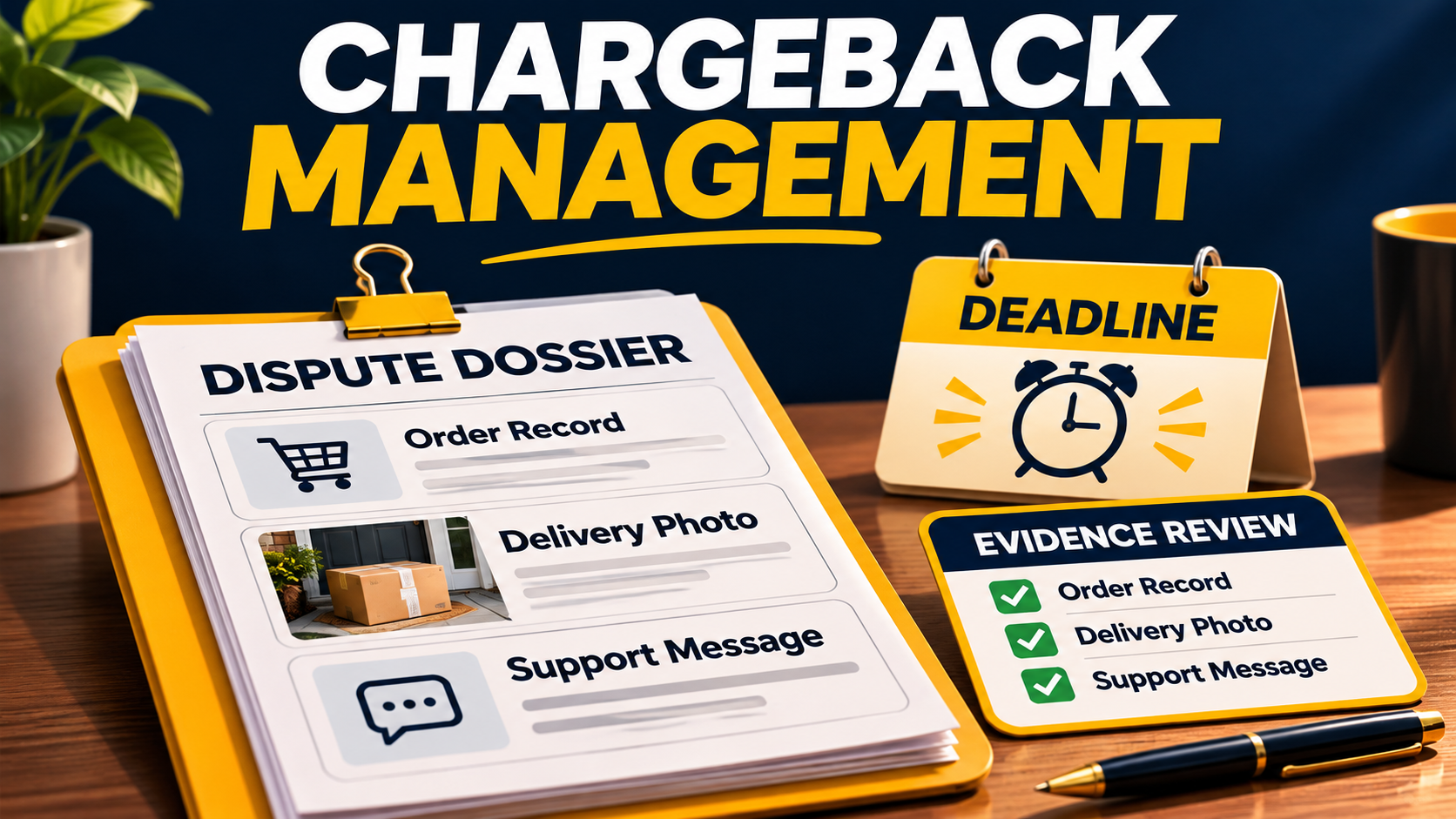
A retailer receives a dispute claiming an order never arrived. The order system shows that it shipped, a carrier has a delivery photo, and support has a message from the customer asking for a replacement. The team has evidence, but it is scattered across several systems and may point to more than one explanation. A chargeback management tool should help the analyst assemble a factual account before the response deadline.
Chargeback management tools gather disputes, link them to transactions, collect evidence, and support decisions about accepting or contesting a case. Some provide alerting, processor integrations, reporting, or managed services. The buying question is which parts of the workflow create preventable losses and whether the proposed tool can address them using evidence the merchant actually has.
Start with the source of the dispute
A dispute record usually comes through the processor or acquiring relationship. It can include a transaction reference, an amount, a reason, a status, and a deadline. The platform should preserve the source details while giving staff a consistent work queue. A normalized reason label can help with reporting, but analysts need enough specificity to determine what the case requires.
Test a merchant that has several processors or accounts. Send cases for the same order from different feeds and inspect how the system identifies duplicates or related cases. One order may have several payments, partial captures, or refunds. Matching only on amount and date can join the wrong records. Ask which stable identifiers the tool uses and how a reviewer can correct an uncertain match.
Check the time between a dispute arriving and appearing in the queue. Determine how the system represents the processor’s deadline and which time zone applies. A reminder is useful when it reflects a reliable source and an owner is assigned. Ask how the tool detects a connection failure that prevents new cases from arriving.
Map evidence to the allegation
Evidence requirements depend on the network, reason, and case details. Visa’s merchant guidelines illustrate how appropriate evidence changes with the transaction and dispute category. Build templates around the evidence relevant to the claim and verify the requirements through the merchant’s provider. Visa dispute management guidelines
For a delivery dispute, carrier status, destination details, and the order timeline may matter. For a recurring payment, the merchant may need the agreement, a record of the customer’s action, and any relevant cancellation communications. An analyst should be able to see the source of each item and exclude material that does not support the case.
Test a packet with contradictory evidence. A tracking page might show delivery while the service team has already accepted a return or promised a refund. The tool should bring those records to the reviewer’s attention. Ask how it handles missing files and how it prevents a template from making unsupported statements. Automation can assemble a draft, while a review control is valuable when the facts are incomplete or inconsistent.
Decide when it is worth contesting
The amount at stake, evidence quality, staff time, fees, and customer relationship can all affect the decision. A low-value case with weak evidence may deserve a different response from a high-value case with a complete record. Define who can accept or contest cases and which ones require escalation.
A merchant with predictable products and strong order records can use rules to prioritize cases. A business with bespoke services may need more manual judgment because the evidence differs on every transaction. Test automation against those patterns. A tool should let the merchant see what was submitted, by whom or by which rule, and what acknowledgment the processor returned.
Review fee arrangements for managed services. A percentage of recovered revenue, a charge per case, or a subscription creates different incentives and cost patterns. Ask how a vendor defines recovered revenue and how later reversals or reopened cases are treated. Include dispute acceptance and prevention work in the comparison, especially if they account for a substantial share of the team’s time.
Reconcile the response to the financial outcome
A case can move through submission, review, and further stages depending on the provider and network. The platform should track the final financial result and link it to any credits, debits, and fees. The merchant needs a record suitable for finance, even when a processor update arrives after the operational team considers the case closed.
Run a test case with an existing partial refund. Compare the dispute amount, the refund amount, and the net funds movement. Ask how the system prevents the case record from obscuring what the merchant already paid back. Review what happens if a processor rejects a submission or an attachment fails. A status that says submitted should be backed by the best available confirmation from the receiving service.
Define retention for the evidence and limit access to staff who need it. Order data can contain personal information, and some evidence is irrelevant to the dispute. The platform should let the merchant assemble a packet that is both sufficient and appropriately scoped, then retrieve the record later if required.
Use dispute data to fix the source of repeat cases
A dispute program can reveal unclear billing descriptors, slow refunds, delayed shipping, or hard-to-use cancellation flows. Track patterns by product, fulfillment method, processor, and reason where those dimensions are meaningful. Compare counts with the underlying transaction volumes. A growing product may generate more disputes even when the rate is stable.
Use caution when comparing win rates. A tool that contests only cases with strong evidence may show a higher rate while recovering less in total. Review eligible cases, contested cases, net recovery, time spent, and the number of preventable disputes together. Those measures give a clearer view of where the program is helping.
Ask each vendor to process a test case with a tight deadline, incomplete evidence, and a prior customer service interaction. Follow the case to financial reconciliation. The right tool gives analysts a clearer account of what happened and gives the business enough detail to reduce the chance of the same dispute appearing again.