Introduction
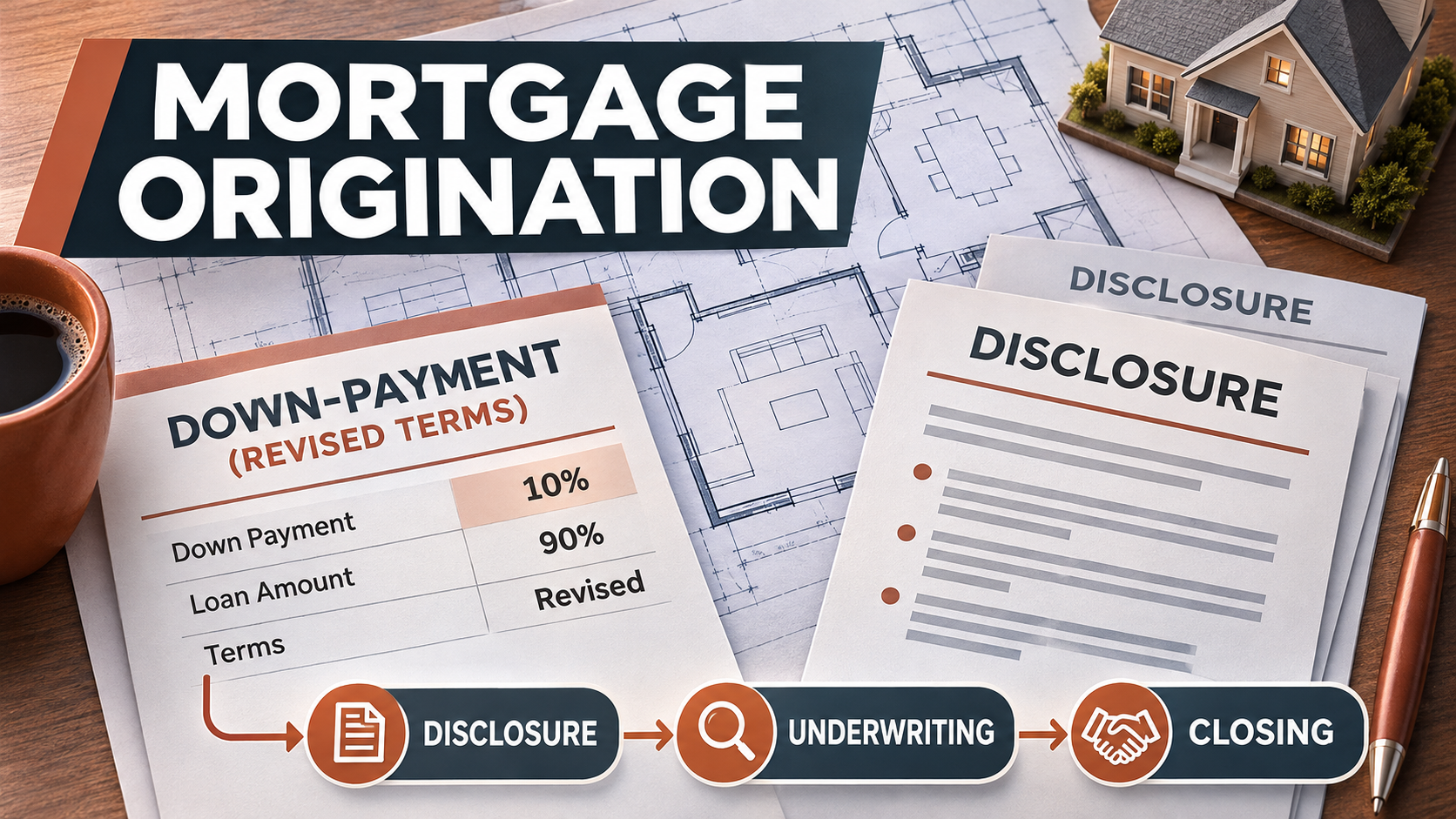
A borrower changes the down payment after underwriting has started. The purchase price remains the same, but the loan amount, pricing, cash needed at closing, and underwriting calculations may all change. Several teams have already used the old figures. A mortgage loan origination system earns its place by showing who needs to act, which records need updating, and what the lender previously sent to the borrower.
Mortgage loan origination systems, often called mortgage LOS platforms, coordinate the work from intake through closing and funding. Their scope varies. A platform might include the borrower portal, pricing tools, document services, and closing workflow. Another may serve as the system of record and connect to specialists for those functions. The right comparison follows a mortgage file through the lender’s actual process and checks whether people can recover when the file takes an unexpected turn.
Work backward from the closing package
Start the evaluation by listing the data and documents needed to fund and deliver a loan. Include signed closing documents, borrower and property identifiers, final terms, fees, conditions, and any additional information required by downstream partners. Then trace each item back to its source and identify the stage at which it becomes authoritative.
A property address may enter through a borrower form, receive a correction during processing, and appear in documents produced by an external provider. A system should show which version it used for each action. Replacing the address everywhere without a history may make a current screen tidy, while leaving the lender unable to explain an older document. Keeping every copy visible with equal authority can create the opposite problem. Staff need a current value and a reliable record of prior values.
Ask a closer to review the test file using the permissions and views they would have in production. They should be able to distinguish an open underwriting condition from a document that arrived but awaits review. They should also be able to see whether a revised document supersedes one that a borrower has already signed. This is where workflow design has a direct effect on accuracy under deadline pressure.
Define the boundary between the portal and the LOS
A borrower-facing point of sale generally collects application information, supports uploads, and displays progress. The LOS manages the authoritative workflow, routing, and records behind the transaction. The same vendor can provide both. The operational question is how data moves between them and what happens when the customer and a loan officer edit the same field.
Have a borrower start online, switch devices, and then finish with a loan officer. Observe whether the system creates a duplicate application or preserves a single file with the right history. Next, have the borrower upload a replacement document while an employee reviews the original. Check which copy the employee sees and whether the review task changes. Evaluate the language the portal uses when it has received a document but the lender still needs to verify it.
Where brokers or other partners submit loans, test their access separately. They may need visibility into conditions without access to internal commentary or unrelated customer records. A good demonstration makes those distinctions visible through actual role permissions.
Test disclosure events alongside changed data
Disclosure obligations depend on jurisdiction and product. In the United States, the Consumer Financial Protection Bureau explains the Loan Estimate and the information a lender needs to provide it for covered mortgages. A lender evaluating software should translate its applicable obligations into explicit events, delivery records, and tests for its own products. CFPB guide to the Loan Estimate
Test a file that starts incomplete and later crosses the lender’s disclosure trigger. Confirm the platform records the relevant input, the timestamp, the template version, and the delivery result. If delivery fails, the file should create a visible task and retain enough detail for an employee to take the appropriate next step. A document timestamp alone does not tell the team whether the delivery service accepted the package or whether the borrower received it.
Then introduce a change after initial disclosures. Have the system show the staff member the original facts, the revised facts, and the workflow the lender configured. Check which actions require judgment and who can approve them. Automated rules can schedule work and enforce permissions, while the institution remains responsible for how those rules apply.
Make the underwriting queue reflect actual work
Underwriting conditions need an owner, a description, a clear status, and a relationship to the relevant loan or document. A processor should see which conditions block the next milestone and what evidence is needed. An underwriter should see what changed since the previous review and which conditions were satisfied under an older set of facts.
Take an example where an income document is accepted and a later submission contains different figures. A mature workflow can reopen affected checks and leave unrelated approvals in place when policy permits. Ask whether the system can identify the dependent calculations or whether staff must remember to rerun them. Also inspect how it handles an exception approved by a supervisor. The file should retain the original condition, the decision, and its scope.
Measure more than total application-to-close time. A simple file may pass through every system quickly. Track the age of unresolved conditions, how often files return to processing, and whether a delay comes from a borrower, an external provider, or the lender’s own queue. Those measurements help an operations team improve the process after implementation.
Rehearse funding and the servicing handoff
The closing package, the funding instruction, and the servicing record can each travel through different interfaces. Confirm that the loan amount, interest terms, payment dates, and applicable escrow information agree. Follow a sample through the receiving system and ask the servicing team to check what it actually received. A green export indicator only proves the sender performed its part of the exchange.
Test a rejected boarding record. Decide whether the LOS keeps the file open, routes the error to an owner, and supports correction without producing a second loan. Include downstream reconciliation and a review of outstanding transfers. For migrations, clarify what happens to loans already in progress, especially files with disclosures issued or closings scheduled. Moving an active pipeline can require retaining old documents, milestone history, and permissions in both systems for a transition period.
Ask who can maintain the workflow after launch
A bundled LOS can reduce the number of contracts and connectors, particularly when its built-in services fit the lender’s products. A more modular setup can preserve existing services or let the lender change one provider at a time. Its integration work includes mapping, version updates, monitoring, and deciding who owns failures between systems.
For both approaches, ask a qualified administrator to change a test rule and publish it through the proposed release process. Observe the review, approval, rollback, and treatment of applications already underway. Compare those requirements with the lender’s staffing and support model. Include document generation, external data calls, and test environments when comparing costs.
A meaningful final demonstration uses a file that changes after disclosure, a file that returns from underwriting, and a loan that encounters a boarding error. Give the people who process those files the controls. Their ability to establish what happened and move the loan forward will reveal more about the LOS than a polished walkthrough of an uncomplicated application.