Introduction
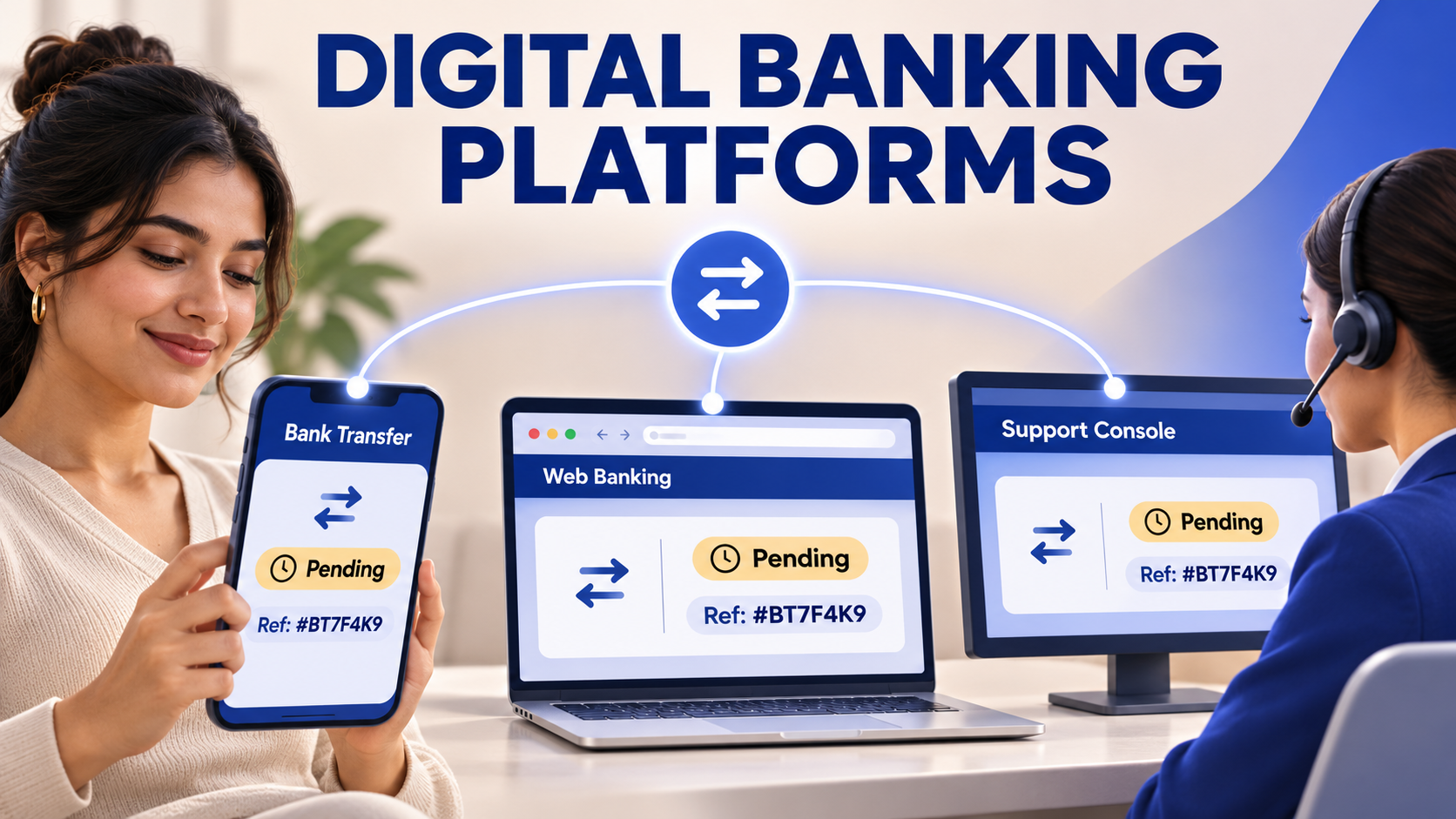
A customer begins a transfer on a phone, loses connectivity, and later checks the web app to see whether the money moved. The transfer is pending in one channel, missing in another, and unclear to the employee answering the customer’s call. All three screens can be attractive. The customer still needs one coherent account of what happened.
Digital banking platforms provide the channels and workflows customers use to access banking services. They may include mobile and web banking, onboarding, card controls, payments, messaging, and support tools. Behind those experiences sit systems for identity, accounts, transaction processing, and other functions. The best evaluation follows customers across those boundaries, especially when an action is unfinished or one service is unavailable.
Follow journeys that cross more than one channel
Select a few journeys with clear business consequences. A customer may open an account, make a first deposit, replace a card, or report an unfamiliar transaction. A business customer may create a payment that a second employee must approve. Map who acts, what information they need, and which system owns the resulting state.
Run the onboarding journey on a phone, then switch to a desktop. Ask a staff member to resume the case in an assisted channel. The system should show what the customer has completed and what remains outstanding, subject to the employee’s access. Check how the platform handles an expired document link or a failed verification request. A journey that resumes cleanly can save customers from repeated submissions and give staff a clearer path to resolution.
For a money movement journey, distinguish the customer’s instruction from execution and settlement. Use language that reflects the underlying status and shows what the customer can do next. Test how notifications behave when the status changes. A message sent from a stale cache can undo the clarity of a well-designed transaction screen.
Examine the integration behind the screen
An API-first channel can make it easier to connect to several systems, but its usefulness depends on the quality of the interfaces and the data they expose. Ask whether balance, transaction, and card status are read live or retrieved from a cached view. Identify what time the information represents. If an external service is unavailable, see whether the platform can display a safe read-only view or explain that particular information is temporarily unavailable.
A simple integration contract should specify identifiers, state transitions, and who owns each write. Duplicate actions matter when the customer retries after a timeout. The digital channel needs a stable reference for the instruction and a method of retrieving its status. Test the same scenario through both web and mobile and show how support can correlate the requests.
Open banking integrations introduce another boundary. For example, Monzo publishes a separate reference for its UK Open Banking API. A buyer should verify the standards and obligations relevant to its market, along with how consent, revocation, and support operate across the parties involved. Monzo UK Open Banking API reference
Put account recovery and accessibility in the demo
Account recovery brings together customer experience, identity verification, and fraud controls. A customer who loses a device may need a different path from someone who simply forgot a password. The platform should support step-up checks where the institution’s policy calls for them and provide a safe route when self-service recovery is unavailable.
Test what an employee can do on the customer’s behalf. Require evidence for sensitive actions and ask how overrides are approved and reviewed. A support console should expose the context an employee needs while limiting access to information unrelated to the case. Check how a customer is informed after a device change or sensitive action, including when the original channel is unavailable.
Run important journeys with a keyboard and a screen reader and test the layouts at higher text sizes. Check that errors are announced, that fields have usable labels, and that a customer can recover from a timeout. Include external components such as identity verification and payment authorization. The customer experiences the entire journey even when multiple providers supply it.
Decide how much of the channel to own
A packaged platform can provide common banking journeys and a consistent set of administrative tools. It can fit an institution that wants to standardize channels and has limited capacity to maintain separate applications. Evaluate where the package permits changes to wording, navigation, and workflows. Confirm which changes require a vendor release and how accessibility is verified after customization.
A headless or composable platform offers services that an institution can use in its own interface. That can support differentiated customer experiences or more control over release timing. The institution also takes responsibility for more design, engineering, testing, and operational support. Clarify what happens when a mobile release and a platform API upgrade occur on different schedules.
A hybrid approach may preserve a packaged feature where it works and replace a particular journey that matters commercially. The cost appears at the seams. Identity, analytics, support context, and status updates need to behave consistently across the interface. Ask the vendor to demonstrate a cross-component journey before accepting a modular roadmap.
Measure whether customers can finish
Login counts and active users can indicate adoption. They do not explain why an account opening stalls or why customers call after a transfer. Choose measures connected to completed journeys, such as time to first funded account, completion of a recovery flow, and the proportion of payment inquiries that require escalation. Review by channel and device where meaningful so an aggregate figure does not conceal a recurring accessibility or compatibility problem.
Define operational measures as well. Set expectations for how quickly the team identifies a failed dependency, what it tells customers, and how it clears delayed work. Have the vendor explain the support relationship during an incident that spans the channel and the core. Establish who can publish a service notice and what evidence remains for review.
At the final demonstration, ask a customer to lose a connection during a payment, switch devices, and contact support. Add one accessibility test and one business approval flow. Compare how well each platform communicates the state of the work and how much effort the institution will need to keep that behavior consistent. Those journeys offer a direct view of how the platform will serve customers when they need it most.