Introduction
A distribution site shuts down after a power failure. Facilities tracks restoration, logistics redirects shipments, and communications drafts a customer update. By evening, three teams have different estimates for when the site will reopen. The incoming response lead has a chat transcript, several spreadsheets, and a decision to make before the next dispatch window.
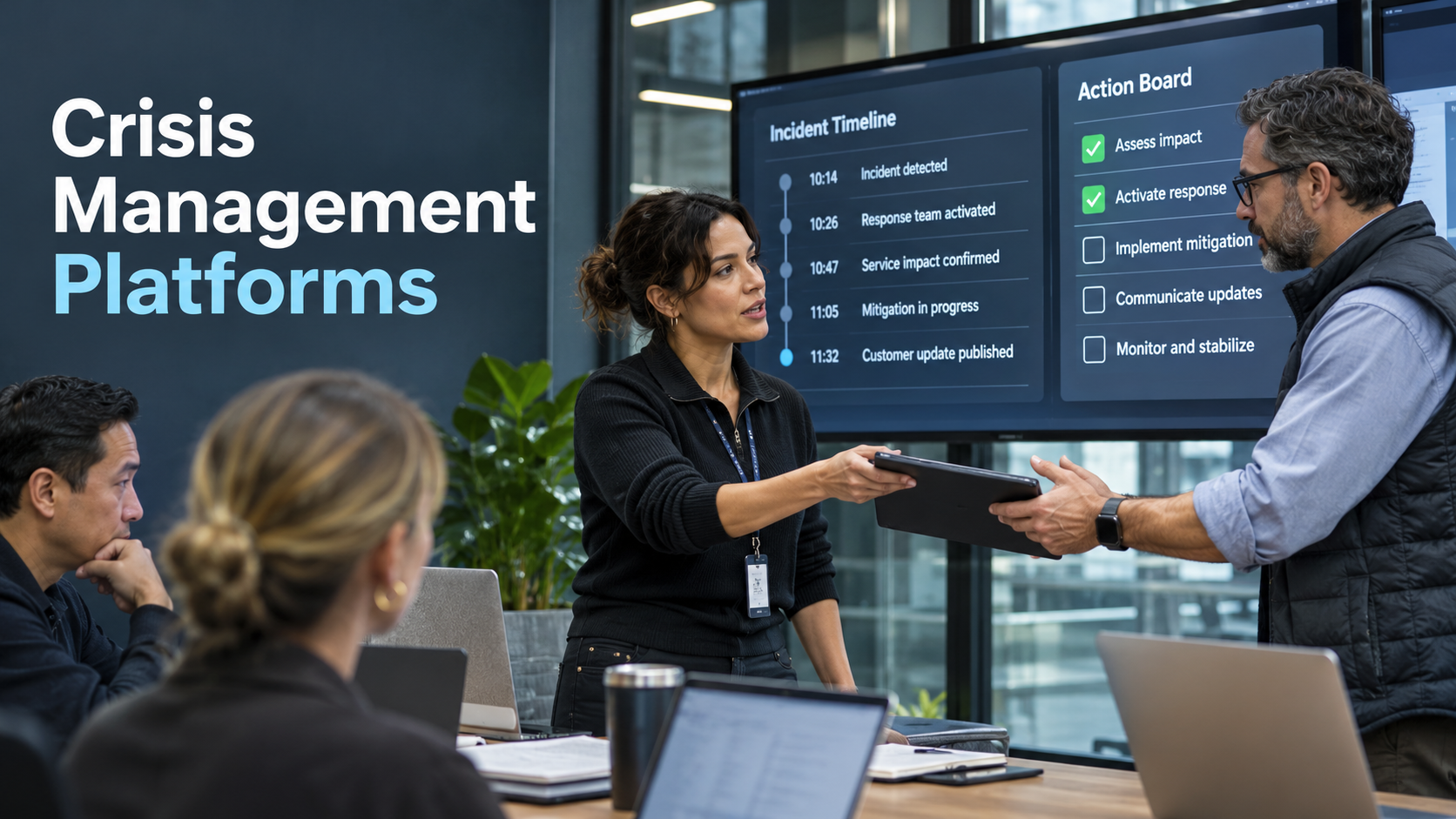
Crisis management platforms give response teams a shared place to organize the event, assign work, and record decisions. Their value shows up when information changes or new people take over. A team should be able to see what it knows, what it assumes, what it has committed to, and which decisions remain open.
Activate an incident under ordinary conditions
Start a demonstration with the alert the duty team would actually receive. Give the operator enough information to recognize the issue but leave the scope uncertain. Ask how they open an incident, assign roles, and set the first review time. See whether early actions are easy to record before a full team has assembled.
The person starting the record may not be the person who leads the response. Test how the platform transfers responsibility and whether it preserves who acted before formal activation. Include an unavailable team lead and a person who is new to the role. A good workflow guides the operator through the required steps without making them hunt through a large plan.
Templates are useful when they help teams establish a working rhythm. Ask how staff adapt a template when an event spans several sites or affects a service the template did not anticipate. If a team duplicates a crisis workspace for each location, decide where shared decisions belong and how regional updates roll into a common view.
Keep facts, estimates, and decisions readable
A status board should show when information arrived, where it came from, and who owns the next update. A restoration estimate from a utility should be visible as an estimate. A decision to redirect deliveries should have a responsible person and an effective time. If new information changes that decision, the team needs to see both the revision and its consequences.
In the distribution example, facilities may report that technicians expect power back before midnight. Logistics may still redirect morning shipments because refrigeration and inventory checks need additional time. Communications should be able to see what it can tell customers and why that message differs from the utility’s estimate. A shared status board earns its keep by preserving those distinctions.
Ask the vendor to enter a correction while several people are editing the event. Can someone mark an earlier update as superseded without deleting it? Does the current summary show the latest information? Are the earlier estimate and its source still available to the team conducting the review? Look at the exported incident record as well as the live view.
Give the incoming lead a usable handover
A handover should describe current objectives, critical risks, open decisions, assigned work, and the next planned update. It also needs a way to call attention to information that has become stale. If a supplier promised a response two hours ago, the new lead needs to see that the team is still waiting.
Give one group a timed exercise and let a second group take over without a verbal briefing. Ask the second group to explain the situation, identify the decisions it must make next, and find the evidence behind those decisions. Use the questions it asks to identify gaps in the workspace. A long activity log can preserve history while still leaving the incoming team without a clear picture.
FEMA’s incident action planning materials show how an incident management process can organize objectives and activities for an operational period. A private organization can use a similar planning rhythm where it fits its response model. The software should support the roles and decisions the organization actually uses.
Connect communications to decisions
The people drafting customer, employee, or partner updates need a clear source for approved information. A crisis platform can record approval and show which message version went out. The sending function may sit in another system. What matters during the exercise is whether the team can connect the communication to the decision and retrieve it later.
Test an update whose facts change after approval. Have the reviewer withdraw or replace the draft, then show what happens in the notification tool and in the crisis log. Ask who can issue a correction and whether the system links the correction to the earlier message. If the response team relies on chat to track approvals, find out how an incoming lead distinguishes a suggestion from an authorized instruction.
Permissions may vary across audiences. An operations team may share restoration estimates widely while restricting personal details or commercially sensitive information. Test guest access for a supplier or outside adviser. Check that the person sees what they need without gaining access to other events, attachments, or historical cases.
Plan for a response when normal systems are unavailable
Run a scenario where the office network or primary identity service is down. Identify how authorized responders access the workspace and where they obtain contact details or approved procedures. If the team records work outside the platform during the interruption, demonstrate how it reconciles those records after access returns.
This is also a useful test of vendor support. Ask who answers an urgent service request, what information responders can get about a partial outage, and how the organization can retrieve an event record if normal access remains unavailable. Include device changes and account recovery for staff joining the response from another location.
A smaller organization may find that a well-managed shared workspace, communications process, and duty roster cover its needs. Dedicated software becomes easier to justify when events regularly involve several teams, role changes, external communications, or overlapping incidents. Price the actual operating model, including exercises and administration, alongside licenses.
Turn the review into an assigned change
Once the event ends, ask the platform to export a timeline of decisions, actions, and communications. The review team needs enough context to understand why a decision seemed reasonable at the time. An event record that lists every message but omits the source of an important estimate can make the review harder.
Give follow-up actions owners and review dates. Link each change to the part of the response it addresses. If the team revises the handover template, test it in a later exercise and record the result. The purpose of keeping the incident record is to give the organization a way to improve how people coordinate during the next disruption.
Return to the distribution site at the end of the pilot. Give the evening lead one question about reopening and one about what customers have already been told. The lead should be able to answer both from the workspace and identify who can resolve any uncertainty. That is a meaningful test of the platform’s role in an actual shift change.