Introduction
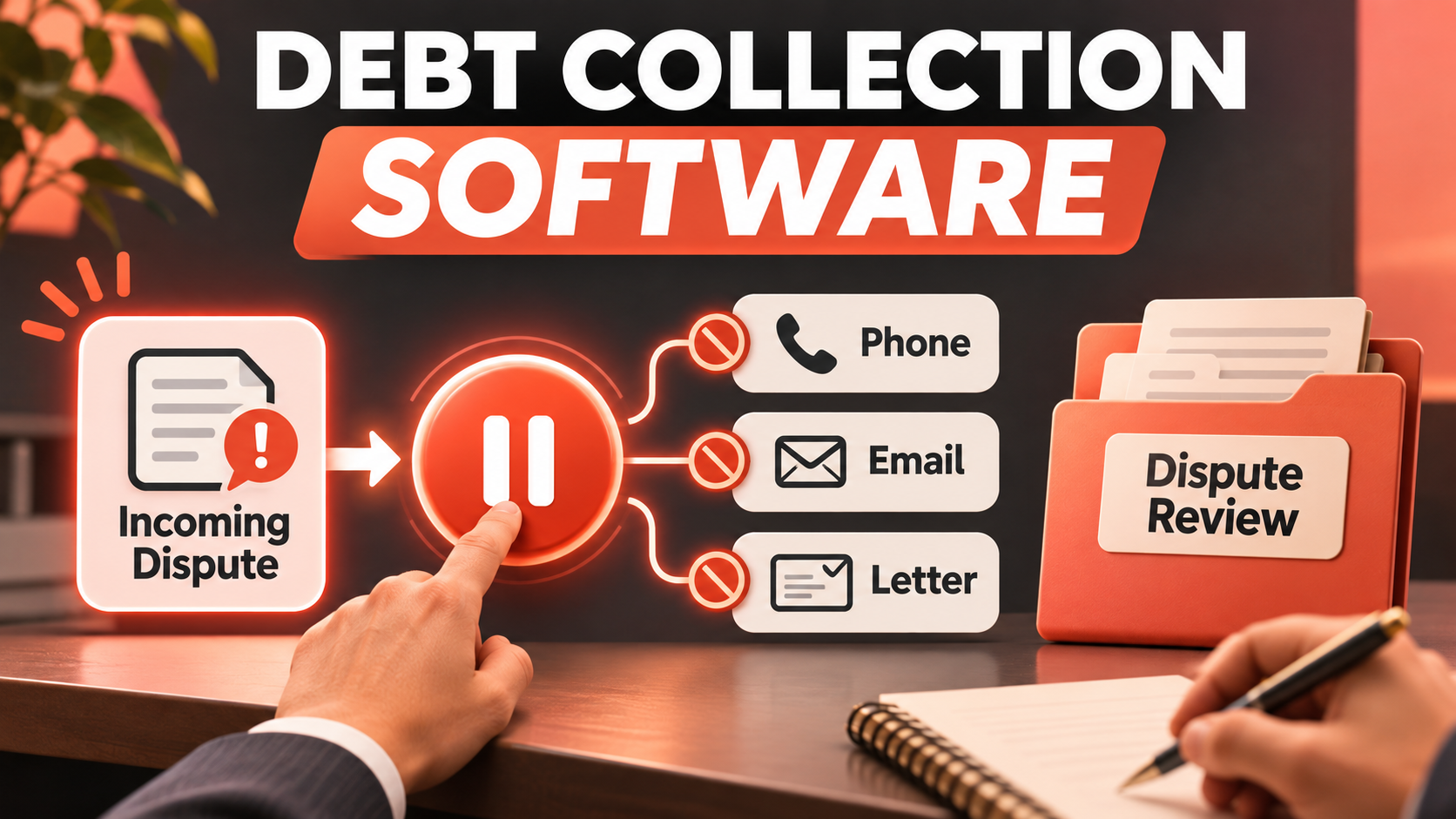
An account enters a call queue just before a consumer disputes the balance through a different channel. A supervisor records the dispute, but the dialer already has its next list. The difference between a controlled collection workflow and a risky one is whether the new information reaches every affected channel before the next action.
Debt collection software helps creditors, agencies, and service providers organize accounts, communications, disputes, payments, and reporting. The scope depends on who owns the debt, who services it, and which activities the organization performs. A creditor managing early arrears inside its servicing operation may need a focused case workflow. An agency working for several clients may need placement controls, client-level rules, and reconciled remittance reporting. The most revealing procurement test starts with an account that should come out of a queue.
Map restrictions to the systems that act
A collection operation may use a dialer, email provider, text messaging service, letter vendor, and consumer portal. Each can take an action after the collection platform has assigned the case. The buyer needs to identify how these systems receive restrictions and how they handle a change after a campaign has started.
Ask how the platform represents an instruction affecting one channel, one account, or several accounts associated with the same consumer. Then watch a test account enter a campaign. Apply a restriction and inspect the records in the platform and the delivery service. Check whether a job already queued can be stopped, how the system confirms the stop, and what operators can do if an external provider does not respond.
In the United States, the CFPB’s Regulation F materials describe federal rules for debt collectors within the applicable scope. The organization needs to determine which rules apply to its activities and translate those obligations, local requirements, and client policies into enforceable controls. A configuration demonstration should show how those controls operate, including when multiple rules apply to the same case. CFPB Debt Collection Rule
Treat the dispute as its own case
A dispute may relate to the balance, the identity of the consumer, or the ownership of the debt. A case system should retain the incoming communication and attachments, identify the disputed item, and route the work to someone authorized to respond. It should show which account actions have been restricted and why. A general-purpose note in the account history cannot reliably drive those behaviors on its own.
For the pilot, submit a dispute after a new portfolio has been placed. Provide an updated balance from the client while the dispute is open. Ask whether the amount can be updated without prematurely closing the case or restoring an account to outreach. Then review how the case resolves and how the platform records who approved the next action. The result should give a reviewer a chronology they can follow without comparing different teams’ inboxes.
The same care applies when an account is returned to a client, reassigned, or closed. Ask what happens to open payment arrangements, queued communications, and active disputes. Each needs a defined disposition, with any retained information accessible under the applicable retention policy.
Establish which balance the consumer sees
The collection platform may import a balance from servicing or receive periodic updates from a client. It may also collect payments through a portal or processor. Decide which system owns principal, fees, adjustments, and payment posting. Test how the software responds when these sources disagree and whether it can place a case into review until someone resolves the discrepancy.
A useful example involves a payment made directly to the creditor after the agency has offered a plan. The portal should reflect the correct status as soon as the operating arrangement requires. The payment should appear in reconciliation without being counted as an agency receipt. If the agreed payment schedule needs to change, check how an employee makes the correction and what the consumer sees.
Review promises, plans, and settlements separately. A promise to pay may be an action for follow-up. An accepted arrangement has terms that may need approval, a schedule, and a record of payments received. A settlement can have different approval and completion rules. Modeling all three as the same note makes reporting easier initially and daily operations harder later.
Match the platform to the organization’s role
A collection module inside a servicing platform may have an advantage when payment and delinquency information already live there. It can reduce delay between a posted payment and a changed queue. Check whether it supports the required channels, client-specific logic if applicable, and the documentation needed for disputes.
A dedicated agency system becomes more relevant when the business receives placements from multiple clients, applies different instructions, and remits money under different contracts. Evaluate how it isolates client data, how it detects a duplicate placement, and how it records account returns and balance changes. Ask for a sample remittance file and have the finance team reconcile it against test payments.
An organization can also buy a specialist channel or payment component while keeping its case platform. Define which tool is allowed to act and how the others receive the outcome. A portal that accepts payments and a system that manages contact each need a consistent understanding of the account. Integration monitoring should expose stale data before staff or consumers rely on it.
Measure whether arrangements are working
Recovery totals matter, but they can hide differences in portfolio mix and case handling. Compare placements by age, product, or client where meaningful. Track kept arrangements, broken arrangements, disputes awaiting action, and contacts suppressed by policy. A supervisor needs to see why a queue grew and whether the team is spending time on cases it can actually resolve.
Include complaint handling in the evaluation. Link a complaint to the communications, documents, and transactions that provide context. Limit access to sensitive materials and record who reviewed the case. Look for exports that preserve chronology and can be understood outside the platform. A chart can show how many complaints exist. The underlying record helps a reviewer investigate one.
Run the final demonstration with an active arrangement, a payment return, a newly disputed account, and a contact restriction applied after a campaign starts. Ask staff to show the resulting account, consumer-facing view, and client report. The purchase should turn on whether the platform controls the next action as accurately as it records the previous one.