Introduction
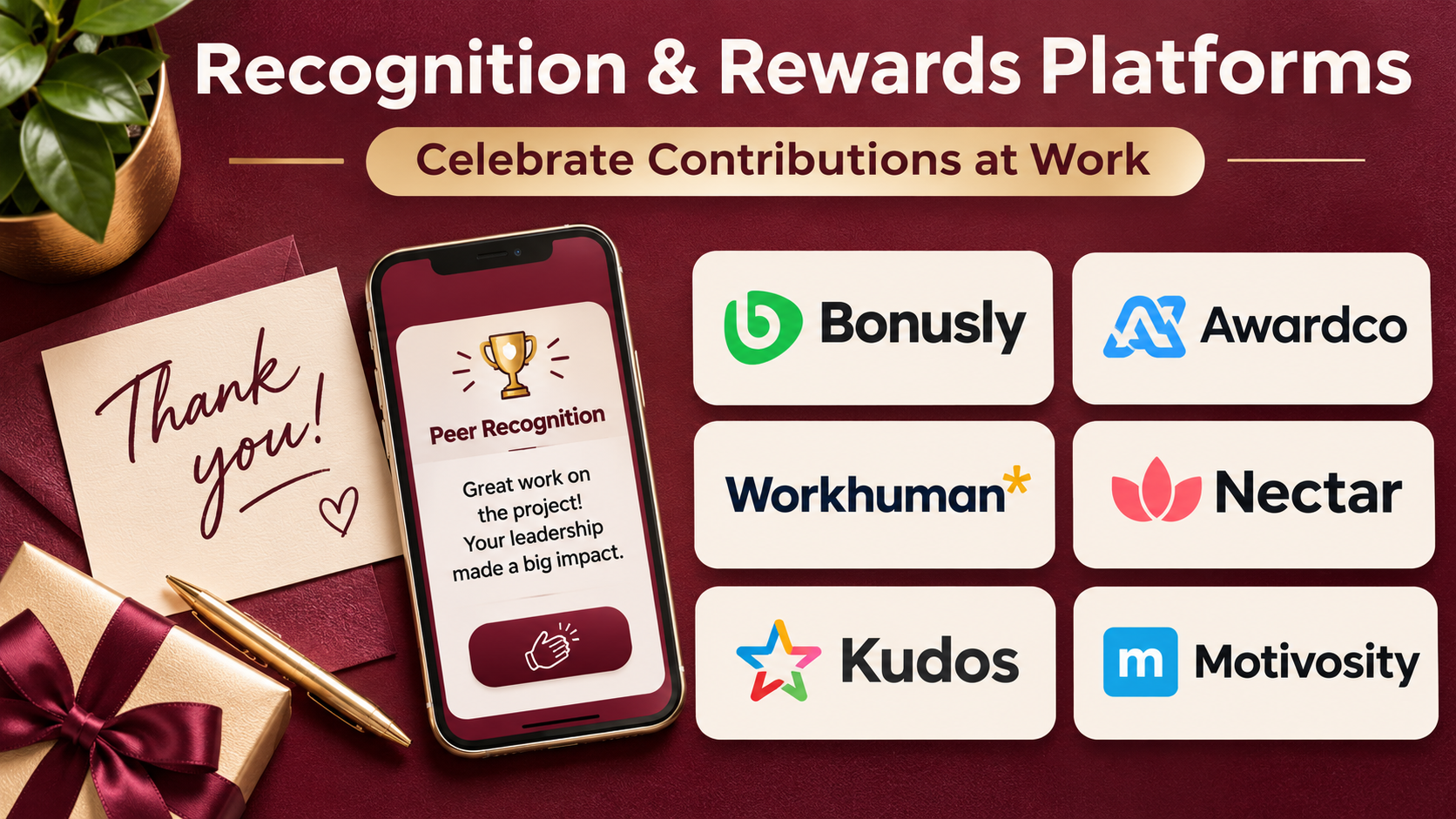
Employee recognition is an important part of building a workplace where people understand that their contributions matter.
Employees contribute through completed projects, customer service, problem-solving, teamwork, innovation, and everyday actions that support organizational goals.
However, these contributions are not always visible to managers or colleagues.
In a distributed organization, employees may work across departments, locations, and time zones. Managers may recognize highly visible achievements while overlooking the consistent work that keeps operations running.
Recognition and rewards platforms help organizations establish more consistent approaches to employee appreciation.
They provide digital tools for peer recognition, manager awards, service milestones, points-based rewards, gift distribution, and recognition reporting.
Some platforms emphasize frequent, informal appreciation. Others support enterprise reward budgets, international fulfillment, company values, and formal recognition programs.
These differences matter because recognition and rewards serve related but distinct purposes.
Recognition communicates appreciation for a contribution. Rewards provide a tangible benefit, such as points, a gift, an experience, or another approved incentive.
A recognition program can include both, but meaningful appreciation does not always require a monetary reward.
Organizations also need to consider fairness, accessibility, cultural differences, taxation, reward funding, and administrative workload.
An expensive rewards catalog cannot compensate for a workplace where recognition is inconsistent or perceived as favoritism.
This guide compares ten recognition and rewards platforms, explains how they work, and provides practical guidance for selecting and implementing an effective program.
What Are Recognition & Rewards Platforms?
Recognition and rewards platforms are software systems that help organizations acknowledge employee contributions and administer associated incentives.
They commonly support:
- Peer-to-peer recognition.
- Manager recognition.
- Public appreciation feeds.
- Company values alignment.
- Points-based rewards.
- Gift cards and merchandise.
- Service anniversaries.
- Employee milestones.
- Reward budgets.
- Approval workflows.
- HR system integrations.
- Recognition reporting.
The precise capabilities vary by vendor and product plan.
Recognition vs. Rewards
Recognition is an expression of appreciation for a specific contribution.
For example, a colleague might recognize an employee for helping resolve an urgent customer issue.
Rewards are tangible incentives associated with recognition or achievement.
Examples include gift cards, points, merchandise, experiences, or charitable donations.
Recognition can be effective without a reward. Conversely, a reward without meaningful explanation may feel transactional.
Types of Employee Recognition
Peer recognition: Employees acknowledge colleagues for helpful actions.
Manager recognition: Supervisors recognize performance, effort, or values-based contributions.
Milestone recognition: Organizations celebrate service anniversaries, onboarding milestones, and other achievements.
Performance-related recognition: Employees receive acknowledgment for defined accomplishments.
Values-based recognition: Contributions are linked to organizational principles.
Social recognition: Appreciation is visible to an appropriate internal audience.
Private recognition: Appreciation is shared directly with the recipient.
Organizations should offer appropriate choices because employees have different preferences for public recognition.
How Recognition & Rewards Platforms Work
A typical program follows several stages.
Step 1: Define Recognition Criteria
The organization determines which behaviors and achievements should be acknowledged.
Step 2: Establish Program Rules
Administrators define eligibility, award types, budgets, and approval requirements.
Step 3: Connect Employee Records
The platform receives relevant employee information through supported integrations or managed imports.
Step 4: Enable Recognition
Employees and managers submit recognition through the application or integrated workplace tools.
Step 5: Review Award Eligibility
The platform applies configured limits, approvals, and budget rules.
Step 6: Deliver Recognition
Recipients receive an acknowledgment, potentially with points or another reward.
Step 7: Redeem Rewards
Employees select eligible rewards from the available catalog or approved options.
Step 8: Measure Participation
Administrators review recognition frequency, distribution, and program costs.
Step 9: Evaluate Fairness
The organization investigates whether recognition is disproportionately concentrated among particular groups or departments.
Step 10: Improve the Program
Feedback and operational results inform changes to the recognition strategy.
Benefits of Recognition & Rewards Platforms
More Visible Employee Contributions
Recognition tools help acknowledge work that may otherwise remain unnoticed.
Stronger Peer Appreciation
Employees can recognize helpful colleagues without relying entirely on managers.
Consistent Milestone Celebrations
Automated workflows reduce the likelihood of missing important service anniversaries.
Better Alignment With Company Values
Values-based programs connect recognition with specific behaviors.
Reduced Administrative Work
Automation can simplify award distribution, approval, and tracking.
Flexible Reward Choices
Employees may prefer different rewards depending on their location and personal preferences.
Improved Program Visibility
Reporting can reveal participation patterns and possible gaps.
Recognition platforms can support engagement, but they do not independently guarantee higher morale, retention, or productivity.
Top 10 Recognition & Rewards Platforms
1. Bonusly
Best For: Organizations seeking frequent peer-to-peer recognition with points-based rewards.
Overview
Bonusly is an employee recognition platform designed to make appreciation part of everyday work.
It allows employees to recognize colleagues and, in supported configurations, associate recognition with points that can be redeemed for rewards.
For example, a customer support employee may recognize an engineer for resolving a difficult technical issue.
The recognition can explain the contribution and connect it to a relevant organizational value.
This makes recognition more specific than a generic message of thanks.
Bonusly is particularly relevant to organizations that want appreciation to occur throughout the year rather than only during annual award ceremonies.
However, a points-based model requires thoughtful program design.
If employees focus primarily on collecting points, recognition may lose its original meaning.
Key Features
- Peer Recognition: Enables employees to acknowledge colleagues.
- Points-based Awards: Supports recognition associated with configured points.
- Recognition Feed: Makes selected appreciation visible to colleagues.
- Company Values: Connects recognition with organizational principles.
- Reward Catalog: Provides redemption choices in supported programs.
- Workplace Integrations: Supports recognition through compatible communication tools.
- Program Administration: Manages budgets and permissions.
- Reporting: Helps monitor participation and distribution.
- Milestone Support: Provides selected recognition automation.
Benefits
Bonusly can encourage frequent appreciation while giving administrators visibility into recognition activity.
Pros
- Strong peer-recognition focus.
- Supports frequent appreciation.
- Points and rewards capabilities.
- Integrates with workplace tools.
- Useful for values-based recognition.
- Accessible to growing organizations.
Cons
- Reward budgets require management.
- Points can become overly transactional.
- Recognition quality depends on employee participation.
- International reward availability may vary.
- Administrators must monitor fairness.
Practical Use Cases
- Peer recognition programs.
- Values-based appreciation.
- Team achievement celebrations.
- Employee reward redemption.
Best For: Organizations building everyday recognition habits.
2. Awardco
Best For: Organizations requiring flexible recognition programs and broad reward options.
Overview
Awardco provides employee recognition and rewards capabilities for organizations managing both everyday appreciation and formal award programs.
Its reward-oriented approach is relevant to businesses that want employees to choose from a range of redemption options.
For example, a multinational organization may operate service awards, peer recognition, and performance-related recognition across several departments.
Awardco can support structured programs with configurable eligibility and reward arrangements.
Its breadth makes it useful for organizations with different recognition requirements.
However, a large rewards catalog is only one part of a successful program.
Organizations must also evaluate reward availability by country, funding procedures, approval workflows, and the experience of employees who do not regularly use computers.
Key Features
- Recognition Programs: Supports different appreciation initiatives.
- Reward Marketplace: Provides eligible redemption choices.
- Service Awards: Supports employment milestone recognition.
- Peer Recognition: Enables colleague appreciation.
- Manager Awards: Supports structured recognition.
- Program Customization: Configures recognition rules.
- Budget Controls: Helps administer reward spending.
- HR Integrations: Connects relevant employee information.
- Analytics: Provides program reporting.
Benefits
Awardco can consolidate several recognition and reward programs into a managed environment.
Pros
- Broad reward orientation.
- Supports formal and informal programs.
- Suitable for larger organizations.
- Configurable award rules.
- Service milestone capabilities.
- Administrative reporting.
Cons
- Implementation requires program design.
- Reward availability differs by region.
- Pricing depends on organizational requirements.
- Funding and taxation need evaluation.
- Complex programs increase administration.
Practical Use Cases
- Global employee awards.
- Service anniversary recognition.
- Manager-led rewards.
- Structured enterprise recognition.
Best For: Organizations prioritizing reward flexibility and program administration.
3. Workhuman
Best For: Large enterprises seeking structured social recognition and recognition analytics.
Overview
Workhuman provides employee recognition and workplace culture capabilities, including social recognition and milestone programs.
It is particularly relevant to enterprises that want recognition connected to broader organizational objectives.
For example, a global professional services company may want to recognize collaboration, innovation, and customer commitment across business units.
Workhuman can support a structured recognition program with defined policies and reporting.
Its enterprise orientation is useful when organizations require governance across regions and employee populations.
However, recognition data should be interpreted carefully.
Employees who receive more recognition are not necessarily more productive, and recognition frequency may reflect differences in visibility, role, or management practices.
Key Features
- Social Recognition: Supports employee appreciation.
- Peer-to-peer Awards: Enables colleague recognition.
- Service Milestones: Supports employment anniversary programs.
- Values Alignment: Connects recognition with organizational behaviors.
- Global Program Support: Addresses multinational recognition requirements.
- Recognition Analytics: Provides insights into recognition patterns.
- Administrative Governance: Supports enterprise program policies.
- HR Integration: Connects relevant employee records.
- Reward Fulfillment: Supports eligible reward options.
Benefits
Workhuman can help enterprises administer recognition consistently across large workforces.
Pros
- Enterprise recognition focus.
- Global program capabilities.
- Strong governance orientation.
- Recognition analytics.
- Supports values-based appreciation.
Cons
- Enterprise implementation may be substantial.
- Commercial costs require evaluation.
- Reward funding adds expense.
- Analytics can be misinterpreted.
- Program effectiveness depends on culture.
Practical Use Cases
- Global recognition programs.
- Service milestones.
- Values-based recognition.
- Enterprise recognition reporting.
Best For: Large organizations with formal recognition strategies.
4. Achievers
Best For: Enterprises seeking employee recognition integrated with engagement initiatives.
Overview
Achievers provides employee recognition and reward capabilities intended to support appreciation across an organization.
Its approach combines recognition programs with relevant employee experience and reporting features.
For example, a healthcare organization may want to recognize employees across hospitals, administrative offices, and support departments.
Achievers can support structured recognition programs for a diverse workforce.
It is particularly relevant when recognition must operate across locations and employee groups.
However, organizations should assess how easily employees can participate.
A recognition program that depends on desktop access may disadvantage frontline employees unless suitable access arrangements are provided.
Key Features
- Employee Recognition: Supports peer and manager appreciation.
- Reward Marketplace: Provides eligible redemption options.
- Values-based Recognition: Connects awards with organizational principles.
- Milestone Recognition: Supports employee celebrations.
- Workplace Integrations: Connects supported applications.
- Global Program Capabilities: Supports distributed workforces.
- Engagement Insights: Provides relevant reporting.
- Administrative Controls: Manages program policies.
- Mobile Access: Supports appropriate employee participation.
Benefits
Achievers can help large organizations standardize recognition while allowing employees to participate across locations.
Pros
- Enterprise-focused capabilities.
- Supports broad employee populations.
- Reward flexibility.
- Values-based recognition.
- Program analytics.
- Relevant workplace integrations.
Cons
- Requires organizational commitment.
- Commercial pricing varies.
- Global reward operations need review.
- Employee participation may be uneven.
- Administrative configuration can be complex.
Practical Use Cases
- Enterprise appreciation programs.
- Frontline employee recognition.
- Values-based awards.
- Employee milestone celebrations.
Best For: Enterprises connecting recognition with employee engagement.
5. Nectar
Best For: Growing organizations seeking straightforward recognition, rewards, and employee appreciation.
Overview
Nectar provides employee recognition and rewards capabilities designed to make appreciation easier to manage.
It supports peer recognition, reward programs, and selected employee engagement workflows.
For example, a growing technology company may want employees to recognize helpful colleagues through familiar workplace tools.
Nectar can support this type of recognition while giving administrators control over reward arrangements.
Its appeal lies in combining everyday appreciation with manageable program administration.
However, businesses should review the specific modules included in their subscription.
Recognition, rewards, employee communication, and other capabilities may be packaged differently.
Key Features
- Peer Recognition: Enables colleague appreciation.
- Reward Points: Supports configured recognition incentives.
- Reward Redemption: Provides eligible gift and reward choices.
- Company Values: Associates recognition with relevant behaviors.
- Milestone Celebrations: Supports selected employee anniversaries.
- Workplace Integrations: Connects supported communication tools.
- Program Administration: Manages relevant settings.
- Engagement Features: Supports selected employee initiatives.
- Reporting: Helps track recognition activity.
Benefits
Nectar can help growing organizations introduce structured recognition without building custom reward workflows.
Pros
- Accessible recognition model.
- Supports peer appreciation.
- Includes reward capabilities.
- Relevant to growing teams.
- Integrates with workplace communication.
Cons
- Reward costs require planning.
- Product packaging needs review.
- Recognition participation varies.
- International rewards require validation.
- Program rules must prevent misuse.
Practical Use Cases
- Startup recognition programs.
- Employee milestone celebrations.
- Peer appreciation.
- Company values reinforcement.
Best For: Growing organizations implementing formal recognition.
6. Motivosity
Best For: Organizations combining recognition with employee connection and workplace culture.
Overview
Motivosity provides employee recognition, rewards, and workplace connection capabilities.
Its approach emphasizes relationships between colleagues rather than treating recognition only as a reward transaction.
For example, a midsize company may want employees to learn more about colleagues, celebrate contributions, and recognize everyday assistance.
Motivosity can support these activities through social recognition and related employee experience features.
It is particularly relevant when organizations want recognition to reinforce workplace relationships.
However, social features should be implemented thoughtfully.
Employees have different preferences for visibility, public appreciation, and sharing personal information.
Key Features
- Peer Recognition: Supports employee appreciation.
- Social Recognition Feed: Displays relevant acknowledgments.
- Employee Connection: Supports workplace relationship-building.
- Rewards: Provides eligible incentives.
- Manager Recognition: Enables supervisor-led appreciation.
- Milestone Automation: Supports selected celebrations.
- Engagement Insights: Provides relevant program information.
- Workplace Integrations: Connects supported tools.
- Administrative Controls: Manages program settings.
Benefits
Motivosity can help organizations connect recognition with broader employee relationships.
Pros
- Strong culture orientation.
- Supports peer recognition.
- Encourages employee connection.
- Includes reward capabilities.
- Relevant to midsize organizations.
Cons
- Social participation differs among employees.
- Privacy preferences require attention.
- Reward administration adds cost.
- Features vary by package.
- Recognition still requires managerial involvement.
Practical Use Cases
- Employee appreciation.
- Culture-building programs.
- Team relationship development.
- Milestone recognition.
Best For: Organizations prioritizing connection and appreciation.
7. Kudos
Best For: Organizations emphasizing recognition aligned with company values.
Overview
Kudos provides employee recognition capabilities with a focus on workplace culture and organizational values.
It helps employees acknowledge colleagues for behaviors that support defined principles.
For example, a company may have values such as customer commitment, collaboration, and continuous improvement.
Employees can recognize specific actions that demonstrate those values.
This approach can make recognition more meaningful than generic praise.
However, values-based recognition requires clear definitions.
If company values are vague or inconsistently interpreted, recognition may become subjective.
Organizations should train managers and employees to provide specific examples of contributions.
Key Features
- Values-based Recognition: Connects appreciation with organizational principles.
- Peer Recognition: Enables colleague acknowledgment.
- Recognition Feed: Shares selected appreciation.
- Employee Milestones: Supports celebrations.
- Reward Capabilities: Provides eligible incentive options.
- Culture Reporting: Helps review recognition patterns.
- Administrative Controls: Manages recognition rules.
- Workplace Integrations: Connects relevant applications.
- Employee Participation: Encourages recognition across teams.
Benefits
Kudos can help organizations reinforce company values through specific employee appreciation.
Pros
- Strong values-based approach.
- Supports peer recognition.
- Relevant to culture programs.
- Provides reporting.
- Encourages meaningful appreciation.
Cons
- Requires clearly defined values.
- Recognition quality depends on users.
- Reward costs need management.
- Analytics require context.
- Participation may differ by department.
Practical Use Cases
- Values-based recognition.
- Culture reinforcement.
- Peer appreciation.
- Employee milestones.
Best For: Organizations linking recognition with workplace values.
8. Guusto
Best For: Organizations seeking practical employee gifting and spot rewards.
Overview
Guusto provides employee recognition and reward gifting capabilities.
It is particularly relevant to organizations that want managers to deliver tangible appreciation without administering an elaborate social recognition program.
For example, a restaurant group may want supervisors to reward employees who handle difficult customer situations or support colleagues during busy shifts.
Guusto can support practical gift distribution.
Its approach can be useful for frontline workforces and organizations where reward delivery matters more than social feeds.
However, businesses should evaluate recipient access, redemption availability, and reward distribution policies.
Key Features
- Digital Rewards: Supports gift distribution.
- Spot Recognition: Enables timely appreciation.
- Reward Management: Helps administer gifting.
- Recipient Delivery: Supports relevant distribution methods.
- Manager Programs: Enables supervisor-led awards.
- Budget Controls: Supports reward spending management.
- Reporting: Tracks relevant reward activity.
- Frontline Suitability: Supports selected deskless employee scenarios.
Benefits
Guusto can simplify tangible employee appreciation for organizations that do not need a comprehensive social recognition system.
Pros
- Practical gifting orientation.
- Useful for frontline employees.
- Supports spot rewards.
- Relatively straightforward use cases.
- Manager-led recognition.
Cons
- Less focused on social recognition.
- Reward availability varies.
- Funding requires administration.
- Program fairness must be monitored.
- Broad engagement features may require other tools.
Practical Use Cases
- Frontline employee appreciation.
- Manager spot awards.
- Customer service recognition.
- Employee gifting.
Best For: Organizations prioritizing simple reward delivery.
9. Vantage Circle
Best For: Organizations combining recognition, rewards, and employee benefits initiatives.
Overview
Vantage Circle provides employee recognition and engagement-related offerings.
Its capabilities can support reward programs, employee appreciation, and selected benefits or wellness initiatives.
For example, a large employer may want one environment for recognition campaigns, employee rewards, and related engagement programs.
Vantage Circle can support this broader approach.
Its international orientation may be relevant to organizations with employees across different countries.
However, buyers should distinguish between recognition, rewards, benefits, and wellness products.
Each serves a different purpose and may involve different eligibility, privacy, and administration requirements.
Key Features
- Recognition Programs: Supports employee appreciation.
- Reward Catalog: Provides eligible redemption options.
- Peer Recognition: Enables colleague acknowledgments.
- Service Awards: Supports employment milestones.
- Employee Benefits: Offers relevant benefits-related capabilities.
- Wellness Initiatives: Supports selected engagement programs.
- Global Availability: Addresses multinational use cases.
- Reporting: Provides program insights.
- Administration: Manages recognition settings.
Benefits
Vantage Circle can help organizations coordinate recognition with broader employee experience initiatives.
Pros
- Broad employee engagement orientation.
- Supports rewards and recognition.
- Relevant to global workforces.
- Offers complementary programs.
- Provides administrative reporting.
Cons
- Multiple offerings require evaluation.
- Reward availability differs by location.
- Program complexity can increase.
- Costs depend on selected capabilities.
- Privacy and eligibility rules need attention.
Practical Use Cases
- Global recognition programs.
- Employee rewards.
- Service milestones.
- Benefits-linked engagement initiatives.
Best For: Organizations seeking a broad employee rewards environment.
10. Assembly
Best For: Growing teams seeking recognition alongside lightweight workplace engagement workflows.
Overview
Assembly provides employee recognition and workplace engagement capabilities.
It is relevant to organizations that want a simple way for employees to acknowledge contributions and participate in appreciation programs.
For example, a growing agency may want employees to recognize colleagues for teamwork, creative contributions, and client service.
Assembly can support these interactions through recognition workflows and related features.
Its broader workplace capabilities may appeal to teams seeking a connected employee experience.
However, buyers should assess which features are included in their selected plan and whether the platform provides the depth required for complex global rewards programs.
Key Features
- Peer Recognition: Enables employee appreciation.
- Recognition Feed: Displays relevant acknowledgments.
- Reward Points: Supports configured incentives.
- Milestone Recognition: Helps celebrate employee events.
- Employee Engagement: Supports selected workplace activities.
- Workflow Features: Provides relevant automation.
- Integrations: Connects supported workplace applications.
- Reporting: Measures recognition participation.
- Administrative Controls: Manages program configuration.
Benefits
Assembly can help growing organizations establish repeatable recognition habits with manageable administration.
Pros
- Accessible recognition workflows.
- Suitable for growing teams.
- Supports peer appreciation.
- Includes related engagement features.
- Useful workplace integrations.
Cons
- Advanced enterprise requirements need review.
- Reward budgets add cost.
- Feature packaging varies.
- Employee participation requires encouragement.
- Global fulfillment needs validation.
Practical Use Cases
- Small business recognition.
- Peer appreciation.
- Employee milestone celebrations.
- Workplace culture programs.
Best For: Growing teams seeking straightforward recognition.
Recognition & Rewards Platforms Comparison Table
| Platform | Primary Strength | Best-Fit Organization | Key Consideration |
|---|---|---|---|
| Bonusly | Frequent peer recognition | Growing companies | Points governance |
| Awardco | Flexible rewards | Enterprises | Global fulfillment |
| Workhuman | Enterprise recognition | Multinationals | Program complexity |
| Achievers | Recognition and engagement | Large organizations | Workforce accessibility |
| Nectar | Everyday appreciation | Growing teams | Product packaging |
| Motivosity | Employee connection | Midsize organizations | Social participation |
| Kudos | Values-based recognition | Culture-focused companies | Recognition criteria |
| Guusto | Spot gifting | Frontline employers | Reward distribution |
| Vantage Circle | Broad rewards programs | Global organizations | Module selection |
| Assembly | Lightweight recognition | Growing teams | Enterprise depth |
How to Choose the Right Recognition & Rewards Platform
Step 1: Define the Purpose
Decide whether the organization wants peer appreciation, manager recognition, service awards, or a broader rewards program.
Step 2: Identify Eligible Employees
Consider full-time employees, part-time workers, frontline staff, and employees in different countries.
Step 3: Establish Recognition Criteria
Define which contributions qualify for recognition.
Avoid vague rules that encourage favoritism.
Step 4: Decide Whether Rewards Are Necessary
Some programs can begin with meaningful nonmonetary recognition.
Others require points, gifts, or formal awards.
Step 5: Define the Reward Budget
Separate software subscription costs from reward funding and fulfillment expenses.
Step 6: Review Global Availability
Confirm that employees in each relevant country can receive appropriate rewards.
Step 7: Evaluate Employee Accessibility
Ensure that workers without corporate computers can participate.
Step 8: Assess Integrations
Review HR system compatibility, identity management, and workplace communication integrations.
Step 9: Establish Approval Rules
Determine which awards require manager or administrator approval.
Step 10: Evaluate Reporting
Look for recognition distribution, participation, budget utilization, and potential fairness gaps.
Step 11: Review Tax and Employment Considerations
Consult appropriate specialists about taxable benefits, payroll reporting, and local employment requirements.
Step 12: Conduct a Pilot
Test the platform with representative departments before a company-wide launch.
Best Recognition & Rewards Platforms by User Type
| User Type | Suitable Platforms | Primary Requirement |
|---|---|---|
| Growing teams | Bonusly, Nectar | Everyday recognition |
| Large enterprises | Workhuman, Achievers | Program governance |
| Global reward programs | Awardco, Vantage Circle | Reward availability |
| Culture-focused companies | Motivosity, Kudos | Employee connection |
| Frontline organizations | Guusto | Practical gifting |
| Smaller teams | Assembly | Accessible recognition |
Practical Example: Launching a Recognition Program
A company with 350 employees wants to improve appreciation across departments.
Step 1: Interview Employees
Ask how employees currently receive recognition and which contributions are overlooked.
Step 2: Define Program Goals
Prioritize peer appreciation, fairness, and meaningful recognition.
Step 3: Establish Award Categories
Create categories for collaboration, customer support, innovation, and operational excellence.
Step 4: Define Recognition Standards
Require every recognition message to explain the specific contribution.
Step 5: Select a Platform
Compare Bonusly, Nectar, Kudos, and other suitable tools.
Step 6: Set Reward Budgets
Determine monthly allocations, award limits, and funding responsibilities.
Step 7: Configure Integrations
Connect employee records and relevant workplace communication systems.
Step 8: Train Managers
Explain recognition quality, fairness, and appropriate award distribution.
Step 9: Launch a Pilot
Introduce the program in three departments.
Step 10: Monitor Participation
Review how frequently employees recognize colleagues and whether participation is broadly distributed.
Step 11: Collect Feedback
Ask whether recognition feels meaningful and accessible.
Step 12: Refine the Program
Adjust reward rules, communication, and training before expansion.
Common Recognition & Rewards Mistakes
1. Treating Rewards as a Substitute for Fair Compensation
Recognition cannot replace appropriate pay, working conditions, or respectful management.
2. Rewarding Only Highly Visible Employees
Behind-the-scenes contributions also deserve acknowledgment.
3. Using Generic Recognition Messages
Specific appreciation communicates more value than repetitive praise.
4. Creating Competition Between Colleagues
Poorly designed leaderboards can discourage collaboration.
5. Ignoring Cultural Preferences
Employees differ in their preferences for public recognition and rewards.
6. Failing to Budget for Redemption
Reward funding must be planned separately from software costs.
7. Overlooking Frontline Access
Recognition programs should not exclude employees without desktop access.
8. Measuring Recognition Only by Volume
More recognition messages do not automatically mean a healthier culture.
9. Ignoring Tax and Payroll Requirements
Some rewards may create reporting obligations.
10. Allowing Favoritism
Administrators should review recognition distribution and investigate concerning patterns.
Frequently Asked Questions About Recognition & Rewards Platforms
1. What is employee recognition software?
It is software that helps organizations acknowledge employee contributions.
2. What is the difference between recognition and rewards?
Recognition expresses appreciation; rewards provide a tangible benefit.
3. Can recognition be effective without money?
Yes. Specific and sincere appreciation can be meaningful without financial incentives.
4. What is peer-to-peer recognition?
It allows employees to recognize colleagues.
5. What is manager recognition?
It is appreciation provided by a supervisor or manager.
6. What are recognition points?
They are configured units associated with eligible recognition or reward programs.
7. What is a reward catalog?
It is a collection of available redemption options.
8. What are service awards?
They recognize employment anniversaries or other service milestones.
9. What is values-based recognition?
It connects employee appreciation with defined organizational values.
10. Which platforms emphasize peer recognition?
Bonusly, Nectar, Kudos, and several other solutions support this approach.
11. Which platforms suit large enterprises?
Workhuman, Achievers, and Awardco are relevant options.
12. Which platform is suitable for simple gifting?
Guusto focuses on practical reward distribution.
13. Can recognition integrate with Slack or Microsoft Teams?
Several platforms support relevant workplace integrations.
14. Can recognition programs operate globally?
Yes, but reward availability and legal requirements differ by location.
15. Are employee rewards taxable?
Some rewards may be taxable depending on local law and their characteristics.
16. How should recognition budgets be established?
Consider program goals, workforce size, award frequency, and expected redemption.
17. What is social recognition?
It makes selected employee appreciation visible within an organization.
18. Should all recognition be public?
No. Employees should have appropriate options for private recognition.
19. Can recognition software improve retention?
It may support a positive employee experience, but retention depends on many factors.
20. What is recognition analytics?
It examines participation, award distribution, and related program activity.
21. Can recognition analytics identify unfairness?
It can reveal patterns worth investigating, but it does not independently prove discrimination or fairness.
22. How often should employees receive recognition?
Recognition should reflect meaningful contributions rather than arbitrary quotas.
23. Can managers approve rewards?
Many platforms support configurable approval workflows.
24. What is a spot award?
It is recognition delivered near the time of a specific contribution.
25. Can employees choose their rewards?
Many platforms provide eligible redemption choices.
26. How can organizations prevent recognition misuse?
Use clear rules, budget limits, reporting, and appropriate oversight.
27. Should recognition be linked to performance reviews?
Recognition can inform discussions, but it should not replace structured performance evaluation.
28. What causes low participation?
Unclear rules, weak leadership support, difficult access, and unappealing programs are common causes.
29. How should a recognition program be measured?
Review participation, fairness, employee feedback, reward utilization, and program objectives.
30. What is the most important recognition principle?
Make appreciation specific, fair, timely, and meaningful to the recipient.
Final Thoughts
Recognition and rewards platforms help organizations acknowledge employee contributions and manage appreciation programs.
Bonusly and Nectar are relevant to everyday peer recognition, while Awardco, Workhuman, and Achievers address broader enterprise requirements.
Motivosity and Kudos emphasize culture and employee connection.
Guusto supports practical gifting, Vantage Circle combines several employee rewards capabilities, and Assembly provides accessible recognition workflows.
The best platform depends on workforce characteristics, reward budgets, governance requirements, and organizational culture.
Successful recognition is not measured only by the number of points distributed or gifts redeemed.
It depends on whether employees receive meaningful, equitable appreciation for contributions that matter.