Introduction
In an increasingly interconnected world, healthcare is no longer confined by national borders. Every year, millions of individuals cross international lines in search of high-quality medical intervention, a practice widely known as medical tourism. Whether seeking specialized procedures, more affordable care, or faster access to treatment, patients are increasingly looking globally to secure their health and well-being.
However, medical travel is a significant decision that requires meticulous planning. Navigating foreign healthcare systems, understanding complex treatment plans, and coordinating logistics can feel overwhelming. This is why proper guidance is essential. By utilizing a trusted medical tourism platform like MYMEDICPLUS.COM, patients can bridge the gap between their home environment and world-class care providers, ensuring that every step of the journey—from initial consultation to post-treatment recovery—is managed with expertise and transparency.
What is Medical Tourism?
At its core, medical tourism is the practice of traveling to a different country to receive medical, dental, or surgical care. While the term may sound modern, the concept of traveling for health has existed for centuries. In the contemporary context, however, it has evolved into a sophisticated global industry supported by highly accredited hospitals, advanced medical technology, and specialized international patient care teams.
The primary difference between domestic and international healthcare lies in the logistical complexity and the need for seamless coordination. When you seek healthcare abroad, you are not just a patient; you are a traveler coordinating with diverse healthcare systems, managing travel documentation, and arranging recovery logistics in a new environment. Medical tourism is growing globally because it empowers patients with choice, offering access to high-quality care that might otherwise be unavailable, delayed, or unaffordable in their home country.
Why Patients Choose Medical Tourism
The decision to seek medical treatment abroad is typically driven by a combination of factors aimed at improving the patient’s quality of life. Common motivations include:
- Affordable Healthcare: Many patients seek treatment in countries where medical services are more cost-effective without compromising quality.
- Access to Specialists: Some regions are hubs for specific medical expertise, allowing patients to consult with renowned specialists in niche fields.
- Modern Hospitals: Global medical centers often invest heavily in state-of-the-art infrastructure and modern equipment.
- Shorter Waiting Periods: In many nationalized or overburdened healthcare systems, waiting lists for elective or semi-elective surgeries can be lengthy. Medical tourism often provides faster access.
- Better Treatment Options: A patient might seek an innovative procedure or a clinical trial not yet available in their home country.
- Personalized Patient Care: Specialized medical tourism providers prioritize the patient experience, offering dedicated support staff to manage the non-clinical aspects of the journey.
Who Can Benefit from Medical Tourism?
Medical tourism is not limited to a single demographic; it serves patients with a wide range of needs. Individuals who often benefit from international healthcare include:
- Cardiac Patients: Seeking bypass surgeries, valve replacements, or advanced cardiac interventions.
- Cancer Patients: Looking for specialized oncological treatments, proton therapy, or advanced chemotherapy protocols.
- Orthopedic & Spine Patients: Requiring joint replacements, complex reconstructive surgery, or spinal stabilization.
- Cosmetic & Plastic Surgery Patients: Seeking aesthetic procedures performed by highly experienced surgeons.
- Dental Patients: Requiring complex dental restorations, implants, or full-mouth reconstruction.
- Fertility Patients: Seeking IVF, surrogacy (where legal), or advanced reproductive technology.
- Bariatric Patients: Looking for effective surgical solutions for weight management.
- Neurology Patients: Needing specialized treatment for complex neurological conditions.
- Preventive Healthcare Travelers: Seeking comprehensive diagnostic checkups and screenings in high-tech wellness centers.
Popular Treatments Available Through Medical Tourism
The scope of treatments available is vast. While availability varies by country and facility, the most requested services include:
- Cardiology: Angioplasty, heart valve surgery, and electrophysiology.
- Oncology: Surgical oncology, radiation therapy, and personalized cancer care.
- Orthopedics: Total knee and hip replacement, arthroscopy, and trauma surgery.
- Spine Surgery: Decompression, spinal fusion, and minimally invasive spine procedures.
- Neurosurgery: Brain tumor surgery and complex nerve repair.
- Cosmetic & Plastic Surgery: Facelifts, rhinoplasty, breast augmentation, and body contouring.
- Dental Care: Dental implants, veneers, and restorative procedures.
- IVF & Fertility: In-vitro fertilization, IUI, and fertility preservation.
- Bariatric Surgery: Gastric bypass, sleeve gastrectomy, and gastric banding.
- General Surgery & Health Checkups: Routine surgeries and extensive preventive health screenings.
Complete Medical Tourism Journey
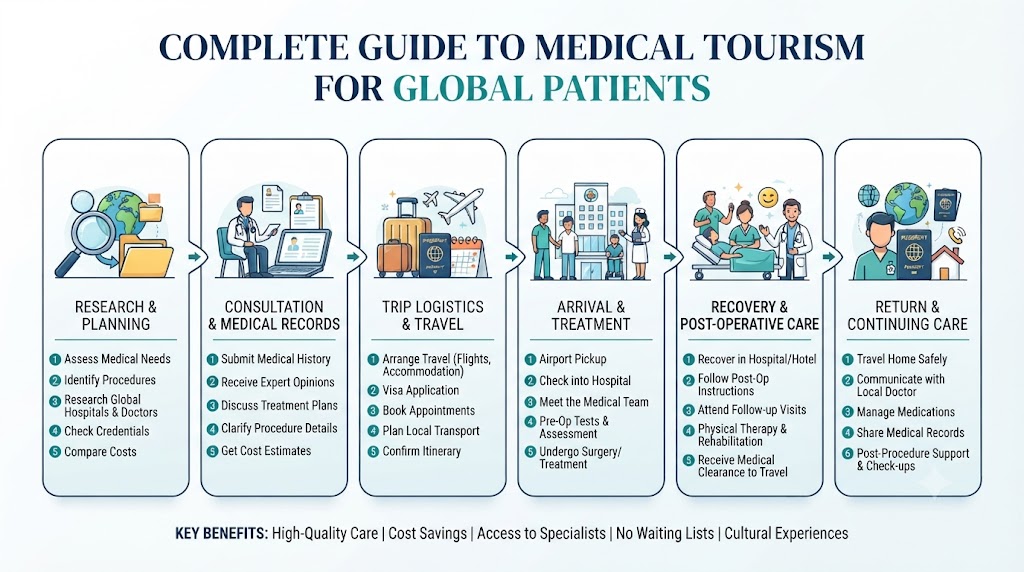
A successful medical journey follows a structured path. Here is what you can expect:
Initial Consultation
The process begins with an assessment of your medical needs. This is where you discuss your symptoms, previous diagnoses, and treatment goals.
Medical Record Review
You will be asked to share your medical history, including recent reports, imaging (MRI/CT scans), and current medication lists. Specialists abroad will review these documents to determine suitability for treatment.
Treatment Planning
Based on your records, the medical team develops a preliminary treatment plan, which may include further diagnostic tests upon arrival.
Hospital Selection
You, often with the assistance of a guidance platform, choose a hospital that meets your specific medical and comfort requirements.
Specialist Consultation
Before finalizing your travel, you may have a virtual consultation with the treating surgeon or physician to ask questions and build rapport.
Treatment Cost Estimation
You will receive a comprehensive breakdown of the estimated costs. Note that these are estimates; final costs vary depending on the patient condition and individual healthcare needs.
Visa & Travel Planning
Once the plan is confirmed, you handle travel logistics, including visas, flights, and local accommodation, often with support from your medical tourism coordinator.
Hospital Admission & Treatment Process
Upon arrival, you are admitted to the hospital. Your medical team will conduct pre-operative assessments before proceeding with the planned treatment.
Recovery & Discharge Planning
Recovery occurs in the hospital, and potentially at an off-site recovery center or hotel. The medical team will provide clear discharge instructions.
Post-treatment Follow-up
This involves ongoing communication between your treating surgeon abroad and your local primary care provider to ensure a safe and successful recovery.
How to Choose the Right Hospital
Choosing the right facility is a critical step. Consider these factors:
- Hospital Accreditation: Look for international accreditations that signify adherence to global safety and quality standards.
- Infrastructure: Evaluate the hospital’s capacity, operating theatre technology, and intensive care facilities.
- International Patient Services: Does the hospital have a dedicated team to assist with language, translation, and cultural needs?
- Infection Control: Research the hospital’s protocols for maintaining a sterile environment.
- Rehabilitation Facilities: Ensure there is adequate support for post-operative recovery.
- Treatment Transparency: The hospital should be clear about what is included in their service packages and how they handle unexpected complications.
How to Choose the Right Doctor
The doctor’s expertise is paramount. Assess them based on:
- Qualifications & Specialization: Verify their board certifications and specific fellowship training.
- Experience & Case Volume: A doctor who regularly performs a specific procedure often develops a higher level of proficiency.
- Communication: You should feel comfortable asking questions. A good doctor explains the risks, benefits, and alternatives clearly.
- Multidisciplinary Care: Does the doctor work as part of a team? Best-in-class care often involves collaboration between surgeons, anesthesiologists, and rehabilitation specialists.
Cost Factors in Medical Tourism
Costs can be influenced by several variables:
- Treatment Complexity: The nature of the procedure and the duration of the surgery.
- Destination: The healthcare infrastructure and the general cost of living in the host country.
- Facility & Expertise: The reputation and technology of the hospital and the credentials of the surgeon.
- Diagnostic & Medication Needs: The type of imaging, laboratory tests, and medications required.
- Recovery Duration: Longer hospital stays or extended recovery times abroad increase costs.
Treatment costs vary depending on patient condition, treatment type, hospital selection, and individual healthcare needs. Always ensure you have a clear, written estimate that details what is covered.
Benefits of Medical Tourism
The advantages of medical travel extend beyond cost savings:
- Access: Many patients gain access to life-saving treatments that are not available locally.
- Quality: Receiving care in a center of excellence can significantly improve outcomes.
- Comprehensive Support: Many international patient programs offer “concierge” style services, managing airport transfers, accommodation, and translator services.
- Efficiency: Streamlined processes often mean you spend less time waiting for appointments and more time focusing on recovery.
Risks and Challenges
It is important to be realistic about the risks:
- Follow-up Care: The most significant challenge is ensuring continuity of care once you return home.
- Language Barriers: Miscommunication can occur. Always ensure your medical team provides documentation in a language you understand.
- Insurance Limitations: Many insurance policies do not cover international medical procedures.
- Recovery Travel: Long-haul flights shortly after surgery can pose health risks. Always seek your surgeon’s clearance before flying.
Practical Solutions: Use a professional coordination platform to manage logistics, verify hospital credentials, and ensure you have a solid post-treatment plan communicated to your local doctor.
Preparing for Medical Travel
Before Traveling
- Consult your local doctor about your plans.
- Organize all medical records in a digital and physical format.
- Secure travel insurance that specifically covers medical tourism complications.
- Finalize all travel documents, including medical visas.
During Treatment
- Keep a copy of your treatment plan and surgeon contact details with you.
- Ensure a friend or family member is present to assist you.
- Follow all medical advice regarding pre- and post-operative care.
Before Returning Home
- Obtain a complete summary of your treatment, including surgery reports and discharge medication list.
- Ensure you have all relevant imaging (X-rays, MRIs) on a portable drive or secure cloud link.
- Get clear “fit to fly” clearance from your surgeon.
After Returning Home
- Schedule a follow-up with your local doctor to review your treatment summary.
- Monitor your recovery closely and report any unusual symptoms to your international medical team immediately.
Questions Every Patient Should Ask Before Choosing Treatment Abroad
- What is the total estimated cost, and what specific expenses are included or excluded?
- What is the surgeon’s experience with this exact procedure?
- What are the possible risks and complications, and how does the hospital manage them?
- How do you ensure continuity of care with my local physician after I return home?
- What kind of rehabilitation and recovery support is available?
- How do you handle medical emergencies or unexpected extensions of stay?
- Can I speak with a member of the international patient services team about the logistical process?
- What accreditations does the hospital hold?
- What is the protocol for obtaining my medical records for my local doctor?
- Is there a point of contact available 24/7 during my stay?
How MYMEDICPLUS.COM Helps Global Patients
MYMEDICPLUS.COM serves as a vital bridge in your medical journey. We recognize that navigating international healthcare requires more than just finding a hospital; it requires expert coordination. We support patients by:
- Treatment Guidance: Helping you understand your options based on your specific medical needs.
- Hospital & Doctor Coordination: Connecting you with reputable facilities and experienced specialists.
- Appointment Assistance: Simplifying the scheduling process to ensure you are seen promptly.
- Patient Communication: Facilitating clear channels of communication between you and your medical team.
- Recovery Planning: Assisting in the coordination of post-treatment care and follow-up guidance.
Our mission is to provide you with the clarity and support you need to make informed healthcare decisions with confidence.
Future of Medical Tourism
The landscape of medical tourism is evolving rapidly. We are seeing a rise in:
- Telemedicine: Expanding the ability to consult with specialists across the globe before you even book a flight.
- AI-Assisted Healthcare: Helping in more accurate diagnosis and personalized treatment planning.
- Digital Patient Journeys: Platforms that allow you to track your medical records and recovery progress in real-time.
- Smart Hospitals: Facilities utilizing advanced automation to improve patient safety and outcomes.
- Cross-border Collaboration: Increasingly formal agreements between hospitals in different countries to ensure seamless long-term follow-up care.
Frequently Asked Questions
1. Is medical tourism safe? When planned with reputable, accredited hospitals and experienced specialists, medical tourism is generally safe. The key to safety lies in thorough research and proper coordination.
2. Will my home insurance cover the treatment? It varies significantly. You must check with your insurance provider to see if they cover international medical procedures.
3. What if something goes wrong after I return home? You should have a clear follow-up plan. This involves having your medical records from abroad shared with your local doctor and maintaining a line of communication with the international medical team.
4. How do I know if a doctor is qualified? Research their board certifications, years of experience, and whether they are recognized by professional bodies in their country.
5. How long should I plan to stay abroad? This varies depending on the treatment type, hospital selection, and individual healthcare needs. Your surgeon will provide an estimated recovery timeline.
6. Do I need a special visa for medical tourism? Many countries offer specific medical visas. Always check the embassy requirements of your destination country well in advance.
7. Can I bring a companion? Yes, most hospitals welcome companions. It is recommended to have a support person with you for recovery.
8. How are medical records transferred? Most modern hospitals use secure digital portals. It is essential to ensure you receive a comprehensive copy of your records before you depart the hospital.
9. Are the standards of care the same as in my home country? Many internationally accredited hospitals meet or exceed the standards of care found in top-tier Western facilities.
10. Why should I use a platform like MYMEDICPLUS.COM? We simplify the complex process of international healthcare by providing guidance, coordination, and support, helping you avoid common pitfalls and focus entirely on your health.
Conclusion
Medical tourism offers a pathway to high-quality, accessible, and personalized healthcare for patients around the globe. While the prospect of traveling for treatment can feel daunting, it becomes a manageable and rewarding experience when approached with careful research and expert support.
By prioritizing accredited facilities, consulting with experienced specialists, and planning your logistics thoroughly, you can navigate your treatment journey with peace of mind. At MYMEDICPLUS.COM, we are dedicated to providing the guidance you need to make the right decisions for your health. If you are exploring your options for medical treatment abroad, we invite you to reach out to our team to see how we can help you coordinate a safe and effective medical journey.
A successful medical tourism journey should also focus on what happens after the treatment is completed. Patients need proper follow-up plans, secure sharing of medical records, and coordination between overseas and local doctors. Long-term care support can play a major role in improving patient safety and overall treatment outcomes.
One practical step for patients travelling abroad is to arrange a clear plan for sharing updates with family and their regular doctor back home. Treatment notes, medicine changes, and recovery instructions can be easy to miss when patients are dealing with travel and unfamiliar surroundings. Keeping digital copies of key records and knowing who to contact after returning home can make follow-up care less confusing. Good preparation helps patients stay informed throughout the process.