An employee joins a company and needs access to email, collaboration software, business applications, and internal systems. A contractor requires temporary access to a limited set of resources. An administrator needs elevated permissions to maintain critical infrastructure.
These situations appear routine, but each introduces a security decision: who should have access, to which resources, under what conditions, and for how long?
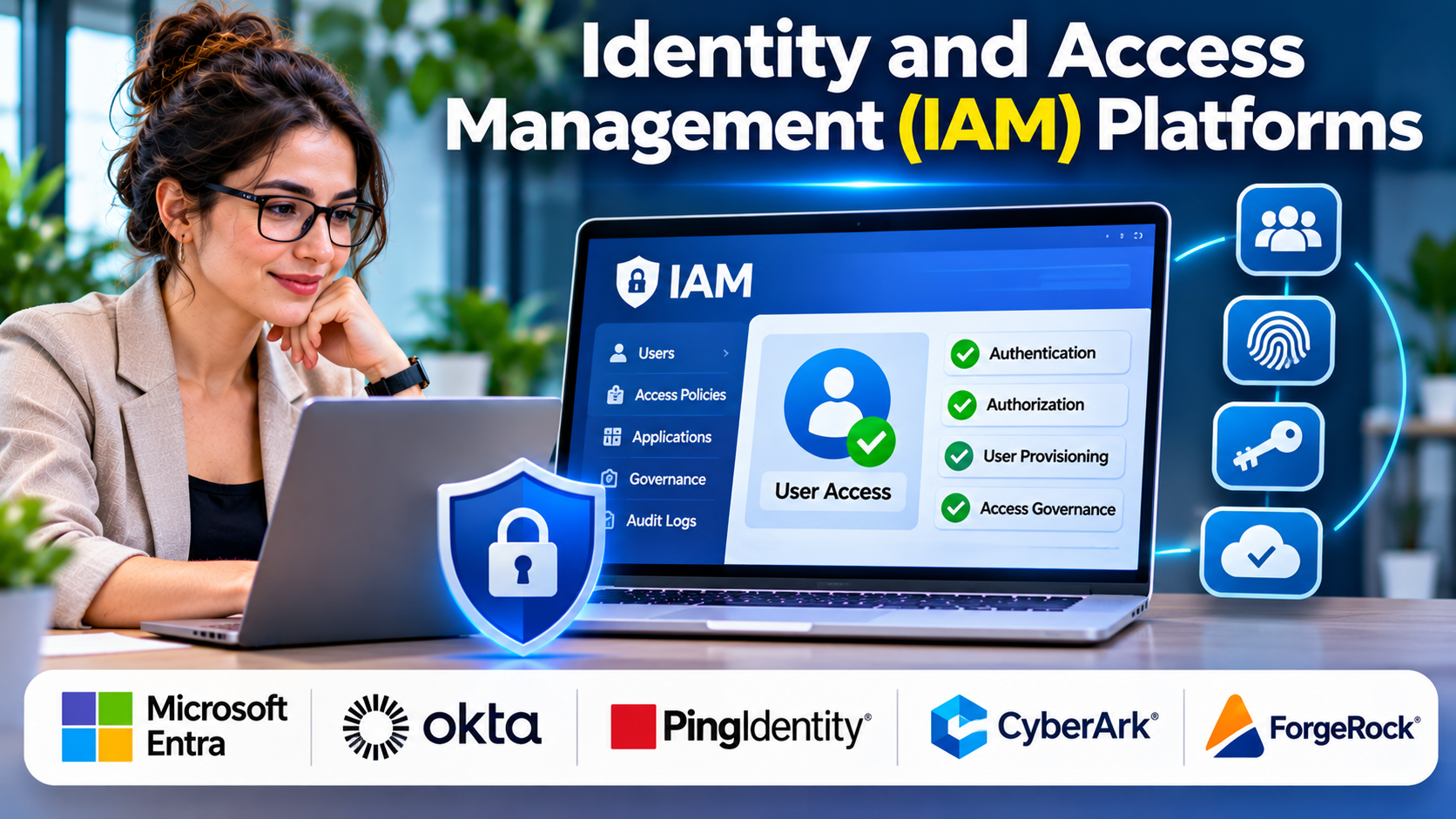
Identity and Access Management (IAM) provides the systems and policies that help organizations answer those questions consistently.
What Is Identity & Access Management?
Identity and Access Management is a combination of technologies, processes, and governance practices used to manage digital identities and control access to resources.
An IAM environment commonly supports:
- User authentication
- Single sign-on
- Multifactor authentication
- Identity directories
- Access policies
- User provisioning and deprovisioning
- Role and group management
- Application integrations
- Identity-related logging and reporting
IAM is not a single feature. It is a security architecture that connects identity information with access decisions.
Authentication and Authorization Are Different
Authentication establishes who or what is requesting access.
Authorization determines what that identity is permitted to do.
For example, a financial analyst may successfully authenticate through an organization’s identity provider but still lack permission to modify payroll information.
Both functions matter.
Strong authentication without appropriate authorization can expose sensitive resources. Strict authorization is ineffective if attackers can impersonate legitimate identities.
Why IAM Has Become Essential
Organizations increasingly operate across cloud applications, on-premises infrastructure, remote devices, and third-party services.
This creates several challenges.
Fragmented Identity Systems
Without centralized management, users may maintain separate credentials for many applications.
That increases administrative effort and makes consistent security enforcement difficult.
Delayed Access Removal
When employees change roles or leave, outdated permissions may remain active.
Automated lifecycle processes can reduce this risk, although their effectiveness depends on reliable source data and application integrations.
Excessive Permissions
Users often accumulate access over time.
IAM policies should support least privilege, ensuring that identities receive only the permissions required for their responsibilities.
Inconsistent Authentication
Different applications may enforce different password and authentication requirements.
Central identity controls can improve consistency, provided applications are correctly integrated.
Major IAM Platforms to Consider
Microsoft Entra ID
Microsoft Entra ID provides cloud identity and access capabilities, including authentication, application access, and policy-based controls.
It is particularly relevant to organizations using Microsoft 365, Azure, and Microsoft-centered workplace infrastructure.
Best-fit considerations: Microsoft ecosystem integration, workforce authentication, and conditional access requirements.
Trade-offs: Advanced features can depend on licensing, and organizations must carefully manage policy complexity.
Okta Workforce Identity
Okta provides workforce identity capabilities for authentication, single sign-on, multifactor authentication, and identity lifecycle integrations.
It is relevant to organizations operating diverse SaaS application environments.
Best-fit considerations: Cross-vendor application integration and centralized workforce access.
Trade-offs: Review feature packaging, integration requirements, and total subscription costs.
Ping Identity
Ping Identity provides identity and access solutions supporting enterprise authentication and access requirements.
It can be relevant to organizations with complex identity architectures and hybrid environments.
Best-fit considerations: Enterprise federation, authentication orchestration, and specialized deployment requirements.
Trade-offs: Architecture and implementation complexity should be evaluated against internal expertise.
JumpCloud
JumpCloud combines directory-related capabilities with identity and device management functions.
It is worth evaluating for organizations seeking to coordinate user access and device administration.
Best-fit considerations: Mixed operating system environments and integrated identity-device workflows.
Trade-offs: Validate support for required applications, endpoint configurations, and advanced governance needs.
OneLogin
OneLogin offers workforce identity services, including single sign-on and access management capabilities.
It is relevant to businesses seeking centralized authentication across applications.
Best-fit considerations: SaaS access consolidation and identity administration.
Trade-offs: Confirm product packaging, lifecycle capabilities, and integrations for the intended deployment.
Keycloak
Keycloak is an open-source identity and access management project supporting authentication and identity federation.
It is particularly relevant to development teams and organizations that want to operate their own identity infrastructure.
Best-fit considerations: Self-managed identity services, application integration, and architectural flexibility.
Trade-offs: Hosting, upgrades, security maintenance, availability, and operational support remain the organization’s responsibility.
IAM Platform Comparison
| Platform | Relevant environment | Main evaluation priority |
|---|---|---|
| Microsoft Entra ID | Microsoft-oriented enterprises | Licensing and conditional access |
| Okta | Diverse SaaS environments | Integration and lifecycle coverage |
| Ping Identity | Complex enterprise identity | Architecture and federation |
| JumpCloud | Mixed identity and device estates | Directory and device requirements |
| OneLogin | Centralized workforce access | Application support and administration |
| Keycloak | Self-managed application identity | Operational ownership |
This comparison identifies practical evaluation areas rather than declaring a universal winner.
IAM vs. SSO, PAM, and IGA
These categories overlap but solve different problems.
Single Sign-On (SSO) reduces repeated authentication across connected applications.
Privileged Access Management (PAM) focuses on powerful accounts and sensitive administrative access.
Identity Governance and Administration (IGA) emphasizes access lifecycle governance, certifications, and policy oversight.
IAM is the broader foundation connecting identities with authentication and access control.
Organizations may need specialized tools in addition to their primary IAM platform.
Essential IAM Selection Criteria
Application Compatibility
Create an inventory of critical applications and determine which authentication and provisioning standards they support.
SAML, OpenID Connect, OAuth-related authorization flows, and SCIM may be relevant depending on the integration.
Lifecycle Automation
Evaluate how the platform handles new employees, transfers, contractors, and departures.
A reliable human resources data source and clear ownership of access decisions are essential.
Conditional Access
Some environments require decisions based on device state, location signals, application sensitivity, or session risk.
Check whether the proposed platform supports the necessary conditions and whether policies are understandable to administrators.
Resilience and Recovery
Identity systems can become dependencies for nearly every business application.
Examine service availability, emergency access, recovery procedures, and the consequences of identity-provider outages.
Auditability
Organizations should be able to investigate access changes, authentication events, and administrative actions.
Verify log availability, retention options, and integration with monitoring systems.
A Practical IAM Implementation Roadmap
Start with an identity inventory.
Identify employees, contractors, administrators, service accounts, applications, and existing directories.
Next, establish a reliable source for workforce identity information.
Define access ownership and role requirements before attempting large-scale automation.
Integrate a small group of critical applications, test authentication and provisioning, and document recovery procedures.
Introduce stronger authentication policies for sensitive accounts.
Expand gradually while monitoring sign-in failures, orphaned accounts, excessive privileges, and support requests.
IAM deployment should be treated as an ongoing security program rather than a one-time software installation.
Common IAM Mistakes
One frequent mistake is assuming that single sign-on automatically solves access governance.
Another is relying on broad administrator roles instead of designing appropriate permission boundaries.
Organizations also underestimate the consequences of inaccurate employee records, poorly tested provisioning workflows, and inadequate emergency access.
Finally, excessive dependence on a single identity platform without tested recovery arrangements can create operational risk.
Final Thoughts
Identity and Access Management is central to modern security because access decisions connect nearly every user, application, and business process.
Microsoft Entra ID, Okta, Ping Identity, JumpCloud, OneLogin, and Keycloak offer different ways to build that foundation.
The right platform is the one that fits existing systems, supports reliable identity lifecycles, enforces appropriate controls, and remains manageable as the organization changes.
Successful IAM combines technology with clear ownership, dependable processes, and continuous review.