Introduction
Planning surgery or medical care is a big step. Patients often need to choose where they will receive treatment. Hospitals can differ in services, facilities, specialists, costs, and patient support. Hospital comparison helps patients look at different options before they make a choice. By comparing information, patients can learn what to expect and ask better questions during consultations. This article explains how a careful and simple approach to hospital comparison can help patients and their families feel more prepared and informed about their medical journey.
What Does Hospital Comparison Mean?
Hospital comparison is the process of looking at different hospitals to see what they offer. It helps patients understand which hospital fits their health needs.
When doing a hospital comparison, patients may look at several areas:
- Hospital services and departments
- Surgeon or specialist availability
- Experience with a specific procedure
- Facilities and equipment
- Accreditation or quality information
- Patient support services
- Costs and billing details
- Location and travel ease
- Follow-up care options
Patients should compare relevant and verified information. Relying only on advertisements or online star ratings is not enough when making important health choices.
Why Should Patients Compare Hospitals?
Taking time to compare hospitals can help patients make careful choices. Every hospital is different, and finding the right fit matters for comfort and care.
Hospital comparison can help patients:
- Understand their available options clearly
- Ask better questions during doctor visits
- Identify important differences between facilities
- Understand expected costs before treatment
- Check if required medical services are available
- Review practical support for travel and stay
- Prepare well for medical consultations
- Make a more informed decision about care
Comparison does not guarantee treatment results, but it can help patients feel more ready and secure.
What Should Patients Compare Between Hospitals?
When choosing where to go for medical care, patients should look at several core factors. Each factor helps build a clear picture of what the hospital provides.
Hospital Services
Patients should check whether the hospital provides the exact surgery or treatment they need. Not all hospitals offer every type of specialized care.
Doctors and Specialists
Patients may review the relevant specialist’s qualifications, training, and experience. Knowing who will manage the procedure helps build trust. This review should stay factual without inventing or ranking doctors.
Experience With Procedure
Patients may ask about the hospital’s experience with their specific surgery. Higher familiarity with a procedure can mean the team is well-prepared for that type of care.
Hospital Facilities
Patients should check relevant facilities and support services. This includes clean rooms, advanced testing units, and safe recovery areas. Only verified facility details should be used.
Quality and Accreditation
Patients may check relevant accreditation and quality information. Accreditation shows that a hospital meets certain safety and operational standards, though it does not guarantee treatment quality on its own.
Cost
Hospital costs may vary based on the procedure, patient needs, required tests, room type, and other services. Patients need clear pricing details.
Patient Support
Helpful support services make a big difference, especially for those traveling far. These services may include:
- Appointment scheduling support
- International patient assistance
- Language translation help
- Travel and local transport guidance
- Accommodation guidance near the hospital
- Follow-up communication channels
Why Price Should Not Be the Only Comparison Factor
A lower quoted price can look attractive, but it may not include every part of care. Patients should check what a quoted cost covers before they book treatment.
A clear cost review should check if the price includes:
- Initial doctor consultations
- Pre-surgery lab tests and scans
- The surgery itself and operating room fees
- Hospital room stay and nursing care
- Medicines and medical supplies
- Post-surgery follow-up visits
- Any extra required services
Understanding the full cost helps prevent unexpected expenses and ensures a smoother medical experience.
| Comparison Factor | What Patients Should Check |
|---|---|
| Surgery | Is the required procedure available? |
| Specialist | Is the relevant specialist available? |
| Facilities | What care and support facilities are offered? |
| Cost | What does the quoted cost include? |
| Follow-Up | What support is available after treatment? |
Simple Steps to Compare Hospitals
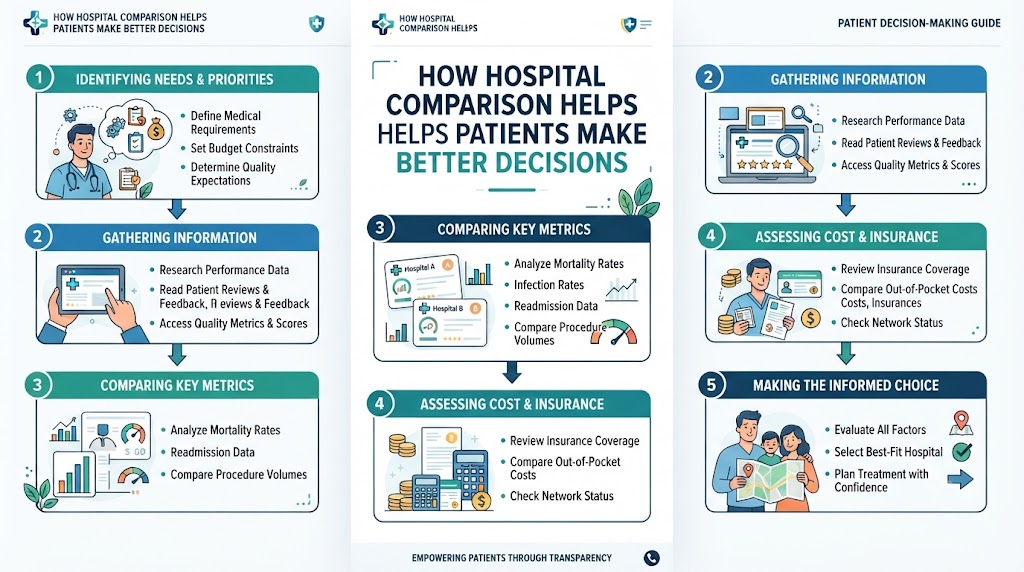
Comparing options does not have to be hard. Patients can follow a few basic steps to guide their research:
- Understand the surgery or treatment you need.
- Make a list of possible hospitals.
- Check relevant hospital services.
- Review specialist information.
- Compare facilities and support.
- Ask about the full cost.
- Check follow-up care options.
- Discuss your options with a qualified healthcare professional.
Questions Patients Should Ask
Asking the right questions helps patients get clear answers from hospitals. Here are useful questions to ask:
- Does the hospital provide the surgery I need?
- Who will perform or manage the procedure?
- What experience does the relevant specialist have?
- What facilities are available for my care?
- What does the estimated cost include?
- What pre-surgery tests may be needed?
- What happens immediately after surgery?
- How can I contact the hospital if I have questions?
- What follow-up support is available after discharge?
How Should Patients Use Online Hospital Information?
Online information can help patients research their options, but it should be used with care.
When looking online, patients should:
- Check information from reliable and official sources.
- Look for current and up-to-date details.
- Avoid relying only on star ratings or glowing reviews.
- Check whether hospital claims can be verified.
- Ask the hospital direct questions to clear up doubts.
- Discuss all medical choices with qualified healthcare professionals.
Online reviews can give general feedback, but they are not proof of medical quality.
Common Mistakes to Avoid
When comparing hospitals, patients sometimes make easy-to-fix mistakes. Keeping these in mind can lead to better choices:
- Choosing a hospital only based on a low price tag
- Trusting advertisements without checking the details
- Relying only on online star ratings
- Ignoring the importance of follow-up care
- Not checking what the quoted cost actually includes
- Failing to ask about the relevant specialist’s background
- Comparing hospitals without considering the specific procedure needed
Simple Hospital Comparison Checklist
Patients can use this quick checklist to track their research:
- Hospital services checked
- Relevant specialist information checked
- Procedure experience reviewed
- Facilities reviewed
- Quality information checked
- Full cost understood
- Patient support reviewed
- Follow-up care understood
- Important questions prepared
Note: This checklist supports your personal research and does not replace professional medical advice.
Frequently Asked Questions
Why should patients compare hospitals before surgery? Hospital comparison helps patients understand their options, check available services, review costs, and feel more prepared before making a medical decision.
What factors should patients compare between hospitals? Patients can compare services, specialist experience, available facilities, quality info, support services, and total costs.
Should hospital cost be the main deciding factor? No. Cost is important, but a low price might leave out key parts of care like tests, medicines, or follow-up visits. Patients should look at the full cost.
How can patients compare hospital facilities? Patients can review what care units, equipment, and comfort features the hospital offers, and check these details directly with the hospital team.
What should patients ask about the surgeon? Patients can ask who will perform the procedure, what their qualifications are, and what experience they have with that specific surgery.
How can patients check hospital quality information? Patients can look for official accreditations, verified safety records, and details on hospital standards from trusted healthcare sources.
Should patients compare follow-up care? Yes. Good follow-up care is important for safe healing and helps patients know who to contact if they have questions after leaving the hospital.
Can online hospital reviews help patients compare hospitals? Online reviews can offer general ideas, but patients should verify claims and talk directly with medical professionals instead of relying only on ratings.
Conclusion
Hospital comparison can help patients understand their options and feel more in control of their care. Patients should look beyond price and examine services, specialists, facilities, quality information, support, and follow-up care. Checking reliable information before making a choice is a smart step. Patients should always discuss their medical choices and treatment plans with qualified healthcare professionals to ensure the best possible care.