A polished résumé does not always reveal whether someone can perform a particular job.
Interviews can provide valuable insight, but they may also be influenced by inconsistent questions, interviewer expectations, and subjective impressions.
Candidate assessment tools offer another way to gather job-relevant evidence.
Their value depends on choosing appropriate assessments, interpreting results carefully, and ensuring that the evaluation process is fair.
What Are Candidate Assessment Tools?
Candidate assessment tools are applications used to evaluate skills, knowledge, abilities, or other characteristics relevant to employment.
Assessments may include technical exercises, work samples, job simulations, cognitive tests, situational judgment exercises, and structured questionnaires.
Different assessment methods answer different questions.
A programming exercise may demonstrate coding ability, while a realistic customer service simulation may reveal how someone approaches common workplace situations.
No single assessment can fully predict future job performance.
Major Types of Candidate Assessments
Technical Skills Assessments
These evaluate capabilities such as programming, data analysis, or other specialized knowledge.
The strongest exercises resemble tasks candidates would actually perform in the role.
Work Sample Tests
Candidates complete practical assignments related to the position.
These can provide direct evidence of job-related abilities, although assignment length and candidate effort require consideration.
Cognitive and Psychometric Assessments
These measure particular abilities or psychological constructs.
Organizations should examine the validity, reliability, and job relevance of the specific assessment rather than assuming every standardized test is appropriate.
Situational Judgment Tests
Candidates respond to realistic workplace scenarios.
These assessments may help evaluate decision-making in defined situations, provided the scenarios and scoring criteria are appropriate.
Candidate Assessment Platforms to Evaluate
HackerRank
HackerRank provides technical assessment and interview-related tools.
It is relevant to organizations evaluating programming and software development skills.
Codility
Codility focuses on technical hiring assessments and related evaluation workflows.
Organizations should examine whether available exercises reflect the actual engineering responsibilities of their positions.
TestGorilla
TestGorilla provides pre-employment assessment capabilities across different skill areas.
It is worth considering when organizations need to evaluate multiple job-related competencies.
Criteria
Criteria offers employment assessment solutions.
Businesses should review the supporting validation evidence for the specific assessments they intend to use.
SHL
SHL provides talent assessment products and related services.
It deserves consideration for organizations requiring structured assessment programs and documented evaluation approaches.
Vervoe
Vervoe emphasizes skills-based assessment and job-related evaluation.
It is relevant when practical demonstrations of capability are central to the hiring process.
What Makes an Assessment Useful?
A useful assessment should measure something genuinely connected to successful job performance.
It should also produce results that can be interpreted consistently.
| Criterion | Evaluation question |
|---|---|
| Job relevance | Does the assessment reflect actual work? |
| Validity | Is there evidence supporting the intended interpretation? |
| Reliability | Are results reasonably consistent? |
| Accessibility | Can candidates with disabilities participate fairly? |
| Candidate effort | Is the assessment proportionate to the hiring stage? |
| Scoring transparency | Can hiring teams explain the result? |
| Data protection | Is candidate information handled appropriately? |
Avoiding Assessment Bias
Assessment fairness requires more than giving every candidate the same test.
A test may disadvantage certain applicants if it includes unnecessary language complexity, inaccessible interfaces, or tasks unrelated to the job.
Organizations should consider reasonable accommodations and review whether assessments produce unexplained differences across relevant groups.
Automated scoring should not be treated as inherently objective.
Algorithms can reproduce problems present in their design, training data, or evaluation criteria.
Using Assessments Within a Hiring Process
Candidate assessments work best as one component of a broader evaluation process.
For example, a technical exercise may establish whether an applicant can solve a particular problem.
A structured interview can then explore how the candidate approaches collaboration, trade-offs, and communication.
Hiring teams should define assessment criteria before reviewing results.
Changing standards after seeing candidate performance can undermine consistency.
Candidate Experience Matters
Long or poorly explained assessments can discourage qualified applicants.
Candidates should understand the purpose of an assessment, its approximate duration, and how results will be used.
Organizations should also consider whether unpaid assignments require unreasonable amounts of work.
A shorter, well-designed assessment may provide more useful evidence than an extensive collection of unrelated tests.
Final Thoughts
Candidate assessment tools can improve hiring decisions when they measure relevant abilities and support consistent evaluation.
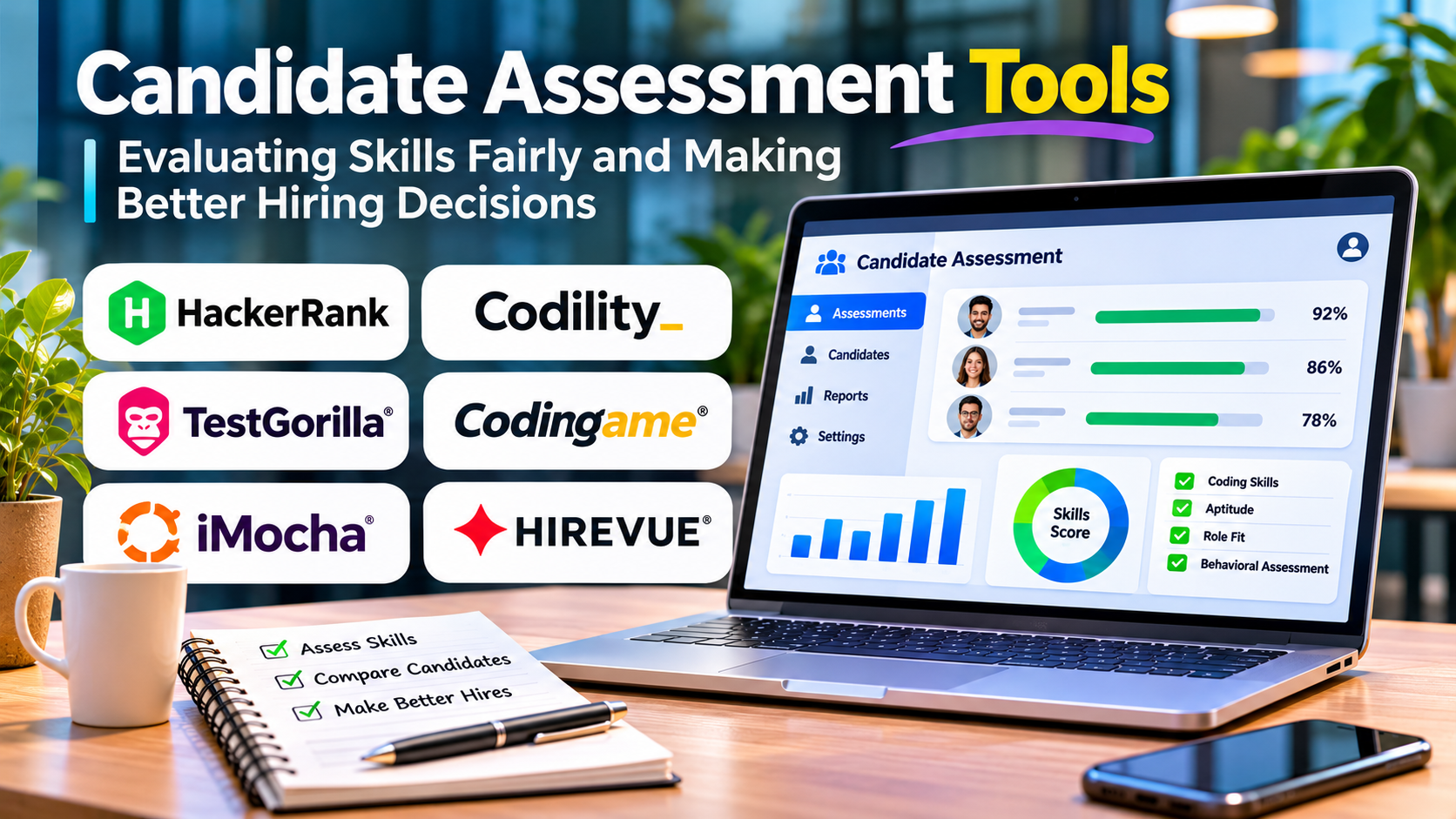
HackerRank and Codility focus on technical assessment, while TestGorilla, Criteria, SHL, and Vervoe address different skills and evaluation requirements.
The right solution depends on the roles being filled, the evidence required, and the organization’s ability to interpret results responsibly.
Assessments should make hiring more informed and fair—not reduce candidates to unexplained numerical scores.