A supplier agreement is signed, filed, and marked complete. Months later, a business owner wants to switch vendors and discovers that the deadline for giving notice has already passed. The agreement was searchable. The commercial obligation stayed buried in the document, and nobody owned the decision.
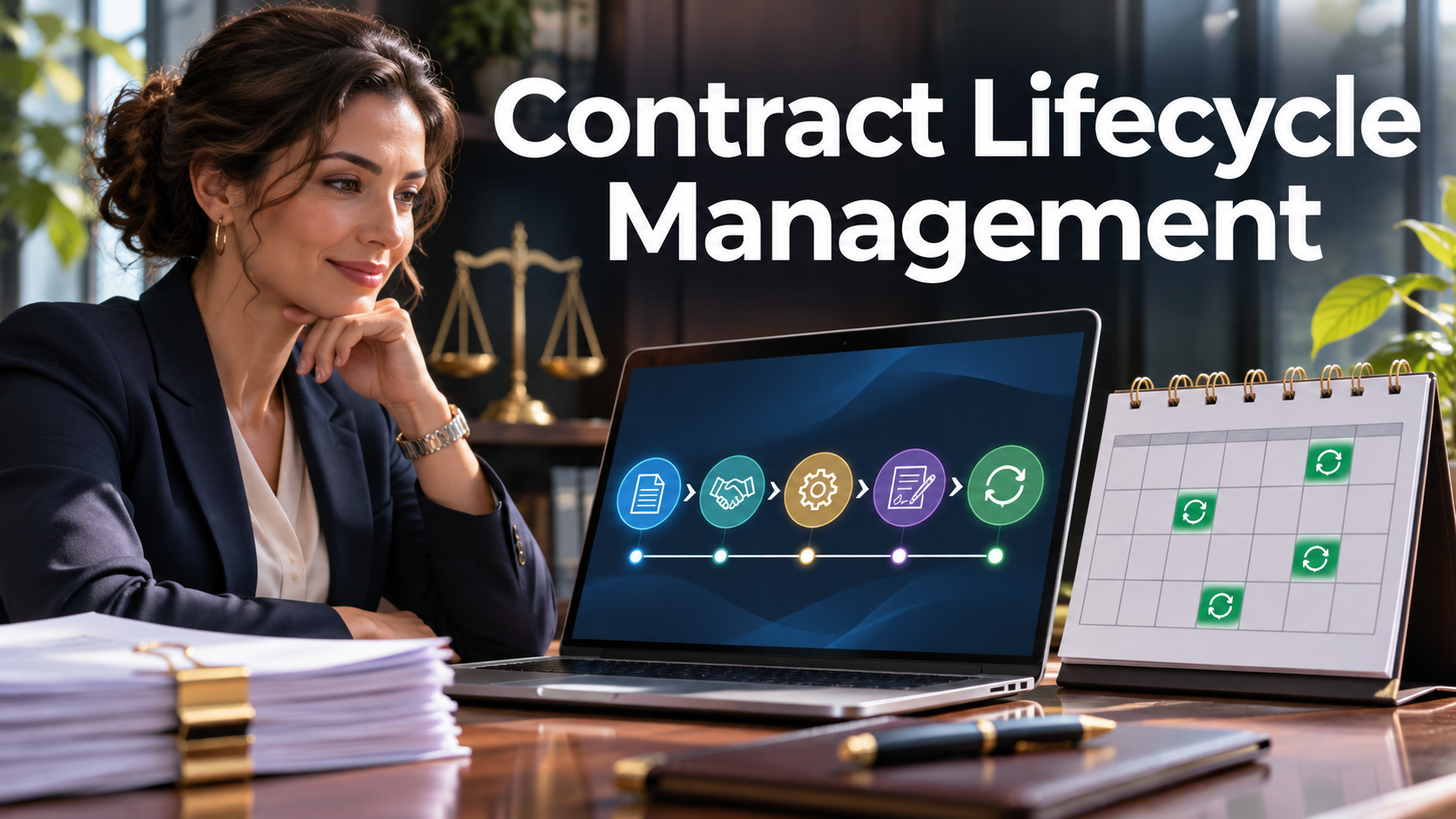
Contract lifecycle management, or CLM, covers how an agreement moves from a request through negotiation, approval, signature, and ongoing administration. Buyers often encounter these capabilities together in a product demonstration. In practice, each stage solves a different problem and may involve a different group of people. Choose where to start by following the failures that cost your organization time or money.
Work backward from a renewal that mattered
Take one recent renewal and reconstruct how the organization handled it. Identify the controlling document, the notice clause, the person accountable for the decision, and the evidence that notice was given if applicable. If the agreement was amended, establish which document changed the original terms. This exercise reveals more than a search for the supplier name.
Distinguish the date when the agreement ends from the deadline for sending notice and the date when the organization wants to make its decision. Those are separate milestones. A renewal reminder that arrives exactly when notice is due gives a business owner little time to evaluate alternatives or consult procurement. Set a decision milestone early enough for the work required.
Docusign’s CLM documentation describes obligation management for certain CLM accounts with IAM plans. Use that capability as a prompt to check the precise scope of an offering. Ask whether your proposed package includes obligation records, who can edit them, and how the system handles amendments, escalations, and completion evidence.
Give each commitment an owner and evidence
An obligation record might capture a date, responsible team, source clause, completion criteria, and escalation route. Some obligations recur, such as providing an annual report. Others arise when an event happens, such as delivering information within an agreed interval after an approved request. The platform needs to reflect that distinction or support a clear handoff to a system that can.
Track what completion means. An email notification asking a team to supply a document represents a reminder. Completion might require the document itself and confirmation that it was delivered through the designated channel. Give the responsible person somewhere to record that evidence, or retain a reliable link to the source system.
Design for changes in responsibility. If the contract owner leaves, the agreement still has active obligations. Ask how administrators can find unassigned items and transfer them. Show what happens if a team name changes or if two departments share responsibility for different clauses. An assigned task should remain understandable to the person who inherits it.
Fix intake before making approvals more elaborate
For some teams, the biggest problem comes earlier. Requests arrive with missing legal entities, unknown commercial terms, or a deadline already promised to the counterparty. Good intake captures enough information to choose the right route. It can offer different paths for an approved standard form, a contract supplied by the other party, or a higher-risk transaction requiring specialist review.
Keep the initial form short enough for requesters to complete accurately. Ask questions that affect routing or preparation. A procurement request may need supplier identity, the type of service, and whether sensitive data is involved. A sales request may need commercial scope, approved pricing, and the correct customer entity. Collect supporting details as they become relevant.
Once a route is chosen, use approval rules to match the nature of the decision. Finance may need to review payment or pricing exceptions. Security may evaluate data processing arrangements. Legal may focus on departures from approved language. Test what happens when one reviewer’s change affects another reviewer’s earlier decision. A visible approval trail helps the team decide whether review needs to reopen.
Keep amendments connected to the terms they change
A contract repository becomes useful when people can identify the current set of terms. A master agreement may have order forms, schedules, and later amendments. Someone looking for a renewal deadline or service commitment needs to see the relevant relationships. A folder with many similarly named PDFs leaves the interpretation to whoever happens to open them.
In a pilot, import an agreement with two amendments. Have one change pricing and another change the notice period. Ask a new user to identify the operative deadline, show the supporting text, and find any corresponding task. Then check what happens to the previous task when the amendment goes into effect. The organization should be able to retain the prior record and see why it changed.
If the platform extracts metadata from documents, test it on scanned files, attachments, and language where a date depends on a formula or notice window. Have a reviewer compare the extracted result to the actual clause. Use higher review standards for fields that trigger important actions. An incorrect counterparty nickname and an incorrect termination deadline carry different consequences.
Connect CLM with sales, procurement, and signature
A sales or procurement system often starts the request. The CLM system may hold the negotiation history and signed contract. A signature service may handle the signing process. Agree on which system owns each status and what counts as a successful handoff. Check what happens if someone signs externally or the signer’s identity changes halfway through the process.
Include an integration failure in the demonstration. Have the signed file arrive while the CRM status update fails. Ask who sees the failure, how they retry it, and whether the document gets copied twice. Check that access permissions remain appropriate when a link appears in a broader system. A sales opportunity may be visible to people who should only see a summary of certain agreements.
Choose access rules by role and agreement type. A procurement manager may need commercial terms for an active supplier. A business owner may need the obligations they perform. A restricted acquisition agreement may need tighter controls. Test search, preview, attachment access, reporting, and export, because all can surface information in different ways.
Roll out around one complete agreement type
Select an agreement type with enough volume to justify the effort and a clear business owner. Include new intake and a sample of existing records. Measure turnaround and rework, but also check obligations that reach an accountable person with a realistic deadline. Run one renewal decision through the pilot before expanding.
Budget for template maintenance, data cleanup, integration support, and ongoing ownership. Ask what you can export, including the signed files, relationships, audit history, and obligation records. A platform may make it simple to retrieve documents while leaving structured workflow data harder to carry forward.
Start with the contract that people had to reconstruct by hand. The best demonstration ends with someone finding the operative terms, knowing what they own, and having enough time to act.