Introduction
Choosing a hospital is one of the most important healthcare choices you can make. Different hospitals offer different medical services, specialized care, facilities, and treatment costs. Selecting a facility based only on brand name or location may not always give you the care you need. Comparing hospitals allows patients and families to evaluate available options carefully before receiving treatment.
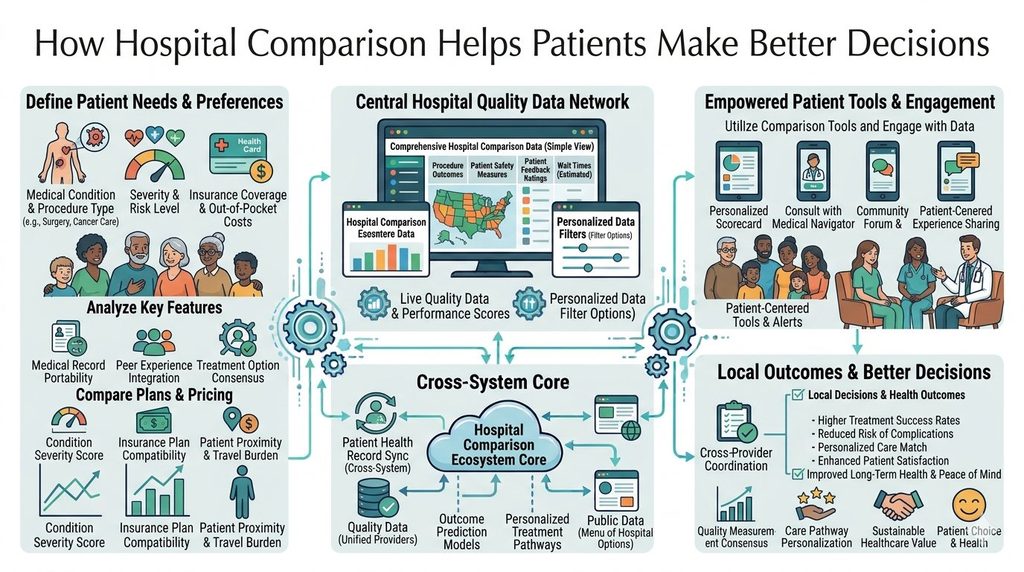
Hospital comparison helps you look beyond marketing claims and focus on factors that directly affect your care. By reviewing medical services, doctor experience, treatment costs, and patient safety, you can make clear and informed healthcare choices. Understanding your options gives you confidence and helps you take an active role in your medical journey.
What Hospital Comparison Means
Hospital comparison means reviewing key details about two or more medical facilities before choosing where to receive care. Instead of picking the nearest facility or relying only on brand recognition, patients look closely at what each hospital offers.
When you compare hospitals, you look at details like available medical treatments, doctor qualifications, modern facilities, location, estimated costs, and safety records.
The best choice always depends on your specific medical condition, financial situation, personal preferences, and advice from qualified healthcare professionals.
Why Hospital Comparison Matters for Patients
Collecting clear information before selecting a hospital gives you control over your healthcare journey. It allows you to make decisions based on facts rather than advertisements, hearsay, or guesswork.
- Understands Your Options: You learn what treatments are available across different facilities.
- Prepares Better Questions: Reviewing details helps you form targeted questions for your doctor.
- Identifies Key Gaps: Comparison highlights missing details regarding pricing, care quality, or facilities.
- Builds Confidence: Making an informed choice reduces anxiety before a procedure.
Note: Hospital comparison is intended for planned, non-emergency care. Urgent or life-threatening medical conditions require immediate emergency attention.
Important Factors Patients Should Compare
Medical Services and Treatment Options
Not all hospitals offer the same treatments. Some specialize in cardiac care, while others focus on oncology or orthopedics. Before scheduling care, verify that the hospital regularly performs the exact procedure or treatment you require.
Doctor Qualifications and Experience
The skill and experience of the medical team directly impact your care. Look into doctor credentials, board certifications, and experience in handling your specific condition. You can check official professional registries or hospital staff profiles for verified details.
Hospital Facilities and Equipment
Advanced diagnostic tools, modern operating rooms, and well-equipped intensive care units (ICUs) contribute to quality care. Ensure the hospital has the specific equipment required for your planned diagnosis or treatment.
Patient Safety and Quality of Care
Patient safety involves strict infection control, low complication rates, clear communication, and adherence to medical standards. Reviewing official safety records and hospital quality data helps you choose a facility with strong safety protocols.
Treatment Costs and Financial Planning
Healthcare costs vary widely between facilities. Ask for a clear cost estimate covering doctor fees, diagnostic tests, room charges, and medications. Understanding these details early prevents unexpected medical bills later.
Hospital Location and Accessibility
Consider physical distance, travel times, transport options, and parking. Convenient locations matter especially for treatments requiring multiple visits, prolonged rehabilitation, or regular family support.
Patient Reviews and Hospital Reputation
Patient feedback offers insights into nursing care, cleanliness, and communication standards. Read reviews from multiple reliable sources to get a balanced perspective rather than relying on a single comment.
Communication and Patient Support
A supportive hospital environment values clear explanations, patient respect, and transparent treatment plans. Look for care teams that listen to your concerns, offer translation services if needed, and guide your family through the process.
How Hospital Comparison Supports Better Decisions
Comparing options provides a structured way to evaluate healthcare choices. By organizing details on costs, specialist qualifications, and facilities, you can make logical decisions aligned with your personal priorities.
While careful comparison helps you select a well-suited facility, it does not guarantee medical outcomes. Healthcare decisions should always be made in consultation with qualified medical professionals.
How Patients Can Compare Hospitals Step by Step
Follow this clear process to evaluate your healthcare options effectively:
- Identify Your Need: Define the exact condition, diagnosis, or treatment you require.
- Consult Your Doctor: Ask a healthcare professional for recommendations and treatment options.
- Shortlist Hospitals: Create a list of facilities offering the required medical services.
- Check Credentials: Verify doctor qualifications and surgical experience.
- Review Facilities: Confirm the hospital has necessary safety protocols and equipment.
- Request Cost Estimates: Ask for written financial estimates detailing all potential charges.
- Evaluate Location: Factor in travel distance, access, and follow-up visit requirements.
- Check Patient Feedback: Read reviews across reliable sources to evaluate patient experiences.
- Ask Clarifying Questions: Contact hospital helpdesks to clear up any confusing details.
- Make an Informed Choice: Discuss your findings with your doctor before finalizing your decision.
Common Mistakes Patients Should Avoid
- Choosing Only by Reputation: Picking a hospital solely based on its brand name without checking if it specializes in your specific condition.
- Focusing Solely on Lowest Price: Selecting the cheapest option without verifying what services, tests, or care standards are included.
- Assuming Higher Cost Means Higher Quality: Believing expensive care guarantees better medical outcomes.
- Trusting Unverified Reviews: Relying on single, unverified online comments instead of balanced feedback across reliable sources.
- Overlooking Doctor Experience: Focusing entirely on hospital rooms while ignoring surgeon or specialist credentials.
- Delaying Emergency Care: Spending time comparing hospitals during a life-threatening health event.
The Role of Reliable Information in Hospital Comparison
Accurate information is essential when evaluating healthcare providers. Relying on official hospital disclosures, verified medical registries, transparent pricing estimates, and qualified doctor advice leads to better decision-making. Avoid relying on unverified internet claims, advertisements, or promotional material as proof of healthcare quality. Always confirm critical care details directly with the hospital or your primary doctor.
How Families Can Help Patients Compare Hospitals
Family members play a valuable supporting role during healthcare decision-making:
- Gather Details: Assisting with research on hospital facilities and doctor credentials.
- Organize Information: Keeping track of price estimates, questions, and treatment options.
- Plan Logistics: Managing travel, accommodation, and appointment schedules.
- Provide Emotional Support: Listening to the patient’s preferences and respecting their final decisions.
Key Comparison Reference Tables
Hospital Selection Factors Overview
| Hospital Comparison Factor | Why It Matters | What Patients Should Check |
| Treatment Options | Ensures the hospital provides the exact care required for your health condition. | Available medical procedures, specialized units, and treatment technologies. |
| Doctor Qualifications | Directly impacts the quality and expertise of your medical care. | Board certifications, years of experience, and specialty focus. |
| Facilities & Equipment | Advanced technology supports accurate diagnosis and safer procedures. | Modern ICUs, specialized operating rooms, and diagnostic machinery. |
| Patient Safety | Reduces risks of hospital-acquired infections and care complications. | Infection control practices, safety standard accreditations, and care protocols. |
| Treatment Costs | Prevents unexpected financial strain and helps with budget planning. | Comprehensive cost estimates, breakdown of charges, and billing clarity. |
| Location & Travel | Affects convenience during regular visits, emergencies, and recovery. | Distance from home, travel options, ease of access, and parking. |
| Communication | Helps you understand treatment plans, risks, and recovery steps. | Clear explanations from staff, patient support services, and responsiveness. |
Patient Hospital Comparison Checklist
| What to Compare | Questions to Ask | Information to Confirm |
| Medical Expertise | Does the specialist handle my specific condition regularly? | Doctor qualifications and experience level. |
| Services Offered | Are all required tests and post-treatment care available here? | List of available facilities and care programs. |
| Cost & Billing | What is included in the estimated total price? | Written itemized cost breakdown. |
| Safety Standards | What infection control measures are in place? | Hospital safety record and accreditation status. |
| Travel & Access | How easy is it for family members to visit? | Transport links, visiting hours, and local lodging options. |
How MYMEDICPLUS Fits Into the Patient Information Journey
Finding clear healthcare information can feel overwhelming. Access to clear educational resources empowers patients and families to understand their choices better. MYMEDICPLUS serves as an informative resource to help readers learn about medical options, prepare useful questions, and approach healthcare decisions with confidence.
Educating yourself on key factors like safety, medical expertise, and costs makes speaking with healthcare professionals far more effective.
Frequently Asked Questions (FAQs)
1. What is hospital comparison? Hospital comparison is the process of reviewing and evaluating details such as costs, doctor qualifications, safety records, and facilities across different hospitals before receiving care.
2. How does hospital comparison help patients make better decisions? It gives patients clear information on treatment options, pricing, and medical expertise, allowing them to choose a facility suited to their specific medical needs and budget.
3. What factors should patients compare before choosing a hospital? Patients should compare doctor qualifications, available medical treatments, hospital safety standards, facilities, overall costs, location, and communication quality.
4. Why should patients check doctor qualifications and experience? Checking doctor credentials ensures that the medical professional treating you has proper training, certification, and relevant experience handling your specific health condition.
5. How can patients compare hospital treatment costs? Patients can request itemized cost estimates from different hospitals, asking what each quote includes regarding consultation fees, tests, room charges, and medicines.
6. Why is patient safety important when choosing a hospital? Patient safety measures reduce the risk of infections, surgical complications, and medical errors during your hospital stay.
7. Are online hospital reviews reliable? Online reviews offer general insight into patient experiences, but they should be combined with verified facts like doctor qualifications, safety records, and official hospital details.
8. Should patients choose a hospital based only on its reputation? No, a famous hospital may not always offer the specific treatment or doctor expertise needed for your individual condition.
9. How can families help patients choose a hospital? Families can assist by gathering information, taking notes, comparing price estimates, arranging transportation, and organizing questions for the doctor.
10. When should patients consult a healthcare professional before choosing a hospital? Patients should consult a qualified healthcare professional early in the planning process to understand their specific medical needs and receive expert recommendations.
Conclusion
Comparing hospitals before receiving planned medical treatment helps patients make informed healthcare decisions. By evaluating doctor qualifications, available treatment options, safety standards, facilities, costs, and location, you can choose care that best fits your specific needs.
There is no single hospital that is perfect for every person; the right choice depends on your individual situation. Always consult with qualified healthcare professionals to discuss your medical options before making final decisions.