Introduction
Finding the right mobile network details can feel tricky when you manage telecom projects or build mobile apps. Many developers, roaming teams, and telecom researchers need a clear way to identify network codes across different countries.
Without the right data, tracking down operator assignments takes too much time. eSIMGlobo provides structured resources to help professionals find mobile network codes, country lists, and provider directories in one place. This guide explains how mobile network codes work and how you can use telecom directories for your research.
Understanding MCC and MNC Codes
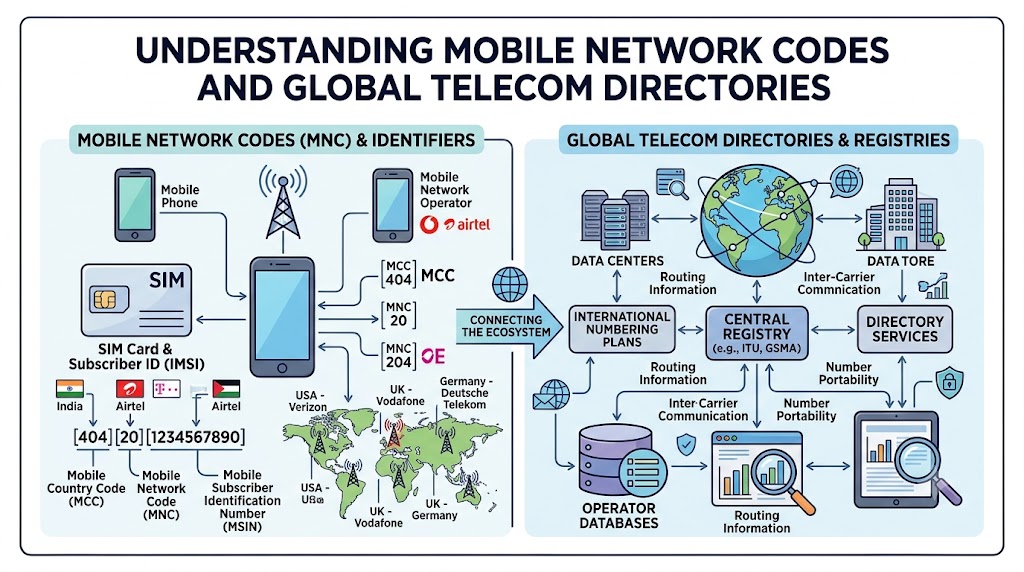
Mobile network identification relies on two core numbers assigned to every carrier worldwide. An MCC stands for Mobile Country Code, which is a three-digit number that identifies a specific country. For example, the United States uses the MCC 310.
An MNC stands for Mobile Network Code, which consists of two or three digits following the country code to identify a specific mobile network operator. When combined, these codes create a unique identifier for every cellular network on earth. Knowing these numbers helps engineers and developers route traffic, analyze roaming agreements, and test mobile connectivity.
PLMN Code Lookup and Its Purpose
A PLMN code combines the Mobile Country Code and the Mobile Network Code into a single string known as a Public Land Mobile Network identifier. A PLMN code lookup allows you to type in a combined code to find the exact network operator associated with it.
Telecom researchers use this lookup process to identify unknown network signals captured during field tests or roaming analysis. Keep in mind that finding a code in a directory only confirms that an operator holds an official assignment. It does not guarantee that the network offers active commercial service, current roaming agreements, or local signal coverage in a specific area.
Finding Mobile Network Codes by Country
Searching for network codes by country is the easiest way to narrow down large sets of telecom data. A structured Mobile Country Code List helps researchers isolate carriers operating within a specific geographic boundary.
If you need to analyze carriers in Germany, for instance, you can look up the country code 262 to view every assigned network code within that region. This country-based approach saves time when you develop localized apps or study regional carrier competition. It lets you filter out irrelevant global data and focus entirely on your target market.
Using a Mobile Network Operator Directory
A Mobile Network Operator Directory acts as a master list of carriers that manage their own physical cellular infrastructure. These directories store operator names, assigned network codes, country details, and status updates.
Developers and software teams rely on these records to populate carrier dropdown menus in mobile apps or validate user SIM cards. Telecom researchers also use operator directories to track industry changes, such as carrier mergers or newly assigned network codes issued by regulatory bodies.
| Term | Full Form | Simple Meaning | Main Purpose |
| MCC | Mobile Country Code | A three-digit number for a country | Identifies the nation where a mobile network operates |
| MNC | Mobile Network Code | A two or three-digit number for a carrier | Identifies a specific mobile network operator within a country |
| PLMN | Public Land Mobile Network | The combination of MCC and MNC | Uniquely identifies a specific cellular network globally |
Exploring a Global Telecom Provider Directory
Global telecom markets include thousands of companies operating across multiple regions and borders. A Global Telecom Provider Directory helps you view these international companies in an organized format. Instead of searching individual national regulatory websites, you can access compiled records from around the world.
eSIMGlobo organizes these international provider listings so you can compare network operators across different continents. This setup is especially useful for multinational enterprises and roaming specialists who need a broad view of global telecom infrastructure.
Understanding a Telecom Operator Database
A robust Telecom Operator Database contains deep records about mobile carriers, including historical code changes, parent companies, and operational statuses. The quality of a database depends entirely on regular updates and strict verification checks.
Unverified records can contain old codes or defunct operators that no longer exist. When you research telecom data, you must ensure your source separates current active assignments from historical data to avoid routing errors in your applications or technical reports.
Exploring an MVNO Directory
A Mobile Virtual Network Operator, or MVNO, is a company that provides mobile services to consumers without owning physical cell towers or spectrum licenses. Instead, an MVNO rents network access from a traditional Mobile Network Operator.
Because many MVNOs rely entirely on their host operator’s core network, they often do not receive their own unique MCC or MNC assignment. An MVNO directory helps you identify these virtual providers and understand which underlying network carrier powers their services.
Finding Providers Through an eSIM Provider Directory
An eSIM provider directory focuses on companies that sell digital SIM profiles for global travel and remote data connectivity. It is important to distinguish between traditional network operators, virtual network operators, and modern eSIM retailers.
While some network operators sell eSIMs directly, many eSIM providers act as digital resellers or aggregators partnering with multiple carriers worldwide. An eSIM provider directory helps travelers and businesses compare these digital service brands and find providers that offer connectivity in specific countries.
Understanding an MCC MNC Lookup API
An application programming interface, or API, is a software tool that allows different computer systems to talk to each other automatically. An MCC MNC Lookup API lets software developers send a network code query directly from their app and receive instant operator details in return.
This automation is vital for modern mobile applications, fraud detection tools, and telecom platforms that need to process thousands of carrier lookups in real time. Platforms like eSIMGlobo offer structured data access that developers can integrate into their workflows to streamline network identification tasks.
| Lookup Need | What It Is | What It Helps You Do |
| Country Code Search | Filtering records by geographic region | Isolate mobile network codes for a specific country |
| PLMN Code Lookup | Identifying combined network strings | Find the exact operator linked to a specific signal code |
| Operator Directory | Exploring physical infrastructure carriers | View official network names, codes, and carrier statuses |
| MVNO Research | Checking virtual network providers | Understand which host carrier powers a virtual brand |
| eSIM Provider Research | Comparing digital connectivity brands | Find companies selling digital travel and data profiles |
| API Lookup | Automating code queries via software | Integrate instant network identification into apps and tools |
Common Uses of Mobile Network Codes
Network codes serve many practical purposes across the modern telecommunications and software industries. Mobile app developers use them to auto-detect user carrier information during onboarding. Telecom researchers analyze them to map out global roaming footprints and study market competition.
Data teams also use network codes to clean and validate customer database entries. However, you must remember the limits of this data. A network code confirms an official regulatory assignment, but it does not tell you current signal strength, data speeds, or local pricing plans.
Common Lookup Mistakes
People often run into trouble during telecom research due to a few common mistakes. One frequent error is mixing up the Mobile Country Code with the Mobile Network Code, which leads to incorrect operator lookups. Another mistake is using incomplete code strings or relying on outdated records from unverified forums.
Researchers also mistakenly assume that every company holding an assigned network code offers direct consumer service, when many operate strictly as wholesale infrastructure providers or testing networks. Always double-check your source data to ensure accurate results.
How eSIMGlobo Helps With Telecom Research
Researching global telecommunications requires access to clean, organized, and up-to-date data structures. eSIMGlobo provides streamlined directories and lookup tools designed to make telecom research straightforward.
You can explore country-specific network lists, operator directories, and eSIM provider records without sorting through cluttered regulatory documents. While the platform offers structured insights, users should always verify active commercial service availability directly with providers before making business decisions or deploying production code.
What Is an MCC MNC Lookup?
An MCC MNC lookup is the process of searching for a mobile country code and mobile network code to identify the telecommunications company that owns that specific network identifier.
What Is the Difference Between MCC and MNC?
An MCC is a three-digit code that identifies the country of a mobile network, while an MNC is a two or three-digit code that identifies the specific mobile operator within that country.
What Does a PLMN Code Identify?
A PLMN code combines an MCC and an MNC to uniquely identify a specific public land mobile network anywhere in the global telecommunications grid.
How Can I Find Mobile Network Codes by Country?
You can find mobile network codes by country by using a telecom directory that allows you to filter carrier assignments based on a specific geographic nation and its assigned country code.
What Does a Mobile Network Operator Directory Show?
A mobile network operator directory shows official carrier names, assigned network codes, country locations, and operational statuses for companies that own physical cellular infrastructure.
Does Every Telecom Provider Have Its Own MCC and MNC?
No, many telecommunications providers, such as smaller virtual operators and digital resellers, do not receive their own unique MCC and MNC assignments from regulatory bodies.
What Is the Difference Between an MNO and an MVNO?
An MNO owns and operates physical cell towers and core network infrastructure, while an MVNO rents network access from an MNO to provide services to end users.
How Is an eSIM Provider Directory Different From a Telecom Operator Database?
An eSIM provider directory lists companies selling digital travel SIM profiles, whereas a telecom operator database focuses on core network codes and infrastructure carrier records.
What Is an MCC MNC Lookup API Used For?
An MCC MNC lookup API is used by software developers to automate carrier identification queries directly inside mobile apps, enterprise software, and telecom analytics tools.
Why Should I Verify Network-Code Records?
You should verify network-code records to ensure you are not relying on outdated assignments, defunct companies, or unverified data that could cause errors in your applications.
Conclusion
Mastering mobile network codes and telecom directories gives developers, researchers, and telecom professionals a strong foundation for managing global connectivity data. Understanding how MCC, MNC, and PLMN codes work allows you to identify carriers accurately across different regions.
Always remember that network codes confirm regulatory assignments rather than active commercial coverage. Platforms like eSIMGlobo offer helpful directories and tools to simplify your research process. Explore the available directories on eSIMGlobo today to streamline your next telecom project.