🥑 Keto Diet: A Complete User Guide (End-to-End)
Discover everything you need to know to begin, maintain, and optimize a ketogenic diet — based on real research, scientific experiments, benefits, and risks.
🔍 What is the Keto Diet?
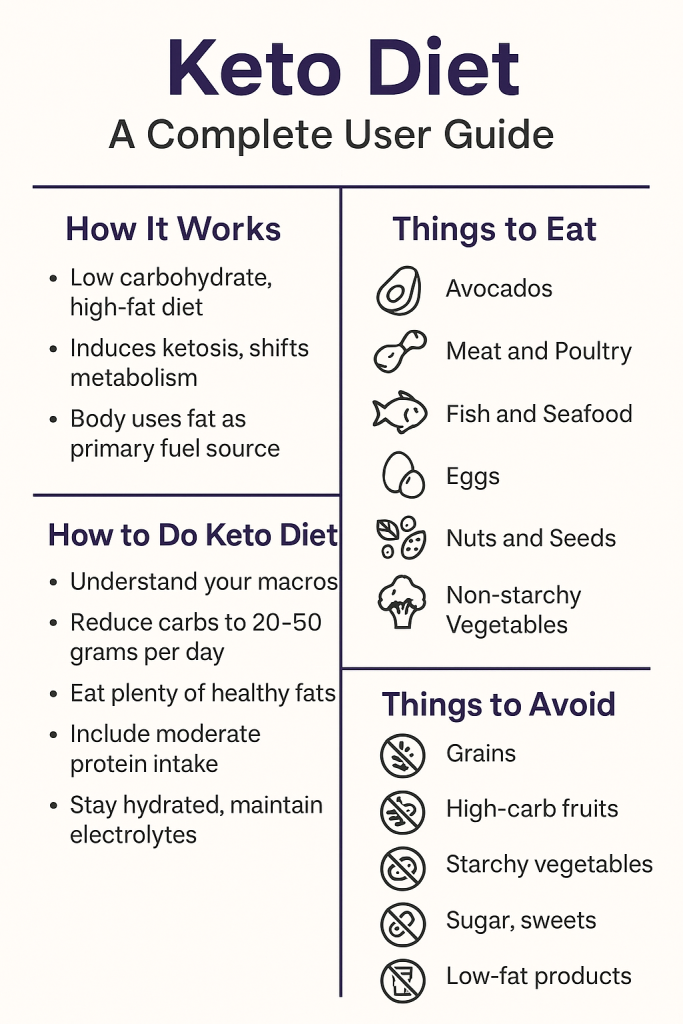
The Ketogenic (Keto) Diet is a low-carbohydrate, high-fat, moderate-protein diet that alters your body’s metabolism. Instead of burning glucose (carbs) for energy, the body enters a state called ketosis, where it burns fat for fuel.
Typical Keto Macros:
- 70–75% fat
- 20–25% protein
- 5–10% carbs (usually under 20–50 grams net carbs/day)
🔬 How the Keto Diet Works (Scientifically)
When you drastically reduce carbs:
- Insulin levels drop
- Your body starts breaking down fat into ketones (BHB, acetoacetate, acetone)
- These ketones become the new fuel source for your brain and muscles
This metabolic shift mimics fasting and triggers processes like:
- Fat oxidation (burning stored fat)
- Reduced inflammation
- Stable energy levels
- Improved cognitive clarity
🧪 Research and Experiments
Numerous scientific studies have evaluated the keto diet’s impact:
✅ Weight Loss
- Virta Health (2017): 218 Type 2 diabetics lost an average of 12% body weight in 12 months on keto and reduced HbA1c by 1.3%.
- Journal of Clinical Endocrinology (2002): Keto showed greater fat loss compared to a low-fat diet, even when calories were equal.
✅ Epilepsy
- Originally developed in the 1920s for epilepsy. Still used today, especially for drug-resistant childhood epilepsy.
✅ Type 2 Diabetes
- Keto has shown to lower blood glucose, reduce insulin resistance, and in many cases, reverse Type 2 diabetes.
✅ Cognitive Health
- Early studies show potential in Alzheimer’s, Parkinson’s, and brain injury recovery due to ketones being a “cleaner” energy source.
✅ Proven Benefits of the Keto Diet
| Benefit | Description |
|---|---|
| ⚖️ Fat Loss | Burns fat stores, especially visceral fat |
| 🍽️ Appetite Control | Ketones suppress hunger hormones (ghrelin) |
| 💡 Mental Clarity | Steady fuel = less brain fog, improved focus |
| 💊 Blood Sugar Stability | Great for prediabetics and diabetics |
| ❤️ Improved HDL/Triglycerides | Keto tends to increase HDL and reduce triglycerides |
| 🔥 Anti-Inflammatory | Reduced CRP markers in many studies |
| 🧠 Neuroprotective | May protect against cognitive decline |
⚠️ Risks and Side Effects
| Risk | Description |
|---|---|
| 😵 Keto Flu | Fatigue, brain fog, headache in the first 3–5 days |
| 🍌 Electrolyte Imbalance | Sodium, potassium, magnesium loss from diuresis |
| 💩 Constipation | Low-fiber intake from carb restriction |
| 🍗 Overconsumption of processed fats | Eating poor-quality fats (e.g., bacon, salami) can harm heart health |
| 🩺 Not suitable for some conditions | Pregnant women, kidney issues, pancreatitis patients should consult doctors |
| 🧬 Long-term unknowns | Some long-term studies are inconclusive on keto’s impact after 5+ years |
🏁 How to Start the Keto Diet – Step-by-Step
✅ Step 1: Understand Your Macros
Use a calculator (like ruled.me or Keto Calculator) to set your:
- Total daily calories
- Fats (~70%)
- Proteins (~20–25%)
- Net carbs (<20–50g)
✅ Step 2: Clean Out Your Kitchen
Remove:
- Bread, rice, pasta
- Sugary snacks and sodas
- High-carb fruits (bananas, grapes)
- Processed foods
✅ Step 3: Stock Up on Keto-Friendly Foods
| Category | Examples |
|---|---|
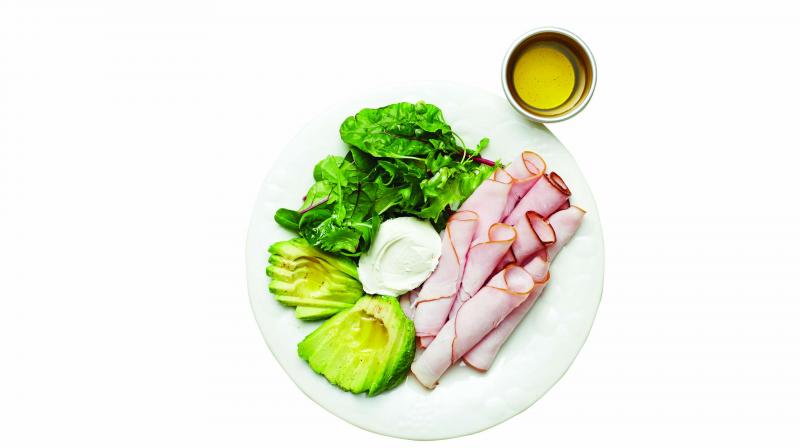
| ✅ Fats | Avocados, olive oil, coconut oil, ghee, butter |
| ✅ Proteins | Eggs, chicken, beef, pork, salmon, sardines |
| ✅ Low-Carb Veggies | Spinach, kale, zucchini, cauliflower, broccoli |
| ✅ Dairy | Cheese, heavy cream, full-fat yogurt (unsweetened) |
| ✅ Nuts & Seeds | Almonds, chia, flax, walnuts (moderate amount) |
| ✅ Condiments | Mustard, mayo, hot sauce, vinegar (no sugar) |
✅ Step 4: Track Your Intake (At Least Initially)
Use apps like:
- Carb Manager
- MyFitnessPal
- KetoDiet App
This helps ensure you stay within your carb limit.
✅ Step 5: Stay Hydrated + Electrolytes
Due to water loss on keto, take:
- 2–4g sodium/day (Himalayan salt or bouillon)
- 500mg potassium
- 300mg magnesium
This prevents keto flu, cramps, fatigue.
🚫 Things to Avoid on Keto
❌ High-Carb Foods:
- Bread, pasta, rice, potatoes
- Cereals, oats, granola
- Beans and legumes
- Most fruits (except berries)
- Sugary drinks, juices, soda
- Alcohol (especially beer, sweet cocktails)
- Packaged low-fat products (usually high in sugar)
❌ “Dirty Keto” Pitfalls:
- Bacon-only meals without veggies
- Artificial sweeteners in excess (can spike insulin)
- Processed keto junk (keto cookies, chips, etc.)
- Not eating enough real food or fiber
🔄 What is Ketosis? How Do You Know You’re in It?
When in ketosis, your liver produces ketones used by your body and brain for energy.
✅ Signs you’re in ketosis:
- Reduced hunger
- Increased focus
- Dry mouth / metallic taste
- Urine or breath ketone test shows positive
- Weight loss (initially water, then fat)
📈 How to Measure Ketosis
- Urine strips (cheap, easy, but not always accurate)
- Breath meters (like Ketonix – reusable)
- Blood ketone meters (most accurate – e.g., Keto Mojo)
⏳ How Long Does It Take to Enter Ketosis?
- Usually 2–4 days with <20g carbs/day
- Exercising + intermittent fasting can speed up the process
- Hydration + electrolytes help manage symptoms
🍽 Sample 1-Day Keto Meal Plan
| Meal | Example |
|---|---|
| 🥓 Breakfast | Scrambled eggs in butter + spinach + avocado |
| 🥗 Lunch | Chicken thigh + olive oil salad + feta |
| 🥘 Dinner | Salmon + zucchini noodles + garlic cream sauce |
| ☕ Snack | Bulletproof coffee or a handful of almonds |
👨⚕️ Who Should Be Cautious or Avoid Keto?
- People with kidney/liver/pancreas disease
- Pregnant or breastfeeding women
- Those with a history of eating disorders
- If you’re on diabetic or blood pressure medication – always consult your doctor
🧠 Final Thoughts
The Keto Diet isn’t just another trend. Backed by science and clinical use cases (like epilepsy, obesity, and diabetes), it’s a powerful metabolic tool when done correctly. But like any serious diet, it requires planning, balance, and personalization.
✍️ Summary
- ✅ Keto = High fat, low carb, moderate protein
- ✅ Trains body to burn fat instead of glucose
- ✅ Helps in weight loss, blood sugar control, mental clarity
- ✅ Comes with side effects if not managed properly
- ✅ Avoid sugars, grains, starchy veggies, processed junk
- ✅ Stay hydrated, track macros, and focus on whole foods
Would you like this exported as:
- ✅ Markdown file
- ✅ HTML blog format
- ✅ A short eBook?