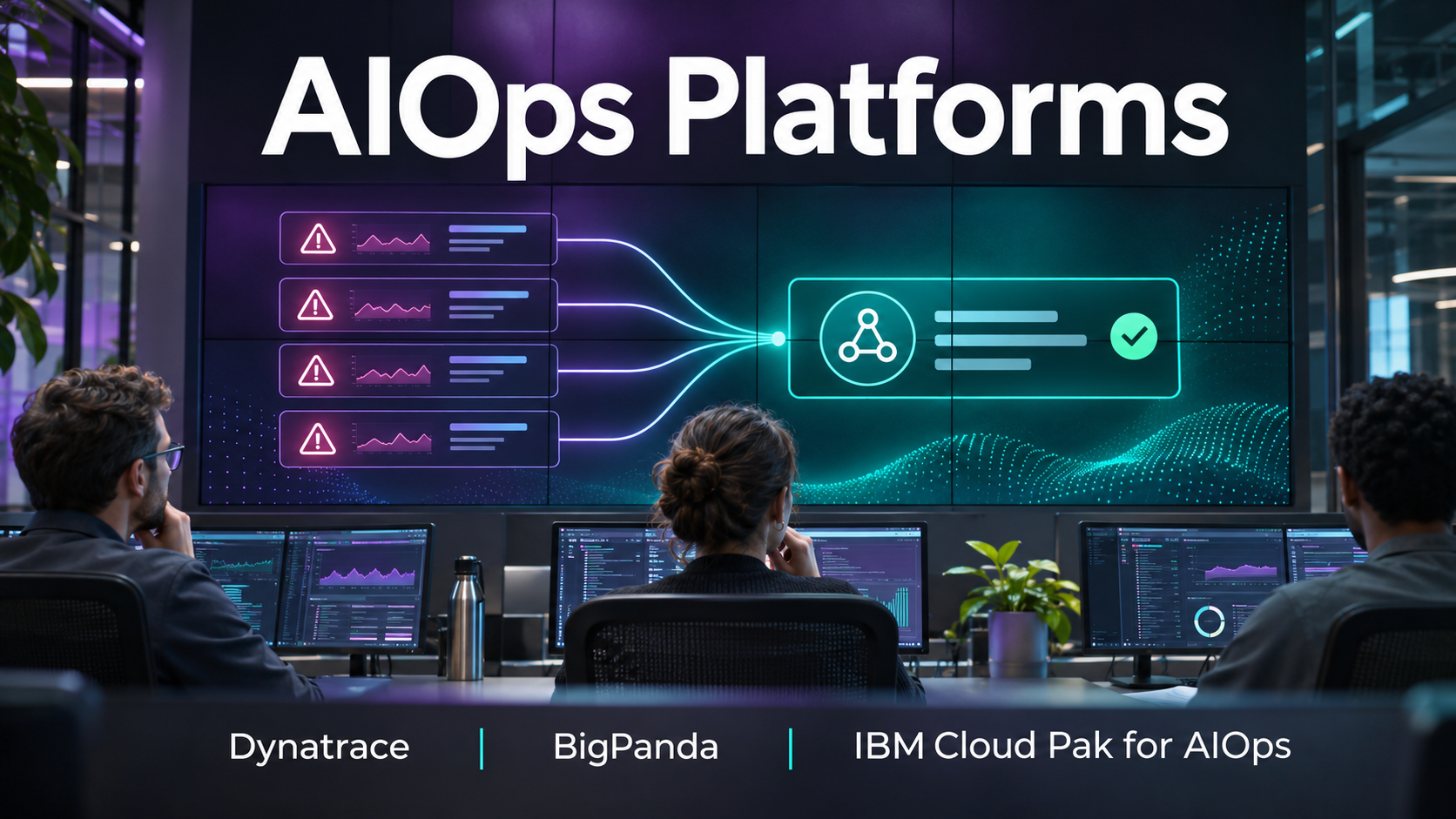
A database incident can trigger alerts from application servers, queues, and customer-facing monitors. An AIOps platform can group related signals and surface context for triage. The hard part is determining whether those signals reflect one underlying event or several failures that happen to overlap.
Choose the data the platform can reason over
When alerts arrive from many tools, BigPanda is a candidate for normalizing and correlating those events. Test whether incoming records carry the service, environment, and timing attributes the correlation rules need.
When a team already collects detailed application telemetry in Dynatrace, evaluate its AIOps capabilities in the context of that telemetry and the service relationships it can observe. Include dependencies outside its strongest coverage.
IBM Concert Operate, formerly IBM Cloud Pak for AIOps, is a candidate for enterprise operations involving multiple event sources, service topology, and automation. Include integration effort and ownership of service mappings in the pilot.
Make false merges visible
Replay incidents with known timelines. Include a noisy cascading failure and two independent failures that overlap in time. Ask responders to inspect each proposed grouping, identify the source evidence, and explain how they would split an incorrect cluster. Track missed incidents, false merges, and time to a defensible first hypothesis alongside any reduction in alert count.
Begin with suggestions and routing while humans retain control of mitigations. If the platform recommends an action, verify its preconditions against the live system. Give any automatic action a defined scope, an owner, and a way to stop it. A successful pilot shows that responders reach a better-supported decision faster while retaining access to the signals they may need to challenge it.