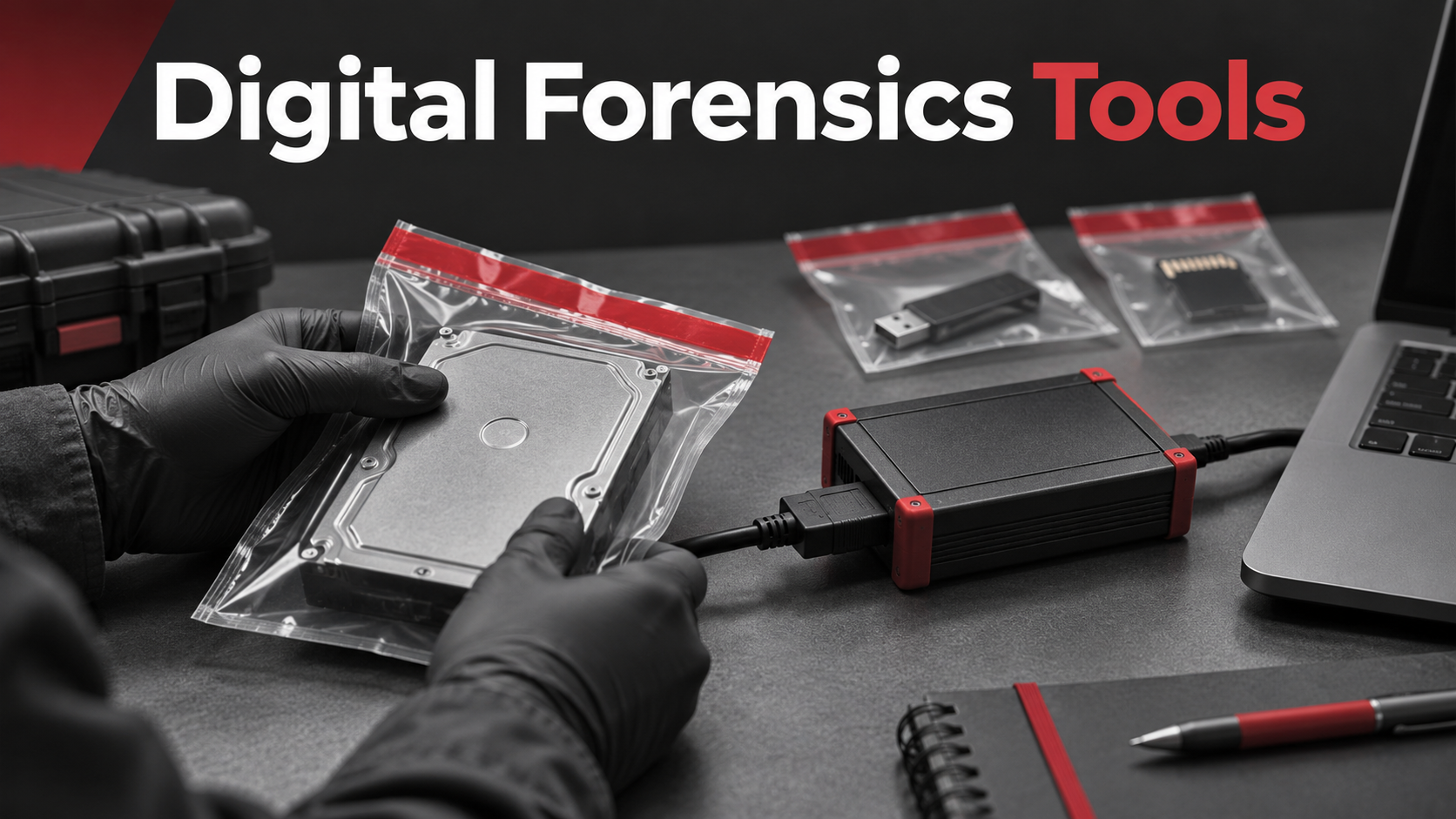
An endpoint alert points to unusual activity shortly before a laptop loses its network connection. The responder has a running device, a set of server logs and an urgent request for a timeline. The device may contain temporary evidence that will disappear when it powers down. The logs could expire or report time differently from the laptop. A rushed collection can make the answer harder to defend, even when it produces a visually convincing report.
Digital forensics tools support the acquisition, examination and interpretation of digital evidence. Their value depends on the source, the collection method and the record of what happened between acquisition and reporting. Evaluate them as part of a workflow in which another authorized analyst can reconstruct the important steps and explain the same finding from the retained material.
Decide what must survive the first response
Establish authorization, scope and immediate operational priorities before collection. A live system can expose volatile information, including process and memory state, but acquiring it can change the state being observed. A powered-off system poses a different set of questions around access, encryption and storage. Document the state you found, the reason for the collection method and actions that could affect later analysis.
NIST’s guide to integrating forensic techniques into incident response discusses collection, examination, analysis and reporting across different data sources. Its structure is useful for distinguishing the evidence you preserved from the interpretation you later made. Turn those stages into named responsibilities, especially when operations, investigators and external specialists share the work. NIST Guide to Integrating Forensic Techniques into Incident Response
A responder rarely has time to collect everything. Prioritize sources by relevance and volatility, and ask how the collection could affect business operations or an ongoing investigation. Record uncollected sources and the reason they were excluded. If a log source is routinely retained for only a short time, request preservation early through the approved process. A precise gap is more useful than an unexplained absence.
Select the tools by source and collection method
| Source | Evaluation question | Typical evidence to retain |
|---|---|---|
| Disk or storage media | Can the tool acquire and verify the needed image format? | Image, digest, acquisition log and device identifier |
| Running system memory | Can authorized responders acquire and analyze this system version? | Memory capture, environment details and collection notes |
| Cloud service or identity logs | Do exports capture the right scope, time span and event fields? | Raw export, query parameters, tenant context and retrieval log |
| Endpoint artifacts | Can another analyst trace a parsed artifact to its original location? | Source object, parser version, output and interpretation notes |
Acquisition and analysis may justify separate tools. A collection utility can produce a verified image, and an examination tool can parse an array of artifacts from that image. A single interface can simplify training and administration, while separate utilities can help teams validate consequential findings. The product choice depends on which platforms are common and which evidence you need to export in an independently usable format.
The acquisition method should fit the source. When appropriate for an offline device and collection workflow, a write blocker can help protect the original media from writes. For a cloud log export, preserve the raw output and record the account, query, time range and filters that shaped it. For a live capture, record the tool and version as well as any actions the collection took on the host.
Establish integrity and custody together
A cryptographic digest helps compare an acquired object with the same bytes later. Establish how the object was acquired and whether collection was complete through separate evidence. Keep the digest beside the collection record, storage identifier and documented handling history. Retain an original or preservation copy and work from controlled copies as appropriate to the investigation.
Custody records should identify the item, the authorized people who handled it, the time of each transfer and the purpose. Define how analysts get access to sensitive evidence and how the organization handles temporary copies. A strong tool can make those tasks easier through permissions, logs and exports. The team still needs a procedure for evidence handed over outside that tool.
Exercise storage and export before a case requires them. Ask how encryption keys are managed, who can restore an archive, which events are logged and whether a departed analyst’s work remains accessible. Have a second operator restore an old test case from the artifacts that would actually be retained. Note any dependency on a particular license, release or online service.
Build a timeline with uncertainty visible
Record original timestamps and time zone information before normalizing values for comparison. Check system clocks and collector offsets. File system timestamps, server events and identity-provider events can refer to different moments in a single workflow. A clean sequence on a chart may reflect sorting choices rather than the true order of activity.
Give major findings a source reference and a short explanation. A login followed by a file event can support a sequence of observations without establishing that the account owner personally performed the action. A parser may infer meaning from an artifact whose format varies by application version. Verify important claims with another artifact or a second method when the case warrants it.
Include contradictions. If an endpoint log suggests a connection while network records show an overlapping maintenance window, keep both in view and state the implications for confidence. Record collection and retention limits. A missing event in a time window with no coverage has a different evidentiary value from a missing event in a complete, well-understood log.
Use a known test case before choosing software
Build a small synthetic case with a known sequence of file activity, logins and system events. Give one analyst the evidence to acquire and another analyst the job of reproducing a consequential finding using the exported work. Include an artifact the tool should fail to parse and watch how it reports the failure. Silent omissions are difficult to detect in a real investigation.
Evaluate operator time as well as tool features. Large collections need storage, transfer and processing capacity. Cloud APIs may require carefully scoped permissions and can return different results depending on the role or query. Specialist suites can reduce the number of manual steps, while modular tools can let experienced analysts work closer to the source. Compare those trade-offs with your case volume and available training.
Review the scope of what you can hand to someone outside the original team. A useful package includes raw material where authorized, acquisition records, reproducible queries or processing parameters, and a readable account of what the evidence supports. Test whether a report can travel without exposing unrelated personal information or handing over every item in the case.
Check the parser against a second view
Suppose a case turns on a browser download that may have occurred shortly before the laptop lost connectivity. One parser places the download in the timeline with a normalized timestamp. Preserve the original artifact and inspect how the tool derived the value. A second analyst might compare the underlying record, an independent tool’s interpretation and a proxy event tied to the relevant device. Document the relationship between them and keep any disagreement visible. This is especially important when the timestamp’s meaning changes between operating system or browser versions.
A sensible acceptance condition is that the analyst can show where each display value came from. Record what happens if an artifact format is unknown or the parser returns only part of a record. Include how the analyst can export the source without exposing other people’s activity unnecessarily. Keep parser updates under change control for active matters, with a way to run a second version without overwriting earlier output. That leaves room for a corrected interpretation while preserving the history of the original finding.
Have the second analyst record their own tool version and explain any difference that affects the sequence of events.
The best evaluation ends with a second analyst independently explaining a finding and its limits. When the source, method, custody record and interpretation fit together, the team has a finding it can review after the original investigator moves on.