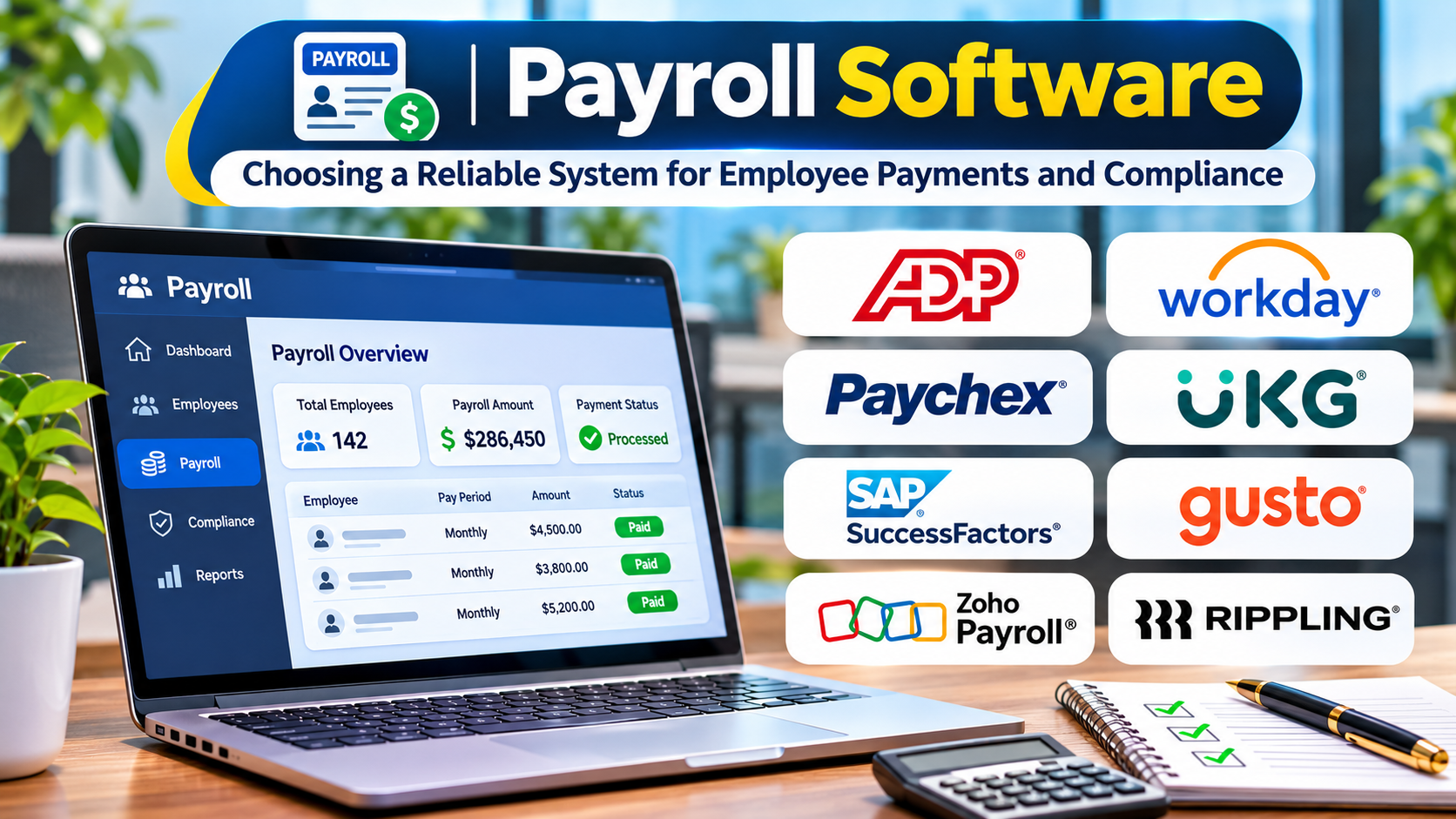
Payroll is one of the few business processes where even a small mistake can immediately affect employee trust.
An incorrect deduction, missed payment, or inaccurate tax calculation can create financial and administrative consequences.
As organizations grow, payroll becomes increasingly complicated. Different employee categories, variable hours, benefits, deductions, and local requirements make manual calculations difficult to maintain.
Payroll software helps organizations manage these responsibilities through structured calculations, records, and payment workflows.
What Is Payroll Software?
Payroll software is a system used to calculate and administer employee compensation.
Depending on the product and jurisdiction, it may support salaries, wages, overtime, deductions, taxes, payslips, payment files, and statutory reporting.
Some payroll platforms operate independently. Others form part of larger HR or human capital management systems.
The distinction matters because organizations must decide whether payroll should be managed through a specialist application or integrated with broader employee administration.
Understanding the Payroll Process
A typical payroll cycle involves collecting employee information, validating working hours, calculating gross compensation, applying deductions, determining net pay, and preparing payment and reporting records.
Errors can enter the process at any stage.
For example, an attendance system may transfer incorrect overtime hours. Even if the payroll calculation itself is mathematically correct, the employee may still receive the wrong payment.
Reliable payroll therefore depends on accurate inputs as well as suitable software.
Payroll Software Platforms to Evaluate
ADP
ADP provides payroll and HR solutions for organizations with different operational requirements.
It is relevant to businesses seeking established payroll administration capabilities and related services.
Availability and functionality vary by market and product.
Gusto
Gusto provides payroll and HR services focused primarily on businesses operating in the United States.
Its integrated approach can appeal to smaller organizations that want payroll and employee administration in one environment.
QuickBooks Payroll
QuickBooks Payroll connects payroll-related functionality with the QuickBooks business ecosystem.
Organizations should evaluate regional availability and compatibility with their existing accounting products.
Rippling
Rippling combines employee administration with payroll and other business technology workflows.
It is relevant when organizations want employee information to support multiple operational systems.
Deel
Deel provides international workforce and payroll-related services.
It deserves attention when businesses manage employees or contractors across countries, although the available services and legal arrangements differ by jurisdiction.
Zoho Payroll
Zoho Payroll offers payroll functionality within the Zoho ecosystem.
Businesses should confirm local statutory coverage, supported payroll features, and compatibility with their HR and accounting workflows.
Choosing Payroll Software by Business Model
| Business requirement | Evaluation priority |
|---|---|
| Small domestic business | Payroll calculations and ease of administration |
| Hourly workforce | Time and attendance integration |
| Multi-location company | Location-specific policies and reporting |
| International operations | Country coverage and employment arrangements |
| Growing HR department | Employee data integration and approvals |
| Complex compensation | Allowances, deductions, adjustments, and exceptions |
Compliance Cannot Be Assumed
Payroll obligations vary significantly between countries and sometimes between states or regions.
Organizations must consider applicable tax rules, employment legislation, reporting requirements, and record retention obligations.
A vendor’s international presence does not necessarily mean its payroll engine supports every jurisdiction.
Before purchasing, confirm which countries and employee categories are supported, what the provider actually calculates, and which responsibilities remain with the employer.
Data Security and Access Controls
Payroll systems contain sensitive financial and personal information.
Organizations should evaluate access permissions, authentication, audit records, encryption, and procedures for responding to security incidents.
Payroll administrators should have appropriate access without exposing compensation details to unnecessary personnel.
Changes to bank details and payment instructions deserve particularly strong verification.
How to Migrate Payroll Systems Safely
Payroll migration should begin with a review of employee records, compensation details, deductions, and historical balances.
Organizations should reconcile opening information and test unusual scenarios.
Where feasible, a parallel payroll run can help compare results between the existing and new processes before the new system becomes authoritative.
Testing should cover ordinary pay periods as well as bonuses, leave, overtime, corrections, and employee departures.
Final Thoughts
Payroll software should make employee payments accurate, understandable, and dependable.
ADP, Gusto, QuickBooks Payroll, Rippling, Deel, and Zoho Payroll address different markets and operational requirements.
The right choice depends first on jurisdictional support, payroll complexity, and integration needs—not simply the number of advertised features.
Reliable payroll is built on correct employee data, carefully configured rules, and consistent review processes.